 Insurance Curator
You open your bank account on payday. The balance looks decent. Then the bills hit — rent, utilities, car payment, groceries. Before the week ends, you are down to single digits. Again.
Living paycheck to paycheck is exhausting. It feels like you can’t get ahead no matter how hard you try. But here’s the truth: budgeting is exactly what you need to break the cycle. It’s not about restriction. It’s about giving every dollar a job so you stop wondering where your money went.
This guide walks you through a practical, step‑by‑step plan to build a budget when money is tight. You’ll learn the psychology behind your spending, the exact method to track everything, and the tools that make the process easier — including top‑rated budget planners you can grab from Amazon.
The Psychology of Paycheck‑to‑Paycheck Living
When you’re barely covering the basics, budgeting can feel like a luxury you can’t afford. Scarcity mindset tricks your brain into believing that tracking money will only highlight how little you have. But the opposite is true.
Research shows that people who track their spending, even on a low income, feel more in control and reduce financial anxiety. The simple act of writing down numbers creates clarity. And clarity is the first step toward change.
If you’ve tried budgeting before and failed, it’s likely because the system didn’t fit your reality. Let’s fix that.
Why Most Budgets Crash When Money Is Tight
Before we build your new budget, understand the common traps that sabotage people in your situation.
- Unrealistic categories: Cutting your grocery budget by 50% overnight sets you up for failure. You need wiggle room.
- Ignoring irregular expenses: Annual insurance, car repairs, birthday gifts — they pop up and destroy your plan.
- Forgetting to track the small stuff: That $5 coffee adds up to $150 a month. You need to see it.
- No system for accountability: Without a check‑in routine, discipline fades by week two.
A budget that works for a tight income must be flexible, honest, and easy to maintain. That’s exactly what we’ll build.
Step‑by‑Step: Your Paycheck‑to‑Paycheck Budget
Step 1: Gather Your Financial Reality
Start with the hard numbers. No guesswork. Use a simple table or a dedicated budget planner to list everything.
| Income Source | Monthly Amount |
|---|---|
| Job (after tax) | $3,200 |
| Side gig | $400 |
| Total Income | $3,600 |
| Fixed Expenses | Amount |
|---|---|
| Rent | $1,200 |
| Car payment | $350 |
| Insurance | $150 |
| Phone | $80 |
| Total Fixed | $1,780 |
| Variable Expenses (last 3 months average) | Amount |
|---|---|
| Groceries | $500 |
| Utilities | $200 |
| Gas | $180 |
| Dining out | $120 |
| Total Variable | $1,000 |
Now subtract your expenses from income: $3,600 – $2,780 = $820 remaining. That’s your buffer. But if you’re living paycheck to paycheck, that buffer may be smaller or negative. That’s okay — we adjust.
If you don’t have clear numbers yet, spend one month tracking every single purchase. Use a Budget Planner like the one rated 4.6 stars on Amazon. It has expense tracker pages that make recording painless.
Step 2: Differentiate Needs, Wants, and “Life” Expenses
Needs are non‑negotiable: rent, utilities, minimum debt payments, groceries. Wants are optional: streaming subscriptions, takeout, new clothes.
But there’s a third bucket: life expenses — things you can’t skip but can scale. Haircuts, household supplies, pet care. Treat these as semi‑variable costs.
Write each expense into one of the three buckets. Then challenge every want and every inflated life expense.
- Can you share a streaming account?
- Can you meal‑prep to cut dining out by half?
- Can you switch to a cheaper phone plan?
These small cuts create breathing room. But don’t eliminate joy entirely — a sustainable budget includes a small fun allowance.
Step 3: Choose a Budgeting Method That Fits
Not all budgeting systems work for tight incomes. Here are three that people living paycheck to paycheck have used successfully.
Zero‑based budgeting — You assign every dollar of income to a category until nothing is left. This method forces intentionality. Zero‑based Budgeting Explained is a deep dive into how you can use it.
Envelope system — Withdraw cash for variable categories (groceries, gas, fun) and put the cash in labeled envelopes. When the envelope is empty, you stop spending. Many people love the tactile feel. Envelope Budgeting vs. Budgeting Apps compares both approaches in detail.
50/30/20 method — Allocate 50% to needs, 30% to wants, 20% to savings/debt. This is simpler but less precise. On a tight income, the 20% savings may be impossible — start with 5% and build up.
Choose one method and commit for 90 days. Don’t switch until you’ve given it a real chance.
Step 4: Implement a Tracking System — Digital or Paper
You need to know where your money is going in real time. Two popular options:
- Budgeting apps like YNAB, EveryDollar, or Goodbudget. They sync with your accounts and categorize automatically.
- Paper planners — Many people prefer writing by hand because it forces mindfulness. Amazon has affordable options that get great reviews.
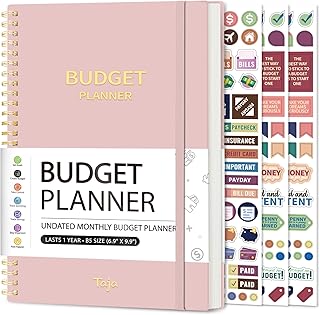
Budget Planner (Pink) – $8.99 – 4.6 stars. This undated planner helps you track income, bills, and spending each month. The price is less than two takeout coffees.
If you prefer a binder system, the NICOOTH Budget Binder (Purple) at $6.28 (4.6 stars) includes zipper envelopes for cash and expense sheets. It’s perfect for the envelope system.
Another top pick is the SKYDUE Budget Binder ($8.98, 4.7 stars). It comes with cash envelopes, budget sheets, and a savings tracker. You can use it alone or as part of a cash‑envelope system.
For a more traditional look, the Budget Planner (Black) ($8.99, 4.6 stars) offers the same layout as the pink version — just a different cover.
Step 5: Adjust Monthly and Build a Rhythm
Your first budget won’t be perfect. At the end of each month, review what happened.
- Did you overspend in groceries? Increase that category and cut elsewhere.
- Did you have an unexpected car repair? Create a “miscellaneous” line of $25–50 for surprises.
- Did you save less than planned? No shame — adjust the goal.
Consistency is more important than perfection. Over three to six months, you’ll get better at forecasting your needs. This is the foundation of the Beginner’s Budgeting Blueprint: a 30‑day plan to take control.
Tools That Help — Detailed Product Roundup
Sometimes the right tool makes all the difference. Here are the best‑selling budget planners and binders from Amazon, carefully chosen for people who need to stretch every dollar.
Physical Budget Planners
Undated planners let you start any month. They typically include monthly overviews, bill trackers, and expense log pages.
| Product | Price | Rating | Best For |
|---|---|---|---|
| Budget Planner (Pink) | $8.99 | 4.6 | Classic monthly tracking |
| Budget Planner (Black) | $8.99 | 4.6 | Same layout, black cover |
Both planners have 12 monthly spreads, undated pages, and a compact size that fits in a purse or briefcase. They’re ideal if you prefer a simple book rather than a binder.
Cash Envelope Binders
If you want to use the envelope system, a binder with zippered pockets is a game changer.
- NICOOTH Budget Binder (Purple) – $6.28 – 4.6 stars. It contains 12 cash envelopes, budget sheets, and a zippered cover to keep everything secure. Great for beginners.
- SKYDUE Budget Binder – $8.98 – 4.7 stars. Slightly larger, with more expense tracking sheets and a savings challenge tracker. The higher rating reflects its durability and included extras.
Educational Resource
Understanding the theory behind budgeting can help you stick with it. The book Budgeting 101 ($9.69, 4.6 stars) covers everything from tracking expenses to setting financial goals. It’s a compact guide that fits in your work bag.
Budgeting 101 – $9.69 – 4.6 stars. A 256‑page crash course written by Michele Cagan. Perfect pairing with any physical planner.

Strategies to Break the Cycle Long‑Term
A budget keeps you afloat, but to stop living paycheck to paycheck, you need to increase the gap between income and expenses. Here are four proven strategies.
1. Build a $1,000 Starter Emergency Fund
Most financial experts recommend $1,000 as the first milestone. It covers a small car repair or a medical co‑pay without sending you into debt. Start by saving $20 per week. In a year, you’ll have over $1,000.
2. Increase Income — Even Temporarily
A side hustle or overtime can transform your budget. Drive for Uber, freelance on Fiverr, or sell unused items. Even an extra $200 per month gives you breathing room.
If your income fluctuates, check out Budgeting on an Irregular Income for specific tips.
3. Negotiate Your Fixed Bills
Call your internet provider, insurance company, or phone carrier. Ask for a discount or a loyalty offer. Many companies will reduce your bill by $10–20 per month just for asking.
4. Use the “Values‑Based” Approach
When you align spending with what truly matters, you stop wasting money on things you don’t care about. For example, if travel is important, cut your cable subscription and put the savings into a vacation fund. Learn more in Values‑based Budgeting.
Common Questions People Ask When Building a Budget on a Tight Income
What if I have no money left after bills and basics?
Focus on two things: reduce your highest fixed expense (rent, car) or increase income. Even $50 freed up can go toward an emergency fund. Also, look for one single expense you can eliminate — like a gym membership you never use.
How do I handle variable income?
Create a budget based on your lowest earning month. Any extra income above that goes to savings or debt. Use the envelope method to smooth out fluctuations. The detailed guide on Budgeting on an Irregular Income covers this in depth.
Should I use cash envelopes even if I pay by card?
Yes. Withdraw cash for the categories you overspend on — groceries, dining, entertainment. Seeing the cash leave your hand makes you spend less. Many people combine a NICOOTH Budget Binder with a digital tracking app.
How do I budget for irregular expenses like car insurance?
Divide the annual cost by 12 and set that amount aside each month in a dedicated “sinking fund” envelope or savings account. Then when the bill comes, you already have the money.
Is it worth buying a physical budget planner?
Absolutely, especially if you are a visual or tactile learner. Writing things down increases accountability. Planners like the Budget Planner (Pink) or Budget Planner (Black) cost less than $10 and last a full year. That’s a small investment for financial control.
Conclusion: Your Budget Is a Bridge, Not a Cage
Living paycheck to paycheck is not a life sentence. A well‑built budget lets you see where your money is going, make intentional choices, and slowly create a cushion.
Start today. Pick one method from this guide, grab a simple tool like the SKYDUE Budget Binder or the Budgeting 101 book, and commit to tracking every dollar for 30 days.
You don’t need to be perfect. You just need to begin.
Related resources you might find helpful:
- Couples Budgeting Guide: How to Combine Money Without Constant Fights
- Budgeting for Beginners in Their 20s: Money Moves to Avoid Lifetime Regret
- Advanced Budgeting Techniques for High Earners Who Still Feel Broke
- How to Fix a Broken Budget: Signs It’s Not Working and What to Change
Frequently Asked Questions
What is the first step to budgeting when you’re broke?
The first step is tracking everything you spend for one month without judgment. Use a simple notebook or a budget planner. Once you see the numbers, you can create a realistic plan.
Can you budget on a fluctuating income?
Yes. Base your budget on your lowest expected monthly income. Any extra goes toward savings, debt, or a buffer. The envelope system works particularly well for variable income.
How much should I save if I’m living paycheck to paycheck?
Start with $5 or $10 per week. The goal is to build a $1,000 emergency fund as quickly as possible. Even small amounts add up over time.
Are cash envelopes better than apps for tight budgets?
Both work, but cash envelopes help if you tend to overspend with cards. They make the physical scarcity real. Many people combine an app for tracking with envelopes for spending categories.
Where can I find an affordable budget planner?
Amazon offers several highly rated options under $10. The Budget Planner (Pink or Black) is $8.99 with 4.6 stars. The NICOOTH Budget Binder is only $6.28. Check the links in this article for current prices.