 Insurance Curator
You’ve heard the phrase “give every dollar a job.” That’s the heart of zero-based budgeting (ZBB). Unlike traditional budgeting, where you track what you already spent, ZBB forces you to plan every single rand (or dollar) before you earn it.
The goal is simple: income minus expenses equals zero. Not broke zero – intentional zero. Every dollar is assigned a purpose, from rent to savings to that daily coffee. No dollar sits idle, and no dollar goes to waste.
This method is powerful for anyone who feels like their money disappears each month. In this deep dive, you’ll learn exactly how to implement ZBB, see real examples, avoid common pitfalls, and discover the best tools to keep you on track.
What Is Zero-based Budgeting?
Zero-based budgeting starts from scratch every month. You do not carry over last month’s spending allowances. Instead, you ask: “What does this month’s income need to do?”
Every dollar of income is allocated to specific categories until nothing is left unassigned. That doesn’t mean you spend everything – savings, debt payments, and investments are also “jobs” for your money.
The core equation: Income – All Expenses (including savings) = $0
This forces you to justify every expense. No more “I think I’ll just save whatever is left.” You plan your savings first.
Why Zero-based Budgeting Works
Traditional budgeting often fails because it’s reactive. You record past spending and hope to stay under limits. ZBB is proactive. You decide where money goes before you have it.
Key benefits:
- Intentionality: Every rand has a purpose. No mindless spending.
- Accountability: You see exactly where leaks happen.
- Motivation: Seeing savings goals funded feels rewarding.
- Flexibility: Each month can be different – great for variable income.
A Budgeting for Beginners in Their 20s guide shows how ZBB can prevent common financial regrets early.
Step-by-step: How to Create a Zero-based Budget
Follow these six steps. Grab a notebook or a Budget Planner – Monthly Budget Book with Expense Tracker Notebook – it’s a great physical tool with a 4.6 rating.
1. List Your Total Monthly Income
Include all sources: salary, side hustles, freelance, child support, dividends. Use net (take-home) income.
If your income varies, use your lowest expected monthly amount. Any extra later gets assigned.
2. List Every Expense Category
Break expenses into three groups:
- Fixed necessities: Rent, utilities, insurance, loan payments.
- Variable necessities: Groceries, gas, medical.
- Discretionary: Dining out, entertainment, subscriptions.
- Savings & debt: Emergency fund, retirement, extra debt payments.
Be thorough. Include annual expenses (like car registration) by dividing by 12.
3. Assign Every Dollar Until You Reach Zero
Start with fixed necessities, then savings (pay yourself first), then variable, then discretionary. Adjust as needed.
Example: Income $4,000.
| Category | Amount |
|---|---|
| Rent | $1,200 |
| Utilities | $200 |
| Groceries | $500 |
| Gas | $150 |
| Insurance | $300 |
| Debt payment | $400 |
| Emergency fund | $300 |
| Dining out | $200 |
| Entertainment | $100 |
| Personal care | $100 |
| Subscriptions | $50 |
| Miscellaneous | $300 |
| Total | $4,000 |
The total equals income – zero dollars left.
4. Track Your Spending During the Month
Write every transaction. If you go over in one category, you must pull from another. This makes you conscious of trade-offs.
5. Review and Adjust as You Go
Life happens. Car repairs, medical bills. Adjust the budget mid-month. That’s okay – just reallocate dollars from lower priorities.
6. Roll Over or Rebuild Next Month
If money remains in any category at month’s end, decide: carry it forward, add to savings, or pay down debt.
Common Zero-based Budgeting Mistakes (and How to Fix Them)
Even experienced budgeters slip up. Watch for these:
Forgetting irregular expenses. You plan groceries but forget car insurance due quarterly. Solution: Build a “sinking fund” category – divide annual costs by 12.
Being too restrictive. Cutting all fun leads to burnout. Solution: Include a realistic “fun money” category. How to Fix a Broken Budget helps when your system feels too tight.
Not adjusting when income changes. New job? Side hustle bonuses? Solution: Update your budget immediately. ZBB thrives on flexibility.
Ignoring savings. If you only assign leftovers to savings, it won’t happen. Solution: Make savings a fixed category – automate the transfer.
Zero-based Budgeting vs. Other Methods: A Comparison
| Feature | Zero-based Budgeting | Envelope System | 50/30/20 Rule |
|---|---|---|---|
| Level of detail | Very high – every dollar assigned | High – cash envelopes for categories | Low – only three buckets |
| Flexibility | Extremely flexible month to month | Less flexible (cash in envelopes) | Moderate – fixed percentages |
| Best for | People who want total control | People who overspend with cards | Beginners or simple lifestyles |
| Time required | 30–60 min per month | 15–20 min per month | 5–10 min per month |
The envelope system pairs beautifully with ZBB. Use cash envelopes for categories like groceries and dining out. A NICOOTH Budget Binder Cash Envelopes (purple, $6.28) or SKYDUE Budget Binder (4.7 rating) can help you stay physical and accountable.
Real-world Example: Sarah’s Zero-based Budget
Sarah earns $3,800 monthly after taxes. Here’s her zero-based budget:
- Fixed necessities: $1,550 (rent $950, utilities $150, car payment $300, insurance $150)
- Savings & debt: $800 (emergency fund $300, retirement $200, student loan extra $300)
- Variable necessities: $600 (groceries $400, gas $150, pet supplies $50)
- Discretionary: $550 (dining $150, entertainment $100, shopping $100, gym $50, personal $150)
- Miscellaneous/overflow: $300
Total equals $3,800. Every dollar has a job. She tracks with a Budget Planner in Black ($8.99, 4.6 rating). Mid-month, she needed a $200 car repair. She reduced dining to $50 and shopping to $0, then rolled the extra into repairs.
Zero-based Budgeting on an Irregular Income
Fluctuating paychecks make ZBB even more valuable. Here’s how.
- Budget to your lowest income month. Then any extra income is assigned to savings or debt.
- Use a “buffer” category. Build a small emergency fund equal to one month’s expenses first.
- Prioritize essential categories. Fixed bills and savings come first. Discretionary fills what remains.
For deeper guidance, read Budgeting on an Irregular Income: How to Plan When Your Paychecks Fluctuate.
Tools to Support Your Zero-based Budget
While a spreadsheet or app works, many people benefit from analog tools. No notifications, no swiping. Just pen and paper.
Recommended products from our research:
| Product | Price | Rating | Best for |
|---|---|---|---|
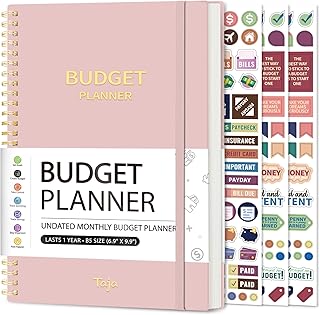
| Budget Planner – Monthly Budget Book (Pink) | $8.99 | 4.6 | Structured monthly tracking |
| NICOOTH Budget Binder (Purple) | $6.28 | 4.6 | Cash envelope system |
| SKYDUE Budget Binder | $8.98 | 4.7 | All-in-one binder with envelopes and sheets |
| Budget Planner – Monthly Budget Book (Black) | $8.99 | 4.6 | Classic sleek design |
| Budgeting 101 Book | $9.69 | 4.6 | Foundational knowledge |
Use a clickable product image:
Advanced Tips for Zero-based Budgeting Success
Once you master the basics, level up.
Use sub-categories. Instead of “transportation,” split into gas, maintenance, parking, ride shares. This prevents overspill.
Build a “miscellaneous” category. Leave 5% of income unassigned for unexpected needs. If unused, it rolls to savings.
Do a monthly “budget audit.” Review every category. Did you need that subscription? Can you lower insurance? This continuous optimization aligns with Advanced Budgeting Techniques for High Earners Who Still Feel Broke.
Involve your partner. Couples often struggle with money tension. The Couples Budgeting Guide offers steps to align values while using ZBB.
Frequently Asked Questions
What if I overspend in one category?
Take from another category. That’s the discipline of ZBB. If you overspent on dining, reduce entertainment or shopping. The total must stay zero.
Can I use zero-based budgeting with irregular income?
Absolutely. Budget based on your lowest expected income. When extra arrives, assign it immediately to savings, debt, or a goal. It’s perfect for variable pay.
Do I need to track every penny?
Yes, at first. Once the habit forms, many people track just a few categories. But the power of ZBB comes from knowing where every dollar goes.
Is zero-based budgeting the same as the envelope system?
Not exactly. The envelope system uses cash in physical envelopes for spending categories. ZBB is a mental framework that can be implemented with envelopes, apps, or spreadsheets. They complement each other.
How long does it take to set up a zero-based budget?
The first month takes 30–60 minutes. After that, 15–20 minutes per month if income and expenses are consistent. The effort pays off quickly.
Can I use a budgeting app instead of paper?
Yes. Apps like You Need a Budget (YNAB) are built on zero-based principles. But many people prefer the tangibility of a Budgeting 101 book or a physical planner.
Final Thoughts
Zero-based budgeting is not about restriction – it’s about empowerment. Every dollar you assign is a decision that aligns your spending with what matters most. No more guessing where money went.
Start small. Use a simple notebook or the SKYDUE Budget Binder to track your first month. You’ll be amazed how much clarity and control you gain.
If you’re living paycheck to paycheck, ZBB can help you break the cycle. Read How to Build a Budget When You’re Living Paycheck to Paycheck for specific strategies.
And remember – values matter. Don’t just budget for survival. Budget for joy, growth, and generosity. Values-based Budgeting: How to Spend Guilt-free on What You Love shows you how.
Your money deserves a job. Give it one.