 Insurance Curator
You love the freedom of freelancing, commission-based work, or seasonal gigs—but budgeting feels like a nightmare. One month you’re flush, the next you’re scraping by. The good news? You can build a stable financial plan even when your income bounces like a rubber ball.
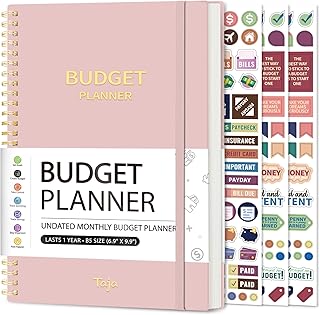
This guide walks you through every strategy, tool, and mindset shift you need to master budgeting on an irregular income. We’ll cover why zero-based budgeting works for freelancers, how to use a Budget Planner – Monthly Budget Book with Expense Tracker Notebook to track fluctuating cash flow, and how to build a buffer without fear.
Let’s dive in.
Why Traditional Budgeting Fails When Your Income Varies
Most budgeting advice assumes a steady paycheck. “Save 20% of every paycheck,” they say. But when you earn $5,000 one month and $800 the next, that advice is useless.
Instead of fighting your income pattern, you need a system that adapts. Think “average-based budgeting” with a built-in buffer. The core idea: stabilize your spending around a minimum baseline, then allocate surplus wisely.
If you’re new to this, start with our Beginner’s Budgeting Blueprint: How to Take Control of Your Money in 30 Days—it lays the foundation for any income type.
Step 1: Calculate Your Minimum Viable Income (MVI)
Your MVI is the lowest amount you need to cover essential expenses (rent, utilities, groceries, debt minimums, gas). Track every fixed cost for the past 12 months, then find the low point.
Example:
- Your essential monthly expenses total $2,500.
- Your worst three months last year averaged $2,000.
You must either trim expenses or build a “buffer fund” to cover the gap. A buffer is a savings pool that fills during high-income months and empties during lean ones.
Step 2: Build a Buffer Fund (Your Income Stabilizer)
Think of this as a personal rainy-day account for income dips. Aim for one to three months of essential expenses as your buffer.
How to fund it:
- When you land a big project, deposit 30–50% into the buffer.
- Use a dedicated Budget Binder Cash Envelopes A6 Money Saving Binder to physically separate your buffer cash if you prefer an envelope system.

Once the buffer reaches your target, treat it as a zero-balance account—if you withdraw for a lean month, you must replenish it next high-income month.
Step 3: Use an Average-Based Spending Plan
You can’t budget based on last month’s income. Instead, use a 6- or 12-month rolling average.
How to do it:
- Add up your total income for the past year.
- Divide by 12 to get your monthly average.
- Spend no more than that average (minus savings goals).
But watch out—this only works if you have a buffer to cover months when actual income falls below the average. That’s why Step 2 is non-negotiable.
Step 4: Prioritize With a “Four-Bucket” System
When income is uncertain, you must rank your spending categories.
| Bucket | Priority | Example Categories |
|---|---|---|
| 1 | Essentials | Rent, utilities, minimum debt, groceries |
| 2 | Stability | Buffer replenishment, emergency fund |
| 3 | Quality of Life | Dining out, travel, streaming, hobbies |
| 4 | Future Goals | Retirement, big purchases, extra debt paydown |
Rule: Fully fund Bucket 1 before you touch Bucket 2. Never skip Bucket 2—your buffer is your security. Once Bucket 2 is topped, you can enjoy Bucket 3 and 4 guilt-free.
Step 5: The Power of Zero-Based Budgeting for Fluctuating Income
Zero-based budgeting means every dollar has a job. Even on irregular income, you can apply it weekly or bi-weekly.
The process:
- When a payment arrives, list all pending bills and expenses for the next 2–4 weeks.
- Assign money to each category until you hit zero.
- If extra remains, put 100% into the buffer or future goals.
This method prevents “feast or famine” spending. For a deeper dive, see our Zero-based Budgeting Explained: a Simple Method to Tell Every Dollar Where to Go.
Tools That Make Irregular Income Budgeting Easier
You don’t need an app—sometimes a well-designed planner is more effective, especially if you like writing things down.
Top Picks from Real Users
1. Budget Planner – Monthly Budget Book with Expense Tracker Notebook (Pink)
- Rating: 4.6 / 5
- Price: $8.99
- Features: Undated pages allow you to start any month; sections for bills, savings, and surplus planning.
2. NICOOTH Budget Binder Cash Envelopes A6 (Purple)
- Rating: 4.6 / 5
- Price: $6.28
- Perfect for envelope system freelancers who want to split cash into categories (e.g., “Buffer,” “Taxes,” “Fun”).
3. SKYDUE Budget Binder with Zipper Envelopes
- Rating: 4.7 / 5
- Price: $8.98
- Includes expense budget sheets and cash envelopes—great for tracking multiple income streams.
4. Budget Planner – Monthly Budget Book (Black)
- Rating: 4.6 / 5
- Price: $8.99
- Same layout as the pink version but in a professional black cover.
5. Book: Budgeting 101 (Adams 101 Series)
- Rating: 4.6 / 5
- Price: $9.69
- A crash course in budgeting fundamentals, including chapters on variable income strategies.
The 50/30/20 Rule (Modified for Irregular Income)
The classic rule suggests 50% needs, 30% wants, 20% savings. But when monthly income fluctuates, you need a dynamic version.
Modified version:
- 50% Needs: This is your MVI (minimum viable income). Spend this first.
- 30% Wants: Only after essentials and buffer are covered.
- 20% Savings & Debt: Prioritize buffer until it’s full, then shift to retirement or extra debt.
Pro tip: In high-income months, push your savings up to 40–50%. In low-income months, you can drop savings to zero and rely on your buffer. That’s how the system absorbs fluctuations.
How to Handle Irregular Paychecks With the Envelope System
The envelope method works beautifully for freelancers—but only if you adapt it.
Steps:
- Withdraw cash for variable expenses (groceries, entertainment, transportation).
- Label envelopes for each category: “Buffer replenish,” “Taxes,” “Fun.”
- On payday, divide cash based on your average monthly spending, not a fixed percentage.
For a comparison of envelope vs. app methods, read Envelope Budgeting vs. Budgeting Apps: Which System Actually Works Better?.
The “Pay Yourself First” Twist for Unsteady Earners
“Pay yourself first” means saving before spending. On a variable income, you do it differently:
- Set a minimum-savings threshold. For example, save any income above $3,000 in a month.
- Automate transfers from your checking to a buffer account only after you’ve covered essentials.
- Reward yourself when you beat the threshold—small rituals keep motivation high.
This technique also helps couples avoid fights over money. If you share finances with a partner, check out Couples Budgeting Guide: How to Combine Money Without Constant Fights.
Tax Savings for the Self-Employed and Gig Workers
Irregular income often means no employer withholding taxes. You must set aside a portion for Uncle Sam.
How to estimate:
- Save 25–30% of every payment if you’re self-employed (depends on tax bracket).
- Deposit this into a separate savings account—never spend it.
Use your physical or digital binder to tag “Taxes” as its own deductible category. The SKYDUE Budget Binder has a dedicated envelope that’s perfect for this.
Psychological Hacks for Financial Stability
Budgeting on unpredictable money is as much a mental game as a mathematical one. Here’s how to stay sane:
- Celebrate small wins. Did you resist spending a bonus check on impulse? Great! Acknowledge it.
- Create a “payday ritual.” Every time money hits your account, run the same 10-minute process: check buffer, pay essential bills, then assign the rest.
- Visualize your buffer as income insurance. It’s not “extra cash”; it’s your safety net against future lean months.
If you constantly feel broke despite earning well, explore Advanced Budgeting Techniques for High Earners Who Still Feel Broke.
Common Mistakes and How to Avoid Them
Mistake 1: Using only one baseline.
Your baseline should adjust quarterly or annually as your income changes.
Mistake 2: Ignoring irregular expenses.
You know bi-annual car insurance will hit in June. Pre-fund that category every month using your average income.
Mistake 3: Treating surplus as mad money.
Surplus is for Buffer First, then goals. Use a Budget Planner to track those surplus allocations.
Mistake 4: Not reviewing monthly.
High-income months can trick you into lifestyle inflation. Review your averages every month.
Real-World Example: Meet Maria, a Freelance Designer
Maria’s income ranged from $2,000 to $8,000 per month. Her essentials were $2,800. She built a $6,000 buffer over six months.
Month 1: $5,000 income
- Essentials: $2,800
- Buffer deposit: $1,200
- Taxes set-aside: $750
- Fun: $250
Month 2: $2,000 income
- Essentials: $2,800 (withdraw $800 from buffer)
- No taxes or fun this month
- Buffer now at $5,200
Month 3: $10,000 income
- Essentials: $2,800
- Buffer top-up: $2,000 (to get back to $7,200)
- Taxes: $2,500
- Extra debt paydown: $1,700
- Fun: $1,000
This system let Maria sleep soundly. Her buffer absorbed the dips. She also tracked everything in a Budget Binder to stay visual.
Why Values-Based Budgeting Matters for Freelancers
When money is tight, every purchase feels stressful. Values-based budgeting helps you spend guilt-free on things that align with your priorities.
For example, if learning is a core value, budget for courses even in lean months—but cut dining out. This approach reduces anxiety because you know each dollar supports your life mission.
Learn more in our guide on Values-based Budgeting: How to Spend Guilt-free on What You Love.
The 80/20 Rule of Irregular Income Budgeting
80% of your financial stability comes from just two actions:
- Having a buffer fund (savings for lean months)
- Tracking every dollar (using a planner or app)
The other 20% is optimization: tax planning, investment timing, and category adjustments. Don’t overcomplicate it.
When to Adjust Your System
Your budget isn’t static. Revisit it when:
- Your average income changes by more than 15%.
- You pay off a major debt.
- You experience a life change (marriage, new child, move).
If your budget feels broken, read How to Fix a Broken Budget: Signs It’s Not Working and What to Change?.
Final Word: You Can Master Fluctuating Income
Budgeting on an irregular income requires more discipline, but it’s absolutely doable. Use the MVI method, build a buffer, and track everything with a tool you love—like the SKYDUE Budget Binder or the classic Budgeting 101 book.
Remember: Consistency, not perfection, creates financial peace. You’ve got this.
Frequently Asked Questions (FAQ)
How much should I save for taxes as a freelancer?
Set aside 25–30% of every payment, depending on your tax bracket. Deposit this into a separate account and do not spend it. Pay quarterly estimated taxes to avoid penalties.
What if my income is too low in a month to cover essentials?
That’s exactly what your buffer is for. Withdraw from the buffer to cover essential spending. Prioritize rebuilding that buffer in high-income months.
Can I use budgeting apps instead of a paper planner?
Yes, many apps handle variable income well. But if you benefit from physically writing down numbers, a Budget Planner can be more effective for accountability.
Should I include investment contributions in my irregular income budget?
Only after you’ve fully funded your buffer and essential expenses. Automate investments only when you have a stable surplus for three consecutive months.
How often should I recalculate my average income?
Every three to six months, or whenever your income patterns shift dramatically. Reviewing quarterly keeps your spending aligned with reality.
What’s the biggest mistake people make when budgeting with irregular income?
Not building a buffer first. Without a safety net, you’ll either overspend in good months or under-save in lean months. A buffer is non-negotiable.