 Insurance Curator
Money is the number one topic couples fight about — and it rarely ends with a simple “I’m sorry.”
You love your partner, but when the bank balance dips or one of you buys a new gadget without asking, fireworks erupt.
The solution isn’t more income or a perfect partner. It’s a system that aligns your values, protects your independence, and creates shared financial goals.
This guide will show you exactly how to combine your money in a way that reduces conflict, builds trust, and even brings you closer.
We’ll cover real budgeting products that can help, step-by-step methods, and expert communication hacks.
Why Couples Fight About Money (and How to Stop)
Most couples start with good intentions. You open a joint account, split the rent, and promise to talk about big purchases.
Then life happens: a surprise car repair, a credit card statement that reveals a secret shopping spree, or one partner feeling controlled.
The root cause is rarely the dollar amount. It’s unspoken expectations — about who pays for what, how much freedom each person has, and what “fair” really means.
“The biggest mistake couples make is assuming they have the same money values just because they love each other.” — Certified financial therapist, Dr. Megan McCoy
To stop the fights, you need a budget that is:
- Transparent – No hidden accounts or surprise transactions.
- Flexible – Room for fun money and individual guilt-free spending.
- Aligned – Reflects both partners’ long-term dreams.
The First Step: A Money Date (Yes, Really)
Before you open a single spreadsheet, schedule a money date.
This isn’t a lecture — it’s a calm, private conversation where you both answer these questions:
- What did your family teach you about money?
- What are your biggest financial fears?
- What is one financial dream you have for the next 5 years?
- How much personal spending money do you need each month to feel free?
Write down each other’s answers without judgment.
This simple exercise uncovers hidden triggers and sets the foundation for a budget you both own.
Choose Your Merging Style: Joint, Separate, or Hybrid
There’s no right way to combine money. The best system is one you both can stick with.
| Style | How It Works | Best For |
|---|---|---|
| Fully Joint | All income goes into a shared account. You pay everything from there. | Partners with similar spending habits and high trust. |
| Fully Separate | Each keeps their own account. You split shared bills by agreement. | Partners who value independence or have different income levels. |
| Hybrid (Proportional Joint) | You open a joint account for shared expenses (housing, utilities, savings). Each contributes a percentage of income and keeps the rest. | Most couples — it balances fairness with freedom. |
Our recommendation for most couples: start with the hybrid model.
It reduces resentment because each partner still controls some personal money.
How to Build Your Couple’s Budget in 6 Steps
Step 1: List All Income and Fixed Expenses
Write down every dollar that comes into the household — salaries, side hustles, child support.
Then list fixed monthly costs: rent/mortgage, utilities, insurance, loan payments.
Step 2: Decide Who Pays What
If you choose the hybrid model, decide the percentage each partner contributes.
Example: If Partner A earns $5,000/mo and Partner B earns $3,000/mo, Partner A pays 62.5% of joint expenses, Partner B pays 37.5%.
Step 3: Create a Fun Money Allowance
Each partner gets an equal no-questions-asked allowance.
This money can be spent on anything — a massage, video game, coffee runs — without discussion.
Step 4: Automate Savings
Treat savings like a fixed bill. Set up an automatic transfer to a shared savings account the day you get paid.
Goal: 10–20% of combined income.
Step 5: Use a Monthly Review System
Schedule a 30-minute budget review every month.
Go over the past month’s spending, celebrate progress, and adjust the next month’s plan.
Step 6: Use Tools That Keep You on Track
You don’t need to remember everything in your head. Physical planners and binders provide structure and accountability.
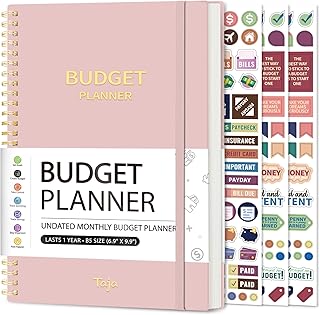
Budget Planner – Pink ($8.99) — This undated planner has dedicated sections for bills, savings, and expenses. Perfect for couples who want to sit down together and write it out.
What to Include in Your Joint Budget Categories
A detailed budget reduces ambiguity. Use these categories:
- Housing (mortgage/rent, property tax, insurance)
- Utilities (electricity, water, internet, streaming)
- Groceries
- Transportation (car payment, gas, insurance, maintenance)
- Debt Repayment (credit cards, student loans, personal loans)
- Savings (emergency fund, vacation, home down payment)
- Personal Allowance (each partner’s fun money)
- Health & Insurance (medical, dental, life insurance)
- Miscellaneous (gifts, pet care, subscriptions)
Pro tip: Use a zero-based budget approach — every dollar has a job.
If you need help tracking small expenses, a NICOOTH Budget Binder Cash Envelopes A6 Money Saving Binder ($6.28) makes it easy to allocate cash for groceries, dining out, and fun money without overspending.
Handling Irregular Income as a Couple
If one or both partners have freelance jobs, commissions, or seasonal work, budgeting becomes trickier.
Here’s the system to avoid fights:
- Calculate a base monthly income based on the lowest-earning month last year.
- Pay yourself that base into the joint account each month.
- Put the extra from good months into a separate buffer account.
- Use the buffer to cover lean months or unexpected expenses.
This smooths out the emotional highs and lows.
And when you have extra, you can both agree on how to allocate it — saving for a dream vacation or paying down debt faster.
The Envelope System for Couples (Yes, It Still Works)
Digital budgeting apps are great, but cash gives a tangible feeling of “this is what’s left.”
Many couples find that using cash envelopes for certain categories stops overspending instantly.
The SKYDUE Budget Binder, Money Saving Binder with Zipper Envelopes ($8.98) comes with labeled cash envelopes and expense tracking sheets.
Each partner can have their own envelope for personal spending, plus joint envelopes for groceries, dining out, and date night.
“We use the binder for our joint cash categories. Seeing $50 left in the ‘Date Night’ envelope makes us think twice about ordering expensive appetizers.” — Rachel, married 4 years
Avoid These 5 Common Budgeting Fights
1. The “My Money” vs “Our Money” Mindset
When one partner earns significantly more, it’s easy to feel entitled or controlled.
Solution: Always use proportional contributions to shared expenses. The higher earner pays more, but both have equal say in how joint money is spent.
2. Hidden Spending
A secret purchase can destroy months of trust.
Agree that any purchase over $100 (or whatever limit you set) must be discussed. Smaller purchases are fine with your personal allowance.
3. Only One Person Handling the Budget
The person who “manages the money” often ends up feeling resentful.
Rotate the role every 6 months, or at least have both partners present during the monthly review.
4. No Fun Money
Cutting out all fun spending is unsustainable.
Give each partner a monthly allowance they can spend guilt-free. You’ll still argue about money, but you’ll have less resentment.
5. Being Too Strict Too Fast
Start with a simple budget — just track housing, utilities, and one savings goal.
Add more categories as you gain confidence. The Budgeting 101 book ($9.69) is an excellent affordable resource to read together. It covers the basics without overwhelming you.
Advanced Tips for High-Earning Couples
If you both earn well but still feel broke, the problem is usually lifestyle creep.
You’ve upgraded cars, homes, and dining habits without agreeing on long-term priorities.
Fix it by:
- Creating a “Freedom Fund” goal — an amount that lets you quit a job or start a business.
- Using separate personal accounts for all individual spending.
- Investing together — set up a monthly date to review investment portfolios.
Remember: earning more doesn’t automatically solve relationship tension.
You still need to communicate and set shared boundaries around spending.
How to Get Started Today
Even if you’ve fought hundreds of times about money, it’s not too late.
Take one action right now:
- Text your partner: “Would you be open to a 30-minute money date this weekend?”
- If they say yes, grab a notebook or a Budget Planner – Black ($8.99).
- Write down your top three shared financial dreams.
- Set a date for your first budget review.
Small steps build big trust.
Internal Resources to Deepen Your Knowledge
Building a budget that works is a skill. These guides from our library can help you refine your system:
- Beginner’s Budgeting Blueprint: How to Take Control of Your Money in 30 Days
- Zero-based Budgeting Explained: a Simple Method to Tell Every Dollar Where to Go
- Envelope Budgeting vs. Budgeting Apps: Which System Actually Works Better?
- Budgeting on an Irregular Income: How to Plan When Your Paychecks Fluctuate
- Values-based Budgeting: How to Spend Guilt-free on What You Love
- How to Fix a Broken Budget: Signs It’s Not Working and What to Change?
Frequently Asked Questions
Q: Should we merge all our accounts immediately?
A: Not right away. Start with a joint account for shared expenses only. Keep separate accounts for personal spending for at least 3 months.
Q: What if my partner refuses to talk about money?
A: Frame it as a shared goal, not a criticism. Use “we” statements: “We want to save for a house — let’s look at what’s possible together.” Offer to do the first draft yourself.
Q: How do we handle debt from before the relationship?
A: Decide together. Some couples pay off each person’s debt proportionally, others keep personal debt separate. The key is total transparency — list all debts and interest rates.
Q: What’s a fair amount for personal fun money?
A: It depends on your income and goals. A good starting point is $50–$100 per person per week, adjusted after the first month.
Q: Can we use only cash and no apps?
A: Absolutely. Many couples prefer the tactile nature of a budget binder. The NICOOTH Budget Binder helps you organize cash envelopes and track spending on paper.
Q: How often should we review our budget?
A: At least once a month. Weekly check-ins for the first month are even better until you build the habit.
Q: What if we still fight after setting up a budget?
A: Fighting is normal — it means you both care. Use the budget as a tool to identify what’s not working. Consider a session with a financial therapist or a couples’ money coach.
Ready to Stop Fighting and Start Saving?
Combining money is not about losing control — it’s about gaining a partner in your financial journey.
Use the steps, tools, and resources above to create a system that respects both of you.
Start with that money date.
Your bank account (and your relationship) will thank you.