 Insurance Curator
A budget is supposed to give you control, but sometimes it feels like a cage. You set one up, you track expenses, and still—money feels tight, goals stay out of reach, and you secretly dread checking your bank account. If that sounds familiar, your budget isn’t working. The good news? You can fix it.
In this deep-dive guide, we’ll walk through the specific signs that your budget has gone off the rails, why it happens, and exactly what to change to get back on track. Whether you’re living paycheck to paycheck or earning a comfortable income, these principles apply. And for the tools that make the process easier, we’ll highlight proven products like the Budget Planner – Monthly Budget Book with Expense Tracker Notebook to help you rebuild.
1. The Real Signs Your Budget Isn’t Working (And You’re Not Just “Bad at Money”)
Before you can fix a broken budget, you need to recognize the symptoms. Most people blame themselves—lack of discipline, impulse spending, not earning enough. But often, the system itself is flawed. Here are the clearest red flags.
You Keep Overspending the Same Categories Every Month
If your “entertainment” or “dining out” category is blown by the second week, month after month, it’s not a willpower issue—your numbers are unrealistic. A budget that doesn’t reflect your actual lifestyle will always fail. The fix: Adjust the allocation to match reality, not guilt.
You Feel Anxious Checking Your Budget
A healthy budget should provide relief, not dread. If you avoid looking at it, that’s a sign it’s too restrictive, too complicated, or tied to shame. The fix: Simplify. Use a tool like the NICOOTH Budget Binder Cash Envelopes A6 for a tactile, guilt-free system.
You’re Constantly “Catching Up” Instead of Planning Ahead
Your budget should be proactive—deciding where your money goes before you spend it. If you’re always entering transactions after they happen and adjusting categories, you’re reacting, not budgeting. The fix: Switch to zero-based budgeting or envelope budgeting.
Your Savings Goals Never Get Funded
A common sign: the “savings” line item exists on paper but gets raided every month for unexpected expenses. That’s not a budget failure—it’s a lack of a buffer category. The fix: Build a “sinking fund” for irregular costs.
You Quit Updating After 2–3 Weeks
If your budget notebook collects dust after the first excitement wears off, the system wasn’t sustainable. The fix: Choose a method that takes 10 minutes a week, not an hour a day.
2. Why Your Budget Broke: Three Core Problems
Budgets break for predictable reasons. Identifying which one applies to you will determine what you need to change.
| Problem | Symptom | Fix |
|---|---|---|
| Wrong method | You hate the process (spreadsheets feel cold, apps feel distracting) | Try a physical planner like Budget Planner – Black or cash envelopes |
| Unrealistic numbers | You undershoot crucial categories (groceries, transport) | Track actual spending for 30 days, then set real limits |
| No “fun money” | You feel deprived, then binge-spend | Add a guilt-free “blow” category (even $50/month helps) |
The “All-or-Nothing” Trap
Many people quit a broken budget entirely because they think they need to be perfect. Progress, not perfection, is the goal. If you overspend one category, don’t scrap the whole system—just adjust the next month.
3. What to Change: A Step-by-Step Fix for a Broken Budget
Step 1: Diagnose the Pain Points
Grab your latest bank statement (or your SKYDUE Budget Binder if you’ve been using one) and highlight every category that was over budget. Be honest—don’t fudge numbers. If you spent $600 on groceries instead of $400, write it down.
Real data point: According to a 2023 survey, 64% of Americans say their biggest budgeting struggle is underestimating variable expenses like food and gas. You’re not alone.
Step 2: Recalibrate Your Categories
A common mistake is using generic labels (e.g., “Miscellaneous”). Instead, use specific categories that reflect your life:
- Groceries (including toiletries and cleaning supplies)
- Dining out (coffee, lunch, delivery)
- Transportation (gas, public transit, ride-share)
- Subscriptions (Netflix, gym, apps—audit these quarterly)
Action: Use a Budget Planner – Monthly Budget Book to write down your target amounts based on last month’s actuals, then reduce by 10% in non-essential categories.
Step 3: Choose the Right Budgeting Method
There is no one-size-fits-all. Match your personality to a method:
- Zero-based budgeting: Best for detail-oriented people who want to assign every dollar. Pair with the Budgeting 101 book for foundational knowledge.
- Envelope system: Ideal if you’re hands-on and want to physically see cash deplete. The NICOOTH Budget Binder with zipper envelopes is perfect for this.
- 50/30/20 rule: Great if you want a high-level view without tracking every penny. Allocate 50% needs, 30% wants, 20% savings.
Step 4: Build a “Buffer” (Your Budget’s Safety Net)
A broken budget often fails because one unexpected car repair derails everything. Create a “sinking fund” category: $50–$100 per month for irregular expenses. Once you have $500–$1,000, you’ll stop raiding other categories.
Expert insight: Dave Ramsey recommends a $1,000 emergency fund before starting any serious budgeting. While opinions vary, having a small cushion is non-negotiable.
Step 5: Automate Your Savings and Bills
If you rely on memory to transfer money to savings or pay bills, you’ll forget. Automation removes the decision fatigue. Set up automatic transfers on payday for savings and fixed bills. Whatever remains is for variable spending—track it with a binder or app.
Step 6: Schedule a Weekly “Money Date”
Most people fail because they budget once and never revisit. The fix: Every Sunday, spend 15 minutes reviewing your SKYDUE Budget Binder or planner. Check which categories are close to overspending and adjust the rest of the week.
4. Tools That Actually Help Fix a Broken Budget
Physical tools can transform your relationship with money because they force mindfulness. Here are the top-rated products that align with the strategies above.
Monthly Budget Planner by Clever Fox
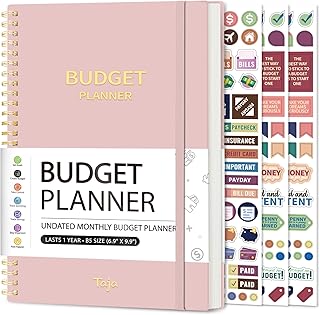
Rating: 4.6 stars
Price: $8.99
Why it helps: This undated planner includes bill organizer pages, expense tracker sheets, and goal-setting sections. Perfect for the step-by-step approach outlined above. The pink cover adds a touch of motivation.
NICOOTH Budget Binder with Zipper Envelopes

Rating: 4.6 stars
Price: $6.28
Why it helps: The A6 size fits in a purse, and the zipper envelopes let you use the envelope cash system without bulky folders. Ideal for people who need a portable, tactile budgeting tool.
SKYDUE Budget Binder with Expense Sheets

Rating: 4.7 stars
Price: $8.98
Why it helps: Comes pre-printed with budget sheets and cash envelopes. The highest-rated option on the list, it includes clear pockets for receipts and a zipper closure for security.
Budget Planner (Black)

Rating: 4.6 stars
Price: $8.99
Why it helps: Same content as the pink version but in a professional black cover. Great for those who prefer a neutral aesthetic.
Budgeting 101 Book (Adams 101 Series)

Rating: 4.6 stars
Price: $9.69
Why it helps: A compact guide covering all fundamentals—debt repayment, tracking expenses, savings strategies. Excellent for beginners or anyone wanting to understand the “why” behind budgeting.
5. How to Keep Your Fixed Budget From Breaking Again
You’ve diagnosed the issues, recalibrated the numbers, and chosen a tool. Now, how do you prevent the same cycle six months from now?
Review Your Budget Quarterly
Life changes—car payments end, new subscriptions appear, grocery prices rise. Every three months, sit down with your budget planner and compare your current spending to your budget. Adjust categories that are consistently over or under.
Allow a “Slush Fund” for Flexibility
A rigid budget snaps under pressure. Give yourself 5–10% of your income as unallocated “slush” money. This covers the unexpected without guilt—a friend’s birthday dinner, a surprise parking ticket, or an impulse want.
Celebrate Small Wins
Did you stay under budget for groceries three weeks in a row? Celebrate with a $10 coffee from your fun money. Positive reinforcement is crucial for long-term habit change. If you only focus on mistakes, your budget becomes a punishment.
Learn From Related Strategies
Deepen your skills by exploring other budgeting approaches. For example, if your income fluctuates, read about Budgeting on an Irregular Income: How to Plan When Your Paychecks Fluctuate. If you share finances with a partner, check out Couples Budgeting Guide: How to Combine Money Without Constant Fights.
6. Expert Insights on Fixing a Broken Budget
“The Budget Isn’t the Problem—It’s the Gap Between Your Values and Your Spending”
Dr. Brad Klontz, financial psychologist, argues that budgets fail when they don’t align with what you genuinely care about. If your budget says “no vacations” but you value experiences, you’ll rebel. Fix: Build a values-based budget. Learn more from Values-based Budgeting: How to Spend Guilt-free on What You Love.
“Track Your Time as Well as Your Money”
Tiffany Aliche (The Budgetnista) suggests that overspending often correlates with time poverty. When you’re rushed, you buy convenience (takeout, rideshares). If your budget is broken, audit your schedule first. Action: Batch meal prep on weekends to reduce food spending.
“Use the 24-Hour Rule for Non-Essential Purchases”
Ramit Sethi recommends a simple rule: wait 24 hours before buying anything over $50. This eliminates impulse purchases that bust budgets. Combine this with the envelope system for maximum effect.
7. What If You’ve Tried Everything? The Radical Reset
Sometimes a budget is so broken it needs a complete overhaul, not patches. Here’s the radical reset:
- Stop tracking for one month. Yes—stop. Spend as you normally would, but save every receipt.
- At month’s end, categorize every dollar. Use a blank notebook or a SKYDUE Budget Binder.
- Create a new budget based on that real data. No estimates, no wishful thinking.
- Start with only three categories: Needs, Wants, Savings. Keep it simple for the first 60 days.
- After two months, add subcategories (e.g., split Wants into Dining, Entertainment, Shopping).
This reset removes the shame of a broken system and lets your actual behavior guide the budget.
8. Common Myths That Keep Budgets Broken
Myth 1: “I need a strict budget to save money.”
Truth: Even a loose budget that accounts for fun helps more than a rigid one you abandon.
Myth 2: “Budgeting apps are better than paper.”
Truth: Both work. The best method is the one you’ll use. Physical binders offer mindfulness that apps can’t replace.
Myth 3: “I don’t earn enough to budget.”
Truth: Budgeting is even more critical when income is tight. It helps you prioritize essentials. Read How to Build a Budget When You’re Living Paycheck to Paycheck? for actionable steps.
Myth 4: “I’ll fix my budget next month.”
Truth: Procrastination costs money. Start today—even if it’s just writing down three categories.
9. Quick Reference: Signs and Fixes Table
| Sign of a Broken Budget | Immediate Action | Long-Term Change |
|---|---|---|
| Overspending same categories monthly | Adjust the category limit to match real spending | Track for 30 days before resetting |
| Feeling anxious when thinking about money | Simplify to a one-page budget or envelope system | Try a NICOOTH Budget Binder for tactile ease |
| Savings never funded | Automate a small transfer (even $20) on payday | Build a sinking fund for irregular expenses |
| Quit tracking after two weeks | Choose a method that takes <15 min/day | Use a Budget Planner with prompts |
| Going into debt for non-emergencies | Cut up credit cards temporarily, use cash only | Enroll in a course like Beginner’s Budgeting Blueprint |
10. Advanced: Fixing a Budget for High Earners
If you earn a solid income but still feel broke, your broken budget likely stems from lifestyle creep and lack of intentionality. The fix:
- Use a percentage-based budget (e.g., 50/30/20) but set a cap on the “wants” category.
- Track “discretionary” spending in real-time with a Budgeting 101 book framework.
- Set up separate accounts for fixed expenses, guilt-free spending, and long-term savings.
For a deeper dive, read Advanced Budgeting Techniques for High Earners Who Still Feel Broke.
11. How to Get Back on Track After a Financial Setback
Medical bills, job loss, or emergency repairs can blow any budget. When that happens:
- Pause all non-essential spending for two weeks.
- Renegotiate bills (phone, internet, insurance) immediately.
- Use a bare-bones budget with only housing, food, transport, and minimum debt payments.
- Once stable, rebuild using a SKYDUE Budget Binder to regain control.
Expert Tip: Keep a “recovery plan” in your budget binder—a page with the steps above. It reduces panic during emergencies.
12. The Power of Community and Accountability
Fixing a broken budget alone is tough. Share your goal with a friend or join an online group. Many people find success with budgeting challenges—like “no-spend January” or “cash-only month.” For couples, read Couples Budgeting Guide: How to Combine Money Without Constant Fights.
Even using a Budget Planner with friends who also use one creates a shared accountability system.
13. Frequently Asked Questions (FAQ)
How do I know if my budget is broken vs. just needs adjusting?
A broken budget consistently fails within the first two weeks, causes stress, or gets abandoned. An adjusting budget may have one or two categories off each month but still provides a sense of control.
What should I do first to fix a broken budget?
Stop using the current system and track your actual spending for 7–14 days. Then, create a new budget based on that data. Do not guess or rely on old assumptions.
Can I use a budget app alongside a physical planner?
Yes. Many people use an app for real-time tracking (e.g., EveryDollar, YNAB) and a physical binder like the NICOOTH Budget Binder for weekly reviews. Choose the combination that feels most natural.
How long does it take to fix a broken budget?
Most people see improvement within two months if they actively follow a revised system. Full habit change—without slips—often takes 3–6 months.
What if my spouse won’t follow the budget?
Start with your own spending. Track your personal categories and model the behavior. Then gently invite your spouse to a weekly “money date.” Force doesn’t work; collaboration does.
Is it better to pay off debt before building savings while fixing a budget?
Financial experts often recommend a “baby steps” approach: save a $1,000 starter emergency fund, then attack high-interest debt, then build savings. A broken budget usually needs both a small buffer and a debt plan.
Should I include irregular expenses (car insurance, holidays) in my monthly budget?
Yes—divide annual costs by 12 and set aside that amount each month. Use a SKYDUE Budget Binder envelope system to hold that cash or earmark it in a separate savings account.
Can I fix a broken budget if I have irregular income?
Absolutely. Use a “baseline budget” for your lowest month’s income, then allocate surplus months to savings and debt. Read Budgeting on an Irregular Income: How to Plan When Your Paychecks Fluctuate for details.
What’s the simplest budget method for someone who hates numbers?
The envelope system. Pull out cash for categories, put money in envelopes, and when the envelope is empty, you stop spending. The NICOOTH Budget Binder makes this easy.
How often should I revisit my budget?
Weekly for check-ins, monthly for category adjustments, quarterly for major reviews, and annually for a full reset.
Final Thought
A broken budget isn’t a personal failure—it’s a signal that something in your system needs to change. By recognizing the signs, recalibrating your numbers, choosing the right tools like the Budget Planner or NICOOTH Budget Binder, and building flexibility into your plan, you can turn your financial life around.
Start with one small change today—review one category. Then another. Before long, your budget will work for you, not the other way around.
For more foundational strategies, explore Beginner’s Budgeting Blueprint: How to Take Control of Your Money in 30 Days.
This article contains affiliate links. If you purchase through these links, we may earn a small commission at no extra cost to you.