 Insurance Curator
 You share a life, a home, and maybe even children, but if you’re not married, the law treats you as legal strangers when it comes to inheritance, medical decisions, and finances. Without a solid estate plan, your partner could be left out in the cold during a crisis.
Estate planning for unmarried couples is not a luxury—it’s a necessity. Married partners automatically inherit certain rights, but unmarried partners must proactively create those protections. The good news: you can build a legally binding safety net with the right documents, strategies, and resources. Books like Living Trusts, Wills & Estate Planning for Seniors – The Complete 3-in-1 Guide and Nolo’s Guide to Estate Planning can walk you through every step.
Why Unmarried Couples Cannot Afford to Skip Estate Planning
The law does not recognize unmarried partners—even long-term ones—as next of kin. If you die without a will (intestate), your assets go to blood relatives, not your partner. If you become incapacitated, your partner may not be allowed to visit you in the hospital or make medical decisions for you.
Key risks unmarried couples face without an estate plan:
- Your partner could inherit nothing from your estate.
- Your partner might lose the home you own together.
- Your partner may be denied access to your bank accounts or insurance payouts.
- End-of-life decisions could be made by family members who don’t respect your wishes.
These aren’t just theoretical problems—they happen every day. A comprehensive estate plan bridges the gap between your private commitment and public legal recognition.
Essential Legal Documents Every Unmarried Partner Needs
Last Will and Testament
A will is the foundation of your estate plan. It tells the court who should receive your property after you die. For unmarried couples, a will is critical because without it, your state’s intestacy laws dictate that your partner receives nothing.
What a will should include for unmarried couples:
- Explicitly name your partner as a beneficiary.
- Appoint your partner as executor (or alternate executor).
- Name guardians for any minor children you have together.
- Specify any specific bequests (heirlooms, vehicles, etc.).
Important note: A will goes through probate, which can be time-consuming and public. Still, it’s better than having no instruction at all.
Living Trust
A living trust offers more privacy and control than a will. Assets transferred into the trust avoid probate, meaning your partner can access them quickly after your death. Trusts are especially valuable for unmarried couples because they keep your affairs out of the public record and reduce the chance of family disputes.
Consider a revocable living trust—you retain control during your lifetime, and upon death, your successor trustee (likely your partner) takes over seamlessly.
For a step-by-step guide on creating a trust, Living Trusts + Wills, Retirement, Tax & Estate Planning – The 6-in-1 Guide includes forms and instructions specifically designed for couples.
Durable Power of Attorney
A durable power of attorney (POA) allows your partner to manage your financial affairs if you become incapacitated. Without this document, your partner cannot pay your bills, access your accounts, or manage your investments—even if you share a household.
Two types of financial POA:
| Type | Purpose |
|---|---|
| Immediate POA | Takes effect as soon as you sign it. |
| Springing POA | Takes effect only after a doctor declares you incapacitated. |
For unmarried couples, a springing POA is often preferred because it activates only when needed, but immediate POAs work well if there is mutual trust.
Healthcare Proxy and Living Will
A healthcare proxy (also called a medical power of attorney) designates your partner to make medical decisions for you when you cannot. A living will outlines your end-of-life wishes (e.g., whether to use life support).
These documents are vital because hospitals typically look to biological family for consent. Your partner may be shut out of critical conversations or decisions unless you have signed forms.
Pro tip: Keep copies of your healthcare proxy and living will in your wallet or a readily accessible place, and notify your primary care doctor.
Beneficiary Designations and Property Ownership
Even with a will or trust, certain assets pass directly to named beneficiaries outside of probate. These include life insurance policies, retirement accounts (401(k), IRA), payable-on-death (POD) bank accounts, and transfer-on-death (TOD) brokerage accounts.
Steps to protect your partner through beneficiary designations:
- Update all beneficiary forms to name your partner as primary beneficiary.
- Name a contingent beneficiary (often your partner again, or a trust) in case the primary predeceases you.
- Review designations annually, especially after major life changes.
Real-estate ownership strategies:
- Joint tenancy with right of survivorship: When one partner dies, the other automatically inherits the home. No probate needed.
- Tenancy in common: Each partner owns a specific share (e.g., 50/50). The share can be willed to someone else—potentially not your partner. Avoid this if you want your partner to inherit.
- Life estate: You retain the right to use the property during your lifetime, but ownership passes to your partner upon death.
Digital Estate Planning for Partners
Your online accounts, crypto wallets, photos, and subscriptions may have significant emotional or financial value. Without a plan, your partner may never gain access.
What to include in your digital estate plan:
- A list of all online accounts with usernames (not passwords initially—store those in a password manager).
- Instructions for each account (close, memorialize, or transfer).
- Access keys for cryptocurrency and NFT wallets.
- Digital asset executor designation in your will or trust.
For a practical organizer that covers digital and physical assets, the I’m Dead, Now What? Planner gives your partner a comprehensive checklist of everything they’ll need to manage after you’re gone.
Digital estate planning is a growing field. Read more about it in our dedicated guide: Digital Estate Planning: How to Secure Online Accounts, Crypto, and Digital Assets.
Tax Considerations for Unmarried Couples
Unmarried couples do not get the unlimited marital deduction that married couples enjoy. This means:
- Estate taxes may apply to assets you leave your partner if your estate exceeds the federal exemption ($13.61 million in 2024, but state thresholds can be much lower).
- Gift taxes apply to transfers exceeding $18,000 per year (2024 limit) to your partner.
- Inherited IRA rules are less favorable for non-spousal beneficiaries—your partner may need to withdraw all funds within 10 years.
Strategies to minimize taxes:
- Use trusts to shelter assets from estate taxes.
- Gift assets to your partner over time within annual exclusion limits.
- Purchase life insurance owned by an irrevocable trust to provide tax-free funds.
For high-net-worth couples, advanced strategies like GRATs or QPRTs may be beneficial. See also: Estate Planning for High-net-worth Individuals: Strategies to Reduce Taxes and Risk.
How to Get Started with Estate Planning
Step 1: Gather your assets and liabilities. List bank accounts, investment accounts, real estate, vehicles, life insurance, debts, and digital assets.
Step 2: Discuss your wishes with your partner. Be clear about who gets what, who makes decisions, and who handles your estate.
Step 3: Choose your team. Decide on your executor, trustee, power of attorney, and healthcare proxy. Talk to each person first.
Step 4: Draft the documents. You can use a DIY service, a book, or hire an attorney. A comprehensive guide like Living Trusts, Wills & Estate Planning for Seniors – The Complete 3-in-1 Guide includes ready-to-use forms for wills, trusts, and powers of attorney.
Step 5: Execute properly. Sign your will in front of two witnesses (and a notary in some states). Fund your trust by retitling assets into the trust’s name.
Step 6: Store and share. Keep originals in a fireproof safe or with your attorney. Give copies to your partner, executor, and healthcare proxy.
Step 7: Review regularly. Update your plan after any major life change—moving to a new state, buying property, having a child, or changing jobs.
Common Mistakes Even Smart Couples Make
- Assuming common-law marriage applies. Only a handful of states recognize common-law marriage, and living together for X years does not automatically confer rights.
- Forgetting to update beneficiary designations. An old 401(k) beneficiary form naming your ex or parent will override your will.
- Owning property as tenants in common without a backup plan. If you die, your share goes to your heir, not your partner, potentially forcing a sale.
- Not having a living will. Leaving your partner without guidance on life support can cause emotional and legal battles with your family.
- Failing to name a guardian for children. Even if you intend for your partner to raise your children, a court may award custody to blood relatives unless you specify otherwise.
Avoid these pitfalls with a solid plan. For a straightforward overview, Estate Planning For Dummies is a reliable resource that explains complex topics in plain language.
Recommended Books and Resources
Living Trusts, Wills & Estate Planning for Seniors – The Complete 3-in-1 Guide

Price: $22.97 — Rating: 4.4 out of 5 stars
This guide includes fill-in-the-blank forms for wills and trusts, plus advice on avoiding probate and family drama. Perfect for couples who want a DIY solution with professional guidance.
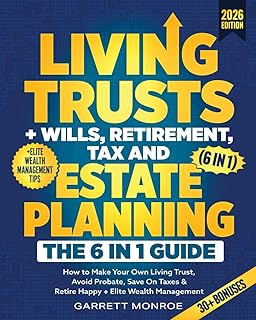
Living Trusts + Wills, Retirement, Tax & Estate Planning – The 6-in-1 Guide
Price: $24.97 — Rating: 4.5 out of 5 stars
A comprehensive, all-in-one resource that covers not just estate planning but also retirement and tax strategies. Especially useful for unmarried couples with significant assets.
Nolo’s Guide to Estate Planning

Price: $27.89 — Rating: 4.7 out of 5 stars
Nolo is a trusted name in legal self-help. This book provides clear, up-to-date explanations of wills, trusts, powers of attorney, and healthcare directives, plus state-specific details.
Estate Planning For Dummies

Price: $20.99 — Rating: 4.3 out of 5 stars
A beginner-friendly guide that breaks down complex estate planning concepts into digestible chapters. Great for couples who are starting from scratch.
I’m Dead, Now What? Planner

Price: $11.63 — Rating: 4.6 out of 5 stars
Not a legal document but an invaluable organizer. Fill it out with all your account numbers, passwords, final wishes, and contact information so your partner has everything in one place.
Frequently Asked Questions
Q1: Do unmarried partners have any inheritance rights without a will?
No. In most states, if you die without a will, your assets go to your closest blood relatives—parents, siblings, or children. Your unmarried partner inherits nothing unless specifically named in a will, trust, or beneficiary designation.
Q2: Can we create our own estate planning documents without a lawyer?
Yes, many couples successfully use DIY kits or books like Nolo’s guides. However, complex situations (blended families, high net worth, business ownership) may warrant professional legal advice. Learn more in our article: Estate Planning 101: a Beginner’s Roadmap to Protecting Your Family and Assets.
Q3: What happens if my partner becomes incapacitated and we have no power of attorney?
You would likely have to petition the court to become conservator or guardian—a costly, time-consuming process that may be contested by your partner’s family. Avoid this by signing a durable power of attorney and healthcare proxy.
Q4: How does life insurance fit into estate planning for unmarried couples?
Life insurance can provide immediate, tax-free cash to your partner. Name your partner as the beneficiary. For advanced planning, an irrevocable life insurance trust (ILIT) can keep the payout out of your taxable estate. Read more: How Life Insurance Fits into Your Estate Planning Strategy?.
Q5: Should we create a joint trust or separate trusts?
Most unmarried couples use separate revocable living trusts. Joint trusts are typically designed for married couples (with unlimited marital deduction). Separate trusts give each partner control and flexibility.
Q6: What about children from previous relationships?
Blended families require special care. A will or trust can ensure your partner is provided for while leaving a clear inheritance for your children. See: Blended Families and Estate Planning: Avoiding Inheritance Disputes Among Stepchildren.
Q7: Can my partner make medical decisions for me without a healthcare proxy?
Not legally. Without a signed healthcare proxy, hospitals defer to your closest biological relative. Only a signed document can grant your partner that authority.
Q8: How often should we update our estate plan?
Review your plan every two to three years, and immediately after major life events—moving to a new state, buying property, changing jobs, having children, or ending a relationship.