 Insurance Curator
 Estate planning isn’t just for the ultra-wealthy or the elderly. It’s a critical process for anyone who wants to protect their loved ones, preserve their assets, and ensure their final wishes are honored. Yet, despite its importance, many people make costly mistakes—or avoid planning altogether.
The good news? Most estate planning pitfalls are entirely preventable. By understanding the most common errors and taking proactive steps, you can create a plan that stands the test of time. In this guide, we’ll walk through the nine biggest mistakes people make and show you exactly how to sidestep them. Plus, we’ll share expert-recommended resources to help you get started—including Nolo’s Guide to Estate Planning, consistently rated one of the best estate planning books available.

Mistake #1: Not Having an Estate Plan at All
The Problem
More than half of American adults do not have a will or any estate planning documents. This leaves their assets to be distributed according to state intestacy laws—which may have nothing to do with their wishes. If you have minor children, the court will decide who raises them. If you have a blended family, stepchildren may be left with nothing.
How to Avoid It
The first step is simply starting. You don’t need a complex trust or a lawyer. A simple will, a durable power of attorney, and an advance healthcare directive cover the basics. For most people, a DIY approach using a reputable guide is perfectly sufficient.
Example:
Sarah, a 34-year-old single mother, died without a will. Her two children went into foster care temporarily while the court determined guardianship with her estranged sister. A simple will could have named her best friend as guardian and avoided the trauma.
Expert Insight:
“Procrastination is the number one estate planning mistake. A plan that is 80% complete is infinitely better than no plan at all.” — Kathleen N., Certified Estate Planner
Mistake #2: Choosing the Wrong Executor or Trustee
The Problem
Many people name a trusted family member as executor or trustee without considering their financial skills, emotional stability, or willingness to serve. This can lead to mismanagement, family conflict, and even legal challenges.
How to Avoid It
Look for someone who is organized, impartial, and capable of handling complex tasks. Consider a professional trustee (like a bank or trust company) if your estate is large or your family dynamics are complicated. Always name a backup.
Table: Executor vs. Trustee – Key Qualities to Consider
| Quality | Executor (Will) | Trustee (Trust) |
|---|---|---|
| Financial literacy | Important | Critical |
| Time availability | Moderate | High (ongoing) |
| Emotional detachment | Helpful | Essential |
| Age and health | Should be younger than you | Preferably younger |
| Willingness to serve | Discuss beforehand | Signed agreement |
Mistake #3: Overlooking Beneficiary Designations
The Problem
Retirement accounts, life insurance policies, and payable-on-death accounts pass directly to the named beneficiary—regardless of what your will says. If you forget to update these after a divorce, remarriage, or the birth of a child, your assets could go to the wrong person.
How to Avoid It
Review and update beneficiary designations every time you experience a major life event. Keep a list of all accounts with beneficiary forms and store it with your estate plan.
Statistics:
Nearly 40% of people have not updated their beneficiaries in the past five years. Outdated designations are a leading cause of estate litigation.
Mistake #4: Failing to Plan for Incapacity
The Problem
Estate planning isn’t just about what happens after death—it’s also about who makes decisions for you if you become incapacitated. Without a durable power of attorney and healthcare proxy, your family may have to go to court to gain control of your finances or medical care.
How to Avoid It
Execute a durable power of attorney for finances and an advance healthcare directive (living will). Name someone you trust implicitly, and discuss your wishes in advance.
Real-Life Scenario:
John, 58, suffered a stroke and was unable to communicate. Because he had no healthcare proxy, doctors had to wait weeks for a court-appointed guardian to approve a life-saving surgery. His wife, Mary, could only watch.
For a deeper dive on discussing these issues with aging parents, see our guide: How to Talk to Aging Parents About Estate Planning Without Causing Conflict?
Mistake #5: Ignoring Digital Assets
The Problem
Your online accounts—email, social media, banking, crypto, photo libraries—may have monetary or sentimental value. Without explicit instructions, your family may be locked out forever. Most state laws only recently began addressing digital asset access.
How to Avoid It
Create a digital estate plan. List all your accounts, passwords, and instructions for each. Store this securely and share access with your executor. Consider using a password manager.
Digital Assets to Include:
- Email accounts
- Social media profiles
- Cloud storage (Google Drive, iCloud)
- Cryptocurrency wallets and exchanges
- Online banking and investment portals
- Domain names and websites
- Subscription services (Netflix, Spotify, Patreon)
For a complete guide, read: Digital Estate Planning: How to Secure Online Accounts, Crypto, and Digital Assets
Mistake #6: Neglecting to Fund a Living Trust
The Problem
Many people create a revocable living trust but fail to transfer assets into it. If the trust isn’t funded, it’s essentially worthless—your assets will still go through probate.
How to Avoid It
After signing your trust, retitle assets such as real estate, bank accounts, and investment accounts into the name of the trust. For personal property, create a “pour-over will” that transfers any remaining assets into the trust at death.
Checklist for Trust Funding:
- Real estate deeds
- Bank and brokerage accounts
- Business interests
- Life insurance policies (if trust is beneficiary)
- Vehicle titles (in some states)
Consider using a comprehensive guide like Living Trusts, Wills & Estate Planning for Seniors (4.4 stars, $22.97) which includes forms and step-by-step instructions for funding your trust.

Mistake #7: Forgetting to Plan for Taxes (Especially Estate Tax)
The Problem
While federal estate tax exemptions are high ($12.92 million per person in 2024), many states impose their own estate or inheritance taxes at much lower thresholds. If your estate exceeds these limits, your heirs could lose a third or more to taxes.
How to Avoid It
Work with a tax professional or estate attorney to understand your state’s exemption. Use tools like credit shelter trusts, marital deductions, and lifetime gifting to reduce exposure.
State Estate Tax Thresholds (2024) – Sample:
| State | Exemption | Top Rate |
|---|---|---|
| Massachusetts | $1 million | 16% |
| Oregon | $1 million | 16% |
| Washington | $2.193 million | 20% |
| New York | $6.94 million | 16% |
| Connecticut | $7.2 million | 12% |
For high-net-worth strategies, see: Estate Planning for High-net-worth Individuals: Strategies to Reduce Taxes and Risk
Mistake #8: Not Reviewing and Updating Your Plan Regularly
The Problem
Life changes—marriage, divorce, births, deaths, moves, new laws. An estate plan created ten years ago may be completely outdated. Failing to review it can lead to unintended consequences.
How to Avoid It
Set a calendar reminder to review your estate plan annually. Update immediately after any major life event. At a minimum, revisit your will, trusts, beneficiary designations, and powers of attorney every three years.
Common Triggers for Updates:
- Marriage or divorce
- Birth or adoption of a child
- Death of a named executor/guardian/trustee
- Change in state residency
- Significant changes in asset value
- New tax laws
Mistake #9: Handling Blended Family Dynamics Poorly
The Problem
Blended families are increasingly common, yet many estate plans treat stepchildren and biological children unequally—or inadvertently disinherit one side. Without careful planning, second marriages can leave children from a first marriage with nothing.
How to Avoid It
Use a qualified terminable interest property (QTIP) trust to provide income to a surviving spouse while preserving assets for children from a prior marriage. Discuss intentions openly with all family members to reduce conflict.
Example:
Tom and Linda married later in life. Tom’s will left everything to Linda, expecting she would pass it to his children. But Linda later changed her will, leaving everything to her own children. Tom’s children received nothing. A QTIP trust could have prevented this.
For deep guidance, read: Blended Families and Estate Planning: Avoiding Inheritance Disputes Among Stepchildren
Recommended Estate Planning Resources
To help you get started or refine your plan, here are five highly rated books and tools. Each has been vetted by thousands of readers and experts.
| Product | Price | Rating | Best For |
|---|---|---|---|
| Nolo’s Guide to Estate Planning | $27.89 | 4.7 | Comprehensive legal reference |
| Living Trusts + Wills, Retirement, Tax & Estate Planning (6-in-1) | $24.97 | 4.5 | All-in-one financial & estate planning |
| Living Trusts, Wills & Estate Planning for Seniors (3-in-1) | $22.97 | 4.4 | Seniors and retirees |
| Estate Planning For Dummies | $20.99 | 4.3 | Beginners |
| I’m Dead, Now What? Planner | $11.63 | 4.6 | Organizing final details for loved ones |
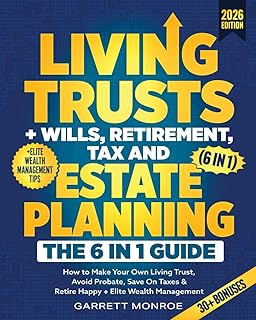
Each resource offers different strengths. The 6-in-1 guide covers retirement and tax planning in addition to estate planning—ideal if you want a holistic approach. The “I’m Dead, Now What?” planner is a simple but powerful tool to ensure your family can find everything they need after you’re gone.
Frequently Asked Questions About Estate Planning
Q: Do I need a lawyer to create an estate plan?
A: Not necessarily. Many people successfully create wills, trusts, and powers of attorney using DIY kits and books. However, if your estate is complex (business ownership, special needs dependents, large tax exposure), consulting an attorney is wise.
Q: How often should I update my estate plan?
A: At least every three years, and immediately after major life events like marriage, divorce, birth, death, or moving to another state.
Q: What happens if I die without a will?
A: Your assets go through probate and are distributed according to state intestacy laws—which often ignore your personal wishes. The court also appoints guardians for minor children.
Q: What is the difference between a will and a living trust?
A: A will takes effect after death and goes through probate. A living trust avoids probate, can manage assets during incapacity, and provides more privacy and control.
Q: Can I change my trust after it’s created?
A: Yes, if it’s a revocable living trust—the most common type. You can amend or revoke it at any time while you are mentally competent.
Q: What is a durable power of attorney?
A: It lets someone you choose manage your financial affairs if you become incapacitated. Without it, your family may need a court conservatorship.
Q: How do I name a guardian for my minor children?
A: You name a guardian in your will. Discuss it with the person first, and name an alternate in case your first choice cannot serve.
Q: Should I include life insurance in my estate plan?
A: Absolutely. Life insurance provides immediate liquidity to pay debts, taxes, and support beneficiaries. Learn more in our article: How Life Insurance Fits into Your Estate Planning Strategy?
Q: What is probate, and why should I avoid it?
A: Probate is the court-supervised process of distributing a deceased person’s assets. It’s public, time-consuming (often 6–18 months), and costly. Trusts and beneficiary designations help you avoid it.
Q: Can I disinherit a family member?
A: In most states, you can disinherit any adult child or relative, but you must explicitly state your intention. Spouses have elective share rights in many states and cannot be completely disinherited.
Q: What is an advance healthcare directive?
A: It’s a legal document that states your medical wishes (like end-of-life care) and appoints someone to make healthcare decisions for you if you cannot.
Q: What’s the best first step for someone new to estate planning?
A: Start with a basic will and powers of attorney. A resource like Estate Planning For Dummies (4.3 stars, $20.99) is a great primer.
Build a Plan That Protects What Matters Most
Estate planning doesn’t have to be overwhelming. By avoiding these common mistakes—and using trusted resources like the ones highlighted above—you can create a plan that provides peace of mind for you and security for your loved ones.
Start today, even if it’s just making a list of your assets and talking to your family. Every small step moves you closer to a complete, effective estate plan.
For more guidance, explore these related articles from our estate planning series:
- Estate Planning 101: a Beginner’s Roadmap to Protecting Your Family and Assets
- Essential Estate Planning Checklist for Families with Young Children
- Estate Planning for Unmarried Couples: Legal Steps to Protect Your Partner
- Estate Planning for Small Business Owners: Succession, Buy-sell Agreements, and Continuity
- Estate Planning for Special Needs Dependents: Protecting Benefits and Quality of Life
- Charitable Giving in Estate Planning: Smart Ways to Leave a Legacy That Lasts
- Estate Planning after Divorce or Remarriage: What You Must Update Immediately
- End-of-life Planning vs. Estate Planning: What Each Covers and Why You Need Both
- Estate Planning for Caregivers: Planning for Your Loved One and Yourself at the Same Time
This article is for educational purposes only and does not constitute legal advice. Consult with a qualified attorney for your specific situation.