 Insurance Curator
 Your home is more than a roof over your head—it’s often your single largest financial asset. But when lawsuits, medical bills, or creditor claims strike, can your home survive the storm? That’s where homestead exemptions step in. These state-level laws shield a portion of your home equity from forced sale by judgment creditors, forming a cornerstone of any serious asset protection and estate planning strategy.
Yet most homeowners misunderstand what this shield actually covers. Some think it makes their home completely untouchable; others assume it’s automatic and covers every situation. The truth is far more nuanced. In this comprehensive guide, we’ll dissect homestead exemptions state by state, reveal exactly which creditors can still break through, and show you how to layer this protection with trusts, LLCs, and insurance to build an ironclad estate plan.
What Is a Homestead Exemption? The Legal Foundation
A homestead exemption is a legal provision that protects a designated amount of equity in your primary residence from attachment by unsecured creditors. The concept dates back to early American frontier law, designed to keep families from losing their homes to debt collectors. Today, every state offers some form of homestead protection—but the rules, dollar amounts, and acreage limits vary wildly.
Key things a homestead exemption typically does:
- Prevents forced sale of your home to satisfy most unsecured debts
- Reduces your property’s taxable assessed value (in many states for property tax purposes)
- Protects surviving spouses and minor children from losing the home after the owner’s death
- Provides a “fresh start” by keeping a roof over your head even in bankruptcy
However, a homestead exemption is not a blanket amnesty from all debts. It won’t stop foreclosure by your mortgage lender, prevent tax liens, or shield you from child support obligations. Understanding these boundaries is essential for effective estate planning.
Homestead Exemption Amounts: The Wild Spectrum Across States
No two states treat homestead exemptions the same. Some offer unlimited protection; others cap equity at a few thousand dollars. If you’re serious about asset protection, you must know where your state falls.
| State | Homestead Exemption Limit | Key Notes |
|---|---|---|
| Texas | Unlimited (no dollar cap) | Covers up to 10 acres urban, 100/200 acres rural |
| Florida | Unlimited | Up to 160 acres rural, 0.5 acre urban |
| Oklahoma | Unlimited | Up to 1 acre urban, 160 acres rural |
| Kansas | Unlimited | Up to 1 acre urban, 160 acres rural |
| California | $300,000 – $600,000+ | Amount depends on county median and homeowner status |
| New York | $89,975 – $179,950 | Varies by county; higher in NYC |
| Illinois | $15,000 | Joint owners may double to $30,000 |
| New Jersey | $32,800 (as of 2025) | Adjusted periodically |
| Connecticut | $75,000 | $150,000 for joint filers |
| Colorado | $25,000 (after 2023 changes) | $75,000 for certain elderly/disabled |
Unlimited exemption states (Texas, Florida, Oklahoma, Kansas) offer the most powerful protection—no matter how much equity you have, creditors can’t force a sale of your primary home for most debts. In contrast, states like Illinois ($15,000) provide only a fragile shield that high-equity homeowners can quickly outgrow.
Important: Homestead exemption amounts are periodically adjusted for inflation. Always verify the current limit with your state’s property tax or judicial website before making planning decisions.
What Your Home Shield Actually Covers—And What It Doesn’t
Homestead exemptions are powerful, but they have explicit gaps. Creditors that can still reach your home equity include:
Typically NOT protected against:
- Mortgage lenders – A homestead exemption doesn’t stop foreclosure if you default on your mortgage or home equity loan.
- Tax liens – The IRS and state tax authorities can attach and force sale of your home for unpaid federal or state taxes.
- Child support and alimony – Family support obligations routinely pierce homestead protection.
- Mechanics’ liens – Contractors who performed work on your home (unpaid) can file a lien and foreclose.
- Purchase money debts – Some states allow a forced sale if the debt was used to buy or improve the home itself.
What IS generally protected:
| Protected Against | Explanation |
|---|---|
| Credit card judgments | Unsecured creditors can’t force a sale |
| Medical debt collectors | Same protection against civil judgments |
| Personal injury lawsuits | Unless intentional tort or DUI (varies by state) |
| Business debts (sole proprietor) | Personal residence shielded if properly separated |
| Most contract defaults | Applies to non-mortgage related judgments |
The catch: timing matters. In many states, you must file a homestead declaration before the creditor obtains a judgment. Filing after the fact can be treated as a fraudulent transfer. This is a critical asset protection mistake to avoid—we’ve covered the full list of Critical Asset Protection Mistakes That Can Backfire and Trigger Legal Trouble in another article.
How Homestead Exemptions Fit Into a Comprehensive Estate Plan
Asset protection for your home isn’t a single tool—it’s a coordinated strategy. Homestead exemptions work best when paired with:
1. Revocable Living Trusts
Placing your home in a revocable living trust does not remove it from asset protection. In most states, the trust still qualifies as your primary residence for homestead purposes. But a trust helps avoid probate and keeps your heirs from needing court approval to sell the home.
Two of the most trusted estate planning resources on Amazon cover this exact interplay:

Living Trusts, Wills & Estate Planning for Seniors – The Complete 3-in-1 Guide – A top-rated (4.4 stars) guide that walks you through using trusts without expensive lawyers, while preserving your homestead exemption. It includes actual will and trust forms.

Nolo’s Guide to Estate Planning – Widely considered the gold standard (4.7 stars), this book explains how to integrate homestead exemptions with living trusts, powers of attorney, and health care directives.
2. LLCs and Corporations
If you own rental properties or a business, keeping your personal residence in a separate LLC adds another layer. Homestead exemptions apply to your primary home; but moving title to an LLC can sometimes complicate the exemption. Always consult a local attorney before transferring your home to an entity. For a deeper dive, read our guide on How to Use LLCs and Corporations for Personal Asset Protection?
3. Umbrella Insurance
A homestead exemption protects against unsecured creditors, but it doesn’t pay the underlying judgment. If you’re sued for $500,000 and the exemption caps equity at $200,000, the creditor can still take everything above that cap. Umbrella insurance steps in to cover the gap. See How Insurance Fits into an Asset Protection Plan for a full breakdown.
4. Prenuptial and Postnuptial Agreements
Marriage significantly impacts homestead rights. In community property states, a spouse may have a forced sale claim that overrides the exemption. Prenuptial agreements can define ownership and limit exposure. Our article on Prenuptial and Postnuptial Agreements as Asset Protection Strategies explores this in detail.
Real-World Examples: When the Shield Holds—And When It Breaks
Scenario A: Unlimited Exemption State (Texas)
Facts: Mary owns a home in Austin worth $1.2 million with $800,000 in equity. She is in a car accident and sued for $1 million in damages beyond her auto insurance limits. The judgment creditor attempts to force a sale of her home.
Result: Mary’s Texas homestead exemption is unlimited. The creditor cannot force the sale or attach a lien on the home. Her home is fully protected—provided she filed a homestead declaration before the lawsuit (Texas allows permissive filing, but it’s wise to do so).
Scenario B: Limited Exemption State (Illinois)
Facts: John owns a home in Chicago worth $400,000 with $200,000 in equity. He defaults on a $50,000 business loan, and the creditor obtains a judgment. Illinois homestead exemption is $15,000 ($30,000 for joint).
Result: John’s $200,000 equity far exceeds the $15,000 exemption. The creditor can force a sale, pay John $15,000 (homestead proceeds), satisfy the judgment from the remaining equity, and give John the leftover. He loses his home.
Lesson: In limited-exemption states, high-equity homeowners must use additional strategies—like a qualified personal residence trust (QPRT) or moving to a more protective state—to avoid losing everything.
Homestead Exemptions in Bankruptcy: Chapter 7 vs. Chapter 13
When financial disaster strikes, bankruptcy becomes a central estate planning tool. Homestead exemptions play a starring role.
Chapter 7 (Liquidation)
In Chapter 7, the bankruptcy trustee can sell nonexempt assets to pay creditors. Your home is exempt up to the homestead limit. If you live in a state with an unlimited exemption (like Florida or Texas), you can keep your entire home equity—even if you file for bankruptcy. However, there is a caveat: the 2005 Bankruptcy Act imposed a 40-month lookback. If you moved to that state and bought the home within 40 months before filing, the exemption is capped at $189,050 (2025 amount). This prevents “homestead tourism.”
Chapter 13 (Reorganization)
Under Chapter 13, you must pay unsecured creditors at least the amount of your nonexempt equity. A high homestead exemption lowers your plan payment. For example, if your equity is $100,000 and your state exempts $50,000, you must pay at least $50,000 to creditors over the plan term.
For seniors especially, bankruptcy planning intersects with long-term care needs. See our resource on Asset Protection for Seniors Entering Long-term Care to understand how homestead exemptions can help protect a home from Medicaid estate recovery.
How to Properly Claim Your Homestead Exemption
Many homeowners assume the exemption is automatic—it’s not. Most states require affirmative action to perfect the protection.
General steps (check your state’s specific requirements):
- File a homestead declaration with the county recorder or property tax office.
- Provide proof of residency (driver’s license, voter registration, utility bills).
- Meet acreage limits (urban vs. rural) – Florida caps urban homesteads at 0.5 acre; rural at 160 acres.
- Re-file after moving to a new property.
- Update after marriage or divorce to reflect ownership changes.
Failure to file on time can leave your home exposed. In states like California, the exemption is applied automatically for property tax purposes, but the creditor protection requires a declaration.
Common Myths About Homestead Exemptions
Let’s clear up three persistent misconceptions:
Myth 1: “My home is 100% shielded from everything.”
False—mortgage lenders, tax collectors, and child support agencies can still reach it.
Myth 2: “I don’t need to file anything.”
In many states (e.g., Texas, Florida), protection is automatic without filing, but filing provides extra evidence. In states like Kansas, you must record a declaration for full protection.
Myth 3: “If I move to Florida, all my home equity is instantly protected.”
Partial truth—the 40-month lookback limits exemptions for recent movers in bankruptcy. Also, creditors with pre-existing judgments may still enforce them.
To avoid dangerous planning errors, read Critical Asset Protection Mistakes That Can Backfire and Trigger Legal Trouble.
Additional Resources for Deeper Estate Planning
Mastering homestead exemptions is just one piece of the puzzle. For a complete estate plan, consider these highly rated books:
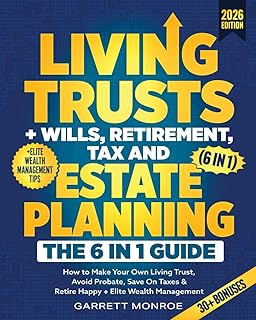
Living Trusts + Wills, Retirement, Tax & Estate Planning – The 6-in-1 Guide – With a stellar 4.5 rating, this covers asset protection, retirement strategies, and wealth management in one comprehensive toolkit.

Estate Planning For Dummies – A practical, no-nonsense introduction (4.3 stars) that explains homestead exemptions in plain language.

I’m Dead, Now What? Planner – While primarily an organizer (4.6 stars), it helps you document your homestead property, insurance policies, and creditor instructions for your executor.
Homestead Exemptions vs. Other Asset Protection Tools: A Quick Comparison
| Tool | Protection Level | Cost | Best For |
|---|---|---|---|
| Homestead Exemption | Strong (varies by state) | Free (filing fee) | Primary residence equity |
| Domestic Asset Protection Trust | Very strong | $2,000–$5,000 setup | High-net-worth individuals |
| LLC | Moderate | $500–$1,500 setup | Business and rental properties |
| Umbrella Insurance | Judgment payment | $200–$500/year | Liability coverage |
| Retirement Accounts (IRA/401k) | Very strong (federal) | None | Long-term savings |
Homestead exemptions are the only tool that costs nothing to implement (aside from a small filing fee) yet can protect unlimited equity in certain states. For comprehensive coverage, combine with umbrella insurance and a trust. Our article on Asset Protection Basics: Legal Ways to Shield Your Wealth from Lawsuits and Creditors provides a full framework.
FAQs—Homestead Exemptions and Asset Protection
What is a homestead exemption in simple terms?
A homestead exemption protects a certain amount of equity in your primary home from being taken by creditors to satisfy debts. It prevents forced sale of the home to pay most unsecured judgments.
Does a homestead exemption protect against credit card debt?
Yes, in most cases. Credit card companies are unsecured creditors, so they cannot force the sale of your home if your equity falls within the state exemption limit. You may still owe the debt, but your home stays safe.
How do I claim a homestead exemption?
You typically file a “homestead declaration” with your county recorder or property tax assessor. Requirements vary by state—some automatically apply it for property taxes. Check your local county clerk’s office.
Can I lose my homestead exemption if I move?
Yes. The exemption applies only to your primary residence. When you move, you must establish a new homestead on your new home. Some states require a new declaration.
Is a homestead exemption the same as a property tax exemption?
Not exactly. Many states use the same term for a property tax reduction (e.g., Texas gives a $40,000 school tax exemption), but the asset protection exemption is a separate legal concept. Some states combine them; others treat them independently.
Does a homestead exemption protect against divorce?
No. Divorce is not a creditor situation. Your spouse’s claims for equitable distribution or child support are not blocked by a homestead exemption. State family law governs division of the home.
Can I have more than one homestead exemption?
No—you can only designate one primary residence as your homestead. You cannot claim exemptions on a vacation home or rental property.
What happens to the homestead exemption when I pass away?
The exemption typically protects the home for your surviving spouse and minor children. For other heirs, the property may lose its exemption and become subject to creditor claims in probate. A trust can help preserve protection. Learn about Asset Protection Planning for Inherited Wealth.
Final Thoughts: Your Home, Your Strategy
Homestead exemptions are one of the most powerful and affordable asset protection tools available—but they are not a standalone solution. Understanding your state’s caps, filing requirements, and creditor exceptions is the first step. From there, integrate your homestead protection with a living trust, umbrella insurance, and proper business entity structuring.
Whether you’re a Texas homeowner with unlimited protection or an Illinois resident with a $15,000 cap, the principles are the same: plan early, document everything, and never treat your home’s shield as impenetrable. For estate planning professionals and DIY planners alike, the resources above offer the depth you need to secure what matters most.
Disclaimer: This article is for informational purposes only and does not constitute legal advice. Always consult a licensed attorney or estate planning professional in your jurisdiction before implementing asset protection strategies.