 Insurance Curator
 Estate planning isn’t just for the wealthy or the elderly. It’s a crucial step for anyone who wants to protect their loved ones and ensure their wishes are honored. If you’re new to the concept, you might feel overwhelmed by the legal jargon and endless options. This guide breaks down everything you need to know in simple, actionable terms.
Think of estate planning as creating a safety net for your family. It covers who gets your property, who makes decisions if you become incapacitated, and how your legacy is passed down. Even if you don’t own a home or have a large bank account, a basic estate plan can save your family from costly court battles and emotional stress. In fact, a recent survey found that only 33% of American adults have a will or living trust—leaving millions of families vulnerable.
To help you get started, we’ve reviewed top resources like the comprehensive Living Trusts, Wills & Estate Planning for Seniors – The Complete 3-in-1 Guide (4.4 stars, $22.97) and the highly rated Nolo’s Guide to Estate Planning (4.7 stars, $27.89). These books can walk you through the process step by step, even if you’re starting from zero.
What Is Estate Planning? (And What It Covers)
At its core, estate planning is the process of arranging for the management and transfer of your assets after your death or during incapacity. It goes beyond just writing a will. A complete plan typically includes:
- A Last Will and Testament – directs how your property is distributed
- A Living Trust – helps avoid probate and provides more control
- Power of Attorney – lets someone manage your finances if you can’t
- Healthcare Directive – states your medical wishes and appoints a proxy
- Beneficiary Designations – for life insurance, retirement accounts, and payable-on-death accounts
- Guardianship nominations – for minor children
Estate planning also covers digital assets like social media accounts, crypto wallets, and online subscriptions. As our lives move online, including these in your plan is non-negotiable. For more on that, see our guide on Digital Estate Planning: How to Secure Online Accounts, Crypto, and Digital Assets.
Why Every Beginner Needs an Estate Plan Right Now
Many people put off estate planning because they think it’s too complicated, expensive, or something to deal with “later.” But here’s the truth: death and incapacity are unpredictable. Without a plan, state laws (called “intestacy laws”) decide who inherits your assets—and it may not be who you’d choose.
Consider this: If you have young children and both parents pass away without naming a guardian, a court will decide who raises them. That could lead to years of custody battles. An estate plan prevents this chaos.
Additionally, estate planning can save your family thousands of dollars in probate fees, legal costs, and estate taxes. Even a basic will can cost under $200 to create, while the probate process without a plan can eat up 3%–7% of your estate’s value.
For families with young children, a detailed checklist is essential. Read our Essential Estate Planning Checklist for Families with Young Children to ensure you haven’t missed key steps.
Core Documents in an Estate Plan: A Deep Dive
Last Will and Testament
A will is the foundation of most estate plans. It allows you to name beneficiaries for your property and appoint a guardian for minor children. However, wills go through probate—a public court process that can take months and cost money. If you own property in multiple states, probate can become even more complex.
When you need a will: If your assets are straightforward (e.g., a house, a car, bank accounts) and you don’t mind the probate process, a will may be sufficient.
Living Trust
A living trust lets you transfer ownership of your assets into a trust while you’re alive. You can act as the trustee yourself. When you die or become incapacitated, a successor trustee takes over. The biggest benefit: avoiding probate. Trusts are private, flexible, and can handle complex family situations like blended families or special needs dependents.
Many beginners choose a revocable living trust because it can be changed anytime. The book Living Trusts, Wills & Estate Planning for Seniors – The Complete 3-in-1 Guide (4.4 stars) includes fill-in-the-blank trust forms and step-by-step instructions to set one up without a lawyer.
Power of Attorney
A Durable Power of Attorney (financial) authorizes someone to manage your bank accounts, pay bills, and handle investments if you become mentally or physically incapacitated. Without it, your family may need to go to court to get a conservatorship—an expensive and time-consuming process.
Healthcare Directive (Living Will)
This document spells out your wishes regarding life-sustaining treatment, pain management, and end-of-life care. It also lets you name a healthcare proxy to make decisions when you cannot. Combining this with a living will ensures your medical team follows your preferences.
Beneficiary Designations
Many assets—like life insurance policies, 401(k)s, and IRAs—pass directly to the person you name as beneficiary, regardless of what your will says. Keep these designations up to date, especially after marriage, divorce, or the birth of a child. Forgetting to update them is one of the Common Estate Planning Mistakes People Make—and How to Avoid Them.
How to Create an Estate Plan: Step-by-Step Roadmap
Step 1: Take Inventory of Your Assets and Liabilities
Make a list of everything you own—real estate, bank accounts, investments, retirement accounts, life insurance, vehicles, jewelry, digital assets, and business interests. Also list your debts (mortgage, credit cards, loans). This will help you decide what needs to be included in your estate plan.
Step 2: Define Your Goals and Family Situation
Ask yourself:
- Who should inherit my property?
- Who will manage my finances if I can’t?
- Who will make medical decisions?
- Who will care for my children?
- Do I have a special needs dependent or a blended family?
- Do I want to minimize estate taxes or support a charity?
Your answers will determine which documents you need.
Step 3: Choose Your Key People
Select trustworthy individuals to serve as:
- Executor of your will (or trustee of your trust)
- Agent under power of attorney
- Healthcare proxy
- Guardian for minor children
Discuss these roles with the people you choose to ensure they’re willing.
Step 4: Draft the Documents
You can create an estate plan using online tools, DIY books, or an attorney. For many beginners, a combination works best. Resources like Estate Planning For Dummies (4.3 stars, $20.99) provides clear guidance, while Living Trusts + Wills, Retirement, Tax & Estate Planning – The 6-in-1 Guide (4.5 stars, $24.97) offers a broader wealth management perspective.
If your situation is complex—like owning a business or having a child with special needs—consult an estate planning attorney.
Step 5: Sign and Notarize
Most documents must be signed in front of witnesses and a notary public to be valid. Follow your state’s requirements exactly. For digital documents, electronic signatures may be acceptable in some states.
Step 6: Fund Your Trust (If You Created One)
A trust only works if you actually transfer assets into it. This means retitling your home, bank accounts, and investments under the trust’s name. Many people forget this step, which renders the trust ineffective.
Step 7: Store Your Documents Safely—and Tell Someone Where They Are
Keep originals in a fireproof safe or with your attorney. Let your executor or trustee know where to find them. Also consider giving a copy to your healthcare proxy.
Step 8: Review and Update Regularly
Life changes—marriage, divorce, birth, death, relocation, or changes in financial status—should trigger a review of your estate plan. Aim to update it every 3–5 years or after any major life event.
Common Mistakes Beginners Make (and How to Avoid Them)
Even well-intentioned plans can fail if certain pitfalls aren’t avoided. Here are the most frequent errors:
| Mistake | Consequence | Solution |
|---|---|---|
| Not creating any plan | State decides distribution, possible guardianship court | Start with a simple will or trust today |
| Forgetting to update beneficiaries | Ex-spouse or old friend inherits assets | Review beneficiary forms annually |
| Using only a will for minor children | No guardian named; court decides | Explicitly name guardian in will |
| Not funding a trust | Trust is empty; assets still go through probate | Retitle assets into trust |
| Overlooking digital assets | Family can’t access online accounts or crypto | Include a digital executor clause |
For a deeper look at these and other pitfalls, read Common Estate Planning Mistakes People Make—and How to Avoid Them.
Estate Planning for Different Life Situations
Estate planning isn’t one-size-fits-all. Your plan should reflect your unique family structure, assets, and goals. Below are some common scenarios and how to tailor your approach.
For Blended Families
Stepchildren often have no legal inheritance rights unless you specifically include them. A trust can ensure your spouse is cared for during their lifetime while preserving assets for children from a previous marriage. For more strategies, see Blended Families and Estate Planning: Avoiding Inheritance Disputes Among Stepchildren.
For High-Net-Worth Individuals
If your estate exceeds the federal estate tax exemption (currently $13.61 million per individual, indexed for inflation), consider advanced strategies like marital trusts, charitable remainder trusts, and GRATs. Learn more in Estate Planning for High-net-worth Individuals: Strategies to Reduce Taxes and Risk.
For Small Business Owners
Your business is likely your largest asset. A succession plan, buy-sell agreement, and life insurance on key partners can ensure continuity. Read Estate Planning for Small Business Owners: Succession, Buy-sell Agreements, and Continuity.
For Unmarried Couples
Without marriage, your partner has no automatic inheritance rights. A will, trust, and cohabitation agreement are essential. See Estate Planning for Unmarried Couples: Legal Steps to Protect Your Partner.
For Families with Special Needs Dependents
A special needs trust allows you to provide for a disabled loved one without disqualifying them from government benefits like Medicaid or SSI. Detailed guidance is in Estate Planning for Special Needs Dependents: Protecting Benefits and Quality of Life.
Top Estate Planning Resources to Get You Started
To make the process easier, consider using a trusted guidebook. The following products offer clear instructions, forms, and checklists—ideal for beginners who want to avoid costly lawyer fees.

Living Trusts, Wills & Estate Planning for Seniors – The Complete 3-in-1 Guide
Rating: 4.4 ⭐ | Price: $22.97
Perfect for seniors and beginners alike, this book includes fillable will and trust forms plus plain-language explanations. It covers how to avoid probate, minimize family drama, and handle end-of-life decisions.
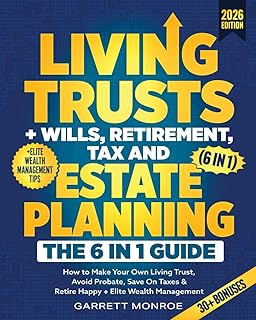
Living Trusts + Wills, Retirement, Tax & Estate Planning – The 6-in-1 Guide
Rating: 4.5 ⭐ | Price: $24.97
A comprehensive resource that goes beyond estate planning into retirement and tax strategies. Ideal for the DIY planner who wants a holistic view of wealth management.

Nolo’s Guide to Estate Planning
Rating: 4.7 ⭐ | Price: $27.89
Written by an attorney, this is the gold standard for DIY estate planning. It covers wills, trusts, avoiding probate, and planning for retirement, with state-specific information.

Estate Planning For Dummies
Rating: 4.3 ⭐ | Price: $20.99
If you prefer a lighthearted, easy-to-digest approach, this book breaks down complex concepts into bite-sized pieces. Great for absolute beginners.

I’m Dead, Now What? Planner
Rating: 4.6 ⭐ | Price: $11.63
Not a legal document, but an essential organizational tool. It helps you record all your accounts, passwords, final wishes, and important information in one place so your loved ones can find it easily.
The Role of Life Insurance in Your Estate Plan
Life insurance is often the engine that funds an estate plan. It provides immediate cash to pay off debts, funeral costs, and estate taxes, and can support your family’s income if you die unexpectedly. Proceeds generally pass outside of probate if you name a beneficiary correctly.
For a detailed breakdown, see How Life Insurance Fits into Your Estate Planning Strategy?. Also, if you’re caring for a loved one while planning for yourself, our guide Estate Planning for Caregivers: Planning for Your Loved One and Yourself at the Same Time offers dual-focused strategies.
End-of-Life Planning vs. Estate Planning: What’s the Difference?
Many people confuse funeral planning with estate planning. End-of-life planning focuses on medical wishes, palliative care, and final arrangements (like prepaid funerals and organ donation). Estate planning handles financial assets, legal documents, and inheritance.
Both are important, but they serve different purposes. Get clarity in End-of-life Planning vs. Estate Planning: What Each Covers and Why You Need Both.
How to Talk to Aging Parents About Estate Planning
One of the hardest conversations is asking your parents about their estate plan. They may resist because they see it as morbid or invasive. Use empathy, share your own planning, and frame it as a way to protect the family. Our article How to Talk to Aging Parents About Estate Planning Without Causing Conflict? provides scripts and strategies that reduce tension.
FAQ: Estate Planning for Beginners
Q: Do I need an attorney to create an estate plan?
A: Not necessarily. If your situation is straightforward, you can use DIY kits like the ones listed above. However, if you have a blended family, own a business, or face significant taxes, consult an attorney.
Q: What’s the difference between a will and a trust?
A: A will goes through probate and takes effect after death. A trust can take effect immediately, avoids probate, and provides ongoing management of your assets.
Q: How often should I update my estate plan?
A: At least every three years or after any major life event—marriage, divorce, birth, death, relocation, or large financial changes.
Q: Can I disinherit someone?
A: Legally yes, but some states protect spouses from being completely disinherited. You can also use a no-contest clause to discourage challenges. It’s best to state your intentions clearly.
Q: What is a digital executor?
A: A person named in your will or trust to manage your online accounts, digital files, and crypto assets after your death. Include this role in your plan.
Q: How do I name a guardian for my children?
A: In your will, you can nominate a guardian. The court ultimately approves the choice, so be sure to discuss your decision with the person and include alternate options.
Start Your Estate Planning Journey Today
You don’t have to be an expert to create a solid estate plan. Begin with one document—like a will—and build from there. Use the resources we’ve outlined, from the beginner-friendly Estate Planning For Dummies to the all-inclusive Living Trusts + Wills, Retirement, Tax & Estate Planning guide.
Remember, estate planning is a gift to your family. It spares them confusion, expense, and conflict during an already difficult time. Taking even one small step today puts you miles ahead of most people.
For more tailored advice, explore our other articles on estate planning for caregivers, unmarried couples, and high-net-worth individuals. Your future self—and your loved ones—will thank you.