 Insurance Curator
 Estate planning for high-net-worth individuals goes far beyond writing a basic will. When your estate includes substantial assets, multiple properties, business interests, and investment portfolios, the tax implications and risk exposures multiply exponentially. Without a carefully structured plan, your heirs could lose 40% or more of their inheritance to federal estate taxes, probate costs, and legal disputes.
For those with significant wealth, estate planning is not merely about distributing assets—it is about preserving generational wealth, minimizing tax burdens, and shielding your legacy from creditors, lawsuits, and family conflict. This deep-dive guide explores advanced strategies that sophisticated planners use to reduce taxes and risk while ensuring your wishes are honored.

Why Standard Estate Planning Falls Short for the Wealthy
A simple will and a few beneficiary designations may work for a modest estate, but they create dangerous gaps for high-net-worth families. The federal estate tax exemption for 2025 is $13.99 million per individual, meaning estates above that threshold face a 40% federal tax on every excess dollar. Many states also impose their own estate or inheritance taxes with much lower exemption thresholds.
The risks are not limited to taxes. Without proper planning, your estate could be subject to probate, which is public, costly, and time-consuming. Your assets could also be vulnerable to creditors, ex-spouses of beneficiaries, or mismanagement by inexperienced heirs. To protect what you have built, you need a multi-layered strategy that addresses tax exposure, asset protection, and family governance.
Core Tax Reduction Strategies for High-net-worth Estates
Irrevocable Life Insurance Trusts (ILITs)
Life insurance proceeds are generally income-tax-free, but they are included in your taxable estate if you own the policy. An ILIT removes the death benefit from your estate by transferring ownership of the policy to an irrevocable trust. The trust becomes the owner and beneficiary, so the proceeds bypass estate taxes entirely.
Key benefits:
- Estate tax exclusion: Death benefit is not counted in your taxable estate
- Liquidity for heirs: Provides cash to pay estate taxes without selling assets
- Asset protection: Creditors cannot reach the trust assets
The premium payments to the ILIT are considered gifts, but you can use your annual gift tax exclusion to shelter them. For 2025, the annual exclusion is $19,000 per beneficiary, so a married couple with three children could gift $114,000 per year tax-free into the trust.
Grantor Retained Annuity Trusts (GRATs)
A GRAT allows you to transfer appreciating assets to your beneficiaries with minimal gift tax consequences. You place assets into an irrevocable trust and receive an annuity payment for a set term. When the term ends, the remaining assets pass to your heirs with little or no gift tax.
GRATs are particularly powerful for high-growth assets like startup equity or publicly traded stocks. If the assets appreciate faster than the IRS assumed interest rate (the 7520 rate, which is around 5% for 2025), the excess growth passes to beneficiaries tax-free.
Example: Suppose you transfer $5 million in stock to a 2-year GRAT. The IRS assumes a 5% return, so the annuity payments are calculated accordingly. If the stock actually grows 15% per year, the excess appreciation of approximately $1 million passes to your children with no additional gift tax.
Qualified Personal Residence Trusts (QPRTs)
If you own a primary home or vacation property that has appreciated significantly, a QPRT lets you transfer it to your heirs at a reduced gift-tax value. You retain the right to live in the home for a specified term, after which ownership passes to the trust beneficiaries (typically your children).
Advantages:
- Freezes the value of the home for gift tax purposes at today’s lower valuation
- Removes future appreciation from your estate
- You can continue living in the home for the trust term
If you survive the trust term, the home passes to your children with minimal gift tax. If you die during the term, the home returns to your estate—so this strategy works best for younger, healthy individuals.
Charitable Remainder Trusts and Charitable Lead Trusts
Charitable trusts serve dual purposes: supporting causes you care about while generating substantial tax benefits. A Charitable Remainder Trust (CRT) provides you or your beneficiaries with income for a set period, with the remainder going to charity. You receive an immediate charitable income tax deduction for the present value of the remainder interest.
A Charitable Lead Trust (CLT) works in reverse: charity receives income for a term, and the remaining assets go to your heirs. This is especially effective for high-net-worth individuals who want to pass wealth to grandchildren while minimizing generation-skipping transfer tax.
Comparison of charitable trusts:
| Feature | Charitable Remainder Trust | Charitable Lead Trust |
|---|---|---|
| Income recipient | You or your beneficiaries | Charity |
| Remainder beneficiary | Charity | Your heirs |
| Tax benefit | Immediate income tax deduction | Reduces gift/estate tax on transfer |
| Best for | Supplementing retirement income | Passing wealth to younger generations |
Risk Management Strategies for Protecting Your Legacy
Asset Protection Trusts (APTs)
Domestic and offshore asset protection trusts shield your wealth from future creditors, lawsuits, and divorce settlements. A properly structured APT is self-settled, meaning you can be a discretionary beneficiary while still protecting the assets from your personal creditors.
Key features:
- Spendthrift clause: Prevents beneficiaries from transferring their interest to creditors
- Distribution committee: Controls when and how distributions are made
- Situs selection: Choose a state or jurisdiction with favorable trust laws
Popular domestic APT states include Nevada, South Dakota, Delaware, and Alaska. These states have no income tax on trust earnings and strong asset protection statutes.
Family Limited Partnerships (FLPs) and Family LLCs
FLPs and FLLCs are powerful tools for consolidating family assets under a single management structure while transferring wealth to younger generations at discounted values. By gifting limited partnership interests to children or trusts, you can take advantage of valuation discounts for lack of marketability and lack of control.
Application: A real estate investor transfers $20 million of rental properties into an FLP. The general partner (the parents) retains control, while limited partner interests are gifted to children. Due to valuation discounts of 25-35%, the gift tax value is reduced to approximately $13-15 million, potentially saving hundreds of thousands in gift taxes.
Dynasty Trusts
Dynasty trusts are designed to last for multiple generations, avoiding estate taxes each time wealth passes from one generation to the next. By distributing income and principal according to trust terms, the assets remain protected from creditors, divorce, and poor financial decisions of descendants.
Rules and limits:
- Perpetual in states that have abolished the rule against perpetuities
- Subject to generation-skipping transfer tax exemption (currently $13.99 million)
- Allows professional management and investment oversight
Business Succession Planning for Entrepreneurs
For high-net-worth individuals who own businesses, succession planning is critical. Without a clear plan, the business may need to be sold at a fire-sale price to pay estate taxes, or family members may fight over control.
Key documents and strategies:
- Buy-sell agreement: Defines how ownership interests are transferred at death or disability
- Cross-purchase agreement: Surviving owners purchase the deceased owner’s shares, often funded by life insurance
- Stock redemption agreement: The company itself buys back the shares, also funded by life insurance
- Family employment agreement: Sets standards for family members working in the business
Using a grantor retained annuity trust (GRAT) for business interests can be particularly effective, as growing business value passes to the next generation tax-efficiently.
Digital Assets and International Considerations
High-net-worth individuals often have complex digital asset portfolios, including cryptocurrency, digital art, intellectual property, and online business interests. These assets require specific planning because they may not be accessible without private keys or passwords.
Digital estate planning checklist:
- Inventory all digital assets with instructions for access
- Store private keys in a secure, documented location
- Designate a digital executor with technical capability
- Consider a digital asset trust to manage and distribute crypto and NFTs
International assets add another layer of complexity. U.S. citizens living abroad or owning foreign property must navigate both U.S. and foreign tax laws. The Foreign Account Tax Compliance Act (FATCA) requires reporting of foreign accounts exceeding $10,000. Bilateral tax treaties may affect estate tax liability on overseas assets.
How Life Insurance Complements Your Estate Plan
Life insurance plays a central role in high-net-worth estate plans, providing liquidity exactly when it is needed most. The death benefit can pay estate taxes, equalize inheritances among children (some of whom may run the family business while others receive cash), and fund buy-sell agreements.
Placing life insurance inside an ILIT keeps the proceeds out of your taxable estate, maximizing the benefit to heirs. Some policies also offer long-term care riders or chronic illness benefits, adding an extra safety net.
For a deeper exploration of how life insurance integrates with broader estate planning, read How Life Insurance Fits into Your Estate Planning Strategy?.
Comprehensive Estate Planning Resources
Building a complete estate plan requires reliable resources and expert guidance. Below are top-rated books that cover the most important concepts, from basic wills and trusts to advanced tax strategies.
1. Living Trusts, Wills & Estate Planning for Seniors
This 3-in-1 guide is designed for seniors who want to protect assets, avoid probate, and create a complete estate plan without expensive lawyers. It includes will and trust forms, making it a practical workbook for high-net-worth individuals who want to understand the process before meeting with their attorney.
Price: $22.97 | Rating: 4.4 stars
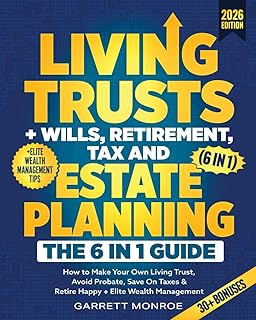
2. Living Trusts + Wills, Retirement, Tax & Estate Planning – The 6-in-1 Guide
This comprehensive resource combines living trusts, wills, retirement planning, tax strategies, and wealth management into one actionable guide. It is particularly useful for affluent individuals who need a holistic view of how estate planning intersects with retirement income and tax minimization.
Price: $24.97 | Rating: 4.5 stars
3. Nolo’s Guide to Estate Planning
Nolo is a trusted name in legal self-help, and this guide is widely considered the gold standard for do-it-yourself estate planning. It covers everything from basic wills to complex trusts, with clear explanations of the legal principles that affect high-net-worth estates.
Price: $27.89 | Rating: 4.7 stars

4. Estate Planning For Dummies
For those new to the subject, this accessible guide breaks down complex concepts into digestible lessons. It covers tax strategies, trusts, powers of attorney, and healthcare directives, making it an excellent starting point for high-net-worth individuals who want to educate themselves before engaging professional advisors.
Price: $20.99 | Rating: 4.3 stars

5. I’m Dead, Now What? Planner
This practical organizer helps individuals document their personal, financial, and business affairs for their loved ones. It is not a legal guide, but it ensures that heirs know where to find critical documents, passwords, insurance policies, and final wishes. For high-net-worth families, this reduces confusion and conflict during an already difficult time.
Price: $11.63 | Rating: 4.6 stars

Building Your Estate Planning Team
No single professional can cover all aspects of high-net-worth estate planning. You need a coordinated team of experts who work together to implement your strategy.
Essential team members:
- Estate planning attorney: Drafts wills, trusts, and legal documents
- Certified public accountant (CPA): Handles tax projections and reporting
- Financial advisor: Manages investments and coordinates with tax and legal strategies
- Insurance specialist: Structures life insurance, LTC insurance, and annuities
- Trust officer: Administers trusts and ensures compliance with trust terms
Review your plan annually and after major life events such as marriage, divorce, birth of a child, sale of a business, or relocation to a new state.
Common Pitfalls and How to Avoid Them
Even well-intentioned estate plans can fail due to oversights and mistakes. Here are the most common errors among high-net-worth individuals and how to prevent them.
Mistakes to avoid:
- Failing to fund your trust: A revocable living trust is useless if assets are not retitled into the trust name
- Outdated beneficiary designations: Retirement accounts, life insurance, and annuities pass outside your will, so beneficiary forms must match your plan
- Overlooking state estate taxes: Some states tax estates worth as little as $1 million, even if your federal exemption covers the full amount
- Ignoring digital assets: Without clear instructions, cryptocurrency and online accounts may be lost forever
- Not planning for incapacity: A durable power of attorney and healthcare directive prevent court intervention if you become unable to manage your affairs
For a comprehensive look at these pitfalls and how to sidestep them, see Common Estate Planning Mistakes People Make—and How to Avoid Them.
If you are beginning your estate planning journey, start with Estate Planning 101: a Beginner’s Roadmap to Protecting Your Family and Assets.
Charitable Giving as a Tax and Legacy Tool
High-net-worth individuals often use philanthropy to reduce taxes while creating a lasting impact. Charitable giving strategies can be integrated into your estate plan to achieve both financial and personal goals.
Effective charitable strategies:
- Donor-advised funds (DAFs): Contribute appreciated assets now, take an immediate tax deduction, and recommend grants over time
- Charitable remainder trusts: Receive income for life, with remainder to charity
- Charitable lead trusts: Provide income to charity for a term, then pass assets to heirs
- Bequests in your will: Simple and flexible, but no current income tax deduction
These strategies can significantly reduce the taxable value of your estate while supporting causes that matter to your family. For more ideas, read Charitable Giving in Estate Planning: Smart Ways to Leave a Legacy That Lasts.
Planning for Younger Families and Special Circumstances
High-net-worth families with young children face unique challenges. You must consider guardianship, education funding, and how to manage assets until children reach a responsible age. A trust can provide for children’s needs while protecting assets from mismanagement.
For guidance specific to young families, see Essential Estate Planning Checklist for Families with Young Children.
Blended families, unmarried couples, and caregivers also have distinct needs that standard planning approaches may not address. Tailored strategies ensure that your plan reflects your values and protects all the people you care about. Learn more in Estate Planning for Blended Families: Avoiding Inheritance Disputes Among Stepchildren and Estate Planning for Unmarried Couples: Legal Steps to Protect Your Partner.
Frequently Asked Questions
What is the federal estate tax exemption for 2025?
The federal estate tax exemption for 2025 is $13.99 million per individual and $27.98 million for married couples filing jointly. Estates exceeding this amount are subject to a 40% federal estate tax. The exemption is scheduled to sunset at the end of 2025, potentially dropping to around $6-7 million in 2026 unless Congress acts.
How does an irrevocable life insurance trust (ILIT) work?
An ILIT is an irrevocable trust that owns a life insurance policy on your life. Because the trust owns the policy, the death benefit is not included in your taxable estate. You make cash gifts to the trust, and the trustee pays the premiums. Beneficiaries receive the proceeds free of estate tax and income tax.
What is the difference between a revocable living trust and an irrevocable trust?
A revocable living trust can be changed or revoked during your lifetime, but it does not protect assets from creditors or remove them from your estate for tax purposes. An irrevocable trust generally cannot be changed after creation, but it provides asset protection and estate tax savings because you have given up ownership and control.
Can I avoid estate taxes with a trust?
Certain trusts, such as irrevocable life insurance trusts, grantor retained annuity trusts, and charitable remainder trusts, can reduce or eliminate estate taxes on specific assets. However, no single trust avoids all estate taxes. A combination of strategies tailored to your net worth and goals is the most effective approach.
How often should I update my estate plan?
You should review your estate plan at least once a year and after any major life event: marriage, divorce, birth of a child, death of a beneficiary, sale of a business, significant change in net worth, or move to a different state. Outdated plans often lead to unintended outcomes.
What is generation-skipping transfer tax (GSTT)?
The GSTT is a federal tax imposed on transfers made directly to a beneficiary who is two or more generations below you, typically grandchildren. The exemption is the same as the estate tax exemption ($13.99 million for 2025). Proper planning can allocate the GSTT exemption to maximize wealth that passes to younger generations.
How does life insurance fit into high-net-worth estate planning?
Life insurance provides immediate, tax-free liquidity to pay estate taxes, equalize inheritances, fund buy-sell agreements, and support family members. When owned by an ILIT, the death benefit is completely free of estate tax, making it one of the most efficient tools for transferring wealth to the next generation.
What is a dynasty trust and who should use one?
A dynasty trust is designed to last for multiple generations without incurring estate taxes each time wealth transfers. It is ideal for high-net-worth families who want to preserve wealth for grandchildren and beyond. The trust is funded with a gift that uses your GSTT exemption, and the assets grow and distribute free of transfer taxes for generations.