 Insurance Curator
 If you’ve spent years building wealth, the last thing you want is to lose it all in a single lawsuit or bankruptcy. Asset protection isn’t about hiding money—it’s about using legal structures to safeguard what you’ve earned. In this guide, we’ll walk through the most effective, court-approved strategies to shield your assets from creditors and litigation, all within the context of estate planning.
Whether you’re a business owner, a real estate investor, or simply planning for retirement, understanding these basics can mean the difference between financial security and devastating loss. For a comprehensive starting point, many professionals recommend Living Trusts, Wills & Estate Planning for Seniors – The Complete 3-in-1 Guide—a top-rated resource that covers trust-based protection from the ground up.

Why Asset Protection Matters More Than Ever
We live in a litigious society. Medical malpractice, slip-and-fall accidents, business disputes, or even a car accident can trigger a lawsuit that targets your personal savings, home, and investments. Without a plan, creditors can seize bank accounts, place liens on property, and garnish wages.
Asset protection is a proactive legal strategy. It’s not about evading legitimate debts—that’s fraud. Instead, it’s about using exemptions, entity structures, and timing to place assets beyond the reach of future, unknown creditors. Done correctly, it preserves your wealth for your family and your estate.
Key principle: The best time to start asset protection is before you have any hint of a claim. Transfers made after a lawsuit is filed can be reversed as fraudulent conveyances.
The Core Legal Tools for Asset Protection
1. Limited Liability Companies (LLCs) and Corporations
One of the most basic moves is to separate personal and business assets. By operating a business through an LLC or corporation, you create a legal barrier. If the business is sued, creditors generally cannot touch your personal home, car, or retirement accounts—unless you’ve personally guaranteed a debt or committed fraud.
For real estate investors, using separate LLCs for each property provides an extra layer of protection. A lawsuit against one property won’t jeopardize the others.
Internal link: For a deeper analysis of business entity protection, read Protecting Business Owners’ Personal Assets: Piercing the Corporate Veil Explained.
2. Domestic Asset Protection Trusts (DAPTs)
A Domestic Asset Protection Trust is a self-settled trust that allows you to be a beneficiary while still protecting assets from future creditors. Currently, about 20 states (including Nevada, South Dakota, Delaware, and Alaska) allow DAPTs. The trust must be irrevocable, and you typically name an independent trustee with discretion over distributions.
These trusts are powerful but require careful drafting. They don’t protect against existing creditors or certain family claims (like child support). Still, for high-net-worth individuals, DAPTs are a cornerstone of advanced planning.
3. Offshore Asset Protection Trusts
For even stronger protection, some planners move assets to jurisdictions like the Cook Islands, Nevis, or the Isle of Man. Offshore trusts are harder for U.S. creditors to reach because they must litigate under foreign laws, which often have short statutes of limitations and high burdens of proof.
However, offshore structures require significant upfront costs and ongoing compliance. They also trigger IRS reporting under FBAR and FATCA. For most people, domestic options are sufficient.
Internal link: Compare both approaches in Offshore vs. Domestic Asset Protection Trusts: Pros, Cons, and Legal Risks.
4. Homestead Exemptions
Your primary residence may already have built-in protection. Many states offer a homestead exemption that shields a certain amount of home equity from creditors. For example, Florida and Texas have unlimited homestead exemptions (with acreage limits), while other states cap the exemption at $100,000 or less.
This protection is automatic—you don’t need a trust. But if you have significant equity beyond the exemption, you may want to use a trust or LLC to protect the excess.
Internal link: Learn exactly what your home shield covers in Homestead Exemptions and Asset Protection: What Your Home Shield Actually Covers.
5. Retirement Accounts – 401(k)s and IRAs
Federal law provides strong protection for employer-sponsored retirement plans like 401(k)s under ERISA. Creditors generally cannot touch these accounts even in bankruptcy. Traditional and Roth IRAs are protected under federal bankruptcy law up to $1,512,350 (as of 2024), with unlimited protection for rollover IRAs from ERISA plans.
State laws vary for non-bankruptcy scenarios, but overall, retirement accounts are among the safest assets.
Internal link: Dive into the nuances in Retirement Accounts as Asset Protection Tools: How Safe Are 401(K)s and IRAs?.
6. Insurance as a First Line of Defense
No asset protection plan is complete without adequate insurance. Umbrella liability policies (typically $1–$5 million) cover claims that exceed your auto or homeowners liability. Professional liability insurance protects doctors, lawyers, and contractors. For landlords, landlord insurance and renters’ liability coverage are essential.
Insurance doesn’t shield assets from all claims—it just pays for the defense and settlement. But it often prevents a lawsuit from ever reaching your personal wealth.
Internal link: See how insurance fits in How Insurance Fits into an Asset Protection Plan: Umbrella, Liability, and More?.
Structuring Your Estate Plan for Maximum Protection
Asset protection should be woven into your estate planning, not tacked on later. Here’s how the two intersect:
- Revocable Living Trusts: Great for avoiding probate, but they offer no creditor protection because you retain control. Assets in a revocable trust are still considered yours.
- Irrevocable Trusts: Once you transfer assets to an irrevocable trust, you generally lose control (unless you’re a beneficiary of a DAPT). This can protect assets from creditors and reduce estate taxes.
- Marital Trusts (QTIP, SLAT): Can protect assets for a surviving spouse while limiting exposure to future creditors or a new spouse.
Many estate planners recommend a layered approach: use insurance for immediate risks, an LLC for business assets, a homestead exemption for the home, and an irrevocable trust for liquid investments.
Real Product Deep Dives: Top Resources to Guide Your Planning
1. Living Trusts, Wills & Estate Planning for Seniors – 3-in-1 Guide
This comprehensive guide focuses on seniors, but its principles apply to anyone. It walks through creating a living trust to avoid probate, drafting a will, and setting up an estate plan without expensive lawyers. The included forms make it actionable. Rated 4.4 stars at $22.97, it’s an affordable starting point for asset protection basics.
Best for: Seniors or anyone wanting a hands-on, do-it-yourself estate planning kit with a strong asset protection component.
2. Living Trusts + Wills, Retirement, Tax & Estate Planning – 6-in-1 Guide
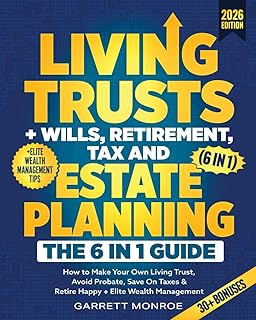
This expanded guide covers not just trusts and wills, but also retirement planning, tax strategies, and elite wealth management. At $24.97 with a 4.5 rating, it’s ideal for those who want a holistic view. The sections on retirement account protection and tax-efficient transfer are particularly valuable.
Best for: Individuals looking for a single resource that combines asset protection with broader financial planning.
3. Nolo’s Guide to Estate Planning

Nolo is the gold standard for legal self-help books. This guide covers everything from wills and trusts to powers of attorney and health care directives. It explains why each tool matters for asset protection. With a 4.7 rating at $27.89, it’s the most authoritative option on this list.
Best for: Readers who want the most trusted, detailed explanation of estate planning law and its asset protection implications.
4. Estate Planning For Dummies

Don’t let the title fool you—this is a thorough, accessible guide. It breaks down complex topics like probate, trusts, and tax laws into plain English. At $20.99 (4.3 rating), it’s a budget-friendly option that covers the essentials without overwhelming jargon.
Best for: Beginners who want a clear, no-nonsense overview of estate planning and asset protection.
5. I’m Dead, Now What? Planner

This is not a how-to guide, but a practical organizer. It helps you record all your accounts, policies, digital assets, and final wishes. While not a tool for protecting assets from creditors, it ensures your family can locate and manage your wealth after you’re gone—an essential part of any complete estate plan. 4.6 rating at only $11.63.
Best for: Anyone who wants to organize their financial life and leave clear instructions for heirs.
High-Risk Professions: Special Asset Protection Considerations
Doctors, lawyers, accountants, real estate agents, and contractors face elevated lawsuit risks. For these professionals, standard asset protection may not be enough. Additional strategies include:
- Separate professional LLC or PLLC to insulate personal assets from business malpractice claims.
- Segregating investment assets into different LLCs or trusts.
- Maxing out retirement contributions to take advantage of ERISA protection.
- Using a family limited partnership (FLP) to hold assets and make gifts to heirs at reduced values.
Internal link: For detailed strategies, read Asset Protection for Professionals at High Risk of Lawsuits (Doctors, Lawyers, Contractors).
How to Use LLCs and Corporations for Personal Asset Protection
Many people assume that forming an LLC automatically protects personal assets. While it does provide a liability shield, creditors can still “pierce the veil” if you:
- Mix personal and business funds.
- Fail to hold annual meetings or maintain corporate records.
- Undercapitalize the company.
- Commit fraud.
To maximize protection, always:
- Use a separate bank account and credit card for each LLC.
- Keep formal minutes and operating agreements.
- Buy adequate business insurance.
- Avoid personal guarantees unless absolutely necessary.
Internal link: Learn the specific steps in How to Use Llcs and Corporations for Personal Asset Protection?.
Fraudulent Transfer Rules: The Legal Line You Must Not Cross
Any asset protection plan must stay within the bounds of fraudulent transfer law. Under the Uniform Voidable Transactions Act (formerly UFTA) and federal bankruptcy law, a transfer can be voided if it:
- Was made with “actual intent to hinder, delay, or defraud” a creditor.
- Left the debtor insolvent or unable to pay debts.
Red flags courts look for: transfers to family members, transfers just after a lawsuit is filed, undervalued sales, or retaining control over transferred assets.
To stay safe, transfer assets well before any claim arises, and always receive fair consideration. Use independent trustees and avoid retaining excessive control.
Asset Protection for Landlords and Real Estate Investors
Real estate is a prime target for lawsuits. Tenants, visitors, or contractors can file claims for injuries, property damage, or discrimination. To protect your portfolio:
- Hold each property in its own LLC to prevent cross-liability.
- Use an umbrella policy on top of landlord insurance.
- Consider a land trust for privacy and ease of transfer.
- Do not hold property in your own name if you have significant equity.
Internal link: Explore specific structures in Asset Protection for Landlords and Real Estate Investors: Structuring Properties Safely.
Prenuptial and Postnuptial Agreements
Marriage creates a commingling of assets. Without a prenup or postnup, a divorce could split your wealth regardless of your estate plan. These agreements can also protect assets from a spouse’s creditors in community property states.
Internal link: Discover how these agreements work in Prenuptial and Postnuptial Agreements as Asset Protection Strategies.
Divorce and Asset Protection
Divorce is one of the most common threats to wealth. If you’re considering divorce, moving assets into trusts or LLCs before separation can protect them—but courts may still consider them marital property. Timing is everything.
Internal link: Read Divorce and Asset Protection: Legal Steps to Safeguard Property before and During Separation.
Asset Protection for Seniors Entering Long-Term Care
Long-term care costs (nursing homes, assisted living) can rapidly drain savings. Medicaid planning is a form of asset protection that involves transferring assets to trusts or spending down resources within the five-year lookback period. Irrevocable funeral trusts and Medicaid-compliant annuities are common tools.
Internal link: See the full guide: Asset Protection for Seniors Entering Long-term Care: Guarding Savings from Nursing Home Costs.
Critical Mistakes That Can Backfire
Even well-intentioned planning can go wrong. Avoid these errors:
| Mistake | Why It’s Dangerous |
|---|---|
| Waiting too long to transfer assets | Courts treat late transfers as fraudulent |
| Keeping too much control over a trust | Creditors can argue the trust is a sham |
| Using a revocable trust for protection | It offers zero protection |
| Forgetting to fund the trust | An empty trust protects nothing |
| Ignoring state-specific exemptions | What works in Texas may not work in California |
| Mixing personal and business funds | Pierces the corporate veil |
Internal link: Read the full breakdown of pitfalls in Critical Asset Protection Mistakes That Can Backfire and Trigger Legal Trouble.
Inherited Wealth: Keeping It in the Family
If you inherit assets, they are at risk from your creditors—and creditors of your heirs. Trusts are the best way to protect inherited wealth. A discretionary trust gives a trustee control over distributions, keeping the assets out of a beneficiary’s bankruptcy estate or divorce settlement.
Internal link: Learn more in Asset Protection Planning for Inherited Wealth: Keeping Family Money in the Family.
Putting It All Together: A Sample Asset Protection Plan
Let’s say you’re a 50-year-old business owner with a $2 million home, $1 million in retirement accounts, $500,000 in savings, and a rental property worth $300,000. Here’s a possible structure:
- Insurance: $1 million umbrella policy + business liability insurance.
- Home: Homestead exemption (state-dependent) + title held in a revocable living trust for probate avoidance (no creditor protection, but insurance covers most risks).
- Rental property: Owned by a single-member LLC.
- Savings: Beyond the homestead limit, move $200,000 into an irrevocable asset protection trust (DAPT) in Nevada.
- Retirement: Max out 401(k) and Roth IRA contributions (ERISA protection).
- Estate plan: Pour-over will, advance health care directive, and power of attorney.
This plan costs a few thousand dollars upfront but could save millions in a worst-case scenario.
FAQ: Asset Protection Basics
What is the difference between asset protection and estate planning?
Asset protection focuses on shielding wealth from lawsuits and creditors during your lifetime. Estate planning focuses on transferring wealth to heirs after death. They overlap because many tools (like trusts) serve both purposes.
Can I protect my assets from creditors using a revocable living trust?
No. A revocable living trust offers no creditor protection because you retain control and can revoke it. Only irrevocable trusts provide a shield.
Is it legal to move assets to an LLC to avoid creditors?
Yes, as long as you do it before any claim arises. Moving assets after receiving a lawsuit or defaulting on a debt may be considered a fraudulent transfer.
How much does a domestic asset protection trust cost?
Setup costs typically range from $2,000 to $5,000 for a DAPT in states like Nevada or South Dakota. Ongoing trustee and administration fees add $1,000–$3,000 annually.
Do all states recognize domestic asset protection trusts?
No. Some states (like California and Florida) do not recognize DAPTs created under their own laws, but they generally honor DAPTs from states that allow them. However, if you move to a hostile state, a creditor may still try to attack the trust.
What assets are automatically protected without any action?
Assets protected by federal law include ERISA-qualified retirement accounts (like 401(k)s), Social Security benefits, and certain life insurance cash values (state-dependent). Your primary residence may have homestead exemption protection.
How does bankruptcy affect asset protection?
Bankruptcy trustees can undo fraudulent transfers made within two years before filing (or up to four years in some cases). However, properly structured asset protection trusts that comply with state law can survive bankruptcy.
Final Thoughts
Asset protection isn’t a luxury—it’s a necessity for anyone with meaningful wealth. By combining legal entities like LLCs, trusts, homestead exemptions, and insurance, you can substantially reduce your exposure to lawsuits and creditors.
The key is to act now, not after trouble knocks. Start with a good book like Living Trusts + Wills, Retirement, Tax & Estate Planning – The 6-in-1 Guide to learn the fundamentals, then consult with an estate planning attorney who specializes in asset protection. Your future self—and your heirs—will thank you.