 Insurance Curator
 When a lawsuit hits—a car accident, a tenant injury, or a business deal gone bad—your personal assets are at risk. Your home, savings, and future income can vanish in a single verdict. That’s where LLCs and corporations come in. These business entities are not just for taxes or operations; they are powerful shields that separate your personal wealth from business liabilities.
But here’s the catch: you must set them up correctly. A poorly structured LLC or corporation is like a cracked shield—it won’t protect you. In this comprehensive guide, you’ll learn exactly how to use these entities for personal asset protection, integrate them into your estate plan, and avoid the mistakes that could blow a hole in your defenses.
Start your education with a trusted resource. The Living Trusts, Wills & Estate Planning for Seniors – The Complete 3-in-1 Guide provides forms and step-by-step instructions to complement your entity planning.

The Foundation: Why Entity Choice Matters for Asset Protection
Asset protection isn’t about hiding money. It’s about creating legal barriers between your personal assets and business or investment risks. Both LLCs and corporations can achieve this barrier—called the “corporate veil” —but they do it differently.
LLC vs. Corporation: Key Differences at a Glance
| Feature | LLC | Corporation (S or C Corp) |
|---|---|---|
| Ownership structure | Flexible; members | Shareholders |
| Tax treatment | Pass-through (default); can elect S-Corp | Double taxation (C Corp) or pass-through (S Corp) |
| Personal liability protection | Strong; charging order protection in most states | Strong; but easier to pierce veil if formalities not followed |
| Formalities | Low (no annual meetings required in many states) | High (board meetings, minutes, annual reports) |
| Best for | Small businesses, real estate investors, professionals | High-growth companies, public offerings, employee stock plans |
| Charging order protection | Yes (single-member less protected in some states) | No; creditors can seize shares |
Bold takeaway: For personal asset protection, LLCs are generally the preferred vehicle because of charging order protection and low maintenance. But corporations still shine for specific scenarios, especially when you plan to raise capital or go public.
How an LLC Shields Your Personal Assets
An LLC (Limited Liability Company) creates a legal separation between you and the business. If the LLC is sued, creditors can only go after the LLC’s assets, not your personal house or bank account. This protection extends to:
- Your primary residence (though homestead exemptions add extra layers)
- Personal investment accounts
- Retirement savings (already protected by ERISA, but the LLC adds another barrier)
- Future wages
The Charging Order: Your Best Friend
In most states, a creditor who wins a judgment against an LLC cannot seize the member’s personal property. Instead, they get a charging order—the right to receive distributions from the LLC if the LLC decides to make them. They cannot force distributions or vote on management. This makes LLC interests far less attractive to creditors.
Important: Single-member LLCs lose charging order protection in many jurisdictions (e.g., California, Nevada, Texas). To keep full protection, form a multi-member LLC or use a holding company structure.
Practical Steps to Maintain the Veil
- Operate the LLC separately: Separate bank accounts, tax IDs, and records.
- Avoid commingling funds: Personal expenses paid from the LLC account pierce the veil.
- Sign contracts in the LLC’s name, not your own.
- Maintain an operating agreement that spells out ownership and management.
For a deeper dive into the law of piercing the corporate veil, read our guide: Protecting Business Owners’ Personal Assets: Piercing the Corporate Veil Explained .
How a Corporation Protects You (and Where It Falls Short)
A corporation—whether C or S Corp—also provides limited liability. Shareholders are not personally liable for corporate debts. However, the barrier is weaker for one big reason: creditors can seize your shares.
If a shareholder is personally sued, the creditor can take their shares in the corporation. The creditor then becomes a shareholder and can vote to liquidate assets or force distributions. That’s why corporations are less popular for pure asset protection.
Where corporations excel:
- Professional practices (doctors, attorneys) often use professional corporations (PCs) to limit malpractice liability.
- High-growth startups need the ability to issue stock and attract investors.
- Employee benefits (health insurance, retirement plans) may be more tax-efficient in a corporation.
Formalities Are Non-Negotiable
To keep corporate protection, you must:
- Hold annual shareholder and board meetings.
- Keep minutes of all major decisions.
- File annual reports and pay franchise taxes.
- Treat the corporation as a separate entity.
Slip on any of these, and a plaintiff’s attorney can “pierce the veil” and come after your personal assets.
Combining Entities for Maximum Protection
Sophisticated estate planners often layer multiple entities. For example:
- Holding Company (LLC) owns valuable assets like real estate or intellectual property.
- Operating Company (LLC or Corp) runs the day-to-day business and rents the assets from the holding company.
If the operating company is sued, the plaintiff can only reach its assets (likely low-value equipment). The holding company’s assets remain safe because they are not directly involved in operations.
Series LLC: One Entity, Multiple Buckets
A Series LLC allows you to create multiple “series” under one umbrella. Each series has its own assets and liabilities, like a separate LLC but without filing fees for each one. This is popular for real estate investors who own multiple rental properties.
Caveat: Series LLCs are recognized in only about half of U.S. states. If you form one in Delaware but operate in a non-recognizing state, you may lose protection.
For landlords and real estate investors, we’ve covered this in detail: Asset Protection for Landlords and Real Estate Investors: Structuring Properties Safely .
Estate Planning Integration: Passing Down Protected Wealth
Your asset protection entities shouldn’t be assets themselves—they should hold assets, and those interests should be owned by a trust, not by you personally.
The Common Structure: LLC Owned by a Living Trust
- Form an LLC for your rental property or business.
- Transfer ownership of the LLC membership interest to a revocable living trust.
- You remain the manager of the LLC (control stays with you).
Benefits:
- Avoids probate when you die.
- Keeps the LLC in the family without court interference.
- Maintains asset protection during your lifetime.
Real Estate and Business Succession
When you own a corporation or LLC through a trust, the transition at death is seamless. The trust holds the shares, and the successor trustee takes over management. No need for court approval.
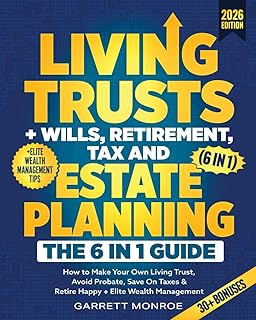
One of the best resources for this integration is Living Trusts + Wills, Retirement, Tax & Estate Planning – The 6-in-1 Guide . It walks you through creating a living trust, retirement planning, and wealth management.
Special Considerations for Seniors
Seniors entering long-term care face unique risks: Medicaid spend-down rules and nursing home costs. An LLC owned by an irrevocable trust may protect assets from both creditors and Medicaid estate recovery. But timing is critical—transfers must occur well before applying for benefits.
Read more in Asset Protection for Seniors Entering Long-term Care: Guarding Savings from Nursing Home Costs .
Common Mistakes That Can Backfire
Even the best entity structure fails if you ignore these rules:
- Undercapitalization: Starting a business entity with zero or very little capital. Courts may see it as a shell.
- Personal guarantees: Signing a lease or loan personally for the LLC brings your personal assets back into play.
- Ignoring state laws: A Nevada LLC operated entirely in California won’t give you California’s charging order protection.
- Fraudulent transfers: Moving assets into an LLC after a lawsuit is filed to hide them. This violates fraudulent transfer laws and can be reversed.
Learn the legal line you must not cross: Fraudulent Transfer Rules: the Legal Line You Must Not Cross in Asset Protection .
The Role of Insurance in Your Entity Structure
Entities are not the only shield. Liability insurance is your first line of defense. An LLC or corporation can protect your personal assets from a $1 million judgment if the entity has $100,000, but you still lose the entity’s assets. That’s why you need:
- General liability insurance for business premises and operations.
- Professional liability (errors & omissions) for advice-based professions.
- Umbrella insurance to cover gaps between your business and personal coverage.
- Directors & officers insurance for corporations.
Insurance and entities work together: insurance pays claims up to its limits, and the entity protects anything beyond that from reaching your personal holdings.
Get the full picture: How Insurance Fits into an Asset Protection Plan: Umbrella, Liability, and More? .
For high-risk professionals like doctors, lawyers, and contractors, extra layers are essential: Asset Protection for Professionals at High Risk of Lawsuits (Doctors, Lawyers, Contractors) .
Case Study: Putting It All Together
Scenario: Dr. Maria owns a dermatology practice as a professional corporation (PC). She also owns three rental properties. She personally has a house, retirement accounts, and savings.
Mistake: She runs the rentals in her own name, makes income directly from the PC, and has no umbrella policy.
After a lawsuit: A tenant slips on a wet floor and sues for $2 million. Dr. Maria’s homeowner’s insurance only covers claims at her residence. Her personal assets are at risk.
Solution (implemented):
- Dr. Maria forms an LLC for each rental property (or one Series LLC).
- She transfers the properties into the LLCs.
- Her PC now signs a lease with the LLC to rent office space—separating business from real estate.
- She buys a $2 million umbrella policy covering both personal and business exposures.
- She updates her will and trust to leave the LLC interests to her children, avoiding probate.
Outcome: The tenant’s lawsuit attaches only to the LLC that owns that specific property. Dr. Maria’s home, PC assets, and other properties are safe. Insurance covers the claim up to the policy limits.
This is the power of a well-structured plan.
FAQ: LLCs, Corporations, and Personal Asset Protection
Q1: Can I protect my existing assets by forming an LLC and transferring them into it?
Yes, but timing is everything. If you transfer assets after a claim arises, it may be deemed a fraudulent transfer. Always move assets into entities well before any signs of litigation.
Q2: Is a single-member LLC worth it for asset protection?
It provides some protection, but charging order protection is weaker in many states. Consider adding a second member (e.g., spouse or trusted partner) to strengthen the veil.
Q3: Do I need an operating agreement for my LLC?
Absolutely. An operating agreement proves the LLC is a real business entity, not a shell. It also clarifies ownership and management.
Q4: Can a corporation protect my personal assets from malpractice lawsuits?
A professional corporation (PC) can protect your personal assets from business debts, but it does not shield you from personal malpractice. That requires professional liability insurance.
Q5: How does an LLC affect my estate plan?
You can own the LLC membership interest through a revocable living trust. This keeps the assets out of probate and maintains control during your lifetime.
Q6: Should I form my LLC in Delaware or Nevada for better asset protection?
Those states offer strong charging order protection and privacy, but you must also register the LLC in states where you do business. The operating state’s laws may apply. Consult a local attorney.
Q7: What’s the difference between an LLC and a trust for asset protection?
A trust (especially irrevocable) can protect assets from your creditors if properly structured. An LLC protects assets held inside it from the member’s personal creditors. They work best together.
Final Checklist for Your Asset Protection Plan
- Choose the right entity (LLC for most, Corp for certain needs).
- Form the entity correctly in your home state and any states where you operate.
- Obtain an EIN, open separate bank accounts, and keep meticulous records.
- Draft a comprehensive operating agreement or corporate bylaws.
- Transfer assets into the entity before any claims.
- Execute an umbrella liability policy and relevant business insurance.
- Integrate the entity into your living trust for seamless estate transition.
- Review annually—laws and personal circumstances change.
To keep everything organized, grab a practical planner like I’m Dead, Now What? Planner . It helps you document all your entities, accounts, and wishes in one place.

The Bottom Line
Using LLCs and corporations for personal asset protection is one of the smartest moves you can make—but only if you do it right. The entity is a legal tool, not a magic shield. Pair it with insurance, maintain formalities, and integrate it with your estate plan to protect your family’s wealth for generations.
Start with education. The Nolo’s Guide to Estate Planning (rated 4.7 stars) is a gold standard for understanding the intersection of entities, trusts, and asset protection.

And for a lighter, yet thorough read, Estate Planning For Dummies (4.3 stars) covers entity structures in plain English.

Remember: asset protection is a journey, not a one-time event. Consult with a qualified estate planning attorney and insurance professional to tailor these strategies to your unique situation.