 Insurance Curator
 If you own a small business, your company is likely your largest asset—and your greatest legacy. Yet many entrepreneurs spend decades building their enterprises without a clear estate plan to protect what happens after they step away, retire, or pass away. Without a legally sound plan, your business could dissolve, your family could lose income, and the dream you built could vanish.
Estate planning for small business owners goes far beyond writing a will. It involves careful succession planning, legally binding buy-sell agreements, and continuity strategies that keep operations running smoothly during transitions. This guide provides an exhaustive deep-dive into each of these areas, with expert insights, real-world examples, and actionable steps you can take today.
If you’re just starting your estate planning journey, consider picking up a comprehensive resource like Nolo’s Guide to Estate Planning – a 4.7-star rated book that covers everything from wills to trusts. It’s an excellent foundation for understanding the legal framework that protects your business and family.

Why Estate Planning Is Critical for Small Business Owners
When a business owner dies or becomes incapacitated without a plan, the consequences can be catastrophic. The business may be forced into probate, assets could be frozen, and family members may fight over control. According to industry studies, nearly 60% of family-owned businesses fail to survive past the founder’s tenure, often due to poor or nonexistent estate planning.
What’s at stake?
- Loss of business value – Without a clear succession plan, key employees leave, customers lose confidence, and the business may be sold for pennies on the dollar.
- Family conflict – Siblings who never worked in the business may demand a buyout, while those running it want control.
- Tax burdens – Improper planning can trigger estate taxes, capital gains taxes, and liquidity crises.
- Operational chaos – No one knows who has authority to sign checks, pay vendors, or make day-to-day decisions.
A well-structured estate plan addresses all these risks. It combines legal documents, insurance strategies, and tax planning to ensure your business continues—whether you leave it to your children, sell it to a partner, or liquidate it for retirement.
Business Succession Planning: Choosing the Right Successor
Succession planning is the process of identifying and preparing the person (or people) who will take over your business after you leave. This is not a one-time decision; it requires ongoing communication, training, and legal documentation.
Who can be a successor?
- Family members – Often a child or spouse who has been involved in the business.
- Key employees – A trusted manager or partner who knows the operations.
- Outside buyers – A competitor, investor, or third party who purchases the business.
- Co-owners – Remaining partners under a buy-sell agreement.
Each option has unique legal and tax implications. For example, transferring a business to a child may qualify for valuation discounts through a family limited partnership, while selling to an outsider may trigger capital gains taxes.
Steps to build a solid succession plan
- Define your goals – Do you want the business to stay in the family? Provide income for your spouse? Maximize sale price for retirement?
- Evaluate candidates – Assess their skills, interest, and ability to run the business.
- Create a timeline – Will you transition gradually over years or hand over full control at once?
- Document the plan – Use a will, trust, or buy-sell agreement to formalize the transfer.
- Fund the transition – Life insurance is often used to provide cash for buyouts or tax payments.
For a step-by-step guide through the entire estate planning process, check out Living Trusts, Wills & Estate Planning for Seniors – The Complete 3-in-1 Guide. It includes forms and checklists that simplify the process, even if you aren’t a lawyer.

Real-life example
Maria owns a successful landscaping company. She wants her son, Alex, to take over when she retires in five years. She creates a phased succession plan: Alex becomes a co-owner, then gradually takes over operations. Maria funds a life insurance policy to provide Alex with cash to buy out her share at full value, avoiding a fire sale.
Buy-sell Agreements: Types, Funding, and Key Clauses
A buy-sell agreement is a legally binding contract that specifies what happens to a business owner’s share when they die, become disabled, retire, or choose to sell. For any business with multiple owners, this is non-negotiable.
Types of buy-sell agreements
| Type | How it works | Best for |
|---|---|---|
| Cross-purchase | Each owner buys life insurance on the others. When one dies, the surviving owners use the proceeds to buy the deceased’s shares. | Two or three owners who can afford premiums on multiple policies. |
| Entity-purchase (Stock Redemption) | The business itself buys life insurance on each owner. Upon death, the business uses the proceeds to redeem the shares. | Businesses with many owners, or when owners want simplicity. |
| Wait-and-see (Hybrid) | A combination: the surviving owners have the first option to buy, followed by the business, then an outside party. | Flexible situations where future circumstances are uncertain. |
Key clauses every buy-sell agreement should include
- Triggering events – Death, disability, retirement, divorce, bankruptcy, or termination of employment.
- Valuation method – How the business is priced (e.g., agreed value, formula, appraisal). Update this annually.
- Funding mechanism – Usually life insurance for death and disability buyouts. For retirement, a sinking fund or loan.
- Transfer restrictions – Owners cannot sell to outsiders without first offering to the other owners (right of first refusal).
- Dispute resolution – How to resolve disagreements over valuation or buyout terms.
Why life insurance is essential for funding
Without a liquidity source, a buy-sell agreement is just a piece of paper. Life insurance provides immediate, tax-free cash to execute the buyout. It also prevents the business from being forced into debt.
Consult your estate planning attorney to determine which type of agreement best suits your situation. For a deep dive into estate planning strategies like this, Estate Planning For Dummies offers a clear, jargon-free explanation of buy-sell agreements and other key documents.

Ensuring Business Continuity Through Estate Planning
Continuity planning goes beyond succession—it ensures the business can operate during the transition period. This is critical because even a temporary shutdown can lead to permanent loss of customers and revenue.
Key continuity strategies
- Durable power of attorney for business – Appoint someone to manage the business if you become incapacitated.
- Living trust for business assets – Transfer your business interests into a revocable living trust to avoid probate and allow a seamless transition of management.
- Key person insurance – Life and disability insurance on essential employees (not just owners) to keep the business running if a key person dies or becomes disabled.
- Emergency operating agreement – For LLCs, include provisions that name a manager to take over in case of owner incapacity.
The role of digital assets
Many small businesses rely on digital accounts—domain names, social media profiles, cloud storage, payment processors. Your estate plan should include instructions for accessing and transferring these assets. Consider using a digital estate planning tool or simply a secure password manager documented in your will.
For organizing all your business and personal affairs, the I’m Dead, Now What? Planner is a 4.6-star rated notebook that helps you record essential information about your business, passwords, insurance policies, and final wishes.

Key Documents Every Business Owner Needs
A complete estate plan for a small business owner typically includes these documents:
- Last Will and Testament – Names beneficiaries for personal assets and appoints guardians for minor children, but it does not avoid probate.
- Revocable Living Trust – Holds business interests and other assets, avoids probate, and allows a successor trustee to manage the business immediately.
- Buy-sell agreement – As discussed, governs ownership transfer.
- Durable financial power of attorney – Grants someone authority to manage finances and business operations if you become incapacitated.
- Advance healthcare directive – Designates someone to make medical decisions.
- Business succession plan – A written document outlining the transition process, training, and timeline.
- Life insurance policy – Funds buyouts, pays estate taxes, and provides liquidity.
- Disability insurance – Replaces income if you become disabled and can’t run the business.
- Digital estate plan – A list of accounts, passwords, and instructions for digital assets.
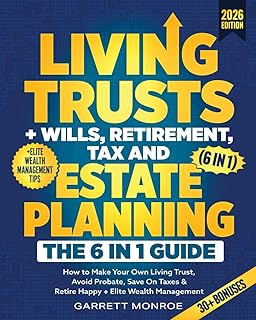
For a comprehensive resource that covers all these documents (with forms), consider the Living Trusts + Wills, Retirement, Tax & Estate Planning – 6-in-1 Guide. It’s rated 4.5 stars and includes wealth management strategies.
Tax Strategies for Business Owners in Estate Planning
Taxes can devour a significant portion of your business value if not planned properly. Here are key strategies:
Estate tax minimization
- Annual gifting – Give away up to $18,000 per person per year (2024 limit) of business interests or cash to reduce your estate’s value.
- Family limited partnerships (FLPs) – Transfer business interests to family members at discounted values, removing appreciation from your estate.
- Grantor retained annuity trusts (GRATs) – Place business interests in a trust that pays you an annuity for a set term; any appreciation passes to beneficiaries tax-free.
- Qualified small business stock (QSBS) – If your C corporation qualifies under Section 1202, you may exclude up to $10 million in capital gains when you sell.
Income tax strategies for successors
- Step-up in basis – When you die, your beneficiaries receive your business assets with a stepped-up cost basis equal to fair market value, potentially eliminating capital gains taxes on appreciation.
- Installment sales – Sell the business to a successor over time, spreading out capital gains.
- Charitable remainder trusts – Donate business interests to a trust, receive income during your lifetime, and pass the remainder to charity, getting an income tax deduction.
Warning: Tax laws change frequently. Always work with a CPA and estate attorney who specialize in business succession.
Common Mistakes and How to Avoid Them
Even well-intentioned business owners fall into these traps:
- Procrastination – “I’ll do it next year” is the most common estate planning mistake. Start now, even if the plan is imperfect.
- Unequal treatment of children – Leaving the business to one child and cash to others can cause resentment. Consider using life insurance to equalize inheritances.
- Ignoring disability – Many plans focus on death but forget incapacity. A durable power of attorney and disability insurance are essential.
- Outdated valuation – If your buy-sell agreement values the business at an old number, a buyout could be unfair or trigger tax problems. Review valuations annually.
- Failing to communicate – Surprising your family or partners with a plan can lead to conflict. Discuss your intentions openly.
For more pitfalls to watch out for, read our article on Common Estate Planning Mistakes People Make—and How to Avoid Them. It covers issues like forgetting beneficiary designations and neglecting digital assets.
FAQ: Estate Planning for Small Business Owners
Q: Do I need a buy-sell agreement if I’m the sole owner?
A: Yes, if you plan to sell or transfer the business. A buy-sell agreement with a key employee or family member ensures a smooth transition. Without it, your executor may be forced to liquidate the business.
Q: What happens if my business partner dies without a buy-sell agreement?
A: The deceased partner’s share passes to their heirs, who may have no interest in the business. You could end up in an unwanted partnership or litigation. A buy-sell agreement prevents this.
Q: How much life insurance do I need for my buy-sell agreement?
A: Enough to cover the value of each owner’s share, plus costs of the transaction. A professional business valuation will determine the right amount.
Q: Can I use a revocable living trust to hold my business interests?
A: Yes. A revocable living trust can hold shares of an LLC or corporation. It allows a successor trustee to manage the business immediately without probate.
Q: What is the difference between a will and a trust for business succession?
A: A will only takes effect after probate, which can delay transfer. A trust avoids probate and allows continuous management. Most business owners prefer a trust.
Q: How can I make sure my children don’t sell the business immediately?
A: You can place conditions in your trust or buy-sell agreement, such as requiring them to work in the business for a set period before inheriting shares, or granting a right of first refusal to other family members.
For more guidance, see our Estate Planning 101: a Beginner’s Roadmap to Protecting Your Family and Assets. It walks you through the fundamentals.
Taking the Next Steps
Estate planning for small business owners is not a one-and-done task. It’s an ongoing process that evolves with your business, family, and tax laws. Start by gathering your documents, talking to your partners and family, and consulting with an experienced estate planning attorney and financial advisor.
For further reading, explore these related articles from Insurance Curator:
- Essential Estate Planning Checklist for Families with Young Children
- How Life Insurance Fits into Your Estate Planning Strategy?
- Estate Planning for High-net-worth Individuals: Strategies to Reduce Taxes and Risk
- Blended Families and Estate Planning: Avoiding Inheritance Disputes Among Stepchildren
Your business is your life’s work. Give it the same care in its future as you did in its creation. With a solid estate plan—featuring succession strategies, buy-sell agreements, and continuity measures—you can protect your legacy, your family, and your employees.