 Insurance Curator
 Generosity is one of humanity’s finest qualities—but unfortunately, fraudsters see it as their most profitable weakness. Every year, billions of dollars meant for food banks, medical research, disaster relief, and community programs end up in the pockets of scammers. When you’re planning your estate, the risk multiplies: large lump-sum donations, trust distributions, and charitable bequests become prime targets. This guide will help you spot fake charities, verify legitimate organizations, and protect your legacy using the same tools that estate planners recommend—like Living Trusts, Wills & Estate Planning for Seniors and other essential resources.
Charity fraud doesn’t just steal money—it erodes trust in the very institutions that hold communities together. Whether you’re writing a check today or naming a charity in your will, verification is non‑negotiable.
Why Charity Fraud Is on the Rise
Scammers follow the headlines. Natural disasters, pandemics, and social crises create an emotional rush to give. The same urgency applies in estate planning: after a loved one passes, grieving families may be pressured into “quick donations” that actually go to criminals.
The Psychology Behind the Scam
- Emotional hijacking – Frauds use heart‑wrenching stories (orphans, starving animals, sick children) to bypass your critical thinking.
- Fake urgency – “Donate now or the matching grant expires” is a classic pressure tactic.
- Authority impersonation – Scammers pose as IRS‑approved 501(c)(3) organizations, using fake EINs and professional websites.
A recent FTC report showed that 1 in 4 people who donated to a disaster relief fund in 2024 later discovered the “charity” was a sham. The average loss was $425 per victim.
Red Flags of a Fake Charity
Before you send money—or name an organization in your will—look for these warning signs.
| Red Flag | What It Looks Like | Why It’s Dangerous |
|---|---|---|
| Similar‑sounding name | “American Cancer Research Foundation” vs. the legitimate “American Cancer Society” | Confuses donors; funds go to a shell entity |
| High‑pressure appeals | “Only a few hours left to claim your tax deduction!” | Bypasses due diligence |
| Refusal to provide written info | No mission statement, no financial reports, no board list | Legitimate nonprofits freely share IRS Form 990 |
| Requests for cash, wire transfers, or gift cards | “We don’t take credit cards—too many fees.” | Untraceable payments |
| Vague or no online footprint | A single‑page website with no physical address, no BBB rating, no Guidestar profile | Rapidly disappears after collecting money |
Real‑World Example: The “Veterans’ Support” Scheme
In 2023, a network of fake charities raised $2.3 million by posing as assistance programs for disabled veterans. They used robocalls, fake testimonials, and a polished website. The FTC shut them down, but most donors never recovered their money.
Expert Insight: “Always verify a charity’s tax‑exempt status using the IRS Tax‑Exempt Organization Search (TEOS). If they don’t appear, treat them as fraudulent until proven otherwise.” — Elena Torres, CFE, author of Fraud Prevention in Estate Planning
How to Verify a Legitimate Charity
Use a three‑step checklist before any donation, especially large gifts or bequests.
Step 1: Check the IRS Database
Visit IRS.gov/charities and search the TEOS tool. Legitimate 501(c)(3) organizations will have a verified EIN and recent Form 990 filings. If a charity hasn’t filed for three consecutive years, its tax‑exempt status may be revoked.
Step 2: Use Independent Watchdogs
- Charity Navigator – Rates financial health, accountability, and transparency.
- GuideStar (Candid) – Provides detailed nonprofit profiles, including Form 990s.
- BBB Wise Giving Alliance – Certifies charities that meet 20 standards for trustworthiness.
Cross‑reference at least two sources. A single good rating can be fabricated; consistency across platforms is the real signal.
Step 3: Contact the Charity Directly
Call the phone number listed on its official website (not the one in an email or ad). Ask for:
- Their mission statement and recent program outcomes.
- A copy of their audited financial statements.
- The names and affiliations of board members.
Legitimate organizations are happy to provide this information. Fraudsters will deflect or become defensive.
Estate Planning Context: Why Charity Fraud Hits Harder
When you include a charitable bequest in your will or trust, you’re making a long‑term commitment. If that charity is a fraud, your estate could lose the entire amount—and your heirs may be left fighting a legal battle.
Charitable Bequests and Trusts
Many estate plans set aside a percentage of assets or a specific dollar amount for charity. A “charitable remainder trust” (CRT) provides income to beneficiaries for life, with the remainder going to a nonprofit. Scammers know this and target elderly clients with fake “charitable annuity” proposals.
Example: An 82‑year‑old widow was persuaded to name a phony “Children’s Health Fund” as the beneficiary of her $500,000 CRT. The scammer provided a fake IRS determination letter. By the time the trustee discovered the fraud, the widow had passed away, and the funds were irrevocably lost.
Donor‑Advised Funds (DAFs) and Fraud
DAFs are popular vehicles for charitable giving during estate planning. However, some scammers create fake DAF sponsors, promising high returns or “guaranteed tax deductions.” Always verify that the sponsoring organization is a bona fide public charity—not a shell company.
Expert Insight: “Never accept a charity’s tax‑exempt status at face value. Pull the EIN directly from the IRS database. A single letter from the IRS can be forged. We’ve seen it happen.” — Marcus Chen, CFP and estate planning attorney
How Fraudsters Target Estate Planners
Criminals monitor public probate records, obituaries, and even social media to find families who are settling estates. They then pose as representatives of charities the deceased supported, asking for “final donations” or “account transfers.”
Common Tactics
- Phishing emails – “As executor of John Doe’s will, please confirm the charity’s new bank account.”
- Phone calls from “trust officers” – Claiming to need immediate payment to unlock a matching grant.
- Fake invoices – Billing the estate for “charitable services” that were never rendered.
These tactics tie directly into broader Fraud Prevention Basics: Everyday Steps to Avoid Becoming a Victim —the same principles apply whether you’re giving $20 or $200,000.
Protecting Your Charitable Legacy with Estate Planning Tools
A robust estate plan documents your intentions and makes it harder for fraudsters to intercept your gifts. Three essential resources can help:
1. Living Trusts, Wills & Estate Planning for Seniors (3‑in‑1 Guide)

This comprehensive guide walks you through creating a living trust, writing a will, and avoiding probate—all crucial for ensuring your charitable wishes are honored. It includes ready‑to‑use forms and checklists for naming beneficiaries and verifying nonprofits. Rating: 4.4 | Price: $22.97
2. Living Trusts + Wills, Retirement, Tax & Estate Planning (6‑in‑1 Guide)
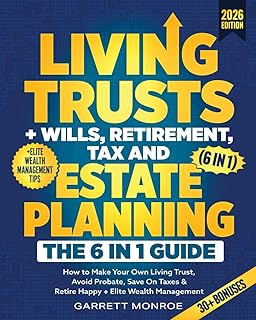
For a deeper dive, this 6‑in‑1 guide covers tax strategies, retirement planning, and wealth management alongside trust and will creation. It’s ideal for those who want to coordinate charitable giving with overall asset protection. Rating: 4.5 | Price: $24.97
3. Nolo’s Guide to Estate Planning

The gold standard from Nolo, this book explains estate planning laws, charitable trusts, and how to avoid common pitfalls—including charity fraud. It’s updated regularly to reflect current IRS rules. Rating: 4.7 | Price: $27.89
4. Estate Planning For Dummies

Perfect for beginners, this friendly guide breaks down complex topics like charitable remainder trusts, donor‑advised funds, and tax‑efficient giving. Rating: 4.3 | Price: $20.99
5. I’m Dead, Now What? Planner

This practical organizer helps you record all your important information—including charities you support, account numbers, and contact details for executors. It’s a simple but powerful tool to prevent confusion (and fraud) after you’re gone. Rating: 4.6 | Price: $11.63
Actionable Steps to Verify Charities in Your Estate Plan
- Include a “charity verification” clause in your will or trust, requiring the executor to confirm the charity’s 501(c)(3) status within 30 days of your passing.
- Name your charities with exact legal names and EINs—not just the familiar trade name.
- Use a donor‑advised fund with a reputable sponsor (Fidelity, Schwab, Vanguard) to make charitable gifts. The sponsor handles verification.
- Review your plan annually—fraudsters change names and organizations. Update your documents accordingly.
If you suspect a charity is fraudulent, report it to the FTC at ReportFraud.ftc.gov and your state attorney general’s office.
The Bigger Picture: Integrating Fraud Prevention into Your Financial Life
Charity fraud doesn’t exist in a vacuum. Scammers often use the same playbook for other schemes. Build a comprehensive defense by learning about:
- Recognizing Phishing Emails and Texts: Real-world Examples and Red Flags
- Elder Financial Fraud: How Families Can Monitor and Protect Vulnerable Relatives
- Investment Fraud Prevention: Spotting Ponzi Schemes, Pump-and-dumps, and Fake Advisors
- What to Do if You’ve Been Defrauded: Reporting, Documentation, and Recovery Steps
Each of these topics reinforces the same core principle: trust, but verify.
FAQ: Charity and Donation Fraud
Q1: How can I check if a charity is legitimate before donating?
A1: Use the IRS Tax‑Exempt Organization Search (TEOS), plus independent watchdogs like Charity Navigator, GuideStar, and BBB Wise Giving Alliance. Always verify the organization’s EIN and check for recent Form 990 filings.
Q2: What are the most common charity scams targeting estate planners?
A2: Fake “charitable remainder trust” offers, impersonation of well‑known nonprofits, and phishing emails posing as executors or trust officers. Scammers also monitor obituaries to contact grieving families.
Q3: Can I lose my tax deduction if I donate to a fake charity?
A3: Yes. Only donations to IRS‑recognized 501(c)(3) organizations are tax‑deductible. If the charity is fraudulent, your deduction is disallowed, and you may face penalties if you claimed it on your return.
Q4: Should I use a donor‑advised fund to protect against fraud?
A4: Yes. DAFs at major financial institutions (Fidelity, Schwab, Vanguard) vet charities before distributing funds. This adds an extra layer of verification and simplifies record‑keeping.
Q5: How often should I update the charities named in my estate plan?
A5: At least once per year, or whenever you receive a change‑of‑address or name‑change notice from a charity you support. Fraudsters sometimes hijack the communications of legitimate nonprofits.
Q6: What should I do if I suspect I’ve been a victim of charity fraud?
A6: Immediately contact your bank or credit card issuer to stop payment, file a report with the FTC (ReportFraud.ftc.gov), and notify your state attorney general’s office. If the fraud involves an estate plan, consult your estate planning attorney.
Final Thoughts: Give Generously, Give Wisely
The desire to make a difference is admirable. A carefully planned charitable legacy can fund research, feed the hungry, and protect the environment for generations. But that legacy can be stolen in an instant if you don’t verify the organizations you trust.
Arm yourself with the same discipline you use in every other financial decision: research, documentation, and professional guidance. The books and planners we’ve discussed—like the Living Trusts, Wills & Estate Planning for Seniors and the “I’m Dead, Now What?” Planner—are affordable tools that can save your estate from fraud and confusion.
Don’t let the scammers win. Verify, document, and give with confidence.