 Insurance Curator
Imagine waking up to find that your investments paid you—literally—while you slept. That’s the promise of dividend stocks: a steady stream of cash deposited into your account without selling a single share. For anyone serious about building long-term passive income, dividends offer one of the most reliable and historically proven paths. But knowing how to use them wisely is the difference between financial freedom and disappointment.
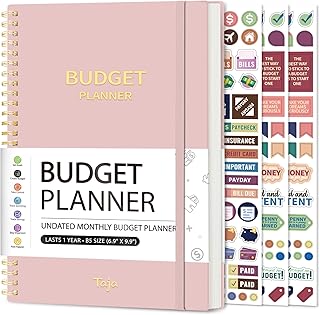
In this deep dive, we’ll walk through everything you need to know about building a dividend stock portfolio for passive income, how to budget for those first purchases, and the practical tools—like a Budget Planner – Monthly Budget Book with Expense Tracker Notebook, Undated Bill Organizer & Finance Planner to Take Control of Your Money, Account Book to Manage Your Finances-Pink—that can help you stay on track.
What Are Dividend Stocks and How Do They Generate Passive Income?
Dividend stocks are shares of companies that regularly distribute a portion of their profits back to shareholders. These payments—usually made quarterly—are your passive income. Unlike capital gains (which require selling), dividends let you keep your shares while enjoying cash flow.
Why Dividends Fit the Passive Income Model
- Low maintenance: Once you own the stock, you don’t need to do anything. The company sends you checks automatically.
- Compounding superpower: Reinvest dividends to buy more shares, which then pay more dividends—classic snowball effect.
- Historical reliability: The S&P 500 has paid dividends for over a century, even through recessions and bear markets.
But passive income from dividends isn’t completely hands-off. You still need to select the right stocks, monitor their health, and manage your portfolio over time. That’s where budgeting and planning come into play.
Step 1: Budgeting for Your First Dividend Stock Purchase
Before you can collect dividends, you need capital. The biggest myth is that you need thousands of dollars to start. With fractional shares, you can buy into top dividend stocks for as little as $10–$50. Yet even that small amount requires a plan.
Use a Budget Planner to Free Up Investing Cash
To consistently invest in dividend stocks, you need to find room in your monthly budget. A physical or digital planner helps you track spending and identify areas to cut. For under ten dollars, the Budget Planner – Monthly Budget Book with Expense Tracker Notebook, Undated Bill Organizer & Finance Planner to Take Control of Your Money, Account Book to Manage Your Finances-Black gives you a clear system to track every dollar.

Why budgeting matters for dividend investing:
- Consistency: Regular contributions (even $25/month) compound into meaningful passive income over 20–30 years.
- Avoiding debt: Using a budget prevents you from borrowing to invest—a dangerous move for passive income seekers.
- Tracking dividend income: Log your payments in the planner to see your passive income grow month by month.
Cash Envelope System for Dividend Savings
If you prefer a tangible system, the NICOOTH Budget Binder Cash Envelopes A6 Money Saving Binder with Zipper envelopes (Purple) and SKYDUE Budget Binder, Money Saving Binder with Zipper Envelopes, Cash Envelopes and Expense Budget Sheets for Budgeting allow you to allocate cash each month for investing before you spend on non-essentials.

Step 2: Selecting the Right Dividend Stocks
Not all dividends are created equal. A high yield can signal trouble if the company can’t sustain the payout. Use these criteria to find quality dividend stocks for long-term passive income.
Dividend Yield vs. Dividend Growth
- Dividend yield = annual dividends per share ÷ stock price. A 3%–5% yield is healthy for most portfolios.
- Dividend growth = how much the company increases its payout each year. Look for 5+ years of consecutive increases.
Table: Example Dividend Stock Categories
| Type | Yield Range | Risk Level | Best For |
|---|---|---|---|
| Blue-chip (e.g., Coca-Cola, Procter & Gamble) | 2%–4% | Low | Stability and steady income |
| Dividend aristocrats (25+ years of increases) | 2%–5% | Low | Long-term compounding |
| REITs (Real Estate Investment Trusts) | 4%–8% | Medium | Higher current income |
| MLPs (Master Limited Partnerships) | 5%–9% | Medium-High | Specialized energy income |
For beginners, start with dividend aristocrats or broad-based dividend ETFs (like VYM or SCHD) to diversify without picking individual stocks.
The Dividend Safety Check
Before buying, ask:
- Payout ratio: Is it below 60%? A lower ratio means the company can afford the dividend.
- Free cash flow: Does the company generate enough cash to cover its dividend?
- Earnings trend: Are profits growing or shrinking?
Step 3: The Power of Dividend Reinvestment (DRIP)
The fastest way to turn dividend stocks into serious passive income is to reinvest automatically. Most brokers offer a Dividend Reinvestment Plan (DRIP) that uses your dividend payments to buy additional shares—often commission-free.
How DRIP Accelerates Your Passive Income
Imagine you invest $10,000 in a stock yielding 4% annually. Without reinvesting, you earn $400/year. With DRIP, after 20 years, your annual income could grow to over $1,200, assuming 6% dividend growth and reinvestment. That’s passive income you didn’t have to save extra for.
Key benefit: DRIP aligns perfectly with long-term passive income because it compounds without any effort from you. You literally set it and forget it.
Step 4: Tax-Efficient Dividend Investing
Passive income isn’t truly passive if taxes eat it up. Dividends are taxed differently depending on your country and income level.
Qualified vs. Ordinary Dividends (U.S. Focus)
- Qualified dividends (held for more than 60 days in a 121-day period) are taxed at long-term capital gains rates: 0%, 15%, or 20% depending on your income.
- Ordinary dividends are taxed as regular income, which can be as high as 37%.
To maximize passive income, favor qualified dividends and hold them in taxable accounts only if you’re in a low tax bracket. Otherwise, use tax-advantaged accounts like IRAs or 401(k)s.
International Considerations
If you’re outside the U.S., dividend taxes may be withheld by the company’s home country. Use tax treaties to reduce withholding (e.g., U.S. stocks often have 15% withholding for treaty partners).
Step 5: Building a Dividend Portfolio for Passive Income
A well-constructed dividend portfolio balances yield, growth, and safety. Here’s a sample allocation for a passive income builder.
Sample Portfolio (Moderate Risk)
| Asset | Allocation | Purpose |
|---|---|---|
| Dividend ETF (VYM) | 40% | Broad market exposure, 3% yield |
| Dividend aristocrat stocks | 30% | Reliable growth and yield |
| REIT ETF (VNQ) | 15% | Higher yield, real estate exposure |
| International dividend fund | 10% | Geographic diversification |
| Cash / short-term bonds | 5% | Dry powder for market dips |
This portfolio targets a 3.5%–4.5% yield with potential for 5%–7% annual total return. For every $100,000 invested, you’d receive roughly $3,500–$4,500 in passive income per year.
How Much Do You Need to Quit Your Job?
To replace a $50,000 annual income with a 4% dividend yield, you need $1,250,000 invested. That sounds intimidating, but consistent investing over decades makes it achievable.
Example: If you save $500/month and earn 8% total return (dividends + capital growth), you reach $1.25M in about 30 years. Your passive income then covers your living expenses.
Step 6: Monitoring and Rebalancing Without Stress
Passive income doesn’t mean zero attention. Schedule a quarterly review—maybe while updating your Budgeting 101: From Getting Out of Debt and Tracking Expenses to Setting Financial Goals and Building Your Savings, Your Essential Guide to Budgeting book.

What to Check Each Quarter
- Dividend announcements: Did any company cut or suspend its dividend? If so, consider selling.
- Payout ratio changes: A rising payout ratio over 80% is a red flag.
- Portfolio weight: If one stock grew to 10%+ of your portfolio, rebalance by trimming or redirecting new investments.
- DRIP settings: Ensure dividends are being reinvested (unless you need the cash flow).
When to Start Taking Cash Instead of Reinvesting
Once your dividend income exceeds your living expenses—or reaches a point where you need income—switch from DRIP to cash dividends. This is the ultimate transition from accumulation to passive income withdrawal.
Common Mistakes to Avoid with Dividend Stocks
Even seasoned investors trip up. Avoid these pitfalls to protect your passive income.
Chasing High Yields
A stock yielding 8% may be risky. Many high-yield companies (like some REITs or MLPs) have payout ratios above 100%—they’re paying dividends with debt or asset sales. Stick to sustainable yields (typically under 6%).
Ignoring Dividend Growth
A stock with a 2% yield that grows dividends 10% annually will outpay a 5% yield that never increases. Total return matters more than starting yield for long-term passive income.
Overconcentration in One Sector
Dividend stocks cluster in utilities, consumer staples, and financials. Spread your bets across sectors to avoid sector-specific crashes (like banks in 2008).
Forgetting Inflation
If your dividends don’t grow, your purchasing power declines. Always prioritize companies with a history of raising dividends annually.
Real-World Example: Building Passive Income Over Two Decades
Let’s put the numbers together with a practical scenario.
Profile: 30-year-old, invests $300/month in a diversified dividend portfolio yielding 3.5%, with 6% annual dividend growth.
- Year 1: $3,600 invested → $126 annual passive income.
- Year 10: ~$55,000 invested → $2,200 annual passive income.
- Year 20: ~$185,000 invested → $12,000 annual passive income.
- Year 30: ~$450,000 invested → $45,000 annual passive income.
By year 30, your monthly passive income from dividends is $3,750—enough to cover many retirees’ expenses. And you haven’t sold a single share.
How Budgeting Tools Elevate Your Dividend Strategy
You can’t build a dividend machine if your finances are a mess. Using a structured planner like the SKYDUE Budget Binder helps you allocate funds specifically for investing while keeping your spending in check.
Practical weekly routine:
- Track all expenses in your budget planner.
- At month-end, transfer any surplus to your brokerage account.
- Log your dividend payments in the planner’s income section.
- Review your progress toward passive income goals.
This creates a feedback loop: better budgeting → more investing → larger dividends → more motivation to stick with the plan.
Internal Links to Related Passive Income Topics
To deepen your understanding, explore these related articles from the same content cluster:
- What Is Passive Income? Realistic Ways to Earn Money While You Sleep?
- Beginner-friendly Passive Income Ideas That Don’t Require Huge Capital
- Creating Digital Products for Passive Income: Step-by-step Overview
- Rental Properties as Passive Income: How Passive Is It Really?
- Building Passive Income Streams with Index Funds and Etfs
- Semi-passive Income: Systems That Need Some Work but Pay You for Years
- How to Use Automation Tools to Turn Active Income into Passive Income?
- Passive Income Pitfalls: Red Flags, Scams, and Overhyped Promises to Avoid
- Designing a Passive Income Portfolio That Matches Your Risk Tolerance
Final Words: Turning Dividend Stocks into Lifelong Passive Income
Dividend stocks aren’t a get-rich-quick scheme. They’re a slow, steady, and proven engine of passive income that rewards patience and discipline. By budgeting wisely—using tools like the Budget Planner – Monthly Budget Book—you can free up capital to buy quality dividend stocks, reinvest your payments, and watch your income grow year after year.
The best time to start was 20 years ago. The second best time is today. Open your brokerage account, set aside $50 from your next budget, and buy your first dividend stock or ETF. Then keep repeating—because passive income is built one dividend at a time.
Frequently Asked Questions (FAQ) About Dividend Stocks for Passive Income
1. Can I live off dividends alone?
Yes, but it requires a large portfolio. As a rule of thumb, you need 25–30 times your annual expenses invested in dividend stocks paying 3–4% yield. For $40,000/year in expenses, that’s $1–$1.3 million.
2. What is a good dividend yield for passive income?
For long-term passive income, a portfolio yield of 3%–5% is healthy. Yields above 6% often come with higher risk, such as companies cutting dividends.
3. Do I need to reinvest dividends to build passive income?
Reinvesting accelerates growth dramatically. If you need current income, you can stop reinvesting and collect cash. For the first 10–15 years, reinvesting is strongly recommended.
4. How often are dividends paid?
Most stocks pay quarterly, but some pay monthly (many REITs) or semi-annually. Check the company’s dividend schedule before investing.
5. Are dividend stocks safe during a recession?
Quality dividend stocks (especially consumer staples, utilities, and healthcare) tend to hold up better than growth stocks during recessions. However, dividends can be cut if the company struggles. Diversification reduces risk.
6. What’s the minimum amount to start with dividend stocks?
There is no minimum if you use a broker that offers fractional shares. You can buy $10 worth of a stock or ETF. Budgeting apps or planners help you accumulate that small amount monthly.
7. Should I use a DRIP or take cash dividends?
Use DRIP during the accumulation phase to compound growth. Switch to cash dividends once you need the income for living expenses. You can toggle this in most broker accounts.
8. How do taxes affect dividend passive income?
In the U.S., qualified dividends are taxed at lower capital gains rates. Ordinary dividends are taxed as regular income. Hold dividend stocks in tax-advantaged accounts (IRA, 401k) when possible.
9. Can I build passive income with dividend ETFs instead of individual stocks?
Absolutely. Dividend ETFs (like VYM, SCHD) offer instant diversification and lower risk. They’re ideal for beginners or anyone who doesn’t want to research individual companies.
10. What budgeting tool helps me save for dividend investing?
A simple budget planner or cash envelope system works wonders. Products like the NICOOTH Budget Binder help you allocate cash each month to your brokerage account, turning budgeting discipline into dividend income.