 Insurance Curator
Medical debt is a crisis that touches nearly every corner of the United States. Even if you have health insurance, a single emergency room visit or a chronic condition can leave you with bills that spiral into thousands of dollars. Unexpected medical expenses are the leading cause of bankruptcy in America. The good news is that you have more power than you think—both legal rights and practical strategies to manage, reduce, and even eliminate medical debt.
This guide walks you through everything you need to know: your consumer protections under federal law, how to fit medical payments into your budget, step-by-step negotiation scripts you can use over the phone, and the best tools—like a Budget Planner – Monthly Budget Book—to keep your finances on track.
Understanding Medical Debt: Why It’s Different
Medical debt behaves differently from credit card debt or personal loans. It often carries no interest, but the amounts can be staggering. Unlike a car loan, there’s no asset to repossess, and unlike student loans, there are limited federal protections. However, recent changes to credit reporting rules have made medical debt less damaging to your credit score. According to the Consumer Financial Protection Bureau, medical debt under $500 is no longer included on credit reports, and paid medical debts will be removed within one year.
But the challenge remains: you need to manage the cash flow to avoid collections and lawsuits. This is where budgeting becomes your secret weapon.
The Emotional Toll of Medical Bills
Medical debt can feel uniquely unfair. You didn’t choose to get sick or injured. The billing system itself is confusing, with separate bills from hospitals, doctors, anesthesiologists, and labs. Many people simply give up and ignore the bills, which leads to collections, wage garnishment, and damaged credit. Don’t fall into that trap. There are clear options and rights that can give you control.
Your Legal Rights When Dealing with Medical Debt
You are not powerless. Several federal and state laws protect you when you owe medical bills.
Fair Debt Collection Practices Act (FDCPA) – Third-party debt collectors cannot call you before 8 a.m. or after 9 p.m., cannot harass you, and must provide verification of the debt. If a collector violates the FDCPA, you can sue for damages.
No Surprises Act (2022) – This federal law protects you from surprise billing for emergency services and out-of-network care at in-network facilities. If you receive a surprise bill, you can dispute it.
HIPAA Privacy Rights – While HIPAA doesn’t prevent you from owing money, it limits how providers and insurers can share your medical information. If a debt collector obtains your medical records improperly, you may have a claim.
State-Specific Protections – Many states (e.g., California, New York, Maryland) have laws requiring hospitals to offer charity care or financial assistance before pursuing collections. You should ask every hospital about its charity care policy.
Fair Credit Reporting Act (FCRA) – You have the right to dispute inaccurate medical debts on your credit report. The credit bureaus must investigate and remove unverifiable items.
What About Medicaid and Medicare Patients?
If you are on Medicaid, most hospitals cannot bill you for your share of cost after insurance pays. For Medicare, you have strong appeal rights if a service is denied. Always check your eligibility for financial assistance first.
Budgeting for Medical Debt: Practical Steps to Stay Afloat
Medical debt is not something you can ignore. But when your budget is already tight, even a small payment can break the bank. The key is to build a specialized medical debt budget—a separate plan within your overall budget that prioritizes health-related expenses.
Step 1: List Every Medical Bill You Owe
Gather all bills, explanation of benefits (EOBs), and statements. Include the provider name, amount owed, date of service, and any insurance payments made. Create a master list. You might be surprised how many small bills add up.
Step 2: Separate “Must-Pay” from “Negotiable”
- Must-pay: Urgent care co-pays, prescription drugs for ongoing conditions, premium payments to keep insurance active.
- Negotiable: Large hospital bills, out-of-network charges, emergency room visits that insurance partially covered.
Anything negotiable can be tackled using the scripts below.
Step 3: Allocate a Monthly “Medical Debt Fund”
Look at your income and essential expenses. Even $25 a month set aside specifically for medical bills can prevent a debt from going to collections. Treat this line item like a utility bill. If you don’t have room, consider cutting non-essential spending (streaming services, dining out) temporarily.
Step 4: Use a Budgeting Tool to Track Everything
A paper or digital budget planner helps you see where every dollar goes. The Budget Planner – Monthly Budget Book with Expense Tracker Notebook (pink cover) is an excellent choice—it has dedicated sections for bills, expenses, and savings. At $8.99 with a 4.6-star rating, it’s a low-cost way to stay organized.
For a cash-based system, the NICOOTH Budget Binder Cash Envelopes A6 Money Saving Binder (purple) lets you physically separate money for medical expenses. It costs only $6.28 and has a 4.6-star rating. Use a specific envelope labeled “Medical Debt” to prevent accidental overspending.
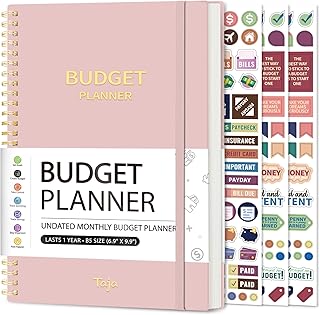
Use a dedicated budget planner to track medical payments and avoid missed deadlines.
Medical Debt Negotiation Scripts (That Actually Work)
Negotiating medical debt is not like negotiating a credit card balance. Providers often accept much less than the billed amount—sometimes 30% to 50%—if you pay in a lump sum. The trick is knowing what to say.
Script 1: Asking for a Discount (Self-Pay or Balance After Insurance)
When to use: Before the bill goes to collections, while still with the original provider.
What to say:
“Hello, I received a bill for [amount]. I cannot pay this in full. Can you tell me if there is a self-pay discount or a prompt-pay discount available? I’m willing to pay [X%] right now if you can reduce the balance.”
Why it works: Many hospitals have an internal “self-pay discount” policy that lowers the bill by 30–50% for patients without insurance or who pay quickly. If you have insurance, the discount may be smaller, but still worth asking.
Script 2: Setting Up an Interest-Free Payment Plan
When to use: If you cannot pay a lump sum.
What to say:
“I want to pay this bill, but I can only afford [amount] per month. Can we set up a payment plan with no interest? I understand that interest can accumulate, and I’d like to avoid that. Is there a hardship program I can apply for?”
Why it works: Most hospitals and doctor’s offices are required by their own policies to offer interest-free payment plans for patients with financial need. Always ask for zero interest before agreeing to any plan.
Script 3: Negotiating a Settled Amount After Collections
When to use: If the debt has already been turned over to a collection agency.
What to say:
“I acknowledge this debt, but I am currently struggling financially. I can offer [X%] of the balance as a lump settlement today. If you can accept that and agree to delete the account from my credit report, I will pay right now.”
Why it works: Collection agencies buy debts for pennies on the dollar. They may accept 20–40% of the original amount. The phrase “pay for delete” is your strongest tool. Always get the agreement in writing.
Script 4: Applying for Financial Assistance (Charity Care)
When to use: For large hospital bills, especially if you are low-income.
What to say:
“I’d like to apply for your hospital’s financial assistance or charity care program. Can you send me the application and instructions? Do you have an income threshold or sliding scale?”
Why it works: Federal law requires nonprofit hospitals to offer financial assistance. Many for-profit hospitals also have programs. If you qualify, your bill could be reduced to $0.
Options Beyond Negotiation: What Else Can You Do?
If negotiation fails or you need more structured relief, consider these options.
Hardship Programs and Patient Advocate Services
Some hospitals employ financial counselors. Ask to speak with one. Their job is to find money to help you—including Medicaid retroactive coverage. If you feel overwhelmed, a medical billing advocate (often a nonprofit service) can review your bills for errors and negotiate on your behalf.
Using a Credit Card or Personal Loan? Be Cautious
Putting a large medical bill on a high-interest credit card is rarely wise. However, a 0% APR balance transfer card or a low-interest personal loan from a credit union could work if you can pay it off within the promotional period. Otherwise, the interest can make things worse.
Bankruptcy: A Last Resort
Chapter 7 or Chapter 13 bankruptcy can discharge medical debt, but it comes with serious consequences—damage to your credit for 7–10 years and loss of property in some cases. Only consider this after exhausting all other options.
Check If Your Bill Has Errors
Up to 80% of medical bills contain errors. Common mistakes: double charges, incorrect procedure codes, services you didn’t receive. Request an itemized bill. If you see something wrong, dispute it in writing.
How Medical Debt Affects Your Credit Score (and What You Can Do)
Because of recent changes, medical debt is now treated more leniently by credit bureaus:
- Paid medical debt is removed from your credit report immediately as of 2023 (Experian, Equifax, TransUnion).
- Unpaid medical debt under $500 is not reported.
- Medical debts older than one year and still unpaid may still appear, but you can dispute them if you have a payment plan.
Protip: If you cannot pay in full, entering an interest-free payment plan and making consistent payments can protect your credit. The provider should agree not to report you as delinquent.
Tools and Products That Make Budgeting for Medical Debt Easier
Staying organized is half the battle. Here are two practical products that thousands of users trust.
SKYDUE Budget Binder, Money Saving Binder with Zipper Envelopes
This binder includes cash envelopes, expense tracking sheets, and a zippered pouch. It’s rated 4.7 stars and costs $8.98. Use it to physically separate your medical debt payments from other spending. The act of putting cash aside for medical bills makes you less likely to spend it elsewhere.

Budgeting 101: From Getting Out of Debt and Tracking Expenses to Setting Financial Goals and Building Your Savings
This book (paperback, $9.69, 4.6 stars) is a complete primer on creating a budget that works. It covers debt repayment strategies, expense tracking, and long-term financial health. Perfect for anyone rebuilding after medical debt.
Internal Linking: Related Articles to Strengthen Your Knowledge
Managing medical debt is part of a larger picture. Read these articles to build a complete financial rescue plan:
- Debt Management 101: a Step-by-step Plan to Get out of Debt Faster
- Debt Snowball vs. Debt Avalanche: Which Payoff Strategy Saves You More?
- How to Negotiate with Creditors and Lower Your Interest Rates?
- Managing Debt on a Low Income: Practical Moves That Make a Real Difference
- How to Prioritize Multiple Debts Without Hurting Your Credit?
- When to Consolidate Debt and When to Avoid It Completely?
- How to Stop Using Credit Cards While Still Staying Financially Afloat?
- How to Rebuild Your Finances after a Debt Settlement or Bankruptcy?
- Student Loan Debt Management Strategies for Borrowers at Every Income Level
These guides dive deeper into payoff strategies, negotiation tactics, and credit repair. Combining them with the medical debt scripts above gives you a comprehensive toolkit.
Real-Life Example: How One Family Cut a $12,000 Bill to $2,300
Maria had an emergency surgery that left her with a $12,000 hospital bill after insurance. Avoiding it only led to collection calls. She used the financial assistance script above, applied for charity care, and discovered she qualified for a 75% discount based on her income. The hospital wrote off $9,000. She put the remaining $3,000 on a 0% APR credit card and paid it off in 12 months. The Moral: Always ask for help before paying.
Frequently Asked Questions About Medical Debt Management
Below are common questions and clear answers. Use them as a quick reference.
Is medical debt automatically removed from credit reports after seven years?
Yes, like most negative items, medical debts must be removed after 7.5 years from the date of first delinquency. However, paying a debt resets the clock only for the original delinquency date, not for collection activity.
Can a hospital sue me for unpaid medical bills?
Yes, a hospital or collection agency can sue you. But they usually only do so for large balances ($1,000+). If you are sued, never ignore the court summons—appear or hire a lawyer. You can often settle before judgment.
Does the No Surprises Act apply to ambulances?
Ground ambulances are not fully covered by the No Surprises Act. Air ambulances are covered. Always check if your insurance plan covers ground transport.
What should I do if a debt collector calls me about a medical bill?
First, ask for a validation letter (written proof of debt). Do not admit to the debt over the phone. Once you have the letter, verify it’s yours and then negotiate using the scripts above.
Can I use my Health Savings Account (HSA) to pay medical debt?
Yes. HSA funds can be used for qualified medical expenses, including past balances you owe. However, the expense must have occurred after the HSA was established.
Final Action Plan: Take Control Today
Medical debt doesn’t have to ruin your financial future. Start with these steps:
- Verify every bill – Request itemized statements.
- Negotiate – Use the scripts provided in this article.
- Budget – Use a tool like the Budget Planner – Monthly Budget Book (black) to track payments.
- Know your rights – FCRA, FDCPA, and state laws are on your side.
- Get help – Speak with a hospital financial counselor or a non-profit patient advocate.
You have options. You have rights. And now you have the exact words to use. Start with one call today.