 Insurance Curator
Building a passive income portfolio is one of the smartest financial moves you can make. But rushing in without understanding your own risk tolerance can lead to sleepless nights and costly mistakes. The secret is aligning your investments with how much uncertainty you can comfortably handle.
Budgeting forms the bedrock of any passive income strategy. Before you invest a single dollar, you need clarity on your cash flow, expenses, and savings capacity. Tools like a Budget Planner – Monthly Budget Book with Expense Tracker Notebook help you track every cent and free up capital for your portfolio. This article will walk you through designing a passive income portfolio that fits your unique risk profile, using real-world examples and practical budgeting techniques.
What Is Risk Tolerance and Why Does It Matter?
Risk tolerance is your ability and willingness to withstand market fluctuations without panicking. It’s not just about numbers—it’s psychological. Some people can sleep soundly with 30% of their portfolio in volatile assets, while others prefer stable, predictable returns.
The Three Main Risk Profiles
- Conservative: Prefers safety over growth. Willing to accept lower returns for capital preservation. Typically invests in bonds, high-yield savings, or dividend aristocrats.
- Moderate: Balances growth and safety. Accepts some volatility in exchange for better long-term returns. Often uses a mix of index funds, REITs, and growth stocks.
- Aggressive: Seeks maximum returns and can tolerate sharp drawdowns. May allocate heavily to equities, crypto, or niche ventures.
Your risk tolerance should dictate every asset you choose for passive income. Ignoring it is like driving without a seatbelt—you might be fine until you hit a bump.
Budgeting: The Unsung Hero of Passive Income
You can’t build a passive income portfolio without money to invest. That’s where budgeting comes in. A well-structured budget reveals hidden savings opportunities, helps you prioritize investments, and ensures you don’t overextend.
Why You Need a Budget for Passive Income
- Identifies surplus cash you can redirect into income-producing assets.
- Prevents lifestyle creep that eats into investment contributions.
- Provides a safety net so you don’t have to sell investments during a downturn.
The best budgeting tools combine simplicity with enough detail to track your progress. For example, the NICOOTH Budget Binder Cash Envelopes A6 Money Saving Binder is a physical system that helps you allocate cash into envelopes for different categories—perfect for those who prefer a tactile approach.

Alternatively, a more comprehensive planner like the Budget Planner – Monthly Budget Book with Expense Tracker Notebook (Black) offers undated pages, bill organizers, and finance tracking to keep you on track month after month.
Aligning Passive Income Streams with Your Risk Profile
Not all passive income is created equal. Some streams are as steady as a water drip; others are more like a geyser—high risk, high reward. Here’s how to match them to your tolerance.
Conservative Streams (Low Risk)
- High-yield savings accounts and CDs. Low returns (2–4%) but FDIC insured.
- Dividend stocks with a long history of consistent payouts (e.g., utility companies). For deeper insight, read How to Use Dividend Stocks for Long-term Passive Income?.
- Peer-to-peer lending (platforms like Prosper) can yield 5–7% but come with default risk.
Moderate Streams (Balanced Risk)
- Index funds and ETFs that track the S&P 500 or total market. Historical returns ~10% annually.
- Real estate investment trusts (REITs) offer dividends from property portfolios without direct ownership. However, check out Rental Properties as Passive Income: How Passive Is It Really? to see the trade-offs.
- Creating digital products like e-books or online courses. Upfront work, but ongoing royalties. For a step-by-step overview, see Creating Digital Products for Passive Income: Step-by-step Overview.
Aggressive Streams (High Risk)
- Cryptocurrency staking or lending. High volatility, potential yields of 5–15% but can drop to zero.
- Small business investments (e.g., via platforms like Mainvest). Illiquid and risky, but returns can exceed 20%.
- Options trading or covered call strategies. Requires active management and strong knowledge.
Remember: high risk doesn’t always mean high return. The key is diversification even within your chosen risk level.
Step-by-Step: Building Your Passive Income Portfolio
Now let’s put theory into action. Follow these stages to design a portfolio that feels right—and that you can actually stick with.
Step 1: Assess Your Risk Tolerance Honestly
Take a free quiz online or simply ask yourself: If my portfolio lost 20% in a month, would I sell in a panic or hold? Your answer reveals much more than a theoretical percentage.
Use a journal or a Budgeting 101 book to reflect on your financial history and emotional responses.
Step 2: Determine Your Budget Surplus
Track your income and expenses for 30 days using a planner like the SKYDUE Budget Binder. It comes with zipper envelopes, cash envelopes, and expense sheets—everything you need to see where your money goes.

Once you know your monthly surplus, decide on a fixed contribution to passive income. Even $50 a month adds up over time.
Step 3: Allocate Assets by Risk Bucket
Divide your investment capital into three buckets:
| Bucket | Risk Level | Example Assets | Allocation (Conservative) | Allocation (Moderate) | Allocation (Aggressive) |
|---|---|---|---|---|---|
| Safety | Low | Savings, bonds | 60% | 30% | 10% |
| Growth | Medium | Index funds, REITs | 35% | 50% | 40% |
| Speculation | High | Crypto, startups | 5% | 20% | 50% |
Adjust these percentages based on your personal tolerance. For a deep dive into index funds, read Building Passive Income Streams with Index Funds and Etfs.
Step 4: Automate and Monitor
Set up automatic transfers from your checking account to your brokerage or savings account. Use alerts for dividend payments. Review your portfolio quarterly, not daily—obsessive monitoring leads to emotional decisions.
Product Deep Dive: Budget Planners and Binders
Since budgeting is critical to funding your passive income portfolio, the right tools make a huge difference. Here are the top products from our research, each designed to help you gain control of your finances.
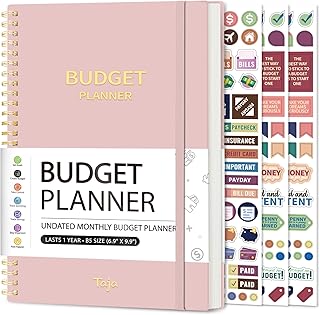
1. Budget Planner – Monthly Budget Book with Expense Tracker (Pink)
- Price: $8.99
- Rating: 4.6/5
- Key Features: Undated pages, bill organizer, expense tracker, pink cover.
- Best For: Visual planners who want a dedicated notebook to track every transaction.
2. NICOOTH Budget Binder Cash Envelopes (Purple)
- Price: $6.28
- Rating: 4.6/5
- Key Features: A6 size, zipper envelopes, cash envelopes, purple color.
- Best For: Cash envelope system fans who want a portable, organized binder.
3. SKYDUE Budget Binder
- Price: $8.98
- Rating: 4.7/5
- Key Features: Zipper envelopes, cash envelopes, expense sheets, multi-section.
- Best For: Users who want everything in one place—budget sheets plus cash storage.
4. Budget Planner – Monthly Budget Book with Expense Tracker (Black)
- Price: $8.99
- Rating: 4.6/5
- Key Features: Same as pink version but black cover, undated, 12-month usability.
- Best For: Those who prefer a professional, neutral look.
5. Budgeting 101 (Adams 101 Series)
- Price: $9.69
- Rating: 4.6/5
- Key Features: 256-page book covering debt, expenses, financial goals, savings.
- Best For: Beginners who want education alongside practical steps.
Monitoring and Rebalancing Your Portfolio
Passive income doesn’t mean “set and forget forever.” Markets change, and so does your life. Review your portfolio annually or after major life events (marriage, job change, birth of a child).
Signs You Need to Rebalance
- One asset class has grown too large relative to your target allocation.
- Your risk tolerance has shifted (e.g., you become more conservative as you near retirement).
- A passive income stream starts underperforming (e.g., a dividend stock cuts its payout).
Use a budget tracker to see how your income streams correlate with your expenses. If your passive income covers 50% of your needs, you’re halfway to financial freedom.
Tools for Monitoring
- Spreadsheets or apps like Personal Capital.
- Physical binders for those who like to write.
- Dividend tracking features in brokerage accounts.
Common Mistakes to Avoid
Even seasoned investors fall into traps. Here are pitfalls unique to passive income portfolios.
Overconfidence in High-Yield Streams
A 12% dividend yield sounds amazing—until the company slashes it. Check payout ratios and business fundamentals. Read Passive Income Pitfalls: Red Flags, Scams, and Overhyped Promises to Avoid to stay informed.
Ignoring Taxes
Passive income is taxable. Rental income, dividends, and interest all have different tax treatments. Factor in taxes when calculating true returns.
Neglecting Emergency Fund
Don’t invest money you might need in six months. Keep 3–6 months of expenses in a liquid, safe account. Otherwise you’ll be forced to sell assets at a loss.
Semi-Passive Income: A Middle Ground
Not all streams are completely passive. Some require a few hours per week but still generate recurring revenue. For example, a blog or YouTube channel can produce ad income with minimal ongoing work once established. Check out Semi-passive Income: Systems That Need Some Work but Pay You for Years.
Similarly, automation tools can turn active income into passive—like using a robo-advisor for investing or a service that handles your rental property management. Learn more in How to Use Automation Tools to Turn Active Income into Passive Income?.
Frequently Asked Questions
How much money do I need to start a passive income portfolio?
You can start with as little as $100 using fractional shares of index funds or ETFs. The key is consistency—regular contributions matter more than the initial amount.
Can I build passive income without a large capital?
Absolutely. Digital products, peer-to-peer lending, and dividend reinvestment plans (DRIPs) require little upfront cash. See Beginner-friendly Passive Income Ideas That Don’t Require Huge Capital for actionable options.
How often should I rebalance my portfolio?
At least once a year. Many investors do it quarterly, but annual rebalancing is sufficient for most passive income strategies.
What is the best passive income stream for a conservative investor?
Dividend-paying stocks from stable companies (like utilities or consumer staples) combined with a high-yield savings account. Also consider What Is Passive Income? Realistic Ways to Earn Money While You Sleep? for a broad overview.
Final Thoughts
Designing a passive income portfolio that matches your risk tolerance isn’t a one-time event. It’s an ongoing process of self-awareness, budgeting discipline, and strategic allocation. Start with a solid budget using tools like the planners and binders shown above, then gradually build streams that align with your comfort zone.
Remember, the goal isn’t to get rich overnight—it’s to create a steady, automated flow of income that gives you freedom and peace of mind. Take small steps, stay consistent, and let time do the heavy lifting.