 Insurance Curator
Nobody likes paying more taxes than they have to. The good news? The tax code is full of perfectly legal ways to reduce what you owe—if you know where to look. Whether you’re a W‑2 employee, freelancer, or retiree, a handful of common deductions and credits can slash your bill by thousands.
But here’s the catch: most people leave money on the table because they don’t track the right expenses year-round. That’s where budgeting comes in. When you pair smart tax planning with a solid budgeting system, you can keep more of your hard-earned cash.
One of the simplest ways to start is with a dedicated planner. The Budget Planner – Monthly Budget Book with Expense Tracker Notebook, Undated Bill Organizer & Finance Planner to Take Control of Your Money, Account Book to Manage Your Finances-Pink ($8.99, 4.6 stars) helps you log every deductible expense throughout the year—no more scrambling for receipts come April.
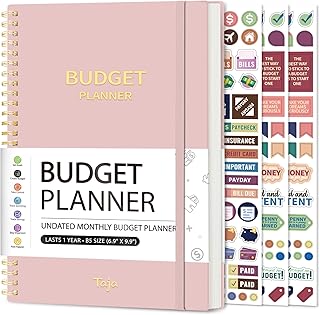
Let’s dive into the most powerful deductions and credits—and how budgeting can help you claim every dollar you deserve.
What Are Tax Deductions vs. Tax Credits?
Before we get into specifics, you need to understand the difference. A deduction reduces your taxable income. A credit reduces your tax bill dollar‑for‑dollar.
- Deduction example: You’re in the 22% bracket and claim a $1,000 deduction → you save $220.
- Credit example: You claim a $1,000 credit → you save $1,000.
Credits are almost always better, but deductions are easier to qualify for. Both require proof, which means meticulous record‑keeping.
The Most Common Tax Deductions That Can Save You Big
Standard Deduction vs. Itemized Deductions
For 2023, the standard deduction is $13,850 for single filers and $27,700 for married filing jointly. If your itemized deductions exceed that amount, you’ll itemize.
Common itemized deductions include:
- Mortgage interest on up to $750,000 of debt
- State and local taxes (SALT) – capped at $10,000
- Charitable contributions – cash and non‑cash gifts
- Medical expenses exceeding 7.5% of your AGI
- Casualty and theft losses from federally declared disasters
Budgeting tip: Use a cash envelope system to set aside money for charitable giving and medical bills. The NICOOTH Budget Binder Cash Envelopes A6 Money Saving Binder with Zipper envelopes (Purple) ($6.28, 4.6 stars) lets you separate categories so you never lose a deductible receipt.

Retirement Contributions
Money you put into a Traditional IRA or 401(k) is tax‑deductible now (you’ll pay taxes later). The 2023 limit is $6,500 for IRAs ($7,500 if 50+) and $22,500 for 401(k)s ($30,000 if 50+).
This is one of the simplest ways to lower your taxable income. If you max out a 401(k), you can reduce your AGI by over $20,000.
Health Savings Account (HSA)
If you have a high‑deductible health plan, contributions to an HSA are triple tax‑advantaged: deductible when you contribute, grow tax‑free, and tax‑free when used for qualified medical expenses. The 2023 limit is $3,850 for individuals and $7,750 for families.
Student Loan Interest Deduction
You can deduct up to $2,500 of student loan interest paid during the year, even if you don’t itemize. The deduction phases out at higher incomes ($75,000 single, $155,000 married).
Self‑Employment Deductions
Freelancers and gig workers can deduct home office expenses, equipment, software, mileage, and even a portion of internet/phone bills. The key is tracking every expense as it happens.
Skip the guesswork: The SKYDUE Budget Binder, Money Saving Binder with Zipper Envelopes, Cash Envelopes and Expense Budget Sheets for Budgeting ($8.98, 4.7 stars) includes dedicated sheets for business expenses—perfect for side hustlers.

Powerful Tax Credits You Might Be Overlooking
Earned Income Tax Credit (EITC)
The EITC is a refundable credit for low‑ to moderate‑income workers. For 2023, the maximum credit is $7,430 for families with three or more children. Even if you owe $0 in tax, you can get this money back as a refund.
Child Tax Credit
In 2023, the credit is up to $2,000 per qualifying child under 17. Up to $1,500 is refundable. The credit phases out at $200,000 single / $400,000 married.
American Opportunity Tax Credit (AOTC)
If you or your child is in college, the AOTC gives up to $2,500 per student for the first four years of post‑secondary education. 40% is refundable.
Saver’s Credit
If your income is below certain thresholds ($36,500 single / $73,000 married in 2023), you can claim a credit of up to 50% of your retirement contributions—up to $1,000 ($2,000 married).
Child and Dependent Care Credit
If you pay for daycare so you can work or look for work, you may qualify for a credit of up to $3,000 for one child or $6,000 for two or more.
How Budgeting Helps You Maximize Deductions and Credits
You can’t claim what you can’t prove. A budget binder or planner keeps your financial life organized all year. Here’s why that matters:
| Tax Item | What to Track | Budgeting Tool |
|---|---|---|
| Charitable donations | Receipts, dates, amounts | Cash envelope system |
| Medical expenses | Bills, mileage logs | Medical expense tracker in planner |
| Business expenses | Mileage, supplies, home office | Dedicated expense sheets |
| Education costs | Tuition receipts, 1098‑T forms | Filing folder for each tax item |
The Budget Planner – Monthly Budget Book with Expense Tracker Notebook, Undated Bill Organizer & Finance Planner to Take Control of Your Money, Account Book to Manage Your Finances-Black ($8.99, 4.6 stars) helps you log bills, income, and deductible expenses in one place.

Step‑by‑Step: Year‑Round Tax Budgeting
- Set up categories – In your planner, create sections for each deduction/credit you plan to claim.
- Log expenses weekly – Don’t wait until April. Every receipt goes into the binder.
- Track income and withholding – Use a paycheck log to ensure you’re not under‑withholding.
- Quarterly review – Add up your deductions so far. Are you on track to itemize? If not, adjust your strategy.
If you’re new to budgeting, the book Budgeting 101: From Getting Out of Debt and Tracking Expenses to Setting Financial Goals and Building Your Savings, Your Essential Guide to Budgeting (Adams 101 Series) ($9.69, 4.6 stars) covers everything from expense tracking to tax‑smart financial goals.

Year‑End Tax Moves to Pair with Your Budget
Waiting until filing season is too late. Smart taxpayers make moves before December 31.
- Max out retirement accounts – Increase your 401(k) contribution in December.
- Bundle charitable donations – If you’re close to the standard deduction, consider “bunching” two years of donations into one.
- Pay January’s mortgage in December – Get an extra month of mortgage interest deduction if you itemize.
- Use your FSA funds – Flexible spending accounts are use‑it‑or‑lose‑it. Spend down by year‑end.
For deeper strategies, check out Tax Planning Moves to Make before Year-end, Not at Filing Time.
Common Mistakes That Cost You Money
Avoid these pitfalls:
- Missing the deadline for IRA contributions – You have until April 15, but budgeting ahead helps you set aside cash.
- Not tracking mileage – The 2023 rate is 65.5¢ per mile. A simple log in your budget binder saves hundreds.
- Forgetting about the Saver’s Credit – If your income is low, this credit can be huge. Plan retirement contributions with your budget.
- Ignoring state tax credits – Many states offer credits for energy efficiency, adoption, or college savings.
Learn what else triggers problems in Common Tax Filing Mistakes That Trigger Delays or Audits.
Frequently Asked Questions
Can I claim deductions if I take the standard deduction?
Yes. Some deductions are “above the line” and available to everyone: student loan interest, IRA contributions, HSA contributions, and self‑employment expenses.
How do I know if I should itemize?
Add up all potential itemized deductions (mortgage interest, SALT, charity, medical). If the total exceeds your standard deduction ($13,850 single / $27,700 married in 2023), itemize.
Are tax credits better than deductions?
Yes. A $1,000 credit saves $1,000 of tax. A $1,000 deduction only saves your marginal tax rate—usually 10%–37%.
What if I can’t afford to max out retirement accounts?
Start small. Even $50 a month into a Traditional IRA gives you a deduction and builds the habit. A budget binder helps you find that $50.
Do I need a professional to claim these credits and deductions?
Not necessarily. Many credits (EITC, Child Tax Credit) are straightforward if you have the right documents. For complex situations like self‑employment or investment sales, a CPA or tax software is wise.
How does budgeting actually lower my taxes?
By tracking expenses year‑round, you never miss a deduction. You also avoid the stress of hasty, error‑prone returns that could trigger audits.
Final Thoughts
Lowering your tax bill legally isn’t about shady loopholes—it’s about knowing the rules and keeping good records. Every deduction and credit in this article is available to you, but only if you claim it.
A small investment in a budgeting system—like the Budget Planner or Cash Envelope Binder we mentioned—pays for itself many times over. You’ll not only save on taxes, but also gain control of your entire financial life.
Start today. Pick up a planner, set up your categories, and begin tracking every deductible dollar. Your future self (and your bank account) will thank you.