 Insurance Curator
The dream of earning money while you sleep is powerful. Passive income promises freedom, flexibility, and financial independence. But the path is littered with traps designed to separate you from your hard-earned cash. Without a solid foundation in budgeting, you can easily fall for scams or sink money into schemes that never deliver.
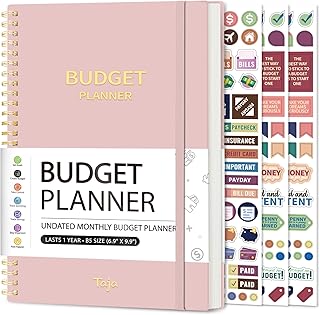
Many people lose thousands chasing “passive” opportunities that are actually expensive lessons. Budgeting isn’t just about cutting expenses—it’s about protecting your capital. Tools like the Budget Planner – Monthly Budget Book with Expense Tracker Notebook help you track every dollar, so you can spot risks before they drain your account. In this in-depth guide, we’ll expose the red flags, scams, and overhyped promises that plague passive income, and show you how a disciplined budget acts as your first line of defense.
The Dark Side of “Easy Money”: Identifying Passive Income Scams
Scammers know people want effortless income. They prey on desperation and inexperience. Understanding their playbook helps you recognize threats early.
Common Scam Archetypes
- Get-Rich-Quick Schemes – Promise massive returns in days with no work. “Double your money in 24 hours” is always a lie.
- Multi-Level Marketing (MLM) – Disguised as business opportunities, they focus on recruitment. Most participants lose money.
- Cryptocurrency Pump-and-Dumps – Hype coins on social media, then insiders sell and crash the price.
- Drop servicing / Flipping Courses – Sell you generic “knowledge” that’s freely available online, often with no real system.
- High-Yield Investment Programs (HYIPs) – Ponzi structures that collapse when new investors stop arriving.
Red Flags That Should Stop You Immediately
| Red Flag | Why It’s Dangerous |
|---|---|
| Upfront fees before any earnings | Legitimate passive income rarely requires large initial payments. |
| Unrealistic income claims | “$10,000/month with 5 minutes a day” violates basic economics. |
| Pressure to act fast | Scammers create urgency to bypass your critical thinking. |
| No verifiable track record | Real systems show transparent results (even if modest). |
| Celebrity endorsements (fake) | Deepfake or stolen images are common. |
| Vague business models | If you can’t explain how money is made, it’s likely made from you. |
How Budgeting Unmasks These Traps
When you track every expense using a dedicated planner like the Budget Planner – Monthly Budget Book with Expense Tracker Notebook (Black), you can see exactly where your money goes. A scam opportunity will show up as an unexplained outflow. Budgeting forces you to ask: Can I afford to lose this money? If the answer is no, you avoid the risk.

Overhyped Promises That Drain Your Budget
Even legitimate income streams are often oversold. Marketers exaggerate “passive” to sell courses, tools, or memberships. Let’s examine the most overhyped claims—and the hidden costs.
“Rental Properties Are Completely Passive”
Landlording isn’t passive. You handle repairs, tenant issues, property management, and vacancies. The true passive version is a Real Estate Investment Trust (REIT) , which pays dividends without you touching a toilet. But even then, returns are moderate, not explosive.
Example: A real estate guru promises “passive cash flow” from a rental. After buying a property with debt, you spend weekends fixing leaks. Your budgeting tool reveals negative net income when you include your time.
“Dropshipping Will Make You Rich Overnight”
Dropshipping has low upfront cost but high operational complexity. You must manage ads, returns, customer service, and supplier issues. Many beginners burn through their savings before making a single sale. A Budget Binder like the SKYDUE Money Saving Binder helps you allocate a testing budget so you don’t gamble your rent money.
“Affiliate Marketing Needs Zero Work”
Affiliate marketing requires content creation, SEO, audience building, and constant optimization. It can become semi-passive after months of effort, but the initial phase demands active work. Promises of “set it and forget it” ignore reality.
The Cost of Overhyped Courses
The real money in passive income gurus is selling you the dream. Courses for $500–$2,000 are common. Yet the success rate is abysmal. According to FTC data, most people who buy these never earn back the tuition. Budgeting prevents you from impulse-purchasing shiny objects.
How Budgeting Protects You from Passive Income Pitfalls
Budgeting isn’t just about restricting spending—it’s a radar system for financial threats. When you track income and expenses, you gain clarity. That clarity helps you evaluate passive income opportunities rationally.
The 30-Day Rule for Any Passive Income Investment
- Write the opportunity in your budget planner.
- Wait 30 days before committing money.
- Research thoroughly during that period.
- If the offer still seems good after a month, proceed with caution.
This simple habit saves thousands. Use a NICOOTH Budget Binder with Cash Envelopes (Purple) to physically set aside cash for experimental investments. Once the envelope is empty, you stop.

Use Zero-Based Budgeting for Passive Income Experiments
Zero-based budgeting means every dollar has a job. You allocate a specific “experiment fund” for testing side hustles. When that fund is depleted, you evaluate results before adding more. This prevents the “sunk cost” trap where you keep pouring money into a failing scheme.
The Budgeting 101 book by Adams Media teaches exactly this discipline. It’s a handy reference for anyone building a safety-first passive income plan.

Real vs. Fake Passive Income: A Comparison Table
Understanding the difference helps you set realistic expectations.
| Characteristic | True Passive Income | Fake / Overhyped Passive Income |
|---|---|---|
| Time to start earning | Weeks to months (setup) | Instant (promised) |
| Ongoing effort | Minimal maintenance | Hidden active work (ads, support) |
| Risk level | Low to moderate (investments) | Very high (scams, volatility) |
| Transparency | Clear track record, regulation | Vague claims, no audits |
| Scalability | Gradual, compound growth | Exponential (impossible) |
| Examples | Index funds, dividend stocks, royalties | MLM, crypto trading bots, “systems” |
| Budget fit | You control allocation | You lose control to promoters |
Expert Insights: What to Look for Before Investing
We spoke with financial advisors and experienced investors who’ve seen it all. These insights will help you vet any passive income proposition.
Verify the Numbers Yourself
Always ask: Where does the money come from? If the answer is “from new members” (MLM, pyramid), run. If it’s from real value creation (licensing, dividends), you can analyze.
Check Regulatory Filings
For investment products, look for SEC filings or equivalent in your country. Unregistered offerings are a red flag.
Avoid “Too Good to Be True” Returns
- Safe passive income: 4–10% annually (dividends, bonds).
- High-risk passive income: 15–30% (private lending, crypto staking).
- Anything above 30% is likely a scam.
Test with a Small Budget
Use your budget binder to allocate a tiny amount—say $50—to test a program. If it demands a larger minimum, it’s not worth it.
Look for Semi-Passive Realism
True semi-passive systems (like a blog with affiliate content or digital products) require upfront work but pay for years. Accept that some effort is necessary.
Budgeting Tools to Keep Your Finances on Track
The right tools make budgeting easy and consistent. Here are the products from our data that help you build financial discipline.
1. Budget Planner – Monthly Budget Book with Expense Tracker (Pink & Black versions)
- Price: $8.99 each
- Rating: 4.6 / 5
- Features: Undated, bill organizer, finance planner. Covers all your monthly tracking needs.
These planners let you monitor income vs. spending, so you can spot unnecessary losses to scams. The pink version (click to buy) and black version (buy here) are identical except color.
2. SKYDUE Budget Binder with Zipper Envelopes
- Price: $8.98
- Rating: 4.7 / 5
- Features: Cash envelopes, expense sheets, money saving system.
Perfect for the envelope method. Use it to allocate cash for passive income experiments. Available on Amazon.
3. NICOOTH Budget Binder (Purple)
- Price: $6.28
- Rating: 4.6 / 5
- Features: A6 size, zipper envelopes, includes budgeting sheets.
A compact, affordable option to keep in your bag. Makes tracking on-the-go easy. Check it out.
4. Budgeting 101 Book
- Price: $9.69
- Rating: 4.6 / 5
- Pages: 254
- Author: Michele Cagan, CPA
A foundational guide that explains budgeting principles you can apply to passive income decisions. Get the book.
Building a Healthy Passive Income Portfolio Without the Hype
Now that you can spot red flags and manage your budget, it’s time to build real passive income. Focus on proven, low-friction strategies.
Start with Index Funds and ETFs
These give you exposure to the entire stock market with minimal fees. They are truly passive because you don’t pick individual stocks. Learn more: Building Passive Income Streams with Index Funds and ETFs.
Consider Dividend Stocks
Dividend-paying companies send you cash quarterly. The key is reinvesting dividends to compound growth. See: How to Use Dividend Stocks for Long-term Passive Income.
Create Digital Products
Ebooks, templates, printables, or courses require upfront work but can sell for years. Budget your time and money with the planners above. Read: Creating Digital Products for Passive Income: Step-by-step Overview.
Semi-Passive Systems That Pay Off
Automation tools can turn active income into passive—but only after you build the system. Explore: How to Use Automation Tools to Turn Active Income into Passive Income.
Match Your Risk Tolerance
Not everyone should be a landlord or crypto trader. Design a portfolio that fits your comfort zone. Read: Designing a Passive Income Portfolio That Matches Your Risk Tolerance.
Avoid Overhyped Real Estate
Rental properties are often sold as passive, but they require constant management. Consider REITs instead. More: Rental Properties as Passive Income: How Passive Is It Really?.
Start Small with Low Capital
You don’t need huge money to begin. Discover: Beginner-friendly Passive Income Ideas That Don’t Require Huge Capital.
FAQ
What is the biggest red flag in a passive income opportunity?
The biggest red flag is an upfront fee before you see any earnings. Legitimate systems either have no fee or charge a reasonable one only after you receive income.
Can passive income really replace my full-time job?
Yes, but it takes years of consistent saving and investing. No shortcut exists. Budgeting helps you allocate funds to build that income stream slowly.
How do I know if a passive income course is a scam?
Check reviews from independent sources, not the course creator’s website. Look for refund rates—anything above 30% is suspicious. Use your budget binder to set a maximum you’re willing to lose.
Why is budgeting important for passive income?
Budgeting prevents you from overspending on risky ventures. It also shows you exactly how much capital you can afford to invest without jeopardizing your daily needs.
What is the most reliable passive income?
Index funds and dividend ETFs are among the most reliable. They have decades of historical returns and require zero maintenance besides occasional rebalancing.
Final Thoughts
Passive income is real, but it’s not magic. The hype machine wants you to believe you can skip effort and risk. Budgeting forces you to be honest about your finances and your goals. Armed with a simple planner or binder, you can resist scams, ignore overhyped promises, and build genuine wealth.
Start with one tool—maybe the SKYDUE Budget Binder—to track every dollar. Then slowly invest in proven passive channels. Your future self will thank you.
Remember: If it sounds too good to be true, it probably is. If it promises effortless millions, it’s definitely a scam. Budget first, invest second, and stay grounded.