 Insurance Curator
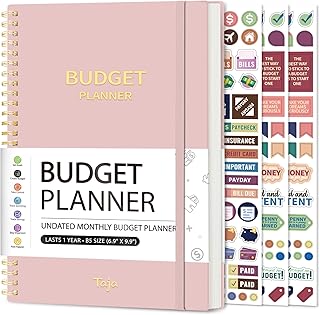
You know you should be better with money. You’ve tried tracking expenses, setting limits, maybe even using a Budget Planner – Monthly Budget Book with Expense Tracker Notebook (that pink one is a bestseller at $8.99). But something still feels off. You have the tools, yet your financial life isn’t transforming the way you expected.
Here’s the truth: budgeting is a skill, but financial literacy is a knowledge system. They aren’t the same thing, and treating them as interchangeable is why many people bounce from one budgeting method to another without lasting progress.
Financial literacy is your understanding of how money works — earning, saving, investing, debt, taxes, and risk. Budgeting is the practical application of that knowledge — a tool you use to plan where your money goes each month. You can be a great budgeter and still be financially illiterate. And you can know all the theory in the world yet never stick to a budget.
This article will break down the differences, show you why you need both, and give you actionable steps — plus real products — to build both skills.
What Is Financial Literacy? (The Knowledge Layer)
Financial literacy is your foundational understanding of personal finance. It’s the “why” behind the numbers. Without it, you might follow a budget blindly but fail to understand why you’re always broke or never growing wealth.
Core Components of Financial Literacy
- Earning & Income Types – Active, passive, portfolio, gig income. Knowing the difference affects tax strategy and long-term planning.
- Saving & Emergency Funds – How much to keep liquid, where to park cash (high-yield savings, money market accounts).
- Debt Management – Understanding interest rates, amortization, good debt vs. bad debt, and strategies like the debt snowball vs. avalanche.
- Investing Basics – Compound interest, risk tolerance, asset allocation, dollar-cost averaging, and the power of starting early.
- Insurance & Protection – Life, health, disability, property insurance. Why you need it and how it plugs financial leaks.
- Tax Literacy – How marginal brackets work, deductions, credits, and the difference between pre-tax and post-tax accounts.
- Retirement Planning – 401(k)s, IRAs, Roth vs. Traditional, employer match, vesting schedules.
Why Most People Stop at the Surface
A 2023 study by the TIAA Institute found that only 37% of U.S. adults could answer basic financial literacy questions correctly. Most people know they should save, but they don’t understand inflation’s impact on purchasing power or how compounding really works.
True financial literacy means you can answer questions like:
If you have $100 in a savings account earning 2% interest compounded annually, how much will you have after 5 years?
Which is more expensive over time: a 30-year mortgage at 6% or a 15-year mortgage at 5.5%?
Without this knowledge, your budgeting feels random. You might cut coffee but not realize your car loan interest is bleeding you dry.
Internal link suggestion: If you need a plain‑English refresher, check out Financial Literacy 101: Plain-english Basics Everyone Should Know before Building Wealth.
What Is Budgeting? (The Action Layer)
Budgeting is the process of creating a plan to spend your money. It tracks income and expenses over a set period (weekly, bi‑weekly, monthly). It’s the how — the practical tool that turns knowledge into daily decisions.
Common Budgeting Methods
| Method | How It Works | Best For |
|---|---|---|
| 50/30/20 | 50% needs, 30% wants, 20% savings/debt | Beginners, simplicity lovers |
| Zero‑Based Budget | Every dollar assigned a job until income minus expenses = $0 | Control‑focused, detailed trackers |
| Envelope System | Cash in labeled envelopes for categories; once empty, no more spending | Overspenders, visual learners |
| Pay Yourself First | Automate savings and investments first, then spend the rest | Goal‑oriented, high savers |
The Tools People Actually Use
You don’t need a fancy app to budget effectively. Many people prefer physical planners because writing things down builds accountability.
One of the most popular options is the Budget Planner – Monthly Budget Book with Expense Tracker Notebook ($8.99, 4.6 stars). It’s undated, covers bills and expenses, and comes in both pink and black versions. For $8.99, it’s a low‑risk way to start.
If you prefer the envelope system, the SKYDUE Budget Binder ($8.98, 4.7 stars) includes zipper envelopes and expense sheets. The NICOOTH Budget Binder ($6.28, 4.6 stars) offers a similar system in a compact A6 size.
These tools are great for executing a budget. But they won’t teach you why you should allocate 20% to savings or how to optimize your tax refund.
Key Differences: Financial Literacy vs. Budgeting
It’s easy to blur the lines. Let’s make them crystal clear.
| Aspect | Financial Literacy | Budgeting |
|---|---|---|
| Scope | Broad: all personal finance topics | Narrow: cash flow management |
| Focus | Knowledge, concepts, principles | Action, numbers, tracking |
| Examples | Understanding compound interest, inflation, risk | Listing income, categorizing spending, setting limits |
| Skills | Analytical, conceptual, decision‑making | Organizational, behavioral, habit‑forming |
| Outcome | Informed decisions, wealth building | Control over monthly spending |
| Time Horizon | Lifelong, strategic | Short‑term, tactical |
| Can it stand alone? | Yes (you can be knowledgeable but not budget) | No (budgeting without literacy leads to inefficient plans) |
Think of financial literacy as the engine and budgeting as the steering wheel. The engine gives you power; the wheel gives you direction. One without the other leaves you stalled or lost.
Why You Need Both
Here’s the real kicker: financial literacy makes budgeting meaningful, and budgeting makes financial literacy practical.
Without Budgeting, Financial Literacy Is Academic
You can know all about asset allocation, tax‑loss harvesting, and the 4% rule. But if you don’t know where your next paycheck is going, you’ll never implement that knowledge. Budgeting forces you to face reality: how much you actually spend on dining out, subscriptions, and impulse purchases.
Without Financial Literacy, Budgeting Is Blind
Many people create a budget that looks good on paper but fails because they don’t understand the underlying numbers. For example:
- You budget $200 for groceries but don’t know that food inflation is 4% — so your $200 buys less every month.
- You cut out your streaming services to save $30, but you keep a high‑interest credit card balance costing you $100 in interest per month.
- You sock away 10% of your income into a savings account earning 0.5%, when a high‑yield account at 4% would earn eight times more.
Financial literacy helps you see the forest. Budgeting helps you navigate the trees.
Internal link suggestion: If you’re a young adult trying to build both, read Financial Literacy for Young Adults: Money Skills Every 20‑Something Should Master Early.
Practical Steps to Build Both
You don’t have to become a finance guru overnight. Start small, layer knowledge and action together.
Step 1: Take a Financial Literacy Self‑Assessment
Before you budget, check your knowledge gaps. Use a quick quiz like the FINRA Investor Education Foundation’s Financial Capability Study questions. Identify weak spots: credit, investing, insurance, taxes.
Internal link: Not sure where you stand? Take How Financially Literate Are You? a Self‑assessment to Spot Hidden Money Gaps?.
Step 2: Choose a Budgeting Method That Matches Your Personality
Are you a detail‑oriented planner? Try zero‑based budgeting. Prefer simplicity? 50/30/20. Hate spreadsheets? Use a physical binder.
The SKYDUE Budget Binder is rated 4.7 stars and includes everything — cash envelopes, expense sheets, and tracking logs. It’s a great starting point.
Step 3: Commit 15 Minutes a Week to Financial Education
Read one article, listen to a podcast episode, or watch a video about a single topic each week. Example topics:
- How compound interest works (and how it can work against you with credit card debt)
- Difference between Roth and Traditional retirement accounts
- How to read a credit report
- The rule of 72
Internal link: For a quick weekly habit, see Simple Financial Literacy Habits That Can Transform Your Money in 15 Minutes a Week.
Step 4: Use Your Budget to Practice Literacy
Track not just how much you spend, but why. Ask:
- Is this expense helping me build wealth or just consuming?
- What is the opportunity cost of this purchase? (If I invest that $50 at 8% for 20 years, it’s $233.)
- Am I paying unnecessary fees (bank fees, high interest, late fees)?
Step 5: Level Up with a Finance Book
The Budgeting 101: From Getting Out of Debt and Tracking Expenses… ($9.69, 4.6 stars) is an excellent resource. It covers both concepts: literacy fundamentals and practical budgeting techniques. It’s part of the Adams 101 series and is written for absolute beginners.
How Budgeting Tools Can Accelerate Financial Literacy
Using a structured planner forces you to engage with your numbers weekly. That repetition builds intuition. Over time, you start to internalize principles like:
- Pay yourself first – When you see savings as a line item, it becomes a habit.
- Living below your means – Tracking expenses reveals how much you actually need.
- Emergency funds – Budgeting for “unexpected” expenses makes you appreciate liquidity.
The NICOOTH Budget Binder ($6.28) is perfect for the envelope method. Physically handing over cash for categories makes spending more painful — and that emotional feedback teaches you the value of delayed gratification.
Similarly, the Budget Planner – Monthly Budget Book with Expense Tracker Notebook – Black ($8.99) gives you a structured layout that encourages reflection at month’s end. Over time, that reflection builds financial literacy.
Product Showcase: Clickable Ad
Real-Life Case Study: From Broke to Balanced
Alex was a 29‑year‑old software engineer earning $75,000. He used a budget app religiously and always stayed within his categories. But he had $15,000 in credit card debt and zero savings.
Why? He was financially literate in some areas (he knew about 401(k) matching) but completely ignorant in others (he didn’t understand how credit card interest compounded). His budget allocated $300 extra to his credit card each month, but at 22% APR, his balance barely budged.
After reading a financial literacy book, Alex realized he needed to stop using credit cards altogether and attack the debt with a snowball method. He also learned that his 401(k) match was free money he was leaving on the table. He adjusted his budget to:
- Pause retirement contributions temporarily (only while high‑interest debt existed)
- Use the envelope system for all discretionary spending
- Allocate $600/month to debt (instead of $300)
Within 14 months, Alex was debt‑free. He then ramped up his 401(k) contributions and started an emergency fund. Budgeting alone didn’t fix him. Financial literacy showed him what to fix, and budgeting gave him the discipline to do it.
Common Mistakes People Make
1. Thinking They’re the Same
Many people say “I’m on a budget” and assume that means they’re financially literate. Wrong. Budgeting is a subset.
2. Relying Only on Apps Without Understanding the Why
Automation is great, but if you don’t understand why you’re saving or investing, you’ll make poor decisions when life changes.
3. Never Revisiting Financial Assumptions
Your budget should evolve as your literacy grows. When you learn about tax brackets, you might adjust your retirement contributions to lower your taxable income.
4. Ignoring Behavioral Finance
Knowing what to do and doing it are different. Financial literacy includes understanding biases like loss aversion, present bias, and the endowment effect. Budgeting tools (like cash envelopes) can counteract those biases.
5. Not Teaching Kids Both
If you only teach your child how to budget an allowance but never explain inflation, compound interest, or trade‑offs, they’ll struggle later.
Internal link: For parents, check out Financial Literacy for Parents: How to Teach Kids About Money at Every Age.
Conclusion
Financial literacy and budgeting are two sides of the same coin. One is the knowledge; the other is the action. You cannot sustainably manage your money with only one.
- Start with literacy so you understand the rules of the game.
- Apply with budgeting so you play the game effectively.
- Revisit both as your life and financial situation change.
The products linked in this article — from the Budget Planner to the Budgeting 101 book — are tools, not solutions. The real solution is building both your financial knowledge and your budgeting discipline.
Remember: you don’t need to be perfect. You just need to be better than you were yesterday. Start today.
Frequently Asked Questions
What is the difference between financial literacy and budgeting?
Financial literacy is your understanding of how money works — concepts like compound interest, inflation, and investing. Budgeting is the practical act of planning and tracking your income and expenses. Literacy provides the why; budgeting provides the how.
Can I be good at budgeting but not financially literate?
Yes. Many people can stick to a budget without understanding the deeper principles of personal finance. However, this often leads to suboptimal decisions, such as saving in low‑interest accounts while carrying high‑interest debt.
Do I need financial literacy to budget effectively?
Not strictly, but it helps tremendously. With literacy, you can prioritize the most impactful changes (e.g., paying off high‑interest debt before increasing savings). Without it, you might waste effort on tiny cuts while ignoring big leaks.
What’s the best budgeting method for beginners?
The 50/30/20 method is the simplest. If you want more control, try zero‑based budgeting. The envelope method (often done with physical binders like the SKYDUE or NICOOTH) is excellent for overspenders.
How can I improve my financial literacy quickly?
Commit to one focused learning session per week. Read books like Budgeting 101, follow reputable finance blogs, listen to podcasts, or take free courses from sources like Khan Academy or the FDIC’s Money Smart program.
Are budget planners really useful?
Yes, especially for visual and tactile learners. Writing down expenses reinforces awareness. Planners like the Budget Planner from Amazon ($8.99, 4.6 stars) provide a structured format that helps you stay consistent.
Is financial literacy the same as being good with money?
Not exactly. Being good with money requires both literacy (knowledge) and discipline (behavior). You can know everything about compound interest and still spend impulsively. Budgeting bridges the gap between knowledge and action.
What’s more important: financial literacy or budgeting?
Both are equally important. Literacy without budgeting is theory without practice. Budgeting without literacy is action without direction. They work best together.
How do I teach my child about money?
Start with simple budgeting skills (saving, spending, sharing) and layer in literacy concepts as they age. For example, explain interest when they get a loan from the “family bank.” See our guide on Financial Literacy for Parents: How to Teach Kids About Money at Every Age for more.
Can a high‑income earner be financially illiterate?
Absolutely. High earners often suffer from lifestyle creep and may lack knowledge about tax strategies, investing, or debt. Financial literacy isn’t about income level — it’s about understanding. See Financial Literacy for High Earners: Avoiding Lifestyle Creep and Silent Money Leaks.