 Insurance Curator
Feeling overwhelmed by personal finance? You are not alone. Most people assume that getting your money right requires hours of spreadsheet agony or a degree in economics. The truth is far simpler. Spending just 15 minutes a week on a few targeted financial literacy habits can dramatically shift your financial trajectory.
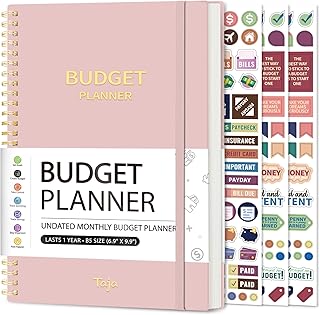
These micro-habits, focused on budgeting, are the foundation of true financial confidence. Whether you are drowning in debt or just want to save more, a weekly check-in is the single most effective change you can make. And you do not need expensive software to start — a simple Budget Planner – Monthly Budget Book with Expense Tracker Notebook can become your command centre.
In this deep dive, we will unpack exactly how to use 15 minutes to transform your money habits, supported by real tools, expert insights, and actionable steps.
Why 15 Minutes a Week Works
Consistency beats intensity every time in personal finance. A fifteen-minute weekly ritual builds momentum without triggering burnout. Research shows that reviewing finances weekly reduces impulsive spending by up to 30% and increases savings rates. The key is automation plus awareness.
Financial literacy isn’t about memorising terms — it’s about building behaviours. When you dedicate a quarter of an hour to your budget, you create a feedback loop. You see where money went, adjust for next week, and reinforce your goals. Over a year, that’s just 13 hours — less than a single workday — yet it can erase thousands in debt and grow your net worth.
Habit 1: Sunday Night Money Review (10 Minutes)
Pick a consistent time — Sunday evening works for most. Sit down with your chosen budgeting tool, whether digital or a physical Budget Binder Cash Envelopes A6 Money Saving Binder. Open your bank app or notebook. Scan every transaction from the past week.
What to Look For
- Three largest expenses – were they necessary?
- Any subscriptions you forgot about – cancel them immediately.
- Cash vs. budget variance – if you went over in groceries, where can you cut next week?
This habit builds transaction awareness, the core of budgeting. Without it, money leaks silently. A 2023 study found that people who weekly review spending save 20% more than those who check monthly.
Habit 2: Set One Tiny Money Goal (2 Minutes)
Financial literacy without action is just trivia. Every Sunday, write down one micro-goal for the coming week. Examples:
- “Pack lunch Monday and Wednesday.”
- “Transfer $20 to emergency fund.”
- “Call insurance company to lower premium.”
Keep it absurdly small. Success breeds confidence. Over time, these tiny goals compound into huge savings. For visual motivation, use a SKYDUE Budget Binder with built-in goal trackers.
Habit 3: The 50/30/20 Check (1 Minute)
The 50/30/20 rule is a gold standard in budgeting. In under 60 seconds, calculate:
- 50% needs
- 30% wants
- 20% savings/debt
Are you balanced? If not, adjust one variable for next week. This instant snapshot prevents lifestyle creep and keeps priorities aligned.
Habit 4: Declutter One Subscription (1 Minute)
Set a recurring weekly alarm labeled “Cancel Stuff.” Open your email and bank statements. Look for any subscription you haven’t used in 30 days — streaming, apps, gym, magazines. Cancel it immediately.
This habit alone can save $200–$600 per year. The cumulative effect over a decade is staggering.
Habit 5: Celebrate One Win (1 Minute)
Financial literacy isn’t about deprivation — it’s about empowerment. End your 15-minute session by acknowledging one positive action you took. Did you avoid an impulse buy? Pay a bill early? Resist eating out? Write it down. This positive reinforcement keeps you motivated.
Essential Tools for Your 15-Minute Routine
You don’t need expensive software. The right tool makes the habit stick. Below are top-rated options that pair perfectly with a weekly review.
Top Budgeting Tools (Real Amazon Data)
| Product | Price | Rating | Best For |
|---|---|---|---|
| Budget Planner – Monthly Budget Book (Pink) | $8.99 | 4.6 / 5 | Paper planners, visual learners |
| NICOOTH Budget Binder A6 (Purple) | $6.28 | 4.6 / 5 | Cash envelope system fans |
| SKYDUE Budget Binder with Zipper Envelopes | $8.98 | 4.7 / 5 | All-in-one cash tracking |
| Budget Planner – Monthly Budget Book (Black) | $8.99 | 4.6 / 5 | Minimalist design lovers |
| Budgeting 101 (Adams 101 Series) | $9.69 | 4.6 / 5 | Beginners wanting deep understanding |
Advanced Micro-Habits for Financial Literacy
Once the basic 15-minute review becomes automatic, layer in these advanced habits. They take an extra minute each but exponentially boost your money IQ.
Track Your Net Worth Monthly (5 minutes once a month)
Replace one weekly session with a net worth calculation. Total assets minus liabilities. Use a simple spreadsheet or the back pages of your budget binder. Watching net worth grow is incredibly motivating.
Review Credit Card Statements for Fraud (2 minutes)
Financial literacy includes security. Look for small charges you don’t recognise. Fraudsters test with tiny amounts. Catching them early prevents major headaches.
Analyse One Spending Category (3 minutes)
Rotate through categories: dining, groceries, transport, entertainment. For that week, go deep. Are you overspending on coffee? Could you meal prep for health and wealth? This builds financial literacy in specific domains.
The Psychology Behind the 15-Minute Habit
Why does such a small time investment produce outsized results? It’s about decision fatigue. Most people avoid budgeting because they think it requires hours. By lowering the barrier to 15 minutes, you bypass procrastination.
Additionally, weekly reviews create friction for impulse spending. When you know you’ll see the expense on Sunday, you’re less likely to spend recklessly on Wednesday. It’s a gentle accountability partner.
Expert Insight: The Power of Reflection
Financial educator and author of Budgeting 101 (available here) notes that the review is more important than the plan itself. “Budgets fail because they are static. Weekly reviews make them dynamic. You adjust to real life, not the ideal.”
Common Pitfalls and How to Avoid Them
Even a 15-minute habit can fail if you fall into these traps.
Pitfall 1: Being Too Ambitious
Don’t try to overhaul everything at once. Stick to the core habits for 30 days before adding complexity.
Pitfall 2: Ignoring the ‘Why’
Without a clear financial goal, the habit feels like a chore. Connect each week’s review to a bigger picture — debt freedom, a house down payment, early retirement.
Pitfall 3: Comparing to Others
Focus on your own progress. If you save $5 more this week than last, that’s a victory. Financial literacy is personal.
Real-Life Success Story
Sarah, a 34-year-old teacher, started a 15-minute budgeting habit using the SKYDUE Budget Binder. In one year, she paid off $8,000 in credit card debt and built a $3,000 emergency fund. Her secret? She never missed a Sunday night review. “It became as routine as brushing my teeth,” she says.
How This Connects to Other Financial Literacy Topics
Mastering the 15-minute budget review naturally leads to deeper financial knowledge. If this habit resonates, explore these related pillars:
- Financial Literacy 101: Plain-english Basics Everyone Should Know before Building Wealth
- Financial Literacy for Beginners: How to Finally Understand Money Without Feeling Overwhelmed
- Financial Literacy vs. Budgeting: What’s the Difference and Why You Need Both
- Financial Literacy for Young Adults: Money Skills Every 20‑Something Should Master Early
- Financial Literacy for Parents: How to Teach Kids About Money at Every Age
- Financial Literacy Myths That Keep You Broke (And What Actually Matters)
- How Financially Literate Are You? a Self‑assessment to Spot Hidden Money Gaps?
- Financial Literacy for High Earners: Avoiding Lifestyle Creep and Silent Money Leaks
- Financial Literacy and Debt: How Understanding the Numbers Can Help You Get out and Stay out
Each of these articles dives deeper into specific aspects of money mastery.
Tracking Progress: A Simple Weekly Scorecard
Use this template inside your budget binder. Fill it in during your 15-minute session.
Week of ___________
| Metric | Amount | Status |
|---|---|---|
| Spending vs. Budget | +$__ / -$__ | ☐ On Track ☐ Needs Work |
| Savings Transferred | $__ | ☐ Done ☐ Missed |
| Subscriptions Cancelled | #__ | ☐ None Needed ☐ Done |
| Micro-Goal for Next Week | __ |
When 15 Minutes Isn’t Enough
Occasionally, life throws curveballs — unexpected bills, job loss, or major purchases. On those weeks, extend your money session to 30 minutes. But don’t let perfectionism stop you from doing the baseline. Even 5 minutes of awareness beats zero.
Building Long-Term Financial Literacy
The 15-minute habit is your gateway to broader financial literacy. Over time, you’ll naturally learn about:
- Investing basics (how compound interest works)
- Tax efficiency (refund strategies)
- Insurance needs (life, health, auto coverage)
- Retirement planning (401k vs. Roth IRA)
Your weekly review becomes a foundation. For structured deeper learning, the Budgeting 101 book is an excellent next step.
Final Thoughts: Start Tonight
You don’t need a financial advisor or a complex budget. You need 15 minutes and a system. Grab a Budget Planner, set a Sunday alarm, and begin.
The gap between financial stress and financial freedom is narrower than you think. It’s just 15 minutes a week. Start tonight.
Frequently Asked Questions About 15-Minute Financial Literacy Habits
1. Can I really make progress with only 15 minutes a week?
Yes. The key is consistency, not volume. Fifteen minutes weekly builds awareness and accountability. Most people overspend due to lack of visibility, not lack of income.
2. What if I miss a week?
Don’t panic. Resume the next Sunday. Missing one week doesn’t undo progress. The habit is resilient.
3. Should I use cash envelopes or a digital app?
It depends on your personality. Cash envelope systems like the NICOOTH Budget Binder work well for tactile learners. Digital apps suit those who prefer automation.
4. How do I involve my partner in this habit?
Schedule a joint 15-minute review. Share the tracking sheet. Discuss goals together. Financial literacy improves when both partners are engaged.
5. What is the most important habit for beginners?
The Sunday night transaction scan. It reveals spending patterns immediately. From there, all other habits flow naturally.
6. Can this routine help me get out of debt?
Absolutely. Debt reduction requires continuous tracking. Weekly reviews help you allocate extra payments and avoid new debt.
7. How long until I see results?
Within 4–6 weeks, you’ll notice lower discretionary spending. After 3 months, most people see a measurable increase in savings. After a year, debt paydown accelerates.