 Insurance Curator
Financial literacy isn’t about being a math genius or memorizing stock tickers. It’s about understanding how money works so you can make it work for you. And at the very heart of that understanding lies one skill: budgeting.
Without a budget, even a high income can slip through your fingers. With one, you gain clarity, control, and the confidence to build real, lasting wealth. This guide breaks down the plain-English basics of financial literacy with a special focus on budgeting—the foundation that supports every other money move you’ll ever make.
But we won’t stop at theory. You’ll find real-world examples, expert insights, and even practical tools like the Budgeting 101 book to help you start today.
What Is Financial Literacy? (And Why Budgeting Is the First Chapter)
Financial literacy means knowing how to earn, save, spend, invest, and protect your money wisely. It’s not about jargon or complex formulas. It’s about making informed decisions that align with your goals.
The most practical starting point? Budgeting. A budget is simply a plan for your money. It tells your dollars where to go instead of wondering where they went. Think of it as the roadmap for your financial journey. Without it, you’re driving blind.
Why Budgeting Matters More Than You Think
- It prevents overspending. When you track your income and expenses, you see exactly where money leaks out.
- It speeds up wealth building. Every dollar you save can be redirected toward investments, debt repayment, or emergency funds.
- It reduces financial stress. Knowing you have a plan—and sticking to it—brings peace of mind.
In short, budgeting is the single most effective habit for anyone wanting to build wealth, regardless of income level.
The Core of Budgeting: Income, Expenses, and Goals
Before diving into methods, you need to understand the three pillars of any budget:
| Pillar | Definition | Example |
|---|---|---|
| Income | Money coming in (after taxes) | Salary, freelance earnings, side hustles |
| Expenses | Money going out | Rent, groceries, subscriptions, debt payments |
| Goals | What you want your money to do | Save $10,000 for a house, pay off credit card debt |
A budget bridges the gap between your income and your goals by controlling your expenses.
The 50/30/20 Rule: A Simple Starting Point
One of the easiest budgeting frameworks is the 50/30/20 rule, popularized by Senator Elizabeth Warren. It divides your after-tax income into three buckets:
- 50% for Needs — Rent, utilities, groceries, minimum loan payments.
- 30% for Wants — Dining out, entertainment, travel, shopping.
- 20% for Savings & Debt Repayment — Emergency fund, retirement accounts, extra debt payments.
Example: If you take home $4,000 per month, that means $2,000 for needs, $1,200 for wants, and $800 for savings/debt.
Expert insight: This rule is a great starting point, but adjust percentages based on your reality. High-cost cities may require a higher “needs” percentage. The key is to keep savings and debt repayment at the forefront.
Zero-Based Budgeting: Every Dollar Has a Job
For those who want more control, zero-based budgeting assigns every dollar of income a specific purpose until your income minus expenses equals zero.
How it works:
- List all income.
- List all expenses (fixed, variable, savings, debt).
- Allocate every dollar until the balance is zero.
This method forces you to be intentional. It’s especially effective for people who tend to overspend in “miscellaneous” categories.
Envelope System: Cash-Only Discipline
If you struggle with overspending on items like groceries or entertainment, the envelope system might be your solution. Withdraw cash for each spending category and put it in separate envelopes. When the envelope is empty, you stop spending in that category.
Physical tools like the NICOOTH Budget Binder Cash Envelopes can make this method tangible and motivating. Many modern budgeters combine digital tracking with cash envelopes for extra accountability.
Tracking Your Expenses: The Non-Negotiable Habit
You can’t manage what you don’t measure. Tracking expenses is the detective work that reveals your true spending patterns.
How to Track: Three Methods
- Manual logging — Write every expense in a notebook or a Budget Planner like the popular black version ($8.99, 4.6 stars). This method builds awareness but requires discipline.
- App-based tracking — Use apps like Mint, YNAB, or PocketGuard that sync with your bank accounts.
- Spreadsheet — Create a custom Excel or Google Sheets file to categorize and analyze.
Pro tip: Start with a manual method for one month. It forces you to see every transaction. After you understand your habits, switch to an app for efficiency.
What to Do With the Data
After tracking for a month, categorize your expenses. Look for patterns:
- Fixed expenses: Rent, car payment, insurance.
- Variable expenses: Groceries, gas, entertainment.
- Irregular expenses: Annual subscriptions, gifts, car maintenance.
Now compare your spending to your budget. Are you within your 50/30/20 targets? Where can you cut back? Even small changes—like brewing coffee at home instead of buying it daily—can free up hundreds of dollars a year.
Setting Financial Goals That Stick
A budget without goals is like a ship without a destination. Goals give your budget meaning and motivation.
Short-Term vs. Long-Term Goals
| Goal Type | Time Frame | Example | Budget Action |
|---|---|---|---|
| Short-term | 0–12 months | Save $1,000 emergency fund | Set up automatic transfer biweekly |
| Medium-term | 1–5 years | Down payment for a car | Dedicate 10% of income to car savings |
| Long-term | 5+ years | Retirement | Contribute 15% to 401(k) or IRA |
SMART Goals for Budgeting
Make your goals Specific, Measurable, Achievable, Relevant, and Time-bound.
Example: Instead of “I want to save more money,” say “I will save $200 per month for 6 months to build a $1,200 emergency fund.”
Write your goals down and review them weekly. If you need a dedicated space to track progress, consider the SKYDUE Budget Binder (rated 4.7 stars, $8.98). It includes expense sheets and cash envelopes to keep your goals front and center.
Beyond Budgeting: How Financial Literacy Builds Wealth
Budgeting is the foundation, but true wealth building requires expanding your financial literacy into other areas. Here’s how budgeting connects to the bigger picture.
Debt Management
Debt is often the biggest obstacle to wealth. A budget helps you allocate extra payments toward high-interest debt, especially credit cards. Use methods like the debt snowball (pay smallest balances first) or debt avalanche (pay highest interest first).
For a deeper dive, read our article on Financial Literacy and Debt: How Understanding the Numbers Can Help You Get out and Stay out.
Emergency Fund
An emergency fund of 3–6 months of expenses is your financial safety net. Budgeting allows you to consistently add to this fund until it’s fully funded. Start small: $20 per week adds up to over $1,000 in a year.
Investing
Once your budget is stable and you have an emergency fund, investing becomes possible. The key is to invest consistently, even if it’s just $50 per month. Low-cost index funds are a great starting point.
Avoiding Lifestyle Creep
As your income rises, it’s tempting to increase your spending. A budget keeps you grounded. When you get a raise, immediately allocate a portion to savings or investments before adjusting your lifestyle.
For more on this, see Financial Literacy for High Earners: Avoiding Lifestyle Creep and Silent Money Leaks.
Common Budgeting Mistakes (And How to Fix Them)
Even experienced budgeters slip up. Here are the most common pitfalls and plain-English fixes.
Mistake #1: Being Too Restrictive
If your budget leaves no room for fun, you’ll abandon it quickly.
Fix: Include a “fun money” category. Even $50 per month for guilt-free spending helps you stay on track.
Mistake #2: Not Accounting for Irregular Expenses
Annual insurance premiums, holiday gifts, car registration—these can blow a monthly budget if you forget them.
Fix: List all irregular expenses for the year, divide by 12, and save that amount each month.
Mistake #3: Giving Up After a Bad Month
Everyone overspends sometimes. The key is to reset the next month, not quit entirely.
Fix: Review what went wrong, adjust your budget, and move forward. Consistency over perfection wins.
Tools and Resources to Simplify Budgeting
You don’t need expensive software to budget effectively. Here are practical tools from the real data.
Physical Budget Planners & Binders
- Budget Planner – Monthly Budget Book (Pink) — $8.99, 4.6 stars. Undated, with expense tracker and bill organizer. Check it out here.
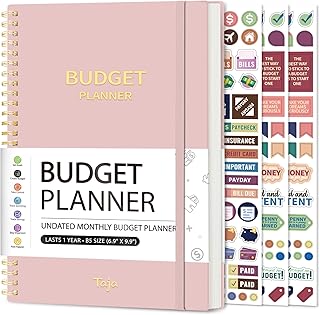
- Budget Planner – Monthly Budget Book (Black) — Same features, black cover. $8.99, 4.6 stars. Get yours here.

- NICOOTH Budget Binder Cash Envelopes (Purple) — $6.28, 4.6 stars. A6 size with zipper envelopes for cash budgeting. Buy it here.

- SKYDUE Budget Binder — $8.98, 4.7 stars. Includes zipper envelopes, cash envelopes, and expense sheets. Order now.

Books for Deeper Learning
- Budgeting 101 (Adams 101 Series) — $9.69, 4.6 stars. Covers debt tracking, financial goals, and savings strategies. Read more.

The Link Between Financial Literacy and Budgeting
Some people think financial literacy and budgeting are the same thing. They aren’t, but they’re deeply connected.
- Budgeting is the tactical day-to-day management of money.
- Financial literacy is the broader understanding that guides those tactics—like knowing why compound interest matters, how credit scores work, or what an emergency fund is for.
To explore this further, check out Financial Literacy vs. Budgeting: What’s the Difference and Why You Need Both.
Simple Habits to Build Financial Literacy
You don’t need to read a textbook. Spend 15 minutes a week on one of these habits:
- Read one article about investing or saving.
- Review your budget and track spending.
- Listen to a personal finance podcast during your commute.
This approach works for all ages. See Simple Financial Literacy Habits That Can Transform Your Money in 15 Minutes a Week.
Financial Literacy for All Stages of Life
Your budgeting approach will evolve as you move through different life stages. Here’s how to adapt.
For Young Adults (20s)
Focus on building a budget that covers rent, student loans, and savings. The 50/30/20 rule works well here. Avoid lifestyle inflation when you get your first “real” job.
Read more: Financial Literacy for Young Adults: Money Skills Every 20‑Something Should Master Early.
For Parents
Budgeting becomes more complex with children. You need to account for childcare, education savings (529 plans), and possibly a larger emergency fund. Teach your kids about money early with allowances and saving jars.
Explore Financial Literacy for Parents: How to Teach Kids About Money at Every Age.
For High Earners
Higher income can mask poor habits. Without a budget, lifestyle creep can eat away your raises. Use a zero-based budget to stay intentional and maximize your savings rate.
For Anyone Retiring
Your budget shifts from accumulation to distribution. Focus on managing withdrawal rates and healthcare costs. Financial literacy helps you understand tax implications and Social Security timing.
Busting Financial Literacy Myths
There’s a lot of bad advice out there. Here are three common myths that keep people broke.
Myth #1: “Budgeting means I can’t have fun.”
Reality: A budget actually gives you permission to spend guilt-free on what you value, as long as you’ve planned for it. It’s about priorities, not deprivation.
Myth #2: “I don’t make enough to budget.”
Reality: Budgeting is even more critical when money is tight. Tracking every dollar helps you identify waste and redirect it toward your most important needs.
Myth #3: “I’m bad with numbers, so I can’t be financially literate.”
Reality: Financial literacy doesn’t require advanced math. Basic addition and subtraction are enough. Many tools do the calculating for you.
For more debunking, read Financial Literacy Myths That Keep You Broke (And What Actually Matters).
How Financially Literate Are You? A Quick Self-Assessment
Take a minute to gauge your current knowledge. Answer these questions honestly:
- Do you know your total monthly income after taxes?
- Do you track your expenses every month?
- Do you have a written budget?
- Do you have an emergency fund with at least 3 months of expenses?
- Do you know your credit score and how to improve it?
If you answered “no” to two or more, you’ve got room to grow. That’s okay—every expert started as a beginner. Use this article as your launchpad.
You can take a more detailed assessment here: How Financially Literate Are You? A Self‑assessment to Spot Hidden Money Gaps?
Putting It All Together: Your Action Plan
Now that you understand the basics, here’s a step-by-step plan to start building wealth through budgeting and financial literacy.
Week 1: Track Every Dollar
Write down every single expense for 7 days. Use a notebook, a Budget Planner, or an app. Don’t judge—just observe.
Week 2: Create Your First Budget
Choose a method (50/30/20, zero-based, or envelope). Based on your tracking, set realistic spending limits. Include savings as a fixed expense.
Week 3: Set One Financial Goal
Pick one short-term goal, like saving $500 for an emergency fund. Write it down and add a monthly contribution to your budget.
Week 4: Review and Adjust
At the end of the month, compare actual spending to your budget. Did you overshoot? Adjust categories as needed. Repeat next month.
Ongoing: Expand Your Financial Literacy
Read one article per week from this site. Learn about investing, insurance, and retirement. Start with Financial Literacy for Beginners: How to Finally Understand Money Without Feeling Overwhelmed.
FAQ: Common Budgeting and Financial Literacy Questions
Here are answers to the most frequent questions people have when starting their journey.
What is the first step to becoming financially literate?
Start by understanding your cash flow—how much you earn and spend each month. Budgeting is the first practical skill.
Do I need a strict budget to build wealth?
Not necessarily strict, but you need a system. Even a flexible budget beats no plan at all.
Can I build wealth on a low income?
Yes. Consistency matters more than amount. Saving $50 per month consistently can grow significantly over time thanks to compound interest.
What’s the best budget method for beginners?
The 50/30/20 rule is easiest to implement and maintain. Once you’re comfortable, explore zero-based budgeting for more control.
How do I stay motivated to budget?
Connect your budget to a meaningful goal—like a vacation, debt freedom, or early retirement. Track your progress visually.
Is it okay to budget with a partner?
Absolutely. But both partners need to be involved. Schedule a monthly money date to review together.
What if I have irregular income?
Use a baseline budget based on your lowest monthly income. When you earn more, allocate the surplus to savings or debt.
Where can I find reliable financial literacy resources?
Start with reputable sites like this one, government resources (e.g., MyMoney.gov), and books like the Budgeting 101 guide mentioned earlier.
Final Thoughts: Your Journey Starts Now
Financial literacy is not a destination—it’s a continuous learning process. Budgeting is the first and most important skill to master. Once you gain control over your money, you can direct it toward the life you want.
Remember: You don’t need to be perfect. You just need to start. Pick one tool, like the SKYDUE Budget Binder, or one habit, like tracking expenses for a week. Small steps compound into big results.
Wealth building is a marathon, not a sprint. And with a solid budget as your foundation, you’re already ahead of the pack.