 Insurance Curator
If you’re staring at a stack of credit card bills, student loans, and maybe a car loan, the biggest question isn’t if you should pay them off — it’s how. Two heavyweight strategies dominate the personal finance world: the debt snowball and the debt avalanche. Both have passionate fans, fierce critics, and real, proven track records.
But which one actually saves you more money? Which one keeps you motivated when the balance feels insurmountable? And how does your budget fit into the equation?
Before we dive deep into the numbers, psychology, and step-by-step tactics, here’s the short version: The debt avalanche saves you more on interest, while the debt snowball keeps you on track emotionally. Your choice depends on your personality, your budget, and how much math you want to fight.
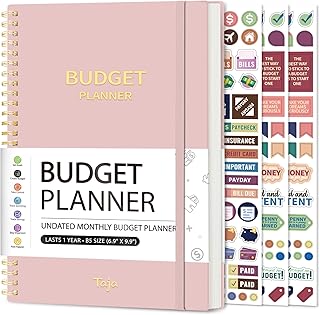
To get serious about tracking your payments, a reliable tool makes all the difference. The Budget Planner – Monthly Budget Book with Expense Tracker Notebook (rated 4.6 stars) helps you log every dollar — essential whether you choose snowball or avalanche.
What Are the Debt Snowball and Debt Avalanche?
These are two methods of ordering which debts you pay off first while making minimum payments on everything else.
The Debt Snowball Method
Created and popularized by Dave Ramsey, the debt snowball ignores interest rates completely. You list your debts from smallest balance to largest balance. You throw every extra dollar at the smallest debt first, regardless of its interest rate. Once that’s gone, you roll that payment into the next smallest debt, creating a “snowball” effect.
How it works:
- List debts from lowest balance to highest.
- Make minimum payments on all debts except the smallest.
- Attack the smallest with all extra cash.
- When paid off, add its payment to the minimum of the next smallest debt.
- Repeat until all debts are zero.
The Debt Avalanche Method
The avalanche is the mathematically optimal approach. You list debts from highest interest rate to lowest. You throw every extra dollar at the debt with the highest APR. This minimizes the total interest paid over time.
How it works:
- List debts from highest interest rate to lowest.
- Make minimum payments on all debts except the highest-rate debt.
- Attack the highest-rate debt with all extra cash.
- When paid off, roll that payment to the next highest-rate debt.
- Continue until debt-free.
Key Differences at a Glance
| Factor | Debt Snowball | Debt Avalanche |
|---|---|---|
| Ordering Rule | Lowest balance first | Highest interest rate first |
| Total Interest Paid | Higher | Lower |
| Time to First Payoff | Faster (small balance) | Slower (may be large balance) |
| Psychological Motivation | Strong (quick wins) | Weak (slow early progress) |
| Best For | People who need momentum | People who are disciplined and analytical |
Which Strategy Actually Saves You More Money?
Let’s run the numbers with a real example. Suppose you have three debts:
- Debt A: Credit card — $2,500 at 22% APR
- Debt B: Personal loan — $5,000 at 12% APR
- Debt C: Car loan — $8,000 at 6% APR
Assume you have $600 extra per month to put toward debt after covering minimums.
Debt Snowball Order
Pay off Debt A first ($2,500), then Debt B ($5,000), then Debt C ($8,000).
Total interest paid (approx): $2,780
Time to debt-free: 30 months
First payoff: Month 5 (Debt A)
Debt Avalanche Order
Pay off Debt A first (22%), then Debt B (12%), then Debt C (6%).
Total interest paid (approx): $2,560
Time to debt-free: 29 months
First payoff: Month 5 (same Debt A)
In this case, the avalanche saves about $220 in interest and finishes one month earlier. The difference is modest because the highest-rate debt is also the smallest balance. But when the high-rate debt is a large balance, the gap widens.
Scenario where avalanche crushes snowball:
- Debt X: $15,000 at 24% APR (credit card)
- Debt Y: $3,000 at 8% APR (student loan)
- Debt Z: $7,000 at 10% APR (personal loan)
Snowball order: Y ($3k), Z ($7k), X ($15k) — you pay off Y first because it’s smallest, but X is bleeding high interest the whole time.
Total interest snowball: ~$6,400
Total interest avalanche: ~$4,800
Savings with avalanche: $1,600
The avalanche can save hundreds or even thousands of dollars, especially if you carry high-rate credit card debt. That’s real money you can put into savings or a vacation.
The Psychology Factor: Why Snowball Wins for Many People
Money is emotional. A purely mathematical approach fails when you lose motivation after six months of paying on a huge, high-interest debt with no visible progress.
The snowball gives you quick wins. Every time you cross off a small balance, your brain releases dopamine. You feel unstoppable. That momentum keeps you throwing extra cash at debt instead of quitting.
Evidence: A study published in the Journal of Marketing Research found that consumers who used the debt snowball actually paid off more debt overall because they stayed committed longer. The emotional boost of small victories outweighed the mathematical disadvantage.
Expert insight: “The debt snowball is not about math. It’s about behavior modification,” says Dave Ramsey. “Personal finance is 20% head knowledge and 80% behavior.”
If you are easily discouraged or have a history of abandoning budgets, the snowball is likely your better choice. Pair it with a physical tracking system like the NICOOTH Budget Binder Cash Envelopes A6 Money Saving Binder with Zipper envelopes (Purple) (rated 4.6) to visualize each payoff.

When to Choose Debt Avalanche (and When to Avoid It)
Choose avalanche if:
- You are mathematically inclined and can ignore short-term progress.
- You have a large high-interest debt that you can pay off relatively quickly.
- Your debts have massive interest rate disparities (e.g., 24% credit card vs. 4% car loan).
- You have a stable income and strong willpower.
- You want to minimize total cost above all else.
Avoid avalanche if:
- You need early wins to stay motivated.
- Your finances are fragile and one slip could wreck your plan.
- You carry a lot of small debts that could be eliminated fast with snowball.
Expert insight: Suze Orman, another personal finance authority, leans toward the avalanche. “If you are going to pay the least amount of interest, you have to go after the highest-rate debt first,” she says. “But if you can’t stick with it, then do the snowball.”
How Budgeting Fits Into Both Methods
No debt strategy works without a budget. The extra cash you throw at debt comes from somewhere — cutting expenses, increasing income, or both.
Budgeting helps you:
- Identify how much “extra” you can put toward debt each month.
- Ensure minimum payments are never missed.
- Track progress and celebrate milestones.
- Avoid new debt while paying off old debt.
If you’re struggling to create a budget, the Budgeting 101: From Getting Out of Debt and Tracking Expenses to Setting Financial Goals and Building Your Savings book (rated 4.6) is a perfect starting point. It covers exactly how to build a sustainable plan.

A zero-based budget — where every dollar is assigned a job — pairs beautifully with both snowball and avalanche. The SKYDUE Budget Binder (rated 4.7) includes cash envelopes and tracking sheets to enforce your plan.

Deep Dive: Hybrid Approaches
You don’t have to pick one method for all your debts. Some people use a hybrid strategy:
- Snowball until you’re motivated, then switch to avalanche.
- Avalanche for high-interest debts, snowball for the rest.
- Target the smallest high-interest debt first (best of both worlds).
Example hybrid: List debts by balance, but within each balance tier, prioritize the highest interest rate. This gives you a quick win (small balance) while still attacking higher rates.
Expert insight: Financial therapist Dr. Brad Klontz recommends the snowball for most people. “The sense of accomplishment from paying off a small debt is more powerful than the math,” he says. “Behavior change is the real win.”
Real-World Application: Step-by-Step Plan
No matter which method you choose, follow these steps:
- List every debt with balance, interest rate, and minimum payment.
- Build a bare-bones budget using a tool like the Budget Planner (Black) (rated 4.6) to track every dollar.
- Decide on your order — snowball or avalanche.
- Attack the first debt with every extra dollar.
- Celebrate each payoff (not by spending, but by rolling the payment).
- Repeat until debt-free.

Common Mistakes and How to Avoid Them
Mistake 1: Ignoring minimum payments
Even if you’re focused on one debt, missing a minimum on another triggers late fees and credit score damage. Automate minimums immediately.
Mistake 2: Stopping too soon
Both strategies require consistency. If you pay off the first debt but don’t roll the payment forward, you lose all momentum.
Mistake 3: Not having an emergency fund
An unexpected car repair can derail your debt payoff if you have no cash. Save $1,000 (or one month of expenses) before starting.
Mistake 4: Choosing the wrong strategy for your personality
If you pick avalanche but feel demoralized after three months, you’ll quit. Be honest with yourself.
Internal Links for Deeper Exploration
- For a complete roadmap, read Debt Management 101: a Step-by-step Plan to Get out of Debt Faster.
- If you’re dealing with high interest rates, learn How to Negotiate with Creditors and Lower Your Interest Rates?.
- On a tight budget? Check Managing Debt on a Low Income: Practical Moves That Make a Real Difference.
- Not sure how to order debts without damaging credit? See How to Prioritize Multiple Debts Without Hurting Your Credit?.
- Wondering if consolidation is right? Read When to Consolidate Debt and When to Avoid It Completely?.
- To break the credit card cycle, visit How to Stop Using Credit Cards While Still Staying Financially Afloat?.
- For medical debt, see Medical Debt Management: Options, Rights, and Negotiation Scripts.
- Rebuilding after a settlement? Start with How to Rebuild Your Finances after a Debt Settlement or Bankruptcy?.
- Student loans require unique tactics: Student Loan Debt Management Strategies for Borrowers at Every Income Level.
FAQ: Debt Snowball vs. Debt Avalanche
1. What is the main difference between debt snowball and debt avalanche?
The debt snowball orders debts by smallest balance first, ignoring interest rates. The avalanche orders by highest interest rate first, minimizing total interest cost.
2. Which method saves more money?
The debt avalanche always saves more money on interest in the long run, because it targets high-rate debts first. Snowball can cost hundreds or thousands more in interest.
3. Is the debt snowball ever a better choice?
Yes, if you need quick wins to stay motivated. The snowball has higher psychological success rates, especially for people who have struggled with debt for years or tend to give up on financial plans.
4. Can I switch from snowball to avalanche halfway through?
Absolutely. If you pay off a small debt and feel motivated, you could then switch to avalanche for the remaining balances. The key is to keep momentum.
5. What budgeting tools work best with these strategies?
Physical budget planners and binders help you track progress. The Budget Planner – Pink and SKYDUE Budget Binder are top-rated options that keep your payments organized.
6. Do I need an emergency fund before starting?
Yes. Most experts recommend at least $1,000 saved before you start aggressive debt payoff. Otherwise, one unexpected expense could push you back into debt.
7. Should I use the snowball if I have very high-interest credit card debt?
Not necessarily. If your credit card debt has a 25% APR and is also your largest balance, the avalanche would save you significantly more. But if you can’t stick with it, snowball is better than nothing.
Final Verdict: Which Should You Choose?
There is no one-size-fits-all answer. The debt avalanche will save you the most money. The debt snowball will keep you engaged and consistent. Both are far superior to making minimum payments forever.
Your action plan:
- Calculate your total interest savings using an online calculator for both methods.
- Be brutally honest about your personality. Do you need quick wins or are you a math-first person?
- Pair your chosen strategy with an effective budgeting system — the tools linked above make that easy.
- Track every payment and celebrate every milestone.
Whichever path you take, the most important step is to start today. The longer you wait, the more interest you pay. Grab that budget binder, list your debts, and pick your strategy. Your future self will thank you.