 Insurance Curator
When you think about retirement planning, you probably focus on saving enough, picking the right investments, and estimating your future expenses. But what about taxes? Most people overlook the huge impact taxes can have on their retirement income. A dollar saved is great, but a dollar that grows tax-free and comes out tax-free is even better.
Budgeting plays a critical role in tax-efficient retirement planning. By controlling your spending and knowing exactly where your money goes, you can free up funds to implement strategies like Roth conversions, HSAs, and tax-loss harvesting. To get started, a simple tool like the Budget Planner – Monthly Budget Book with Expense Tracker Notebook can help you track every dollar and find hidden tax advantages.
In this deep-dive guide, we’ll reveal seven tax-efficient retirement planning strategies that most people overlook—and show you exactly how to apply them using smart budgeting techniques.
Why Tax Efficiency Matters for Retirement
Taxes are likely your largest expense in retirement—even bigger than housing or healthcare. According to the IRS, tax brackets are adjusted annually but remain progressive. In 2025, the top bracket starts at $626,350 for married couples filing jointly. Many retirees unknowingly push themselves into higher brackets by not planning withdrawals carefully.
Key factors that increase your tax burden in retirement:
- Required Minimum Distributions (RMDs) from traditional 401(k)s and IRAs
- Social Security benefits becoming taxable above certain income thresholds
- Capital gains taxes on taxable investment accounts
- Medicare premium surcharges (IRMAA) tied to income
By strategically timing income, contributions, and withdrawals, you can significantly reduce your tax bill—and keep more money for the lifestyle you worked for.
Strategy 1: The Roth Conversion Ladder
A Roth conversion ladder is one of the most powerful yet underused strategies. The idea: convert small amounts of your traditional IRA or 401(k) to a Roth IRA each year, paying taxes at your current rate, so that the growth is tax-free forever.
Why it’s overlooked: Most people fear paying taxes now. But if you convert during low-income years (e.g., between retirement and starting Social Security), you can lock in a 12% or 22% bracket instead of 32% later.
Budgeting tip: Use a budget planner to identify expenses you can trim. The extra cash can cover the conversion taxes. For example, if you skip dining out for a year, you might save $2,000—enough to pay taxes on converting $10,000.
Learn more about the differences between account types in our guide on 401(K) vs. IRA vs. Roth IRA: Choosing the Right Retirement Accounts.
Strategy 2: Health Savings Accounts (HSAs) as a Retirement Tool
Most people treat HSAs as a way to pay for current medical expenses. But if you pay medical costs out-of-pocket and let your HSA grow tax-deferred, you can withdraw tax-free for qualified expenses in retirement—including Medicare premiums and long-term care.
Triple tax advantage: Contributions are tax-deductible, growth is tax-deferred, and withdrawals for medical expenses are tax-free. After age 65, you can also withdraw for non-medical purposes (income taxes apply), making it similar to a traditional IRA.
Budgeting action: Track your healthcare spending in a SKYDUE Budget Binder and set aside enough to max out your HSA each year ($4,150 individual, $8,300 family in 2025).
For a deeper look at healthcare costs, see Planning for Healthcare Costs in Retirement: HSAs, Medicare, and Beyond.
Strategy 3: The Saver’s Credit (Retirement Savings Contributions Credit)
The Saver’s Credit is a non-refundable tax credit worth up to 50% of your retirement contributions ($2,000 max per person). To qualify, your adjusted gross income (AGI) must be below certain thresholds ($38,250 for single, $76,500 for married filing jointly in 2025).
Why people miss it: Many savers either don’t know about the credit or earn just above the limit. By reducing your AGI through traditional 401(k) contributions or an HSA, you can become eligible and get up to $1,000 back from the IRS.
Budgeting technique: Use an expense tracker like the Budget Planner – Monthly Budget Book to monitor your income and adjust contributions mid-year.
Strategy 4: Municipal Bonds for Tax-Free Income
Municipal bonds issued by state and local governments pay interest that is generally exempt from federal taxes—and often state taxes if you live in the issuing state. For retirees in higher tax brackets, this can be a game-changer.
Overlooked benefit: Muni bonds can be used in taxable brokerage accounts to generate tax-free income, reducing the need to withdraw from tax-deferred accounts (and thus avoiding higher RMDs).
Budgeting insight: If you are currently paying 24%+ federal tax and plan to stay in a high bracket, replacing some bond funds with munis can save hundreds annually. Use a budget binder to compare after-tax yields.
Strategy 5: Timing Your Social Security for Tax Efficiency
Your Social Security benefits become taxable when your combined income (AGI + nontaxable interest + half of benefits) exceeds $25,000 (single) or $32,000 (married). Delaying benefits to age 70 increases your monthly check but also raises your taxable income in later years.
Overlooked strategy: If you have a traditional IRA, consider withdrawing from it before claiming Social Security to avoid bumping up your taxable income later. This is called “filling the lower tax brackets” early.
Budgeting approach: Simulate scenarios with a spreadsheet or budget planner. The Budgeting 101 book offers simple methods to model income streams.
Strategy 6: Qualified Charitable Distributions (QCDs)
Once you turn 70½, you can transfer up to $105,000 per year directly from your IRA to a qualified charity. This counts toward your RMD and is excluded from your taxable income.
Why it’s overlooked: Many retirees simply take their RMD in cash and then donate separately. By using a QCD, you avoid increasing your AGI, which in turn lowers the taxes on Social Security and Medicare surcharges.
Budgeting tie-in: If you budget for charitable giving, allocate it to QCDs instead of cash donations. You’ll reduce your tax liability and still support your favorite causes.
Strategy 7: Tax-Loss Harvesting in Taxable Accounts
Tax-loss harvesting involves selling investments at a loss to offset capital gains elsewhere. While this is common for general investing, many retirees forget to apply it in the years leading up to retirement.
Overlooked benefit: Losses can offset up to $3,000 of ordinary income per year, and unused losses carry forward indefinitely. This lowers your AGI, which can help you qualify for the Saver’s Credit or avoid IRMAA surcharges.
Budgeting habit: Keep a detailed record of your investment transactions using a NICOOTH Budget Binder. Track purchase dates and prices to identify harvesting opportunities.
Budgeting Tools to Optimize Your Tax-Efficient Plan
To implement these strategies, you need a clear picture of your cash flow. Here are two outstanding tools that combine budgeting with tax planning.
1. Monthly Budget Planner (Pink or Black)
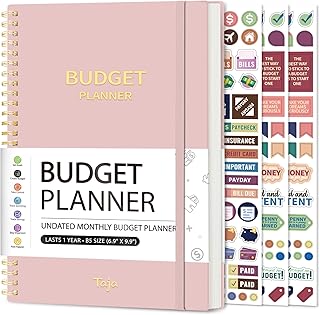
This undated planner helps you track income, expenses, and bill due dates. Use it to calculate your AGI throughout the year and decide when to make Roth conversions or HSA contributions. At $8.99 with a 4.6 rating, it’s an affordable way to stay on top of tax planning.
2. SKYDUE Budget Binder with Cash Envelopes

The SKYDUE binder includes pre-printed expense sheets and zippered envelopes for cash categories. It’s perfect for retirees who want to allocate funds for QCDs, charitable donations, or Roth conversion taxes. Rated 4.7 stars and priced at $8.98, it’s a top pick for disciplined budgeters.
3. Additional Resources
- Budgeting 101 (Book) – A clear guide to building a budget that supports tax-efficient saving. $9.69, 4.6 stars.
- NICOOTH Budget Binder (Purple) – Compact A6 size, perfect for on-the-go tracking. $6.28, 4.6 stars.
Common Mistakes That Undermine Tax Efficiency
Even with the best strategies, small errors can cost you thousands. Avoid these pitfalls:
- Ignoring RMDs – Failing to take RMDs results in a 50% penalty. Use a retirement planning checklist.
- Overlooking IRMAA – Medicare premiums rise with income. Manage your AGI carefully.
- Waiting too long to convert – The window between retirement and Social Security is ideal for Roth conversions.
- Not adjusting withholding – Update your W-4 to account for retirement income.
For a full list, read Avoiding Common Retirement Planning Mistakes That Cost You Hundreds of Thousands.
Putting It All Together: A Sample Plan
| Age | Strategy | Budget Action |
|---|---|---|
| 50–59 | Max HSA, Roth 401(k) if possible | Track medical expenses; set savings target |
| 60–64 | Roth conversions to top of 12% bracket | Use budget planner to identify marginal tax room |
| 65–69 | Delay Social Security; withdraw from taxable | Monitor AGI to stay below IRMAA thresholds |
| 70+ | QCDs for charitable giving; manage RMDs | Allocate charity budget to QCDs |
The earlier you start budgeting with a tool like the SKYDUE Budget Binder, the easier it becomes to execute tax-efficient moves year after year.
Conclusion
Tax-efficient retirement planning isn’t about complex tricks—it’s about timing, awareness, and a little bit of budgeting discipline. By leveraging Roth conversion ladders, HSAs, the Saver’s Credit, municipal bonds, QCDs, and tax-loss harvesting, you can keep more of your hard-earned money.
Start today: grab a budget planner, map out your current income and expenses, and look for opportunities to shift your tax liability to lower-rate years. Your future self will thank you.
For more foundational knowledge, explore our guides on:
- Retirement Planning Basics: How to Estimate What You’ll Actually Need
- How Much Should You Be Investing for Retirement at Every Age?
- How to Create a Retirement Income Plan That Replaces Your Paycheck
- Retirement Planning for Late Starters in Their 40s and 50s
- Retirement Planning for Self-employed and Small Business Owners
- How to Balance Retirement Saving with Other Goals like Debt and College
Frequently Asked Questions
Q1: What is a Roth conversion ladder and how does it save taxes?
A Roth conversion ladder involves gradually converting traditional IRA funds to a Roth IRA over multiple years. You pay income tax on the converted amount at your current rate, which is often lower than what you’d face in retirement when RMDs and Social Security push you into higher brackets.
Q2: Can I still contribute to an HSA if I have Medicare?
Once you enroll in Medicare Part A and B, you cannot contribute new money to an HSA. However, you can still use existing HSA funds tax-free for qualified medical expenses, including Medicare premiums and deductibles.
Q3: How does the Saver’s Credit work with a budget?
The Saver’s Credit is based on your AGI and retirement contributions. By budgeting to reduce your AGI (e.g., increasing pre-tax 401(k) contributions or HSA deposits), you can qualify for a credit of up to $1,000 per person. Use a budget planner to track your income and contributions throughout the year.
Q4: Are municipal bonds safe for retirees?
Muni bonds are generally low-risk, though not risk-free. They are backed by state or local governments and have lower default rates than corporate bonds. The tax-free interest makes them attractive for retirees in higher tax brackets.
Q5: What is a QCD and why should I use it?
A Qualified Charitable Distribution (QCD) lets you donate up to $105,000 per year directly from your IRA to a charity, satisfying your RMD without increasing your taxable income. This reduces taxes on Social Security and Medicare premiums.
Q6: How can a budget binder help with tax planning?
A budget binder lets you track all income and expenses, making it easier to calculate your AGI, identify tax-saving opportunities (like Roth conversion room), and monitor your spending for charitable contributions or medical expenses that qualify for HSA withdrawals.