 Insurance Curator
Healthcare is the single largest wild card in any retirement plan. Even with Medicare, most retirees face thousands of dollars in out-of-pocket costs each year. From premiums and deductibles to uncovered services like dental and long-term care, failing to budget for medical expenses can derail even the most carefully built nest egg.
That’s why smart planning for healthcare costs in retirement is essential. In this guide, we’ll break down the role of Health Savings Accounts (HSAs), the full Medicare landscape, and strategies to cover the gaps. You’ll also discover practical budgeting tools—like the Budget Planner – Monthly Budget Book with Expense Tracker Notebook, Undated Bill Organizer & Finance Planner to Take Control of Your Money, Account Book to Manage Your Finances-Pink—to help you track and control these expenses.
Why Healthcare Costs Demand a Dedicated Retirement Budget
Most retirees underestimate how much they’ll spend on medical care. According to Fidelity, an average 65-year-old couple retiring in 2024 needs roughly $315,000 (after tax) to cover healthcare costs throughout retirement. That figure doesn’t include long-term care.
Without a healthcare-specific budget line item, those expenses can quietly eat into your core retirement income. Worse, an unexpected medical event can force you to dip into investment accounts early, triggering taxes and penalties. The key is to build a separate “healthcare bucket” within your overall retirement budget.
The HSA: The Triple Tax‑Advantaged Retirement Heavyweight
A Health Savings Account (HSA) is arguably the most powerful retirement savings vehicle—if you qualify. Available only to those enrolled in a High‑Deductible Health Plan (HDHP), an HSA offers three layers of tax benefits:
- Tax‑deductible contributions (or pre‑tax through payroll)
- Tax‑free growth on investments
- Tax‑free withdrawals for qualified medical expenses
Unlike a Flexible Spending Account (FSA), HSA funds roll over year after year and can be invested in stocks, bonds, or mutual funds. You can even let the account grow untouched during your working years and reimburse yourself decades later for past medical receipts.
HSA Contribution Limits (2024)
| Category | Annual Limit |
|---|---|
| Individual | $4,150 |
| Family | $8,300 |
| Catch‑up (age 55+) | +$1,000 |
Pro Tip: After age 65, you can withdraw HSA funds for non‑medical purposes without a penalty—you’ll just owe ordinary income tax, similar to a Traditional IRA. That makes the HSA a stealth retirement income source if you don’t need it all for healthcare.
Medicare: The Foundation (and Its Gaps)
Medicare is not free, nor does it cover everything. Understanding the four parts is critical to building a realistic healthcare budget.
Part A (Hospital Insurance)
- Mostly premium‑free if you (or your spouse) paid Medicare taxes for at least 10 years.
- Covers inpatient hospital stays, skilled nursing facility care, hospice, and some home health.
- Deductible in 2024: $1,632 per benefit period.
Part B (Medical Insurance)
- Covers doctor visits, outpatient care, preventive services, and medical equipment.
- Standard monthly premium in 2024: $174.70 (higher for high‑income earners).
- Annual deductible: $240.
Part C (Medicare Advantage)
- Private plan alternative that bundles Parts A and B (often with Part D).
- May include extra benefits like dental, vision, and fitness.
- Trade‑off: Narrower provider networks and out‑of‑pocket maximums (up to $8,850 in 2024).
Part D (Prescription Drug Coverage)
- Standalone plan or included in Medicare Advantage.
- Average monthly premium: ~$55.
- Coverage gap (“donut hole”): You pay 25% of drug costs until you reach catastrophic coverage.
Even with all four parts, avoidable gaps remain: deductibles, copayments, and coinsurance add up quickly. That’s where Medigap comes in.
Medigap vs. Medicare Advantage: Which Is Cheaper Long‑Term?
Medigap (Medicare Supplement Insurance) helps pay the out‑of‑pocket costs that Original Medicare leaves behind. Plans are standardized (A through N) and sold by private insurers.
| Feature | Medigap | Medicare Advantage |
|---|---|---|
| Premium | Higher (monthly) | Lower (often $0) |
| Out‑of‑pocket max | No cap | Annual cap (e.g., $5,000) |
| Provider choice | Any Medicare provider | Network‑based |
| Extra benefits | None (except foreign travel emergency) | Often dental, vision, hearing |
For retirees who travel frequently or want predictability, Medigap is usually the better choice despite higher premiums. To budget effectively, run the numbers: Medigap Plan G premiums might be $150–$250/month, but you avoid paying 20% coinsurance on Part B services—which can easily hit thousands in a single surgery.
Beyond Medicare: Long‑Term Care, Dental, and Vision
Most people don’t realize Medicare does not cover:
- Routine dental care (cleanings, fillings, dentures)
- Routine vision (eyeglasses, contact lenses, eye exams)
- Hearing aids
- Long‑term custodial care (assistance with daily activities)
Long‑Term Care Costs
The median annual cost of a private nursing home room now exceeds $108,000. Even a home health aide runs about $61,000 per year. Planning for long‑term care is essential—either through a standalone policy, a hybrid life/LTC policy, or self‑funding.
Dental and Vision
Without Medicare coverage, retirees often pay out‑of‑pocket or purchase separate dental and vision insurance. A basic dental plan might cost $30–$50/month but may have waiting periods and low annual maximums.
Budget Reality Check: Add at least $200–$500 per month in your retirement budget for these uncovered expenses, more if you forgo insurance and pay directly.
Budgeting Strategies for Healthcare in Retirement
A disciplined budget ensures healthcare costs never become a crisis. Here are three proven methods built for the reality of medical inflation.
1. The “Healthcare First” Bucket
Allocate a fixed percentage of your retirement income (e.g., 15%) to a dedicated healthcare fund. Use a separate savings account or a cash envelope system designed for medical expenses. The NICOOTH Budget Binder Cash Envelopes A6 Money Saving Binder with Zipper envelopes (Purple) is an affordable way to physically separate healthcare cash from general spending.
2. Run an Annual “Medicare Open Enrollment Audit”
Every fall, compare your Medicare Advantage or Part D plan with other options. Even a single change can save you hundreds of dollars. Use the Medicare Plan Finder at Medicare.gov.
3. Forecast Inflation on Medical Costs
Healthcare inflation has historically run 2–3% higher than general inflation. When projecting your retirement budget, apply a 6% annual growth rate to healthcare line items.
Recommended Budgeting Tools
To track these costs month‑by‑month, physical and digital tools keep you honest. Below are top‑rated products that retirees and pre‑retirees use to stay on budget.
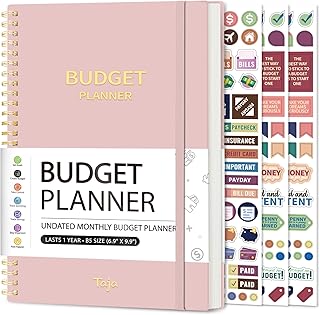
Budget Planner – Pink – $8.99, Rated 4.6
This undated planner lets you track all monthly expenses—including a dedicated healthcare category. The systematic layout helps you see exactly where your medical dollars go. Pair it with a cash envelope system for maximum control.

SKYDUE Budget Binder – $8.98, Rated 4.7
A complete binder with pre‑printed expense sheets, zipper envelopes, and cash sleeves. Use separate envelopes for Medicare premiums, copays, prescription costs, and long‑term care savings. The physical separation of funds reduces the temptation to spend healthcare dollars elsewhere.
Other excellent tools from Amazon include the NICOOTH Budget Binder ($6.28, 4.6 stars) for a budget‑friendly starter kit, and the Budgeting 101 book ($9.69, 4.6 stars) if you want to deepen your financial literacy before retiring.
Common Mistakes That Throw Healthcare Budgets Off Course
Even disciplined savers make errors. Watch for these pitfalls:
- Ignoring the IRMAA surcharge. High income in retirement (over $103,000 single / $206,000 married) triggers income‑related monthly adjustment amounts on Part B and Part D premiums.
- Delaying Medigap enrollment. You have a six‑month open enrollment period starting when you turn 65 and enroll in Part B. After that, insurers can deny you or charge higher rates based on health history.
- Not maximizing HSA contributions before retirement. Every dollar contributed pre‑65 reduces your taxable income and builds a tax‑free reservoir for later.
- Forgetting about dental implants or hearing aids. These common expenses can cost $3,000–$50,000 each. Budget for them explicitly.
To avoid these errors, regularly revisit your retirement plan with a fee‑only financial planner who specializes in healthcare. And consider reading up on Tax-efficient Retirement Planning Strategies Most People Overlook to keep more of your savings intact.
Expert Insights: What Financial Advisors Recommend
We spoke with two certified financial planners (CFPs) to get their top tips:
Marcus Lee, CFP®
“The biggest mistake I see is treating an HSA like a spending account. Let it grow! If you pay current medical expenses out of pocket and keep receipts, you can reimburse yourself tax‑free decades later. It’s essentially a super‑charged Roth IRA for healthcare.”
Diane Rogers, CFP®
“When budgeting for Medicare, don’t just look at Part B premiums. A Medigap Plan G plus Part D may cost $300/month, but it removes financial uncertainty. I tell clients to add at least $6,000–$8,000 per person per year for medical expenses in retirement, and adjust that number upward each year for inflation.”
FAQ: Healthcare Costs in Retirement
Q: Can I contribute to an HSA after age 65 if I’m still working?
Yes, as long as you’re covered by an HDHP and not enrolled in Medicare. Once you enroll in Medicare, you can no longer contribute to an HSA.
Q: What is the average out‑of‑pocket cost for a retiree on Medicare?
Estimates vary, but the Employee Benefit Research Institute (EBRI) found that a 65‑year‑old couple with median prescription drug expenses needs about $156,000 in savings to cover Medicare premiums and out‑of‑pocket costs through age 90.
Q: Is Medicare Advantage cheaper than Original Medicare with Medigap?
Often yes in terms of monthly premium, but not necessarily in total cost if you require expensive treatments. Medicare Advantage has an out‑of‑pocket maximum; Medigap does not have a cap but covers nearly all co‑insurance.
Q: How do I estimate long‑term care costs in my budget?
Start with the Genworth Cost of Care Survey for your state. Then decide if you will self‑fund, buy insurance, or rely on family. If self‑funding, factor in a 4–5% annual inflation rate for care costs.
Q: Should I use a physical budget binder or an app for healthcare tracking?
Both work. Many retirees prefer physical binders like the SKYDUE Budget Binder because they offer a tactile, distraction‑free way to monitor spending. Apps give real‑time data. Use whichever you’ll stick with consistently.
Q: What is the donut hole in Medicare Part D?
It’s a temporary coverage gap where you pay 25% of drug costs. In 2024, the coverage gap ends once your out‑of‑pocket costs reach $8,000. After that, catastrophic coverage kicks in, and you pay only 5% of drug costs.
Putting It All Together
Planning for healthcare costs in retirement requires a multi‑layered approach: maximize your HSA while you can, understand Medicare’s parts and gaps, decide between Medigap and Advantage, and budget for long‑term care, dental, and vision. Use dedicated tools like a physical budget planner or binder to track these expenses monthly.
Your action steps today:
- Review your current health plan and see if you’re eligible for an HSA.
- Estimate your Medicare Part B premium using the IRMAA brackets at SSA.gov.
- Open a separate savings account for future healthcare expenses.
- Buy a physical budget book, like the Budget Planner – Black ($8.99, 4.6 stars), and label one section “Healthcare.”
Don’t let medical costs blindside you in retirement. By using HSAs strategically, choosing the right Medicare design, and budgeting diligently, you can protect your savings and enjoy peace of mind. For a deeper dive into setting overall retirement savings targets, read Retirement Planning Basics: How to Estimate What You’ll Actually Need and How Much Should You Be Investing for Retirement at Every Age?.
Disclaimer: This article is for informational purposes only and does not constitute financial or medical advice. Consult a licensed professional for your specific situation.