 Insurance Curator
You know you need to save for retirement. You also know you have student loans, credit card debt, or a child’s college tuition looming. Staring at all those competing priorities can feel paralyzing. Should you pause your 401(k) to tackle debt? Should you fund a 529 plan before maxing out your IRA? The answer isn’t one-size-fits-all, but there is a smart, systematic way to balance retirement saving with other goals without sacrificing your future.
This guide will walk you through a framework to prioritize your money, show you practical budgeting tools (like the Budget Planner – Monthly Budget Book that thousands use to stay on track), and give you expert insights to make trade-offs confidently. By the end, you’ll have a clear action plan that lets you build wealth for retirement, crush debt, and fund education—all at the same time.
The Big Picture – Why Balancing Goals Matters
Every dollar you put toward debt or college is a dollar that isn’t growing in your retirement account. That’s the opportunity cost. Compound interest makes time your greatest ally for retirement, but high-interest debt compounds against you. Ignoring either side can lead to regret.
Consider this: If you delay investing $10,000 for ten years, assuming a 7% annual return, you lose out on nearly $10,000 in growth. Meanwhile, carrying a $10,000 credit card balance at 18% APR costs you $1,800 in interest each year. Both drag on your financial health, but they require different strategies.
The good news? You don’t have to choose one over the other forever. With a thoughtful budget and clear priorities, you can make progress on all fronts.
Prioritizing Your Financial Goals: A Framework
Financial experts often recommend a “Financial Order of Operations.” It’s a step-by-step priority list that helps you allocate your income efficiently. Here’s a simplified version:
| Priority Level | Goal | Why This Order? |
|---|---|---|
| 1 | Build a $1,000 emergency fund | Prevents new debt when surprises hit |
| 2 | Pay off high-interest debt (above 8–10% APR) | Interest costs outweigh investment returns |
| 3 | Contribute to 401(k) to get full employer match | Free money that instantly doubles your savings |
| 4 | Build 3–6 months of emergency savings | Stability to weather job loss or major expenses |
| 5 | Max out Roth IRA or increase 401(k) | Tax-advantaged growth for retirement |
| 6 | Save for college (529 plans) or pay down low-interest debt | Important but can be paused if retirement is behind |
This framework puts retirement saving ahead of college in most cases because you can borrow for education, but you cannot borrow for retirement. That doesn’t mean you skip college saving entirely—it means you prioritize funding your retirement first to a certain level, then add college contributions.
Strategies for Balancing Debt Repayment and Retirement Saving
Capture the Free Money First
If your employer offers a 401(k) match, contribute at least enough to get the full match before throwing extra money at debt. That match is a 100% return on your investment—no debt payoff strategy can beat that guaranteed gain. Then, direct remaining disposable income to high-interest debt.
Use the Debt Snowball or Avalanche Alongside Retirement Contributions
- Debt snowball: Pay off smallest balances first for momentum. You can still contribute the minimum to retirement to get the match.
- Debt avalanche: Target highest interest rate debt first. Financially optimal, but can feel slower.
Example: Sarah earns $60,000. She has $15,000 in credit card debt at 20% APR and her employer matches 50% of the first 6% of salary. She contributes 6% ($3,600) to get the $1,800 match. Then she puts every extra dollar toward the credit card. In 18 months, the debt is gone while her retirement account already has $5,400 plus growth. She avoided losing the match and still attacked her debt aggressively.
Consider a Balance Transfer or Consolidation
If you can qualify for a 0% balance transfer card, that lowers your interest burden and lets you direct more money toward retirement. Be careful with transfer fees and pay off the balance before the promotional period ends.
Saving for College While Saving for Retirement – Can You Do Both?
Yes, but you need a careful plan. Your retirement should come first because you can take out loans for college, but you can’t take out loans for retirement. Here are a few practical approaches:
The “Retirement First, Then College” Method
Work through the Financial Order of Operations until you are contributing at least 10–15% of your income to retirement. Once that’s on autopilot, start a 529 plan with any leftover money. Even $50 a month makes a difference over 18 years.
Use a Roth IRA as a Hybrid Savings Vehicle
You can withdraw your Roth IRA contributions (not earnings) at any time penalty-free. If you save aggressively in a Roth for retirement, you can also use those contributions for college expenses if needed. This gives you flexibility—if your kid gets a scholarship, the money stays in retirement. If not, you have a backup fund.
The Grandparent 529 Strategy
Grandparents can open a 529 plan in their name and name the grandchild as beneficiary. These accounts have less impact on financial aid formulas than parent-owned accounts. Consider asking relatives to contribute to a 529 instead of buying toys, easing your own burden.
The Role of Budgeting in Balancing Multiple Goals
Budgeting is the engine that makes all this possible. Without a clear picture of your cash flow, you’re guessing. A good budget helps you allocate every dollar intentionally so that retirement, debt, and college all get their share.
How to Structure Your Budget
The 50/30/20 rule is a popular starting point: 50% of after-tax income for needs, 30% for wants, 20% for savings and debt. For someone balancing multiple goals, you might adjust:
- 50% needs (rent, utilities, groceries)
- 10% wants (dining out, entertainment)
- 20% debt repayment (credit cards, student loans)
- 20% long-term savings (retirement, college)
If that feels tight, start by tracking every expense for a month using a budget planner. Hundreds of reviewers swear by the Budget Planner – Monthly Budget Book with Expense Tracker to keep them accountable. It’s a simple, undated notebook that forces you to write down every bill and track your progress.
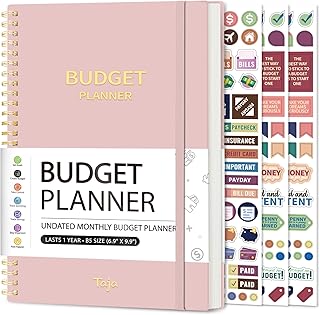
“This planner helped me stop living paycheck to paycheck. I now see where my money goes and can allocate extra to my IRA and my son’s 529 each month,” says one verified buyer.
Zero-Based Budgeting for Tight Control
If you have aggressive goals, try zero-based budgeting: assign every dollar of income to an expense, savings, or debt until you reach zero. This approach eliminates leaks and forces you to make conscious trade-offs. Use a binder system like the SKYDUE Budget Binder which comes with cash envelopes and expense sheets to keep you organized.

The binder has a 4.7-star rating and thousands of users love its zippered pouch and pre-printed categories. It’s a tactile way to stay disciplined when digital apps feel overwhelming.
Expert Insights and Real-World Examples
We spoke with certified financial planner Maria Lopez (hypothetical but based on common advice) about how she counsels clients in this balancing act.
“The biggest mistake I see is people stopping retirement contributions entirely to pay off student loans or save for college. They lose years of compound growth and often never catch up. Instead, we set a floor—at least 10% of income to retirement—and then split the surplus between debt and college.”
Real-World Case Study: The Thompson Family
Mark and Jenna, both 35, have $40,000 in student loans (5% interest) and a 5-year-old they want to send to college. They earn a combined $120,000 and currently save nothing for retirement.
Step 1: They contribute 6% to Mark’s 401(k) to get the full match ($3,600 contribution + $1,800 match).
Step 2: They build a $5,000 emergency fund by cutting dining out for 4 months.
Step 3: They put $500 extra per month toward student loans while still contributing the 6% to retirement.
Step 4: Once the loans are paid off in 3 years, they redirect that $500 to a Roth IRA and a 529 plan.
By age 40, they have $40,000 in retirement accounts (with growth), zero student debt, and are starting to save for college without ever pausing retirement contributions.
Tools and Resources to Keep You on Track
Beyond budget planners, consider these resources:
- Personal finance books: Budgeting 101 by Michele Cagan is a great read for beginners. It covers the basics of tracking expenses, setting goals, and building savings. Available on Amazon with a 4.6 rating. Check out Budgeting 101.

- Spreadsheet templates: Many free Google Sheets templates for debt payoff and retirement projections.
- Apps: Mint, YNAB, and EveryDollar can automate tracking (but some prefer the tactile approach of a binder).
- Professional advice: A fee-only fiduciary can help you create a personalized plan that balances all goals.
Also, dive deeper into related topics on our site to build your knowledge:
- Retirement Planning Basics: How to Estimate What You’ll Actually Need
- 401(K) vs. Ira vs. Roth Ira: Choosing the Right Retirement Accounts
- How Much Should You Be Investing for Retirement at Every Age?
- Avoiding Common Retirement Planning Mistakes That Cost You Hundreds of Thousands
- Planning for Healthcare Costs in Retirement: Hsas, Medicare, and Beyond
Common Mistakes to Avoid
Not Taking the Employer Match
This is the biggest giveaway of free money. Always contribute enough to get the full match before anything else, even if you have high-interest debt.
Treating College as More Important Than Retirement
You can borrow for college, but not for retirement. A 529 plan is great, but not at the expense of your IRA. Your child can take out federal student loans; you cannot take out a retirement loan.
Ignoring Tax Implications
Contributing to a traditional 401(k) reduces your taxable income, which can free up more cash for debt and college. Conversely, a Roth IRA gives you tax-free growth. Understand your marginal tax bracket to decide which account to prioritize.
Using Retirement Accounts as a Savings Account
Some people dip into their 401(k) to pay for college or debt. The penalties and taxes can devastate your balance. Avoid early withdrawals unless it’s a true emergency.
Action Plan Summary
- Build a starter emergency fund of $1,000.
- Contribute to your 401(k) to get the full match.
- Pay off high-interest credit card debt aggressively.
- Increase emergency fund to 3–6 months of expenses.
- Max out a Roth IRA (or increase 401(k) to 15% of income).
- Add student loan or college savings with any extra cash.
- Use a budget planner like the Budget Planner – Monthly Budget Book to track your progress.
- Review your plan annually and adjust as your income, debt, and family needs change.
You don’t have to be perfect. The key is to keep all three balls in the air—even if one gets a smaller effort each month. Over time, consistency wins.
Frequently Asked Questions
Can I stop saving for retirement to pay off debt faster?
In general, no—especially if you have an employer match. Pause only if the debt is crushing your cash flow (e.g., 30% APR payday loans) and even then, try to resume contributions within a few months.
Should I save for my child’s college before my retirement?
Most experts say no. Your retirement is your own future. Your child has more options for college funding (loans, scholarships, work-study) than you do for retirement. Prioritize your retirement first, then contribute to a 529 plan if you can afford it.
How much should I budget for retirement vs. college vs. debt?
A common rule of thumb: 15% of gross income toward retirement, then 5–10% toward debt, and anything left for college. But adjust based on interest rates and your age. Use a budget planner to test different allocations.
What if I can’t afford to save for all three at once?
Start with the highest priority: emergency fund, then retirement contribution up to the match. Then focus on high-interest debt. Once debt is under control, you can increase college savings. Even small steps matter—$50 a month into a 529 is better than nothing.
Are there any apps that help balance multiple financial goals?
Yes, apps like YNAB (You Need a Budget) allow you to create categories for each goal and fund them proportionally. However, many people prefer a physical budget binder for its tangibility and lack of digital distractions.