 Insurance Curator
Freelancing gives you freedom—but it also hands you a full-time tax compliance job. Unlike traditional employees, you are responsible for tracking every dollar you earn and spend, paying estimated quarterly taxes, and maximizing deductions without a payroll department. Missing a single receipt can cost you hundreds.
That’s why tracking your income and expenses all year is not optional. It’s the difference between a smooth tax season and a stressful scramble. In this guide, we’ll walk you through exactly what you must track, the best tools to do it, and the budgeting mindset that keeps you ahead.
Why Year-Round Tracking Matters More for Freelancers
When you receive a W-2, your employer withholds taxes automatically. As a freelancer or gig worker, you are both the earner and the tax collector. The IRS expects you to pay estimated taxes every quarter based on your actual income. Without real-time tracking, you risk underpayment penalties.
Tracking throughout the year also helps you spot deductible expenses before you forget them. That software subscription, the home office chair, the miles you drove to meet a client—each one reduces your taxable income. But only if you record it promptly.
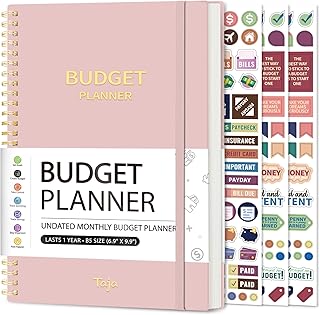
Moreover, consistent tracking allows you to budget for taxes. Setting aside 25–30% of each payment into a separate savings account becomes second nature when you know exactly what you earned. For a solid budgeting foundation, many freelancers turn to a physical planner like the Budget Planner – Monthly Budget Book with Expense Tracker Notebook, Undated Bill Organizer & Finance Planner to Take Control of Your Money, Account Book to Manage Your Finances-Pink. It’s rated 4.6 stars and costs just $8.99.
What Income Must You Track?
All income from freelance or gig work is reportable, even if you receive cash, Venmo, or PayPal payments. The IRS requires you to track:
- Project payments – per invoice or contract
- Tips and gratuities – if you drive for Uber or deliver food
- Bonuses or commissions
- Barter income – goods or services exchanged for your work
- Royalties or licensing fees
Each source must be recorded with the date, client name, amount, and payment method. If you receive a Form 1099-NEC or 1099-K, those totals must match your records. Discrepancies can trigger an audit.
Pro tip: Create separate accounts for business income and expenses. This makes tracking cleaner and protects you if the IRS ever questions personal vs. business transactions.
What Expenses Are Deductible?
Freelancers enjoy a wide range of deductions, but you can only claim what you can prove. The most common categories include:
| Expense Category | Examples |
|---|---|
| Home office | Dedicated space used regularly and exclusively for business |
| Supplies & equipment | Software, printer ink, laptop (depreciated or Section 179) |
| Marketing & advertising | Website hosting, social media ads, business cards |
| Travel & meals | Mileage (standard rate 65.5¢/mi in 2023), client meals (50% deductible) |
| Professional services | Accountant, lawyer, bookkeeper fees |
| Education & training | Online courses, conferences, books |
| Insurance | Health insurance premiums (above-the-line deduction), liability insurance |
You must keep receipts, bank statements, or credit card records for each expense. A digital tool like Expensify or a simple paper system works. Many freelancers pair a digital tracker with a physical binder like the NICOOTH Budget Binder Cash Envelopes A6 Money Saving Binder with Zipper envelopes (Purple) ($6.28, 4.6 stars) to store receipts.

Essential Tools for Freelance Tax Tracking
You don’t need expensive software to stay organized. Here are three budget-friendly options that combine physical and digital tracking.
1. SKYDUE Budget Binder – All-in-One Cash System
The SKYDUE Budget Binder, Money Saving Binder with Zipper Envelopes, Cash Envelopes and Expense Budget Sheets for Budgeting ($8.98, 4.7 stars) is perfect for freelancers who prefer a tangible system. Its zipper envelopes let you separate receipts by month or category, while the included expense sheets give you a running total.

2. Classic Monthly Budget Book – Simple and Effective
For those who want a no-fuss notebook, the Budget Planner – Monthly Budget Book with Expense Tracker Notebook, Undated Bill Organizer & Finance Planner to Take Control of Your Money, Account Book to Manage Your Finances-Black (also $8.99, 4.6 stars) provides monthly spreads where you can log income and expenses side by side. Undated pages let you start anytime.

3. Guide to Budgeting Basics – Learn While You Track
If you’re new to budgeting for taxes, the book Budgeting 101: From Getting Out of Debt and Tracking Expenses to Setting Financial Goals and Building Your Savings, Your Essential Guide to Budgeting (Adams 101 Series) ($9.69, 4.6 stars) teaches the fundamentals. It covers expense tracking, financial goal setting, and debt management—all essential for freelancers.

How to Estimate Quarterly Tax Payments
The IRS requires you to pay estimated taxes if you expect to owe at least $1,000 in taxes after withholding and credits. Calculate your payments based on your adjusted gross income, deductions, and self-employment tax.
Here’s a simple formula:
- Estimate your total annual income (include all gigs).
- Subtract your expected deductions (business expenses, home office, etc.).
- Multiply by the appropriate tax rate (see IRS tax brackets and self-employment tax rate of 15.3%).
- Divide by 4 for quarterly payments (due April 15, June 15, Sept 15, Jan 15).
Example: Sara expects $50,000 freelance income, $10,000 in deductions. Net taxable: $40,000. Estimated federal income tax ~$4,500 (using brackets) + self-employment tax ~$6,120 = $10,620 total. Each quarter: $2,655.
Many freelancers use the safe harbor rule: pay 100% of last year’s tax liability (110% if AGI over $150k) to avoid penalties.
Tracking Mileage and Vehicle Expenses
If you drive for deliveries or client meetings, mileage can be a huge deduction. The IRS standard mileage rate for 2023 is 65.5 cents per mile. Track every business mile with an app or log.
You can also choose actual expenses (gas, repairs, insurance, depreciation) if they produce a larger deduction. Whichever method you pick, be consistent year to year. Keep a mileage log with date, starting odometer, ending odometer, purpose, and location.
Home Office Deduction: The Rules
The home office deduction is valuable but strict. Your space must be used exclusively and regularly for business. That means a dedicated room or clearly defined area—not your dining table used occasionally.
Two methods:
- Simplified method: $5 per square foot of office space, up to 300 sq ft ($1,500 max).
- Regular method: Actual expenses (mortgage interest, rent, utilities, insurance, repairs) multiplied by the percentage of your home used for business.
The simplified method is easier for most freelancers. Track your square footage and keep records of home expenses if you use the regular method.
Digital Receipts and Record Retention
The IRS can audit returns up to three years after filing (or longer if you underreport income). Keep all receipts and records for at least three years. Digital copies are acceptable. Use scanning apps like Google Drive or dedicated software like Shoeboxed.
For physical receipts, a budget binder with envelopes offers immediate categorization. The SKYDUE Budget Binder we mentioned earlier includes separate envelopes for each expense category—perfect for tax time.
Separate Business and Personal Finances
Commingling funds is the number one mistake freelancers make. Open a separate bank account and credit card for business transactions. This makes tracking effortless and strengthens your case if audited.
Use that account for all income deposits and expense payments. If you occasionally use personal funds for a business expense, reimburse yourself and document it. The IRS prefers clear separation.
Integrating Tax Tracking with Budgeting
Tracking alone isn’t enough. You must also budget for taxes. That means setting aside a percentage of every payment into a tax savings account. The common rule is 25–30% of net income, but adjust based on your tax bracket.
Physical planners like the Budget Planner Black help you see your cash flow and tax reserve at a glance. Each month, log income, business expenses, and the amount transferred to your tax savings. This habit prevents year-end surprises.
Common Mistakes and How to Avoid Them
- Underestimating self-employment tax: Many freelancers forget the 15.3% SE tax on top of income tax. Include it in your quarterly estimates.
- Failing to track small cash transactions: A $5 coffee with a client is deductible; a $20 supply purchase adds up. Log everything.
- Missing the home office exclusivity requirement: If you take a deduction for 300 sq ft but also use that room for personal storage, you risk losing the deduction.
- Not reconciling 1099s: Your 1099-NEC total should match your records. Discrepancies invite audits.
For more on avoiding these pitfalls, read our guide on Common Tax Filing Mistakes That Trigger Delays or Audits.
Leveraging Retirement Accounts to Lower Taxes
One of the most powerful ways to reduce your taxable income as a freelancer is by contributing to a retirement account. SEP IRAs, Solo 401(k)s, or SIMPLE IRAs allow you to stash away a portion of your income tax-deferred. Contributions are deductible, and you pay taxes only when you withdraw in retirement.
For example, if you earn $60,000 net and contribute $15,000 to a Solo 401(k), your taxable income drops to $45,000. That saves you thousands in federal and SE tax. Learn more in How Retirement Accounts Can Reduce Your Taxes Today and Tomorrow?.
Year-End Tax Planning Moves
Don’t wait until April to think about taxes. Before December 31, review your income and expenses. Consider:
- Purchasing needed equipment (bonus depreciation allows 100% expensing).
- Prepaying January’s rent or insurance if deductible.
- Deferring income if you expect a lower tax bracket next year.
- Maximizing retirement contributions.
These moves can significantly lower your current-year tax bill. For a full checklist, see Tax Planning Moves to Make before Year-end, Not at Filing Time.
How Side Hustles Change Your Taxes
If you have a full-time job and a side hustle, your tax situation gets more complex. Your employer’s withholding may not cover the additional income. You must pay estimated taxes on side income if your total tax bill exceeds withholding by $1,000.
Also, side business deductions can offset your hobby income. But beware: the IRS limits losses if the activity is not profit-seeking. Learn more in How Side Hustles Change Your Taxes and What to Do About It?.
FAQ on Freelancer Tax Tracking
Q: How often should I track expenses?
A: Ideally, record expenses as they occur, at least once a week. Monthly catch-ups are risky.
Q: Can I deduct my internet bill?
A: Yes, partially if you use it for business. Calculate the percentage of business use (e.g., hours worked vs. personal use) and deduct that portion.
Q: What if I don’t have receipts?
A: The IRS may accept your own records if they are credible. However, for larger expenses, receipts are strongly recommended. Use a budget binder to store them.
Q: Do I need to pay quarterly taxes if I expect a refund?
A: Generally, no. Estimated payments are required only if you will owe $1,000 or more. But if you have a side hustle and your W-2 withholding is insufficient, you may still need to pay.
Q: Can I deduct miles for commuting?
A: No. Commuting from home to a regular workplace is not deductible. However, travel between client locations, meetings, or to supply stores is deductible.
Final Thoughts
Tracking freelancer taxes all year isn’t just about surviving April 15—it’s about taking control of your finances. When you know exactly what you earn and spend, you can budget confidently, invest in growth, and avoid the stress of surprise tax bills.
Start with a simple system: a dedicated bank account, a receipt-capture habit, and a physical or digital planner. The SKYDUE Budget Binder and Budget Planner Black are excellent low-cost options to get organized today.
Remember, the IRS rewards organization. The more disciplined you are with tracking, the more deductions you can legitimately claim. And if you ever feel overwhelmed, consult a tax professional who specializes in self-employment taxes.
For foundational knowledge, start with Tax Basics for Beginners: How Income Taxes Actually Work and then explore How to Lower Your Tax Bill Legally Using Common Deductions and Credits?. Your future self—and your bank account—will thank you.