 Insurance Curator
Deciding between Traditional and Roth retirement accounts is one of the most impactful financial choices you’ll make. It’s not just about where you stash your savings—it’s about when you pay taxes and how those taxes shape your budget today versus in retirement.
Getting this decision wrong can cost you thousands in unnecessary taxes. Getting it right means keeping more of your hard-earned money, both now and later. To make an informed choice, you need to understand how each account treats contributions, growth, and withdrawals.
Let’s dive deep into the tax mechanics, practical examples, and expert insights that will help you align your retirement savings with your current budget and future goals.
How Traditional vs. Roth Accounts Work – The Core Tax Difference
The fundamental difference between Traditional and Roth accounts is the timing of the tax benefit.
Traditional accounts give you a tax deduction on contributions today. You invest pre-tax dollars, the money grows tax-deferred, and you pay ordinary income tax on withdrawals in retirement.
Roth accounts offer no upfront deduction. You contribute after-tax dollars, but qualified withdrawals (including earnings) are completely tax-free.
This trade-off means your tax rate is the deciding factor. If you expect to be in a higher tax bracket in retirement, a Roth locks in today’s lower rate. If you anticipate a lower bracket later, a Traditional account lets you defer taxes to a time when you’ll owe less.
Contribution Limits (2025)
Both account types share the same annual contribution limits:
| Account Type | Under 50 | Age 50+ (catch-up) |
|---|---|---|
| Traditional IRA | $7,000 | $8,000 |
| Roth IRA | $7,000 | $8,000 |
| 401(k) / 403(b) | $23,500 | $31,000 |
However, Roth IRA contributions are subject to income phaseouts, while Traditional IRA deductions may be limited if you (or your spouse) have a workplace retirement plan.
The Budgeting Angle: How Each Account Affects Your Cash Flow Today
Your budget plays a starring role in this decision. Choosing a Traditional account reduces your taxable income now, which can free up cash for other goals. A Roth account, by contrast, requires you to pay taxes upfront, leaving less disposable income in the short term.
Example: You earn $80,000 and contribute $7,000 to a Traditional IRA. Your taxable income drops to $73,000, saving you roughly $1,750 in federal taxes (at 25% marginal rate). You can redirect that saving toward an emergency fund, debt repayment, or a vacation.
With a Roth, you pay $7,000 after-tax, so your budget feels the full pinch. No immediate tax break.
But the long-term math flips. If you plan to spend more in retirement (travel, healthcare, hobbies), tax-free withdrawals from a Roth can preserve your purchasing power and reduce budget stress later.
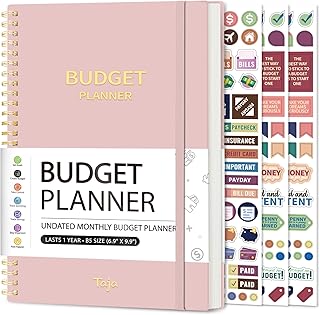
Pro tip: Use a budget planner to track your after-tax savings rate. A simple tool like the Budget Planner – Monthly Budget Book with Expense Tracker Notebook (pink edition, $8.99, 4.6 stars) can help you visualize how different contribution choices affect your monthly cash flow.
When a Traditional Account Beats a Roth (and Vice Versa)
Scenarios Favoring a Traditional Account
- You’re in a high tax bracket now (e.g., 32% or higher) and expect to be in a lower one in retirement (say, 22% or 12%). The upfront deduction is more valuable than future tax-free growth.
- You need the cash now. Lowering your taxable income can help you qualify for other tax credits, reduce student loan payments, or meet affordability thresholds for health insurance subsidies.
- You have a long time horizon and plan to do Roth conversions later. Contributing to a Traditional account now and converting in low-income years can give you the best of both worlds.
Scenarios Favoring a Roth Account
- You’re in a low tax bracket now (12% or lower). Paying taxes today at a minimal rate locks in tax-free growth forever.
- You expect your income to rise significantly over your career. A Roth prevents you from being pushed into higher brackets later when you withdraw.
- You want to avoid Required Minimum Distributions (RMDs). Roth IRAs have no RMDs during your lifetime, giving you greater control over your tax exposure in retirement.
- You want to leave a tax‑free inheritance. Heirs who inherit a Roth IRA can withdraw money income‑tax‑free (subject to their own RMD rules).
Income Limits and Phaseouts – A Critical Budgeting Reality
Roth IRA contributions are phased out for high earners. For 2025, the phaseout begins at $150,000 (single) and $236,000 (married filing jointly). Above these levels, you cannot contribute directly to a Roth IRA.
Traditional IRA deductions also have income limits if you (or your spouse) are covered by a workplace retirement plan. For 2025, the deduction phases out for single filers between $79,000 and $89,000, and for married couples filing jointly between $126,000 and $146,000.
Budgeting impact: If you earn too much for a Roth IRA, consider the “backdoor Roth” strategy (non-deductible Traditional IRA contribution followed by conversion). But be aware of the pro‑rata rule if you have existing Traditional IRA balances.
Required Minimum Distributions (RMDs) – The Hidden Tax Trap
Traditional accounts force you to start taking RMDs at age 73 (rising to 75 in 2033). These distributions are taxed as ordinary income, potentially pushing you into a higher bracket and increasing Medicare premiums (IRMAA).
Roth IRAs have no RMDs during your lifetime. This makes them ideal for retirees who want to minimize taxable income to qualify for ACA subsidies, avoid tax bracket creep, or leave accounts untouched for as long as possible.
Example: A retiree with $1 million in a Traditional IRA will be forced to withdraw about $36,500 at age 73 (based on the IRS Uniform Lifetime Table). That income could push them from the 12% bracket into the 22% bracket, costing an extra $3,650 in taxes that year.
A Roth of the same size would require no distributions, preserving the tax-free growth.
Roth Conversions – How to Shift from Traditional to Roth Strategically
Converting a Traditional IRA to a Roth IRA is a taxable event. You pay income tax on the converted amount in the year of conversion. This strategy works best when:
- Your income is temporarily low (e.g., sabbatical, early retirement, or a year with large deductions).
- You have cash outside the retirement account to pay the tax (so you don’t deplete the converted funds).
- You want to reduce future RMDs.
Budgeting tip: A Roth conversion can be a conscious decision to pay taxes now in exchange for decades of tax‑free growth. Use a money saving binder like the NICOOTH Budget Binder ($6.28, 4.6 stars) to track the conversion date, the tax you owe, and the future tax savings.

The 5-year rule: Roth conversions have a five-year aging period. Withdrawals of converted amounts before five years are subject to a 10% penalty (unless you’re over 59½ or meet an exception).
Employer Match and Tax Diversification
When you have a workplace retirement plan (401k, 403b), the employer match is always pre-tax. Even if you contribute Roth 401k dollars, the match goes into a Traditional sub‑account. This creates automatic tax diversification – a mix of pre‑tax and after‑tax money.
Strategy: Contribute enough to get the full match (free money). Then, depending on your budget and tax outlook, split future contributions between Traditional and Roth. A common approach is to contribute to Traditional to lower your current tax bill and then add Roth through a separate IRA.
How Life Events Change the Equation
Major life events can flip the advantage from one account to the other.
- Marriage: If you marry someone with a lower income, your combined bracket may be lower, making Roth contributions more attractive.
- Children: The Child Tax Credit and dependent care credits lose value above certain income thresholds. Traditional contributions can help you stay eligible.
- Homebuying: Roth IRA contributions (not earnings) can be withdrawn penalty‑free for a first‑time home purchase. Traditional IRA withdrawals for a home come with taxes and penalties.
- Divorce: Alimony is no longer deductible for agreements after 2018, but Traditional IRA contributions could still lower your tax burden if you’re the higher earner.
- Inheritance: Inherited Roth IRAs allow tax‑free distributions, while inherited Traditional IRAs require taxable withdrawals over 10 years.
For a deeper dive into how these milestones affect your tax picture, read our guide on How Major Life Events—Marriage, Kids, Divorce, Homebuying—Affect Your Taxes.
Budgeting for Retirement: Tools to Track Your Contributions
No retirement strategy works without disciplined budgeting. Physical planners and binders help you visualize where your money goes and how much you can allocate to retirement.
Recommended products for retirement budget tracking:
- SKYDUE Budget Binder ($8.98, 4.7 stars) – Comes with zipper envelopes and expense sheets. Great for separating “retirement savings” as a spending category.

- Budget Planner – Monthly Budget Book (Black) ($8.99, 4.6 stars) – Undated, with a bill organizer. Use the expense tracker to monitor your actual contribution amounts versus your goal.

- Budgeting 101: From Getting Out of Debt… ($9.69, 4.6 stars) – A book that covers the basics of budgeting and financial goals. Excellent companion for understanding how retirement savings fit into a complete financial plan.

Common Tax Filing Mistakes That Derail Retirement Planning
Many taxpayers miss opportunities because they don’t track their retirement contributions properly. Common errors include:
- Forgetting to deduct Traditional IRA contributions if you’re eligible (line 20 of Schedule 1).
- Over‑contributing to a Roth IRA when your income exceeds phaseout limits (the IRS charges 6% excess contribution penalty each year).
- Not recharacterizing a Roth contribution to Traditional if you mistakenly contributed above the limit.
- Failing to document Roth basis on Form 8606 for conversions and non‑deductible Traditional contributions.
To avoid these pitfalls, review our list of Common Tax Filing Mistakes That Trigger Delays or Audits.
The Power of Tax Planning Before Year-End
December is the best time to evaluate your Traditional vs. Roth strategy. If your income is higher than expected, a Traditional contribution reduces your tax bill. If your income is low, a Roth conversion can be done at bargain rates.
Year‑end moves include:
- Maxing out 401(k) deferrals before December 31 (IRA contributions can be made until April 15 of the following year).
- Performing a Roth conversion if your marginal tax rate is lower than anticipated.
- Harvesting capital losses to offset gains and adjust your tax bracket for better Roth conversion pricing.
For a full checklist, see Tax Planning Moves to Make Before Year-End, Not at Filing Time.
How Retirement Accounts Can Reduce Your Taxes Today and Tomorrow
Retirement accounts are among the most powerful tax‑saving tools available. Traditional accounts reduce your current taxable income, lowering your bill today. Roth accounts reduce your future taxable income, keeping your Social Security benefits from being taxed and helping you avoid Medicare surcharges.
For a comprehensive breakdown, read our article on How Retirement Accounts Can Reduce Your Taxes Today and Tomorrow.
Final Expert Insights
The “right” account depends on your marginal tax rate now vs. your projected effective tax rate in retirement. Most experts recommend a diversified approach: hold some Traditional funds to take advantage of lower brackets in early retirement, and some Roth funds to manage bracket creep later.
Rule of thumb: If your marginal tax rate is 22% or higher, lean toward Traditional contributions. If it’s 12% or lower, prioritize Roth. If you’re in the middle, split your contributions.
Also, don’t forget state taxes. If you live in a high‑tax state now but plan to move to a no‑income‑tax state in retirement (e.g., Florida, Texas), Traditional contributions let you deduct at your current high state rate and withdraw at 0% state tax later. Roth contributions, by contrast, lock in your current state tax, which may be suboptimal.
Frequently Asked Questions
Can I have both a Traditional IRA and a Roth IRA?
Yes. You can contribute to both, as long as your combined contributions do not exceed the annual limit ($7,000 for 2025). However, eligibility for Traditional IRA deductions may be limited if you have a workplace retirement plan.
Are Roth 401(k) contributions better than Traditional 401(k) contributions?
It depends on your current tax rate and expected retirement rate. Roth 401(k) contributions are after‑tax, but employer matches are pre‑tax. Many high earners prefer Traditional 401(k) for the upfront deduction, then use a Roth IRA for tax diversity.
What happens if I convert a Traditional IRA to a Roth IRA and the market drops?
You pay tax on the market value at conversion. If the value drops later, you overpaid tax relative to a later conversion. You cannot undo a conversion (recharacterization is no longer allowed for conversions after 2017). Consider converting in smaller chunks to manage risk.
Do Roth IRAs count as income for Medicare premium calculations?
No. Distributions from a Roth IRA are not included in modified adjusted gross income (MAGI) for IRMAA purposes. Traditional IRA withdrawals, however, do count.
Can I withdraw Roth IRA contributions anytime penalty‑free?
Yes. You can withdraw your direct contributions at any time without taxes or penalties. Withdrawals of earnings are subject to taxes and penalties unless you are over 59½ or meet a qualified exception.