 Insurance Curator
If you’re self-employed in the UK, you already know the drill: no sick pay, no paid leave, and every day off hits your bottom line. A serious illness doesn’t just threaten your health — it can wipe out your income and even your business. That’s where critical illness cover, added to a solid life insurance policy, becomes your financial safety net. Think of it as a supercharged add-on that pays a tax-free lump sum when you’re diagnosed with a specified condition, giving you the breathing room to focus on recovery without watching your savings drain.
For the self-employed, this cover isn’t a luxury — it’s a necessity. Whether you’re a freelancer in London, a contractor in Manchester, or a small business owner in Birmingham, a single diagnosis can derail years of hard work. In this guide, we’ll break down how critical illness cover works, why it’s even more vital when you’re your own boss, and how to choose the right policy.

Want a clear, practical guide to life insurance? Check out Life Insurance Made Simple on Amazon – it’s packed with actionable advice for every stage of life.
Why Self-employed People Need Critical Illness Cover More Than Employees
Employees in the UK often get company sick pay, income protection through work, and access to group life insurance. Self-employed people? You get statutory sick pay (SSP) at best — currently £116.75 per week — which is barely enough to cover a week’s groceries, let alone a mortgage or business overheads. If you’re sick for more than a few weeks, SSP runs out, and your income stops entirely.
Critical illness cover bridges that gap. It pays a lump sum (typically £50,000 to £500,000) when you’re diagnosed with a listed condition such as cancer, heart attack, or stroke. That cash can replace lost earnings, pay off business loans, or hire temporary staff to keep your company afloat. Unlike income protection, which pays a monthly benefit after a waiting period, a critical illness payout lands in your bank account as a single tax-free amount — giving you immediate control.
Key point: The self-employed don’t have an employer to fall back on. Critical illness cover is your personal emergency fund.
How Critical Illness Cover Works as a Supercharged Add-on to Life Insurance
Most providers offer critical illness cover as a rider (add-on) to a life insurance policy — either level term, decreasing term, or whole of life. This is where the “supercharged” label comes from: you’re protecting your family’s future in two ways. If you die, your beneficiaries get the life cover payout. If you’re diagnosed with a serious illness, you get the critical illness payout (and the life cover often continues or reduces).
For a self-employed professional, this dual protection is incredibly efficient. You pay a single premium for two layers of security. The lump sum can be used however you need — to pay off your business premises rent, cover your personal mortgage, or fund a recovery period. Unlike some other protections, there’s no monthly cap or deduction; it’s your money, tax-free.
Learn more about how critical illness cover works alongside life insurance in the UK →
Key Conditions Covered and Exclusions
Critical illness policies vary by insurer, but most cover the “big three”: cancer (excluding some low-grade or early-stage), heart attack, and stroke. Many also include multiple sclerosis, kidney failure, major organ transplant, coronary artery bypass, and Parkinson’s disease. Some “comprehensive” policies cover up to 40+ conditions.
Common exclusions to watch for:
- Pre-existing medical conditions (declared or undeclared)
- Cancer in situ (very early-stage) unless specified
- Self-inflicted injuries or suicide within first 12 months
- Conditions related to drug or alcohol misuse
- HIV/AIDS (unless from blood transfusion or occupational exposure)
The fine print is everything. For example, a “heart attack” definition might require evidence of specified enzyme changes. Reading the exact wording — not just the condition list — is critical. Our guide to reading critical illness definitions explains why this can make or break a claim →
Critical Illness Cover vs Income Protection: Which Should You Choose?
This is a common dilemma for the self-employed. Both products protect your income, but they work very differently.
| Feature | Critical Illness Cover | Income Protection |
|---|---|---|
| Payout type | Lump sum (tax-free) | Monthly benefit (taxable if not from a personal policy) |
| Trigger | Diagnosis of specific condition | Unable to work due to illness/injury (any reason) |
| Coverage length | Single payout, then policy ends or continues only for life cover | Pays until you return to work, policy end, or retirement |
| Best for | Paying off debts, business capital, one-off costs | Replacing ongoing lost income |
| Cost | Generally lower premium for same sum assured | Higher because covers any incapacity |
For many self-employed people, a combination is ideal. Critical illness cover can handle the big shock — clearing a business loan or mortgage — while income protection keeps monthly cash flow steady. But if you have to choose one first, critical illness cover often wins because the lump sum can save your business from collapsing. Compare both in our detailed breakdown →
Real-life Example: How a Lump Sum Can Save a Freelancer’s Business
Meet Sarah, a freelance graphic designer in Leeds. She has a small studio, one part-time assistant, and a mortgage on her flat. She took out a combined life and critical illness policy with £150,000 cover — a relatively modest sum. Two years later, she was diagnosed with breast cancer.
Her treatment required six months off work. SSP was tiny. Her business had to close temporarily because she couldn’t afford to pay her assistant. But the critical illness payout arrived within weeks. Sarah used £40,000 to cover her personal living expenses, another £30,000 to pay off her assistant’s wages and keep the studio running, and the rest to clear her mortgage. She recovered without debt and relaunched her business after treatment.
Without that cover, Sarah would have faced repossession and the end of her career. That’s the power of a supercharged add-on.
Tips for Choosing the Right Policy
1. Compare comprehensive vs budget policies
Budget policies cover fewer conditions (often 20–30) and have stricter definitions. Comprehensive ones may cover 40+ but cost more. Evaluate based on your medical history and budget. Is the extra cost really worth it? Learn more →
2. Consider adding children’s cover
Many policies let you add children’s critical illness cover for a small extra premium. If your child is diagnosed with a covered condition, you get a lump sum (usually 50% of your sum assured). This can be a lifeline for self-employed parents. Read about protecting the whole family →
3. Review definitions carefully
Especially for conditions like cancer or heart attack. Some policies pay out for “severe” forms only; others have more inclusive definitions. Work with an independent adviser who can explain the nuances.
4. Update your cover as your life changes
As your business grows, so do your liabilities. Review your sum assured every few years — especially if you take on debt, hire staff, or move to a bigger property. Our guide on reviewing and updating cover explains when and how →
5. Use trusted resources to educate yourself
Books like The Hidden Secret to Wealth with Cash Value Life Insurance (rating 4.5, $7.99) can help you understand how life insurance and critical illness cover fit into a broader financial plan. It’s a quick, affordable read for self-employed professionals.
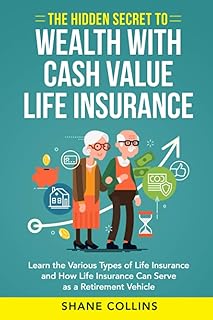
A practical guide to using life insurance as a wealth-building tool — perfect for self-employed readers who want to supercharge their savings.
Conclusion and Next Steps
Critical illness cover is the supercharged add-on that every self-employed person should consider. It transforms a standard life insurance policy from a death benefit into a living benefit — one that can safeguard your income, your business, and your peace of mind. The key is to compare policies, read the definitions, and choose a sum that reflects your true financial risks.
Don’t wait until it’s too late. Review your current cover, speak to a specialist broker, and consider adding this essential protection. Your health and your business depend on it.
Need more help? Explore our full library of critical illness guides at InsuranceCurator.com.