 Insurance Curator
 If you’re shopping for the cheapest life insurance over 50 no medical exam, you’ve probably heard two main options: term life and whole life. No-exam policies are a lifeline for seniors who want coverage without needles, urine samples, or waiting weeks for approval. But which one actually saves you more money over the long run?
Term life insurance typically offers lower monthly premiums for a set period, while whole life builds cash value and never expires. Yet the “cheaper” choice depends on your budget, health, and how long you plan to keep the policy. This deep dive will break down every cost factor, reveal industry data, and help you decide which no-exam policy fits your wallet and your family’s needs.
Why No-Exam Life Insurance Matters After 50
Turning 50 often means higher premiums because of age-related health risks. Life insurance companies usually require a full medical exam for traditional policies. But no-exam life insurance lets you skip the lab tests. You answer a few health questions, and you’re approved in days – sometimes hours.
Key benefits of no-exam policies for people over 50:
- Faster approval (24–72 hours in many cases)
- No blood work or urine samples required
- Lower stress for those with medical anxiety
- Coverage available even with pre‑existing conditions like high blood pressure or diabetes
The trade‑off? No‑exam policies usually have higher premiums than fully underwritten policies. But when you compare term vs. whole life, the price gap can be substantial.
Term Life Insurance Over 50: The Cost‑Effective Champion
Term life insurance provides a death benefit for a specific period – typically 10, 15, or 20 years. If you pass away during that term, your beneficiaries receive the payout. If you outlive the term, the coverage ends (unless you convert or renew).
Why term is often the cheapest no‑exam option for those over 50:
- Pure protection with no cash value component = lower base premium
- Level premiums locked in for the full term
- No medical exam required for many simplified‑issue policies
- Ideal for covering time‑specific needs (mortgage, college, debt payoff)
Average monthly cost (no‑exam term, age 50–55, $250,000 coverage):
| Term Length | Monthly Premium Range |
|---|---|
| 10 years | $35 – $65 |
| 15 years | $50 – $85 |
| 20 years | $70 – $110 |
These rates are estimates. Actual premiums depend on your health class, gender, and carrier. But even at the high end, term remains far cheaper than whole life for the same death benefit.
Example: A 52‑year‑old non‑smoking male with well‑controlled hypertension can get a 15‑year, $250K no‑exam term policy for about $58/month. That same man would pay $230–$350/month for a whole life policy with the same face amount.
Whole Life Insurance Over 50: The Premium That Stays (and Grows)
Whole life insurance provides coverage for your entire lifetime, as long as premiums are paid. A portion of your premium goes into a cash value account that grows at a guaranteed rate. You can borrow against it or withdraw it in retirement.
Why whole life costs more – and why some people still choose it:
- Lifetime coverage – you never have to re‑qualify at older ages
- Cash value accumulation (tax‑deferred)
- Fixed, predictable premiums that never increase
- Potential dividends from mutual insurers
Average monthly cost (no‑exam whole life, age 50–55, $250,000 coverage):
| Policy Type | Monthly Premium Range |
|---|---|
| No‑exam whole life (simplified issue) | $220 – $400 |
| Guaranteed issue whole life (no health questions) | $300 – $500+ |
Guaranteed issue policies often have lower death benefits (e.g., $25,000–$50,000) and a graded period (full death benefit only after 2–3 years). Simplified issue whole life offers higher face amounts but still costs 3–5× more than term.
Example: A 53‑year‑old female with mild osteoarthritis gets a $100K simplified issue whole life policy for $189/month. A comparable 20‑year term policy costs $62/month. Over 20 years, she would save over $30,000 in premiums with term – but she wouldn’t have cash value or lifetime coverage.
Comparing the True Cost: Term vs. Whole Life Over 20 Years
Let’s run the numbers for a 52‑year‑old applicant using no‑exam policies with a $150,000 death benefit.
Scenario 1: 20‑Year Term Life
Monthly premium: $55
Total paid over 20 years: $55 × 240 = $13,200
Cash value: $0
Coverage at age 72: Expired (unless renewed at much higher rates)
Scenario 2: Whole Life (Simplified Issue)
Monthly premium: $210
Total paid over 20 years: $210 × 240 = $50,400
Cash value after 20 years (estimated): $18,000 – $22,000 (guaranteed minimum ~$15,000)
Coverage at age 72: Still active – $150,000 death benefit plus any accumulated cash value
“Cheaper” in pure premium: Term saves you $37,200 over two decades.
“Cheaper” in long‑run value: Whole life gives you permanent coverage and a cash reserve. If you live to 85, the term policy is long gone. Whole life still pays out.
Real‑World Insight
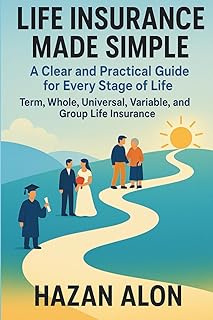
“For most people over 50 with a limited budget, term life insurance is the cheapest way to get meaningful coverage. Only consider whole life if you can comfortably afford the higher premiums and want a permanent death benefit or a tax‑advantaged savings component.” – Industry expert cited in Life Insurance Made Simple: A Clear and Practical Guide for Every Stage of Life.

This book breaks down exactly when term vs. whole life makes sense – a must‑read before you sign any no‑exam application.
No‑Exam Term Life Insurance: Who Offers the Lowest Rates?
When searching for the cheapest life insurance over 50 no medical exam, you want carriers that specialize in simplified‑issue term. Top providers include:
- AIG (Corebridge Financial) – offers term policies up to $500,000 with no exam for ages 50–70
- Transamerica – Trendsetter Super Series has competitive rates for simplified issue
- Banner Life – known for low premiums on 10‑ and 15‑year terms
- Mutual of Omaha – strong no‑exam term options with living benefits
- Prudential – offers up to $1 million without exam for qualified applicants
What affects your rate most with no‑exam term:
- Age (the biggest factor)
- Gender (women pay less)
- Height/weight ratio (BMI limits)
- Tobacco use (never smoking = much lower premium)
- Health questions (blood pressure, cholesterol, diabetes history)
For a deeper look at which companies offer the best rates, check our guide on Top Providers of No-exam Life Insurance for over 50S.
Whole Life Without a Medical Exam: Is It Ever Worth the Extra Cost?
Whole life no‑exam policies are popular for final expense planning. Funeral costs, unpaid medical bills, and small debts can be covered with a $10,000–$50,000 policy. Because the death benefit is lower, the monthly price becomes more manageable.
When whole life might be cheaper overall:
- You need coverage for life (not a set term)
- You want a fixed premium that won’t increase at age 70 or 80
- You don’t qualify for term (health conditions too severe)
- You can use the cash value as an emergency fund or retirement supplement
Example: A 58‑year‑old with type 2 diabetes and a BMI of 32 may be declined for term or quoted $120+/month for $50K term. A simplified‑issue whole life policy for $25K costs $85/month and is guaranteed issued. In this scenario, whole life is the only affordable option.
Limitations to watch for:
- Graded death benefits (you may not have full coverage for the first 2–3 years)
- Lower maximum face amounts (usually under $100K for guaranteed issue)
- Surrender charges if you cancel early
For tips on qualifying for the best rates, see How to Qualify for the Cheapest No-exam Life Insurance over 50?.
Term vs. Whole Life: The No‑Exam Cost Comparison Table
Below is a side‑by‑side summary of typical no‑exam policies for a 55‑year‑old non‑smoker applying for $100,000 coverage.
| Feature | 20‑Year Term Life | Whole Life (Simplified Issue) |
|---|---|---|
| Monthly premium | $45 – $75 | $160 – $280 |
| Total cost over 20 years | $10,800 – $18,000 | $38,400 – $67,200 |
| Coverage after 20 years | Expires | Continues for life |
| Cash value after 20 years | $0 | $12,000 – $20,000 |
| Maximum face amount | Up to $500K | Usually $50K‑$250K |
| Best for | Temporary needs (mortgage, income replacement) | Final expenses, permanent legacy |
| Medical exam required | No (simplified issue) | No (simplified or guaranteed issue) |
Which Policy Is Actually Cheaper Over the Long Run?
The short answer: Term is cheaper… until you reach age 70 or 80.
If you buy a 20‑year term at age 50, you pay low premiums for two decades. At 70, the term ends. If you still need coverage, you must buy a new policy – and at that age, premiums skyrocket. A new no‑exam term policy at 70 could cost $300–$600/month for $100K.
Whole life, on the other hand, locks in your premium at age 50 forever. You pay more now, but you never face a rate shock later.
When term wins on cost:
- You only need coverage for a fixed number of years (e.g., until mortgage is paid off)
- You have a limited budget and need maximum death benefit per dollar
- You plan to invest the difference (you can put the savings from term into a retirement account)
When whole life wins on cost:
- You are still insurable at 50 but may not be at 70
- You want guaranteed lifetime coverage
- You can comfortably afford the higher premium now
- You want to accumulate tax‑deferred cash value
For more details on coverage limits, read Maximum Coverage Amounts for No-exam Life Insurance over 50.
How to Choose Between Term and Whole Life No‑Exam Policies
Follow this simple decision framework:
- Define your need – Is it income replacement for 10–20 years? Or final expenses that will last your entire life?
- Check your budget – Can you afford the whole life premium without sacrificing retirement savings?
- Consider your health – If you have serious conditions, whole life’s guaranteed issue may be the only path.
- Look at renewal rates – If you choose term, know what the guaranteed renewal premium is at the end of the term.
- Get multiple quotes – No‑exam rates vary widely between carriers. Use an independent agent.
Start your application today with the step‑by‑step guide: Step-by-step Application for No-exam Life Insurance over 50.
Resources to Deepen Your Understanding
Two exceptional books can help you master the numbers and avoid costly mistakes.
Life Insurance 101: The Basics of Life Insurance Explained – A short, affordable primer ($14.95) that covers the fundamentals of term and whole life, including no‑exam options. Perfect for first‑time buyers.

Life Insurance Made Simple: A Clear and Practical Guide for Every Stage of Life – A more comprehensive resource ($34.99, rated 4.8 stars) with real‑world examples of term vs. whole life decisions for people over 50. It includes chapters on no‑exam policies and how to estimate your true cost.
Comparison of Top Insurance Books
| Feature | Life Insurance 101 | Life Insurance Made Simple |
|---|---|---|
| Price | $14.95 | $34.99 |
| Rating | 4.1 / 5 | 4.8 / 5 |
| Pages | 120 | 280 |
| Focus | Basics, terminology | Practical decision‑making, advanced strategies |
| No‑exam coverage | ✅ Chapter 5 | ✅ Chapter 9 |
| Buy at Amazon | Buy Now | Buy Now |
Frequently Asked Questions
What is the cheapest no‑exam life insurance for someone over 50?
Term life insurance is almost always the cheapest option. A 10‑year no‑exam term policy for a 52‑year‑old can cost as little as $30–$50 per month for $100,000 in coverage. Whole life for the same face amount typically runs $150–$300 per month.
Can I get no‑exam life insurance if I have pre‑existing conditions?
Yes. Simplified‑issue no‑exam policies ask a few health questions but do not require a physical exam. Even with conditions like high blood pressure or diabetes, you can qualify – though premiums may be higher. Guaranteed issue whole life accepts everyone but offers lower benefits and a graded period.
How much coverage can I get without a medical exam after 50?
For simplified‑issue term, maximum face amounts range from $250,000 to $500,000, depending on the carrier and your age. Whole life no‑exam policies often cap at $50,000–$250,000. Guaranteed issue policies are usually limited to $25,000–$50,000.
Is whole life ever more cost‑effective than term?
If you keep the policy for life, the total premiums paid for whole life may be comparable to renewing a term policy at higher rates in your 70s. Whole life also builds cash value, which can be borrowed. But for pure death benefit coverage over a fixed period, term is cheaper.
How quickly can I get a no‑exam policy?
Many no‑exam term policies are approved within 24–72 hours. Some carriers offer instant decision after a tele‑interview. Whole life simplified issue can also be fast – often under a week. Guaranteed issue requires no health questions and is the quickest, but you wait 2–3 years for full coverage.
Final verdict: If you’re looking for the cheapest life insurance over 50 no medical exam, start with a 10‑ or 15‑year term policy. It gives you the most protection for your dollar. Choose whole life only if you need lifetime coverage and have the budget to pay 3–5 times more each month. Get quotes from at least three carriers to lock in your best rate.