 Insurance Curator
Student loan debt weighs on millions of Americans, crossing every income bracket. Whether you earn $30,000 or $150,000 a year, the pressure to manage monthly payments while staying afloat can feel overwhelming. Yet with the right strategies—starting with a solid budget—you can take back control.
The key is matching your repayment approach to your actual cash flow. Many borrowers assume that low income means few options, and high income means easy payoff. Neither is true. This guide breaks down student loan debt management strategies tailored to every income level, with practical tactics, expert insights, and proven budgeting tools to keep you on track.
1. Understanding Your Student Loan Debt Landscape
Before you choose a strategy, you need a clear picture of what you owe. Federal loans (Direct Subsidized/Unsubsidized, PLUS, Perkins) offer flexible repayment plans, while private loans have fewer protections. Your interest rates, loan servicer, and grace periods all shape your approach.
Take inventory: list each loan’s balance, interest rate, minimum monthly payment, and due date. This raw data becomes the foundation of your budget.
Pro tip: Log into the National Student Loan Data System (NSLDS) to see all your federal loans in one place. For private loans, check your credit report or servicer portals.
2. Budgeting Foundations for Loan Repayment
No matter your income, a budget turns debt from a monster into a manageable line item. The 50/30/20 rule is a widely recommended starting point: 50% for needs, 30% for wants, 20% for savings and debt repayment. But student loans often demand adjustment—you might shift to 50/20/30 or 60/20/20 depending on your situation.
A physical or digital budget planner keeps you honest. The Budget Planner – Monthly Budget Book with Expense Tracker Notebook (pink edition) is a top-rated tool for tracking every dollar.
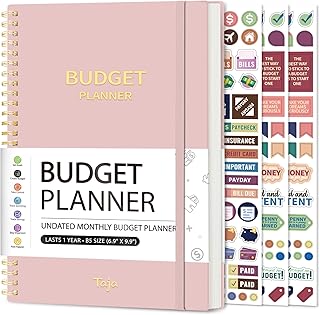
Key features: Undated monthly and weekly spreads, expense tracker, bill organizer — all for just $8.99 (rating 4.6). The compact size fits in a bag, making it easy to log spending on the go.
For borrowers who prefer a guided book approach, Budgeting 101: From Getting Out of Debt and Tracking Expenses to Setting Financial Goals and Building Your Savings by Michele Cagan provides a crash course in money management.

This 256-page guide (rating 4.6, $9.69) explains how to build a budget that works with irregular income—perfect for freelancers or part-time earners managing student loans.
3. Income-Driven Repayment Plans: Low Income Borrowers
If your earnings are below the median for your area, income-driven repayment (IDR) plans can cap monthly payments at 10–20% of discretionary income. After 20–25 years of qualifying payments, the remaining balance is forgiven. Options include:
- SAVE Plan (formerly REPAYE) – lowers payments by not counting spousal income if you file separately.
- PAYE – caps at 10% of discretionary income, never more than the standard 10-year payment.
- IBR – similar to PAYE but with slightly different eligibility.
- ICR – older plan with higher payments but still helpful.
What to watch: Payments can be as low as $0 if your income is very low. BUT interest still accrues on unsubsidized loans, potentially causing negative amortization. Forgiven amounts after 20–25 years may be taxed as income (though the American Rescue Plan waived taxes on federal loan forgiveness through 2025).
Budgeting tip: Use your planner to track your annual recertification date. Missing it can spike your payment to the standard amount overnight.
4. Moderate Income Boosters: Strategies for the Middle Bracket
Earning $50,000–$80,000? You likely don’t qualify for $0 payments, but you still have options to reduce your burden without sacrificing lifestyle.
The Debt Snowball vs. Debt Avalanche
If you have multiple loans (including non-student debt), choose a payoff method that fits your psychology. The debt snowball (pay off smallest balance first) builds momentum. The debt avalanche (highest interest rate first) saves more money long-term. For a detailed comparison, see our guide on Debt Snowball vs. Debt Avalanche: Which Payoff Strategy Saves You More?.
Side Hustle for Extra Payments
Even an extra $100 per month directed toward principal can cut your repayment timeline by years. Use your budgeting tools to track side hustle income and allocate it directly to loans.
Refinancing (Carefully)
If you have good credit and steady income, refinancing federal loans to private may lower your rate. But you lose federal protections (IDR, forbearance). Only refinance the portion you can comfortably pay off in the new loan term. Read our guide on When to Consolidate Debt and When to Avoid It Completely.
5. High Income Strategies: Accelerated Payoff and Tax Planning
Borrowers earning $100,000+ often have the cash flow to aggressively attack student loans. The goal becomes maximizing efficiency while minimizing taxes.
1. Target High-Interest Loans First
Use the avalanche method. Pay minimums on all loans, then throw every extra dollar at the loan with the highest rate. Consider biweekly payments to shave off interest.
2. Leverage Employer Contributions
Some employers offer student loan repayment assistance (up to $5,250 tax-free per year through 2025). Contribute to a Health Savings Account (HSA) or 401(k) to lower adjusted gross income—which also lowers IDR payments if you remain on an income-driven plan.
3. Consider the “Married Filing Separately” Trap
If both spouses have student loans, filing separately may keep IDR payments based only on your income. But this often increases your tax bill. Run the numbers with a CPA before making the election.
4. Use a Budget Planner to Track Windfalls
High income doesn’t guarantee discipline. Bonuses, tax refunds, and stock proceeds should be allocated intentionally. The Budget Planner – Monthly Budget Book with Expense Tracker Notebook (Black) offers the same features as the pink version but in a professional black cover—great for desk use.

6. Using Budgeting Tools to Stay on Track
Budgeting tools are not just for tracking—they enforce accountability. Three physical systems stand out for student loan management:
NICOOTH Budget Binder (Purple) – $6.28

This A6-sized binder comes with zipper envelopes for cash envelopes and budget sheets. Use it to physically separate your “loan payment” cash from other spending—a powerful psychological trick to avoid dipping into that money.
Rating: 4.6 | Price: $6.28 | Best for: Visual learners who prefer tangible separation of funds.
SKYDUE Budget Binder – $8.98

A step up in features: cash envelopes, expense budget sheets, and a zippered closure. The included sheets let you track loan payments alongside other debt categories (credit cards, car loans). Rating 4.7 makes it the highest-rated option—trusted by thousands.
Which One Is Right for You?
| Product | Price | Rating | Best For |
|---|---|---|---|
| Budget Planner (Pink/Black) | $8.99 | 4.6 | Detailed written tracking |
| NICOOTH Budget Binder | $6.28 | 4.6 | Low-cost envelope system |
| SKYDUE Budget Binder | $8.98 | 4.7 | All-in-one with highest rating |
| Budgeting 101 Book | $9.69 | 4.6 | Learning budgeting fundamentals |
7. Debt Management Techniques: Snowball vs. Avalanche
Student loans often coexist with credit card debt, car loans, and medical bills. A unified debt payoff strategy prevents overwhelm.
Debt Snowball: Pay minimums on everything, then attack the smallest balance. This frees up cash flow quickly and builds momentum. Read more in Debt Management 101: a Step-by-step Plan to Get out of Debt Faster.
Debt Avalanche: Target the highest interest rate first. This mathematically saves more interest but requires patience.
Expert insight: “Most borrowers are best served by a hybrid approach—use the avalanche for high-rate private loans and the snowball for small federal balances that provide quick wins,” says certified financial planner Sarah Lin.
8. When to Consolidate or Refinance
Consolidation (federal) combines multiple loans into one with a weighted average interest rate—no savings on interest, but simplifies payments. Refinancing (private) can lower your rate but sacrifices federal protections.
Consolidate if: You want access to PSLF or IDR forgiveness and currently have different servicers.
Refinance if: You have a stable, high income, no need for IDR, and can secure a rate at least 1–2% below your current average.
For a thorough breakdown, see When to Consolidate Debt and When to Avoid It Completely.
9. Protecting Your Credit While Managing Debt
Student loan delinquency stays on your credit report for seven years. One missed payment can drop your score by 50–100 points.
Three non-negotiables:
- Never miss a federal loan payment—enroll in auto-debit to get a 0.25% interest rate reduction.
- If you can’t pay, immediately request deferment or forbearance.
- Monitor your credit report quarterly (free at AnnualCreditReport.com).
Learn how to prioritize debts with our guide How to Prioritize Multiple Debts Without Hurting Your Credit.
10. Negotiating with Servicers and Creditors
You can negotiate with private loan servicers far more than most people realize. Settlement is rare unless you’re in default, but you can request a lower interest rate or temporary hardship modification if you have evidence of reduced income.
Script example: “I’m currently experiencing a financial hardship. Can you reduce my interest rate from 8% to 5% for the next six months in exchange for my continued on-time payments?”
For deeper tactics, read How to Negotiate with Creditors and Lower Your Interest Rates.
11. Building Savings While Repaying Loans
The biggest mistake aggressive paydown borrowers make is neglecting an emergency fund. Without savings, a single car repair can force you onto a credit card at 20% interest, negating any loan progress.
Rule of thumb: Keep at least $1,000 in savings while paying minimums. Once your highest-interest loan is gone, build the fund to 3–6 months of expenses.
Budgeting binders like the SKYDUE or NICOOTH can help you set up separate “savings” and “debt” envelope categories, reinforcing the habit of paying yourself first.
12. Conclusion: Take Control Now
Student loan debt doesn’t have to define your financial future. By aligning your repayment strategy with your income level—and using simple yet powerful budgeting tools you can start paying less, save more, and ultimately become debt-free faster.
Whether you earn $30,000 or $130,000, the same principle applies: know your numbers, automate good habits, and never stop learning. Pair these strategies with a physical planner or binder that works for your lifestyle, and you’ll transform student loans from a burden into a manageable line item.
Start today. Pick up a Budget Planner – Monthly Budget Book with Expense Tracker Notebook or the highest-rated SKYDUE Budget Binder to put your plan into motion.
FAQ – Student Loan Debt Management Strategies
Q: What is the best budget method for student loan repayment?
A: The 50/30/20 rule works well, but many borrowers need to adjust the percentages. Track your actual spending for a month using a budget planner, then customize your allocations.
Q: Can I use income-driven repayment if I have private loans?
A: No, IDR plans are only available for federal loans. Private lenders may offer temporary forbearance but not income-based caps. Consider refinancing only if you’re stable.
Q: How do I avoid interest capitalization?
A: Capitalization occurs when unpaid interest is added to your principal. Make interest-only payments during deferment or forbearance, or switch to an IDR plan that subsidizes unpaid interest on subsidized loans.
Q: What happens if I miss a student loan payment?
A: Federal loans have a 270-day grace period before default. But missed payments are reported to credit bureaus after 30 days. Always contact your servicer immediately if you anticipate trouble.
Q: Should I pay off student loans early or invest?
A: If your loan interest rate is below 4–5% and you have an emergency fund, investing in a broad market index fund may yield higher returns. For rates above 6–7%, prioritize debt payoff.
For more strategies, explore our guides on Managing Debt on a Low Income: Practical Moves That Make a Real Difference, How to Stop Using Credit Cards While Still Staying Financially Afloat, and Medical Debt Management: Options, Rights, and Negotiation Scripts.