 Insurance Curator
 Doctors, lawyers, and contractors share one uncomfortable truth: they get sued. A single malpractice claim, a construction defect allegation, or a professional negligence lawsuit can wipe out years of hard work. Without a solid asset protection plan, your personal wealth—home, savings, retirement accounts—is exposed to every plaintiff lawyer with a subpoena.
Estate planning and asset protection are not separate conversations. They are two sides of the same coin. A well-structured estate plan does more than distribute your assets after death; it shields those assets from creditors during your life. For high-risk professionals, integrating asset protection into estate planning is the single most important financial move you can make.
This guide delivers an exhaustive, step‑by‑step playbook. We’ll cover the legal structures that work, the traps that destroy protection, and the specific strategies for doctors, lawyers, and contractors. We’ll also point you to the best resources to learn the details yourself—including top‑rated books that can save you thousands in legal fees.
📚 Recommended Read: If you want a complete, DIY‑friendly handbook for trusts, wills, and shielding assets for retirement, check out Living Trusts, Wills & Estate Planning for Seniors – The Complete 3-in-1 Guide ($22.97, 4.4★). It includes ready‑to‑use forms and covers exactly the kind of planning high‑risk professionals need.
Why Doctors, Lawyers, and Contractors Are Lawsuit Magnets
Doctors face medical malpractice claims that can run into millions. Even with insurance, gaps in coverage or punitive damage exclusions leave personal assets at risk. Lawyers get sued for missed deadlines, bad advice, or conflicts of interest. A single legal malpractice suit can destroy a practice and a personal nest egg. Contractors operate in a litigation‑heavy world: slip‑and‑falls on job sites, defective work allegations, and property damage claims are routine.
The common thread is high visibility and deep pockets. Plaintiffs and their attorneys research your assets before filing. They know where you live, what you own, and how you’re structured. The moment you appear wealthy, you become a target.
Asset protection is not about hiding. It’s about legally rearranging ownership so that your personal assets are difficult to reach. When done right, creditors face substantial legal barriers—often enough to force a settlement or drop the case.
The Foundation: Estate Planning and Asset Protection Together
Your estate plan is the container for everything you own. If that container is leaky, creditors can siphon out the contents. The core documents—wills, trusts, powers of attorney, and health directives—can be structured to maximize protection.
Key estate planning tools that double as asset protection:
- Revocable living trusts: These avoid probate but, alone, offer no creditor protection because you retain control. However, they become powerful when combined with other strategies (like LLC ownership inside the trust).
- Irrevocable trusts: Once assets are transferred, you lose control, but creditors cannot touch them. This is the gold standard for high‑risk professionals.
- Retirement accounts: 401(k)s and IRAs have strong federal protection. In most states, even Roth IRAs shield assets up to a certain limit. Learn more in our guide: Retirement Accounts as Asset Protection Tools: How Safe Are 401(K)s and IRAs?.
- Homestead exemptions: Many states protect your primary residence from creditors. But the protection amount varies wildly. See Homestead Exemptions and Asset Protection: What Your Home Shield Actually Covers.
Your estate planning attorney should understand asset protection law. A generic will won’t cut it. You need a plan that anticipates lawsuits, not just death.
Core Asset Protection Structures for High‑Risk Professionals
LLCs and Corporations: Separating Business from Personal
An LLC or corporation creates a legal wall between your business and your personal assets. If a contractor gets sued for a job site injury, the plaintiff can take the company’s assets but not the contractor’s house—provided the corporate veil is intact.
Piercing the corporate veil happens when you mix personal and business funds, fail to hold meetings, or treat the company as an alter ego. That’s why we wrote an entire guide: Protecting Business Owners’ Personal Assets: Piercing the Corporate Veil Explained.
For doctors, a professional corporation (PC) or professional LLC (PLLC) is typical. It protects personal assets from business liabilities, but malpractice insurance still covers the negligence itself.
For lawyers, using a law firm LLC or S‑corporation is standard. However, lawyers cannot limit personal liability for their own malpractice—only for the actions of other employees. Still, the structure protects against business debts and lease obligations.
For contractors, an LLC is essential. Many contractors also use multiple LLCs—one for each project—to isolate risk. If one project goes bad, only that LLC’s assets are at risk.
Domestic Asset Protection Trusts (DAPTs)
A DAPT is an irrevocable trust created in one of the few states that allow self‑settled asset protection (e.g., Nevada, South Dakota, Delaware). You can be the beneficiary while the trust protects the assets from your future creditors.
Pros: You keep access to the assets. Creditors cannot touch them after the statutory waiting period (usually 2–4 years).
Cons: State‑specific, expensive to set up, and federal bankruptcy courts may still attack the trust if you file for bankruptcy.
For most high‑risk professionals, a DAPT is a backup layer, not the primary strategy. Compare it with offshore options in our article: Offshore vs. Domestic Asset Protection Trusts: Pros, Cons, and Legal Risks.
Offshore Asset Protection Trusts
For those with significant wealth (usually $1M+ in liquid assets), an offshore trust in a jurisdiction like the Cook Islands or Nevis offers nearly bulletproof protection. The main advantage: foreign courts do not recognize U.S. judgments. Creditors must litigate abroad, which is prohibitively expensive.
The catch: You cannot hide assets. You must disclose the trust on financial statements, and you need to work with specialized offshore counsel. Fraudulent transfer laws still apply—if you fund the trust after a lawsuit is filed, it’s void.
How Insurance Completes the Shield
Asset protection is not about avoiding insurance. It’s about using insurance as the first line of defense. Umbrella policies, professional liability coverage, and business general liability are non‑negotiable.
But insurance has limits and exclusions. For example, most malpractice policies do not cover fraud, sexual misconduct, or punitive damages. That’s where the legal structures above step in.
A good rule: you want enough insurance to cover the bulk of expected claims, then use asset protection to shield everything above those limits. We explore this balance in depth: How Insurance Fits into an Asset Protection Plan: Umbrella, Liability, and More?.
The Danger of Fraudulent Transfers
You cannot move assets after a lawsuit is filed or threatened. That’s a fraudulent transfer, and courts will reverse it—plus add penalties. The law looks at timing, the debtor’s solvency, and the transfer’s purpose.
Key rule: Plan before you need protection. The best time to set up asset protection was five years ago. The second best time is today.
For deeper reading on staying on the right side of the law: Fraudulent Transfer Rules: the Legal Line You Must Not Cross in Asset Protection.
Profession‑Specific Strategies
Asset Protection for Doctors
- Use a PLLC or PC for your practice. Keep personal assets like your home, investment accounts, and rental properties in separate LLCs or trusts.
- Max out retirement accounts. 401(k)s have unlimited federal protection under ERISA. IRAs have a federal cap of ~$1.5M adjusted for inflation. State laws can add more.
- Consider a cash‑balance pension plan for even higher contributions and creditor protection.
- Use homestead exemptions aggressively. In states like Texas or Florida, unlimited home equity is protected.
- Keep tail coverage and an umbrella policy of $2M–$5M.
Asset Protection for Lawyers
- Your law firm structure must be airtight. Use a professional corporation or LLC, and never commingle client funds with operating accounts.
- Separate personal assets from practice assets. Often lawyers own their office building personally and lease it to the firm. That building should be in an LLC or a land trust.
- Use prenuptial agreements to protect your practice from divorce claims. See Prenuptial and Postnuptial Agreements as Asset Protection Strategies.
- Malpractice insurance is mandatory. Never self‑insure for the first dollar.
- Consider a family limited partnership (FLP) to hold investments. FLPs can discourage creditors because they must go through a cumbersome charging order process.
Asset Protection for Contractors
- Multiple LLCs are your best friend. Use one for each major project or geographic area. If one job gets sued, the others remain untouched.
- Personal umbrella coverage of at least $2M is standard.
- Equipment and vehicles should be owned by separate entities and leased to the operating LLC.
- Waivers of lien and indemnity clauses in contracts reduce exposure.
- Worker’s compensation and general liability are legally required in most states, but consider a deductible buy‑back policy to lower premiums.
Whole‑Picture Asset Protection Plan Integration
A complete plan for a high‑risk professional looks like this:
| Layer | Tool | Purpose |
|---|---|---|
| 1 | Insurance (malpractice + umbrella + liability) | First line of defense |
| 2 | LLC/PLLC/PC | Separate business from personal |
| 3 | Homestead exemption | Protect primary residence |
| 4 | Retirement accounts (401k, IRA, pension) | Shield retirement savings |
| 5 | Domestic asset protection trust | Protect liquid assets you still control |
| 6 | Offshore trust (if needed) | Bulletproof protection for large wealth |
| 7 | Prenuptial agreement | Protect assets in divorce |
This layered approach is what estate planners call horizontal and vertical stacking. Each layer makes it progressively harder for a creditor to reach any single asset.
Common Mistakes That Destroy Asset Protection
- Commingling funds. Using your personal account for business expenses or vice versa is the fastest way to pierce the corporate veil.
- Waiting too long. If you set up protection after you’re sued, it may be ruled a fraudulent transfer.
- Using the wrong trust. A revocable living trust offers no protection. Many people confuse it with an irrevocable trust.
- Ignoring state laws. Some states don’t recognize DAPTs. Homestead exemptions vary. Know your jurisdiction.
- Not updating your plan. As you acquire new assets or change professions, your plan needs revision.
For a full list of pitfalls: Critical Asset Protection Mistakes That Can Backfire and Trigger Legal Trouble.
Essential Resources for Your Asset Protection Journey
You don’t have to rely solely on lawyers for every answer. The right books can give you a solid foundation—saving time and money when you do meet with an attorney. Below are five top‑rated resources we recommend for doctors, lawyers, and contractors who want to master asset protection and estate planning.
1. Living Trusts, Wills & Estate Planning for Seniors – The Complete 3-in-1 Guide

Price: $22.97 | Rating: 4.4 | ASIN: B0FQ2WD9P5
This 3‑in‑1 guide covers living trusts, wills, and estate planning for retirees and high‑net‑worth individuals. It includes blank forms for will and trust creation. While it targets seniors, the strategies apply directly to any professional who wants to protect assets and avoid probate. Use it to draft the foundation of your estate plan.
2. Living Trusts + Wills, Retirement, Tax & Estate Planning – The 6-in-1 Guide
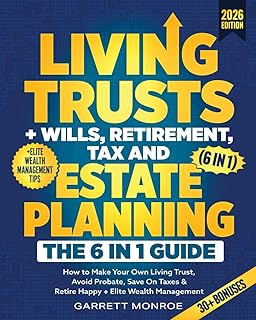
Price: $24.97 | Rating: 4.5 | ASIN: B0F7FRGV1L
A comprehensive 6‑in‑1 resource that includes living trusts, retirement planning, tax efficiency, and wealth management. Perfect for professionals who want to integrate asset protection with retirement and tax planning. The elite wealth management section offers advanced techniques for shielding assets from lawsuits.
3. Nolo’s Guide to Estate Planning

Price: $27.89 | Rating: 4.7 | ASIN: 1413331661
Nolo is the gold standard for plain‑language legal books. This guide covers wills, trusts, probate avoidance, estate taxes, and asset protection. It’s updated regularly to reflect current law. A must‑have for any professional wanting a thorough understanding of estate planning basics and beyond.
4. Estate Planning For Dummies

Price: $20.99 | Rating: 4.3 | ASIN: 1394158548
If you’re new to the topic, this book breaks down estate planning in easy‑to‑understand language. It covers asset protection, trusts, wills, and tax planning. The “For Dummies” series is excellent for building a mental framework before you dive into more advanced texts.
5. I’m Dead, Now What? Planner

Price: $11.63 | Rating: 4.6 | ASIN: 1441317996
This is an organizer for your affairs—important for estate planning because it ensures your family knows where your assets are and how your protection structures work. It includes sections for business affairs, belongings, and wishes. Pair this with your asset protection trust to leave clear instructions.
Integrating Asset Protection into Your Estate Plan
Now that you’ve seen the structures and the resources, let’s talk about the actual implementation process.
Step 1: Take inventory. List all assets—real estate, bank accounts, investments, retirement accounts, business interests, and valuable personal property.
Step 2: Assess risk. What is the likelihood of a lawsuit in your profession? How much insurance do you already have? Where are the gaps?
Step 3: Choose the right entities. For most high‑risk professionals, this means:
- An LLC or corporation for the business.
- A separate LLC or series LLC for rental properties.
- A revocable living trust for your home (for probate avoidance, not protection).
- An irrevocable trust or DAPT for your investment portfolio.
Step 4: Fund the structures. If you create an LLC but never transfer the asset into it, you have no protection. Transfer ownership titles, deeds, and account registrations.
Step 5: Review your beneficiary designations. For retirement accounts and life insurance, proper beneficiaries can keep those assets out of creditors’ hands and probate.
Step 6: Document everything. Keep minutes for your LLC, maintain separate bank accounts, and record all transfers. Good documentation is your best defense against a “piercing the veil” attack.
Step 7: Update annually. Tax laws change, state exemptions shift, and your asset composition evolves. Schedule an annual checkup with your estate planning attorney.
FAQs About Asset Protection for High‑Risk Professionals
Q: Can I move my assets into a trust after I’m sued?
A: No. That would be a fraudulent transfer, and the court will reverse it. Asset protection must be set up before any claim arises.
Q: Is an LLC enough to protect my personal assets?
A: An LLC protects your personal assets from business liabilities, but it does not protect against your personal liabilities (like a car accident). You still need an umbrella policy and additional structures for personal wealth.
Q: Do I need an offshore trust if I’m a small contractor?
A: Usually not. Offshore trusts are for those with substantial liquid assets (often $1M+). For most contractors, a domestic LLC and insurance are sufficient.
Q: How does a prenuptial agreement protect assets from lawsuits?
A: A prenup can specify that certain assets remain separate property, which means a creditor of your spouse cannot reach them. It also prevents a divorcing spouse from taking a share of your business. See Divorce and Asset Protection: Legal Steps to Safeguard Property before and During Separation.
Q: Can I use my retirement account as an asset protection tool?
A: Yes. ERISA‑qualified retirement plans (like 401(k)s) are almost completely protected from creditors under federal law. IRAs have federal protection up to about $1.5 million in bankruptcy, and many states extend that to non‑bankruptcy judgments. Read more: Retirement Accounts as Asset Protection Tools: How Safe Are 401(K)s and IRAs?.
Q: What if I inherit money? Do I need special protection?
A: Inherited assets can be co‑mingled with marital property and become vulnerable. Consider a trust to keep inherited wealth separate. See Asset Protection Planning for Inherited Wealth: Keeping Family Money in the Family.
Final Word: Act Now, Not After the Storm
Asset protection for high‑risk professionals is not optional—it’s a fiduciary duty to yourself and your family. The cost of setting up an LLC, a trust, and a proper insurance program is a fraction of what one lawsuit can take.
If you’re a doctor, lawyer, or contractor, you already have enough to worry about with your practice or business. Protect the wealth you’ve earned so that a single lawsuit doesn’t undo a lifetime of work.
Start with one step: read one of the books above, consult with an experienced estate planning attorney, and begin structuring your assets today. Your future self—and your heirs—will thank you.
📚 Final resource recommendation: For a clear, step‑by‑step guide on trusts, wills, and asset protection, get Nolo’s Guide to Estate Planning (4.7★). It’s the most reliable, lawyer‑approved reference you can own.