 Insurance Curator
As a parent, you want your children to grow up confident, capable, and in control of their finances. Yet many adults admit they never learned money basics at home. The good news? You don’t need to be a financial expert to raise money-smart kids. You just need a plan that grows with them.
Teaching financial literacy isn’t about lectures or complicated spreadsheets. It’s about weaving real-life money lessons into everyday moments—from a trip to the grocery store to the first part-time job. The earlier you start, the more naturally your child will learn to budget, save, and spend wisely.
This guide breaks down age-appropriate strategies, real-world examples, and expert-backed tips to help you turn everyday moments into powerful money lessons. For a broader foundation, check out Financial Literacy 101: Plain-English Basics Everyone Should Know Before Building Wealth.
Why Financial Literacy Starts at Home
Children absorb money habits from parents long before they understand dollars and cents. Studies show that many adult financial behaviors—like spending patterns and saving discipline—are set by age seven. That means the preschool years are golden.
Budgeting is the cornerstone of financial literacy. When kids see you tracking expenses, setting limits, and planning for goals, they learn that money is a tool, not a toy. The key is to make those lessons visible, interactive, and age-appropriate.
Ages 3–5: First Encounters with Money
At this stage, children learn through play, imitation, and simple repetition. Focus on three core ideas: money is used to buy things, we can’t buy everything at once, and saving feels good.
Use Clear Jars, Not Piggy Banks
A clear jar lets your child see money grow. Label three jars: Save, Spend, and Give. Every time they get a coin or a small bill (for chores or gifts), they divide it among the jars. This introduces the concept of allocation—the heart of budgeting.
Play Store at Home
Set up a pretend shop with toys and price tags. Give your child a few coins and let them “buy” items. This teaches trade-offs: “If you buy the car, you won’t have enough for the ball.” When they run out, the lesson sticks better than any lecture.
Model Simple Trade-Offs
At the store, say aloud: “We have $20 for snacks. Should we buy crackers or cookies?” Let your child choose. This builds decision-making skills and shows that money is limited.
Pro tip: Avoid saying “we can’t afford it” which can create scarcity anxiety. Instead say, “We’re choosing to spend our money on other things today.”
Ages 6–10: Building Budget Basics
Elementary-aged kids can grasp bigger concepts: income, expenses, saving for a goal, and the difference between wants and needs.
Introduce a Weekly Allowance (Tied to Chores)
Give a small, consistent allowance (e.g., $1 per week per year of age). Tie it to chores they can handle—making their bed, feeding the pet—but not to every task. This teaches that money comes from effort, not entitlement.
The Three-Jar System Evolves
Now upgrade to a budget envelope system. Use physical envelopes labeled Save, Spend, Give, and possibly Invest (for older kids). When the “Spend” envelope is empty, they can’t spend more until next week. This is a powerful lesson in self-control.
Compare Needs vs. Wants
Create a simple table together:
| Needs | Wants |
|---|---|
| School supplies | Video game |
| Lunch money | Candy |
| Winter jacket | New sneakers |
At the store, ask: “Is this a need or a want? Should we use your Spend envelope for it?” This builds the habit of asking before buying.
Use a Visual Goal Tracker
If your child wants a $20 toy, draw a chart with 20 boxes. Every dollar saved fills one box. This makes delayed gratification tangible.
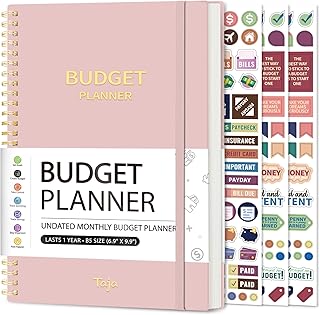
For more structured guidance, the Budget Planner – Monthly Budget Book with Expense Tracker Notebook (affiliate, $8.99, 4.6 stars) can help you model budgeting as a family. Use it to track your own spending openly, so your child sees you planning too.
Ages 11–14: Real-World Practice
Tweens are ready for more autonomy. They can handle a debit card, manage a small budget, and start earning money outside the home.
Open a Teen Bank Account
Many banks offer accounts for kids 13+ with parental oversight. Let them deposit allowance, birthday money, and earnings from babysitting or lawn work. Teach them to check balances online and categorize spending.
Introduce the “Pay Yourself First” Rule
Teach them to save 20% of any money they receive before spending on anything else. This builds the habit of prioritising savings, a core budgeting principle.
Create a Monthly Mock Budget
Give them a fictional income (e.g., $500) and ask them to allocate it across categories: rent, food, entertainment, savings. Use real local prices (e.g., rent for a small apartment). This opens their eyes to real-world costs.
Let Them Make Mistakes (While the Stakes Are Low)
If your tween blows their entire monthly allowance on a video game and has nothing left for a movie with friends, let them feel the disappointment. Don’t bail them out with extra cash. That lesson is worth far more than the small amount lost.
Product recommendation: The NICOOTH Budget Binder Cash Envelopes A6 ($6.28, 4.6 stars) is perfect for tweens who want a physical system. It comes with zipper envelopes and budget sheets, making it easy to separate money for different purposes.

Ages 15–18: High-School Money Management
Teens face real financial decisions: part-time jobs, car expenses, college applications, and social spending. Now is the time to deepen budgeting skills and introduce credit, investing, and taxes.
Help Them Set Up a Real Budget
Use a simple spreadsheet or a budgeting app. List all income (job, allowance) and all expenses (phone bill, gas, dining out). At the end of the month, review together: Where did the money go? What would they change?
Introduce the 50/30/20 Rule
- 50% on needs (phone, gas, insurance)
- 30% on wants (eating out, concerts)
- 20% on savings and debt
Adjust the percentages to match their real life. This framework makes budgeting simple and balanced.
Teach the Cost of “Borrowing”
Open a secured credit card or add them as an authorized user. Explain interest and APR. Show them a credit card statement and how a $100 purchase grows if only minimum payments are made. Use real numbers: at 18% APR, a $100 purchase costs $120 over a year of minimum payments.
Practice Smart Spending with a Summer Job
Encourage a part-time job, then help them allocate earnings: 20% into savings (for college or a car), 30% for short-term goals (prom tickets), 50% for current spending. Compare their plan with the SKYDUE Budget Binder ($8.98, 4.7 stars), which offers cash envelopes and expense sheets—perfect for a teen managing their first paycheck.

Ages 18+: Young Adults and Financial Independence
The goal now is to transition from parent-led money management to independent decision-making. This is the stage where earlier lessons either stick or fade.
Assign Real Financial Responsibilities
If your young adult lives at home, charge them a small “rent” (even $100/month) and have them pay their own phone bill, car insurance, and gas. This forces them to budget for fixed costs.
Introduce Investment Basics
Explain compound interest using a calculator: investing $100/month at age 20 vs. age 30 can mean tens of thousands of dollars difference by retirement. Encourage them to open a Roth IRA if they have earned income.
Discuss Big-Picture Goals
Have open conversations about student loans, down payments, and emergency funds. Help them create a 5-year financial vision with specific milestones. Use the Budgeting 101 book ($9.69, 4.6 stars) as a reference—it covers getting out of debt, tracking expenses, and setting financial goals in plain English.

Let Go Gradually
Hand over full control of their bank account, credit card, and budget tracking. Stay available for questions but resist the urge to micromanage. Mistakes at 22 are far cheaper than at 42.
Tools and Resources to Support Your Journey
You don’t have to do this alone. Here are high-quality products that reinforce the concepts above:
- For parents: The Budget Planner – Black ($8.99, 4.6 stars) is sleek and undated, so you can model family budgeting for your children.
- For kids and teens: The NICOOTH Budget Binder and SKYDUE Budget Binder offer durable, visual systems.
- For deeper learning: The Budgeting 101 book is an excellent read for teens and parents together.
Internal linking: Building financial literacy is a lifelong process. Read Financial Literacy for Beginners: How to Finally Understand Money Without Feeling Overwhelmed if you need a refresher yourself. Also explore Financial Literacy vs. Budgeting: What’s the Difference and Why You Need Both to see how budgeting fits into the bigger picture.
Common Mistakes Parents Make (and How to Avoid Them)
| Mistake | Why It Hurts | Better Approach |
|---|---|---|
| Using money as a reward for grades | Ties self-worth to performance | Link allowance to chores, not achievements |
| Never talking about money at home | Kids learn from silence | Have regular, age-appropriate money conversations |
| Binge-buying to “make up” for guilt | Teaches emotional spending | Stick to your own budget and explain your choices |
| Giving unlimited allowances | No practice with scarcity | Give a fixed amount and let them manage it |
| Protecting kids from failure | They never learn consequences | Let them run out of money before payday |
Expert Insights on Money Milestones
Child development experts and financial educators agree: the most effective money lessons are concrete, repeated, and connected to real life. Dr. Elizabeth Dunn, co-author of Happy Money, notes that “experiences bring more happiness than things” – a principle you can teach by having kids save for a family outing rather than another toy.
Similarly, the Jump$tart Coalition recommends these grade-level benchmarks:
- By grade 5: Can identify the difference between income and expense.
- By grade 8: Can create a simple budget for a one-time event.
- By grade 12: Can manage a personal budget for a month.
For a self-assessment of your own financial literacy, read How Financially Literate Are You? A Self-Assessment to Spot Hidden Money Gaps. It’s never too late to improve your own skills while teaching your kids.
Building Habits That Last
Teaching financial literacy isn’t a one-time conversation. It’s a series of small, consistent actions over 18+ years. Parents who model budgeting, saving, and thoughtful spending raise children who do the same.
Simple habit to start today: Have a weekly “money check-in” at the dinner table. Everyone shares one thing they spent, one thing they saved, and one thing they’re looking forward to buying. Keep it light and judgment-free.
For more on building quick, transformative habits, see Simple Financial Literacy Habits That Can Transform Your Money in 15 Minutes a Week.
FAQ
At what age should I start teaching my child about money?
You can start as early as age 3 with simple concepts like paying with coins and saving in a clear jar. Formal budgeting lessons can begin around age 6.
Should I give my child an allowance?
Yes, if it’s tied to reasonable chores and given consistently. An allowance teaches the connection between work and money. Start small and increase as they get older.
How do I teach budgeting to a teenager who refuses to save?
Let them feel natural consequences. Don’t bail them out. Suggest using a cash envelope system so they physically see money running out. A budget binder like the SKYDUE Budget Binder can make the process more tangible.
What if I’m bad with money myself? Can I still teach my kids?
Absolutely. Be honest: “I’m learning too. Let’s figure this out together.” Use resources like books and apps. Your willingness to improve is itself a powerful lesson. Read Financial Literacy Myths That Keep You Broke (And What Actually Matters) to separate fact from fiction.
How do I handle kids who ask for expensive things?
Use it as a teaching moment. Ask: “How would you plan to pay for that? Could you save your allowance for two months or earn extra money?” This builds problem-solving skills around budgeting.
When should I introduce credit cards to my teen?
Around age 16–18, consider adding them as an authorized user on your card with strict limits. Teach them to pay off the full balance each month. Emphasize that credit is a tool, not free money.
What are the most important budgeting rules for young adults?
The 50/30/20 rule is a great start. Also encourage them to keep an emergency fund of at least $1,000 before any discretionary spending. For more, see Financial Literacy for Young Adults: Money Skills Every 20-Something Should Master Early.
Final Thoughts
You don’t have to be perfect to raise money-smart kids. You just have to be present, intentional, and willing to learn alongside them. Start with one small change this week—maybe a clear jar for a preschooler or a budget binder for a teen. Over time, those small lessons compound into lifelong financial confidence.
For high earners who worry about lifestyle creep, read Financial Literacy for High Earners: Avoiding Lifestyle Creep and Silent Money Leaks. And if debt has been a struggle in your family, Financial Literacy and Debt: How Understanding the Numbers Can Help You Get Out and Stay Out offers a path forward.
Teaching kids about money is one of the greatest gifts you can give. Start today, and watch them grow into adults who spend, save, and give with wisdom.