 Insurance Curator
Inflation is like a silent thief that creeps into your emergency fund and steals its purchasing power. You saved $10,000 thinking it would cover six months of expenses, but now that same basket of groceries costs 20% more—and your safety net suddenly feels thinner. This isn’t just an inconvenience; it’s a real financial threat.
Your emergency fund exists to protect you during job loss, medical emergencies, or unexpected home repairs. But when inflation runs hot (as it has in recent years), the value of every dollar you’ve stashed shrinks over time. The good news? You can fight back. By adjusting how much you save, where you keep those funds, and how you track your budget, you can inflation-proof your safety net.
In this deep dive, we’ll explore exactly how inflation erodes emergency savings, calculate how much more you need, and give you step‑by‑step tactics to protect your fund. And because budgeting is the backbone of any emergency fund strategy, we’ll highlight tools like the Budget Planner – Monthly Budget Book with Expense Tracker Notebook and the SKYDUE Budget Binder to help you stay on track.
How Inflation Silently Erodes Your Emergency Fund
Most people think of an emergency fund as a static number: “I need $15,000 and I’m done.” But inflation makes that number a moving target. If your cost of living rises 7% annually, a $10,000 fund loses $700 of real purchasing power in one year. Over three years of 5% inflation, that same $10,000 buys only about $8,600 worth of goods and services.
The Math: Real vs. Nominal Value
| Year | Nominal Emergency Fund | Cumulative Inflation (5%) | Real Purchasing Power |
|---|---|---|---|
| 0 | $10,000 | 0% | $10,000 |
| 1 | $10,000 | 5% | $9,524 |
| 2 | $10,000 | 10.25% | $9,070 |
| 3 | $10,000 | 15.76% | $8,637 |
In just three years, you lose over $1,300 of real value without spending a cent. That’s why inflation isn’t just a headline—it’s a direct hit to your financial security.
Why Emergency Funds Are Especially Vulnerable
- Low‑yield accounts: Most people keep emergency funds in regular savings accounts earning 0.01%–0.5% APY, far below inflation.
- Long holding periods: Emergency funds sit untouched for months or years, so inflation compounds.
- No adjustment habit: Once you reach your target, you often stop contributing—letting inflation shrink your safety net.
“Inflation is the silent killer of emergency funds. If you aren’t recalculating your target annually, your ‘six‑month cushion’ is slowly deflating.” — Michelle Singletary, Washington Post personal finance columnist
How Much More Do You Need? Recalculating Your Emergency Fund Target
The old rule of thumb is 3–6 months of essential expenses. But with inflation, that rule needs an inflation rider. Here’s how to recalculate:
Step 1: Track Your Real Expenses (Not Your Budget)
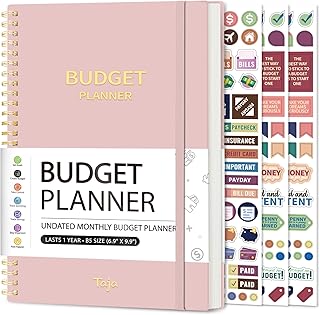
Inflation hits categories unevenly. Rents may rise 10%, groceries 8%, and utilities 5%. Use a budget planner to record actual spending for three months. The Budget Planner – Monthly Budget Book with Expense Tracker Notebook (Pink) (4.6 ⭐, $8.99) is perfect for this—it’s undated and includes expense tracker pages so you can capture every dollar.
Step 2: Apply a Realistic Inflation Adjustment
Look at the trailing 12‑month Consumer Price Index (CPI) for your region. If it’s 6%, multiply your essential monthly expenses by 1.06. Then multiply by your target number of months.
Example:
Monthly essentials = $4,000
Target months = 6
Without inflation adjustment: $24,000
With 6% adjustment: $24,000 × 1.06 = $25,440
Step 3: Increase Your Target Every Year
Make it a habit to revisit your emergency fund target on the same date each year (e.g., your birthday or tax day). Use a budget binder like the SKYDUE Budget Binder (4.7 ⭐, $8.98) to store your expense sheets and track your progress. It comes with zipper envelopes and categorized budget sheets.

Where to Keep Your Emergency Fund During High Inflation
You need a balance of liquidity (quick access) and yield (to fight inflation). Here’s a tiered strategy:
Tier 1: High‑Yield Savings Account (HYSA)
- APY: 4%–5% (as of 2025)
- Access: Instant via debit card or transfer
- Risk: FDIC insured, zero risk
Keep 2–3 months of expenses here. This is your “immediate use” layer.
Tier 2: Short‑Term U.S. Treasury Bills or I‑Bonds
- T‑Bills: 4–6 month maturities, state tax exempt
- I‑Bonds: Inflation‑adjusted rate (currently ~4.3%), but you can’t redeem for the first year
Use I‑Bonds for the portion of your fund you’re certain you won’t touch for at least 12 months. They protect against inflation directly because their rate resets every six months based on CPI.
Tier 3: Money Market Funds
- APY: 4%–5%
- Risk: Very low, but not FDIC insured
These are great for a middle layer—slightly better yield than a savings account, and you can write checks or transfer quickly.
Rule of thumb: Never invest emergency fund money in stocks, crypto, or long‑term bonds. The volatility could rob you of the money exactly when you need it most.
For a deeper dive on where to park your savings, check out Where to Keep Your Emergency Fund: Best Accounts for Safety and Access?.
How Budgeting Helps You Inflation‑Proof Your Emergency Fund
Your emergency fund doesn’t exist in a vacuum—it’s fueled by your budget. When inflation raises your everyday costs, you have two choices: earn more or spend less. A solid budget reveals where your money is going and helps you redirect extra cash toward your fund.
The Link Between Budgeting and Emergency Fund Growth
- Spot spending leaks: A weekly coffee run might be $5, but after inflation that same coffee is $7. Track it.
- Create a surplus: Even $50 extra per month, invested in a HYSA, adds up with compounding.
- Avoid fund erosion: If you don’t budget, you might accidentally dip into your emergency savings for non‑emergencies.
Products That Make Budgeting Easier
| Product | Price | Rating | Best For |
|---|---|---|---|
| Budget Planner (Pink) | $8.99 | 4.6 ⭐ | Monthly expense tracking & bill organizing |
| NICOOTH Budget Binder A6 | $6.28 | 4.6 ⭐ | Cash envelope system, compact size |
| SKYDUE Budget Binder | $8.98 | 4.7 ⭐ | Complete set with zipper envelopes & budget sheets |
| Budget Planner (Black) | $8.99 | 4.6 ⭐ | Same great planner, different color |
| Budgeting 101 Book | $9.69 | 4.6 ⭐ | Foundational knowledge + actionable steps |
The Budgeting 101 book (4.6 ⭐, $9.69) is an excellent companion if you’re new to budgeting. It covers everything from tracking expenses to setting financial goals—skills that directly support your emergency fund strategy.
Budget Hack: Use the 50/30/20 Rule (Inflation‑Adjusted)
- 50% on needs (but recalculate what “needs” cost after inflation)
- 30% on wants (cut back where inflation hit non‑essentials)
- 20% on savings (prioritize emergency fund until you hit your new, higher target)
If inflation pushes your needs above 50%, you have to reduce wants or increase income. A budget binder helps you see that shift in real time.
Strategies to Build a Bigger Emergency Fund Faster When Inflation Is High
You don’t have to wait years. Here are five proven tactics:
1. Automate a Percentage of Every Paycheck
Set up an automatic transfer to your HYSA on payday—even 5% helps. If you get a raise or bonus, increase that percentage.
2. Side Hustle with a Purpose
Temporarily drive for a rideshare, freelance on Upwork, or sell unused items. Direct 100% of that income to your emergency fund.
3. Cut Subscriptions (You Won’t Miss Them)
A $15/mo streaming service is $180/year. Cancel three and you free up $540—that’s real cash for your fund.
4. Use Cash Envelopes for Discretionary Spending
The envelope method works especially well when prices are rising. With a budget binder, you physically see how much you have left for groceries or dining out, which prevents overspending.
5. Refinance High‑Interest Debt
Inflation usually leads to higher interest rates, but if you have good credit, you can still refinance credit card debt or personal loans. Lower payments free up cash for savings.
When You Should (and Shouldn’t) Dip Into Your Emergency Fund
Inflation may tempt you to use your fund for everyday price increases—don’t. Your emergency fund is for unexpected, essential expenses only.
Use It For:
- Job loss / reduction in income
- Major car repair (engine or transmission)
- Medical emergency not covered by insurance
- Urgent home repairs (leaking roof, broken HVAC)
Don’t Use It For:
- Grocery price spikes (cut elsewhere in your budget)
- Holiday gifts or vacations
- New furniture or electronics
- “Topping up” retirement accounts (use income, not safety net)
For a complete guide, see Using Your Emergency Fund the Right Way: When to Tap It and When Not to.
Rebuilding Your Emergency Fund After Using It (Post‑Inflation Crisis)
If you had to use your fund during a period of high inflation, rebuilding is tougher because everything costs more. But it’s still doable.
Step‑by‑Step Rebuild Plan
- Prioritize essentials – Keep only minimum payments on non‑critical debts.
- Create a mini fund first – Aim for $1,000 quickly (sell something, odd jobs). This is your “micro emergency fund.” Learn more about Micro Emergency Funds: a Starter Safety Net for People Living Paycheck to Paycheck.
- Set a weekly savings challenge – Save $50/week for 20 weeks = $1,000.
- Automate as soon as possible – Even $10 per day adds up.
- Reassess your target – Inflation may have changed your monthly expenses permanently.
For a full recovery roadmap, read Rebuilding an Emergency Fund after a Job Loss or Major Crisis.
Special Considerations for Different Household Types
Dual‑Income Families
You have more income stability, but also higher expenses. Consider keeping 6 weeks of total household expenses in cash, plus a separate fund equal to 3 months of only essential costs (excluding discretionary). This prevents over‑saving. See How Dual-income Families Should Structure Their Emergency Funds?.
Freelancers and Gig Workers
Your income is variable, so you need a larger buffer—6 to 12 months. Inflation hurts you more because your rates may not keep up. Focus on building a cash‑heavy fund in a HYSA, and consider I‑Bonds for a portion you can leave untouched. Check Emergency Funds for Freelancers and Gig Workers with Unstable Income.
People Living Paycheck to Paycheck
Start with $500–$1,000. Even a small fund prevents you from going into debt for a minor emergency. Use a budget binder to track every expense—the NICOOTH Budget Binder at $6.28 is affordable and effective. For tips, see How to Build an Emergency Fund from Zero When Money Is Tight?.
Inflation‑Proofing Your Emergency Fund: A Summary Checklist
- Recalculate your monthly essential expenses using actual spending (not budget estimates).
- Multiply by 1 + current annual inflation rate.
- Increase your target by that amount.
- Move your fund to a high‑yield savings account (4%+ APY).
- Consider I‑Bonds for a portion you can lock away for 12 months.
- Use a budget planner or binder to track spending and free up cash.
- Automate weekly transfers into your emergency fund.
- Review your target annually (inflation changes).
FAQ: Inflation and Emergency Funds
Q1: How does inflation affect my emergency fund if I never touch it?
A: Inflation reduces the real purchasing power of your savings. Even untouched, your fund buys less over time. You need to periodically increase your savings to maintain the same level of protection.
Q2: Should I invest my emergency fund to beat inflation?
A: No. The primary goal of an emergency fund is safety and liquidity, not growth. Investing in stocks or crypto exposes you to market risk, and you could lose value exactly when you need cash. Use high‑yield savings accounts or I‑Bonds instead.
Q3: How often should I recalculate my emergency fund target?
A: At least once a year. More often if inflation is unusually high (e.g., above 5%). Tie it to a specific date—such as your birthday—to make it a habit.
Q4: What if I can’t save enough to keep up with inflation?
A: Start small. Even saving an extra $20–$50 per month helps. Use a budget binder to identify spending leaks, and consider a side hustle. Every dollar you add reduces the inflation gap.
Q5: Is a regular savings account okay if inflation is low?
A: Even during low inflation (2–3%), a savings account earning 0.01% is a losing proposition. Always move your emergency fund to a high‑yield account. It’s free money.
Q6: Can I use a Roth IRA as an emergency fund?
A: You can withdraw contributions (not earnings) penalty‑free, but it’s not ideal. You lose future growth potential. Only use a Roth as a last‑resort emergency fund after maxing out other options.
Final Thought: Stay Proactive, Not Reactive
Inflation isn’t going away—it’s a normal part of the economic cycle. The difference between a resilient emergency fund and a shrinking one is regular adjustment. By tracking your real expenses with a budget planner, moving your savings to inflation‑fighting accounts, and increasing your target every year, you ensure your safety net stays strong no matter what the economy does.
Start today: grab a Budget Planner or SKYDUE Budget Binder, calculate your new inflation‑adjusted target, and make your first extra contribution. Your future self will thank you.
For more on the fundamentals, see Emergency Funds Explained: How Much You Really Need and Why and Emergency Fund vs. Savings for Goals: How to Separate and Prioritize.