 Insurance Curator
Worried about where to stash your savings beyond the standard $250,000 limit? You are not alone. With rising inflation and economic uncertainty, keeping large sums of cash safe has never been more critical. FDIC insurance protects deposits up to $250,000 per depositor, per bank, per ownership category—but what happens when your savings exceed that threshold?
This guide dives deep into the safest banking products for large cash holdings, how FDIC coverage really works, and practical budgeting strategies to manage your money without losing sleep over bank failures.
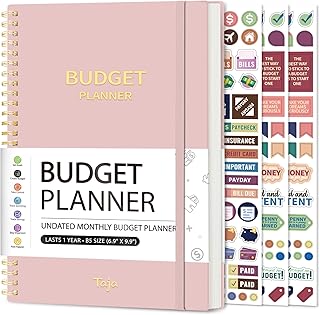
Think of this as your roadmap to maximizing insurance protection while keeping your cash accessible—and yes, we’ll show you the tools that help you track it all, like the Budget Planner – Monthly Budget Book with Expense Tracker Notebook, Undated Bill Organizer & Finance Planner to Take Control of Your Money, Account Book to Manage Your Finances-Pink (which also comes in black).
What Is FDIC Insurance and Why Does It Matter for Large Cash Sums?
The Federal Deposit Insurance Corporation (FDIC) insures deposits at member banks up to $250,000 per depositor, per insured bank, for each account ownership category. That means if your bank fails, the government covers your losses—but only up to that limit.
For anyone sitting on cash reserves exceeding $250,000, the risk is real. A single account holding $500,000 is only half protected. Understanding how to structure your deposits across different banks and ownership types is the first step toward safeguarding your wealth.
Key facts you must know:
- Coverage is automatic – you don’t need to apply.
- Not all financial products are eligible (e.g., stocks, bonds, crypto).
- Ownership categories include single accounts, joint accounts, revocable trust accounts, IRAs, and more.
The $250,000 Limit: How It Works in Practice
Let’s say you have $600,000 in cash from a home sale. If you park it all in one savings account at a single bank, $350,000 is uninsured. Should that bank fail, you could lose a significant chunk.
But with smart structuring, you can protect every dollar.
Ownership Categories Multiply Your Coverage
FDIC recognizes several ownership categories, each with its own $250,000 limit:
| Ownership Category | Coverage Limit | Example |
|---|---|---|
| Single account | $250,000 per owner | One person, one account |
| Joint account | $250,000 per co-owner | Two owners = $500,000 total |
| Revocable trust (payable on death) | $250,000 per beneficiary (up to 5) | 3 beneficiaries = $750,000 |
| Irrevocable trust | $250,000 per beneficiary | Varies by trust terms |
| IRA (self-directed) | $250,000 per owner | Separate from regular accounts |
| Corporation/partnership | $250,000 per entity | Not linked to personal coverage |
Pro tip: A married couple can easily insure $1 million+ by using joint accounts, individual accounts, and trust accounts at the same bank.
Safe Banking Products for Large Cash Sums
Not all bank accounts are created equal when it comes to holding large balances. Some products offer better yields, others better access. Here’s how the main options stack up.
1. High-Yield Savings Accounts (HYSA)
Best for: Emergency funds and short-term savings
Yield: 4–5% APY (as of late 2024)
FDIC coverage: $250,000 per ownership category
HYSAs are ideal for cash you may need within months. They offer competitive interest rates with full liquidity. For sums above the limit, open accounts at multiple banks.
2. Certificates of Deposit (CDs)
Best for: Locking in a fixed rate for a set term
Yield: Varies by term (often 4–5% APY for 1-year CDs)
FDIC coverage: Same $250,000 per depositor per bank
CDs prevent you from withdrawing early without penalty, which makes them a good choice for money you won’t need for 6 months to 5 years. Use a CD ladder to spread maturity dates and maintain liquidity.
3. Money Market Accounts (MMAs)
Best for: Combining check-writing access with a decent yield
Yield: Usually 3–4% APY
FDIC coverage: Same $250,000 limit
MMAs often require higher minimum balances but provide check-writing and debit card access. They’re a middle ground between savings and checking.
4. Checking Accounts
Best for: Everyday spending and bill payments
Yield: Often 0% APY (some high-yield checking exists)
FDIC coverage: $250,000 per owner
Don’t let large sums sit idle in a zero-interest checking account. Use it only for necessary transactions and move excess to insured savings or CDs.
5. Cash Management Accounts (through Brokerages)
Best for: Sweeping uninvested cash into FDIC-insured partner banks
Yield: 4–5% APY
FDIC coverage: Up to $1–2 million via multiple partner banks
Platforms like Fidelity, Schwab, and Wealthfront pass your cash to a network of banks, effectively expanding coverage. Always verify the partner bank list.
How to Insure $1 Million+ Without a Sweat
Here’s a practical example using real numbers:
Assume you have $1,200,000 to protect.
Strategy A: Multiple Banks (Simplest)
- Bank A: $250,000 single account (you)
- Bank B: $250,000 single account (you)
- Bank C: $250,000 single account (you)
- Bank D: $250,000 single account (you)
- Bank E: $200,000 single account (you)
Total insured: $1,200,000. All it takes is five different FDIC-insured banks.
Strategy B: Ownership Categories at One Bank
- Single account: $250,000 (you)
- Joint account with spouse: $500,000 ($250,000 each)
- Trust account with 2 beneficiaries: $500,000
- IRA: $250,000
At a single bank you can cover $1.5M using multiple categories.
Strategy C: Cash Management Account
Open a brokerage cash account that sweeps into 6+ partner banks. Your $1.2M gets automatically split and fully insured.
Budgeting tool tip: To track balances across multiple accounts, use a Budget Binder Cash Envelopes A6 Money Saving Binder with Zipper envelopes (Purple). It helps you see where your cash is parked.

Budgeting Context: Why Large Cash Sums Belong in a Budget
Even if you have a million dollars in savings, you still need a budget. Large cash sums tempt overspending. A proper budget allocates money to goals: emergency fund, big purchases, investments, and fun.
Using a monthly budget planner like the SKYDUE Budget Binder, Money Saving Binder with Zipper Envelopes, Cash Envelopes and Expense Budget Sheets for Budgeting can help you categorize your large cash sum into envelopes—even if they’re digital.

Why budgeting matters for large sums:
- Prevents lifestyle inflation.
- Ensures you don’t exceed FDIC limits unknowingly.
- Makes it easier to decide which banking product to use for each goal.
Remember, the FDIC doesn’t insure your spending discipline—that’s your job.
Beyond FDIC: Other Safety Nets for Large Cash Holdings
FDIC is the gold standard, but there are additional layers of protection.
NCUA Insurance (Credit Unions)
Credit unions offer equivalent coverage through the National Credit Union Administration (NCUA) – also $250,000 per member, per credit union. You can use both banks and credit unions to double your coverage.
Non-FDIC Insured Options
Avoid keeping large sums in:
- Money market mutual funds – Not FDIC insured; subject to market risk.
- Annuities – Insured by state guaranty associations, not FDIC.
- Prepaid cards – Limited FDIC pass-through if the issuer partners with a bank; verify.
What About Gold and Safe Deposit Boxes?
Safe deposit boxes are not insured by FDIC. Banks carry limited insurance for contents. For large cash, a bank account is safer than a metal box.
Common Mistakes When Storing Large Cash Sums
Even smart savers slip up. Watch for these pitfalls.
1. Exceeding the limit without realizing it
If you have multiple accounts at the same bank under your name, the total is aggregated. Example: a checking account with $200K and a savings account with $100K at the same bank = $300K total; only $250K is insured.
2. Assuming joint accounts double coverage perfectly
Joint accounts are insured per co-owner. If you and your spouse have a joint account with $500K, each of you is insured for $250K each—that’s fine. But if you also have individual accounts at the same bank, those are separate categories.
3. Ignoring beneficiary designations
A payable-on-death (POD) account naming beneficiaries qualifies for separate coverage. Update beneficiary forms to increase protection without opening new banks.
4. Not using a cash management system
Without a budgeting tool, it’s easy to lose track. A simple Budget Planner – Monthly Budget Book with Expense Tracker Notebook, Undated Bill Organizer & Finance Planner to Take Control of Your Money, Account Book to Manage Your Finances-Black can save you from costly mistakes.

Expert Insights: How to Structure Your Cash Across Banks
Financial advisors recommend the following approach for six-figure cash hoards:
Step 1: Calculate your total uninsured amount
Add up all balances at each bank. Identify any exposure.
Step 2: Open accounts at multiple banks
Use 2–5 different FDIC-insured banks. Online banks often offer competitive yields and make it easy to open accounts remotely.
Step 3: Use ownership categories strategically
- Single accounts for yourself.
- Joint accounts with a spouse or partner.
- Revocable trust accounts with beneficiaries.
- IRA accounts if you have retirement savings.
Step 4: Set up automated transfers to budgeting envelopes
Use a system like the Budgeting 101: From Getting Out of Debt and Tracking Expenses to Setting Financial Goals and Building Your Savings, Your Essential Guide to Budgeting (Adams 101 Series) to learn how to allocate funds effectively.

Step 5: Monitor regularly
Use a spreadsheet or a budget binder to track how much is where. Update when you move money between accounts.
The Role of Banking Products in Your Overall Financial Plan
Choosing the right banking product for large cash sums isn’t just about safety—it’s also about yield, liquidity, and alignment with your goals.
If you’re saving for a down payment within six months, a high-yield savings account with multiple banks works best. If you’re building a multi-year emergency fund, consider a CD ladder. For everyday spending, keep only what you need in checking.
Related reading for deeper understanding:
- Beginner’s Guide to Banking Products: Checking, Savings, CDs, and More
- High-yield Savings Accounts: What to Look for and How to Compare Offers
- Certificates of Deposit vs. Savings Accounts: Which Banking Product Fits Your Goal?
Each product serves a different purpose. The key is to match them with your time horizon and risk tolerance—while never exceeding FDIC limits.
Frequently Asked Questions About FDIC Insurance and Large Cash Sums
What is the maximum amount insured by the FDIC?
$250,000 per depositor, per insured bank, for each account ownership category. This applies to single accounts, joint accounts, trust accounts, IRAs, and more.
Can I insure more than $250,000 at one bank?
Yes. By using multiple ownership categories (e.g., single + joint + trust), you can cover $500,000, $750,000, or even $1 million+ at a single bank. For example, a married couple with a joint account and two individual accounts can insure $750,000 at one bank.
Are credit unions as safe as banks for large deposits?
Yes. Credit unions are insured by the NCUA (National Credit Union Administration) for the same $250,000 limit. Deposits at credit unions are considered just as safe as those at FDIC-insured banks.
Do all banking products qualify for FDIC insurance?
No. Only deposit accounts at FDIC-insured banks qualify. This includes checking, savings, money market deposit accounts, and CDs. It does not cover stocks, bonds, mutual funds, crypto, or annuities.
How can I check if my bank is FDIC insured?
Use the FDIC’s BankFind tool at FDIC.gov. Enter the bank’s name or location to verify its insurance status. You can also look for the “Member FDIC” sign at branches.
What happens if my bank fails?
The FDIC typically pays insured deposits within a few days. Uninsured deposits may be partially recovered if the bank’s assets are sold. That’s why staying within limits is critical.
Is it better to use one bank with multiple categories or several banks?
Both strategies work. Using multiple banks is simpler for beginners. Using ownership categories at one bank may be easier for account management but requires careful tracking of beneficiaries.
What’s the safest way to hold cash for a short period (e.g., after selling a house)?
Open a high-yield savings account at an FDIC-insured bank. If the amount exceeds $250,000, split it across 2–3 banks. Avoid holding large sums for months in non-insured instruments.
Do I need to pay taxes on interest earned from these accounts?
Yes, interest is taxable as ordinary income. You will receive a 1099-INT from the bank. Budget for taxes if you’re earning significant interest on large deposits.
Can a trust account increase my FDIC coverage?
Yes. Revocable trust accounts (payable-on-death) are insured up to $250,000 per beneficiary (up to 5 beneficiaries). Irrevocable trust accounts also provide separate coverage. Consult a banking advisor for complex trust structures.
Final Thoughts: Protect Your Cash, Build Your Budget
Large cash sums demand respect. FDIC insurance provides the safety net, but you must actively structure your deposits to avoid exposure. Combine multiple banks, ownership categories, and the right banking products to sleep soundly.
Meanwhile, don’t ignore the power of a budget. Even a million-dollar cash reserve can disappear without a plan. Use tools like budget planners and cash envelope binders to keep your finances organized.
Start today: audit your current accounts, calculate your FDIC coverage, and spread the risk. Your future self will thank you.