 Insurance Curator
Most people budget backward. They earn money, pay bills, spend on lifestyle, and then—if anything remains—they save. That leftover approach rarely works. The Pay Yourself First strategy flips the script. You set aside savings before you pay any other expense. It’s a simple shift that transforms your financial life.
Think of it as treating your future self as the most important bill you have. When saving becomes automatic, you remove willpower from the equation. No more hoping there’s money left at month-end. No more guilt over that extra coffee. Your savings grow steadily, invisibly, and effortlessly.
This deep dive covers everything: the psychology behind it, step-by-step execution, practical tools like a Budget Planner – Monthly Budget Book with Expense Tracker Notebook, Undated Bill Organizer & Finance Planner to Take Control of Your Money, Account Book to Manage Your Finances-Pink , and how to anchor this strategy inside a strong budgeting framework.
What Does “Pay Yourself First” Mean?
The phrase is credited to financial author George Clason’s The Richest Man in Babylon, and later popularized by modern experts like David Bach. The principle is straightforward: before you spend a dollar on rent, groceries, or entertainment, you set aside a predetermined percentage of your income for savings and investments.
This isn’t just about building an emergency fund. It’s about funding your goals—retirement, a down payment, travel, or education—with the same priority you give to your landlord or credit card company.
Key difference from traditional budgeting:
| Traditional Budgeting | Pay Yourself First |
|---|---|
| Save what is left after expenses | Save first, then spend the rest |
| Relies on discipline and tracking | Relies on automation and habit |
| Often leads to inconsistent saving | Guarantees consistent progress |
| Reactive to overspending | Proactive wealth building |
Why “Pay Yourself First” Works So Well
1. It Removes Decision Fatigue
Every time you decide whether to save, you engage your prefrontal cortex. Over a day, dozens of micro-decisions drain your willpower. Setting up an automatic transfer to a savings account eliminates the choice. You never see the money, so you never miss it.
2. It Inverts the “Spend Less” Trap
Traditional advice says “spend less to save more.” That feels like deprivation. Pay Yourself First feels like abundance—you decide what matters most (your future) and design your lifestyle around that priority.
3. It Leverages Behavioral Psychology
- Loss aversion: When savings come out first, spending feels like the sacrifice, not saving.
- Mental accounting: You mentally categorize that pre-transferred money as “untouchable,” making it harder to raid.
- Habit stacking: Pair the saving action with a recurring event (payday) to form a strong automatic routine.
For deeper behavioral insights, see Behavioral Saving Strategies: Psychology Tricks to Help You Save More.
How to Implement Pay Yourself First: A Step-by-Step Guide
Step 1: Define Your “First” Percentage
Start with a number that feels uncomfortable but doable. Common recommendations:
- 10% of gross income for beginners.
- 20% for those targeting financial independence.
- 50% for aggressive savers (the FIRE movement).
If you’re unsure, use the 50/30/20 framework: 50% needs, 30% wants, 20% savings. That 20% becomes your “pay yourself first” number.
Step 2: Open Dedicated Accounts
- High-yield savings account (HYSA) for short-term goals (emergency fund, vacation).
- Retirement accounts (401k, IRA) for long-term wealth.
- Investment brokerage for taxable growth.
Automate transfers to each bucket on payday. If your employer offers a 401k match, that’s the ultimate “pay yourself first” – it comes straight from your paycheck before you ever touch it.
Learn more about using HYSA effectively: How to Use High-yield Savings Accounts as Part of Your Saving Strategy?
Step 3: Automate Everything
Set up recurring transfers from checking to savings on payday. If your bank supports it, split your direct deposit so a percentage lands directly in savings before you ever see it.
Example:
Monthly net income: $4,000
Pay yourself first: 20% = $800
Transfers: $500 to HYSA, $300 to Roth IRA
Remaining $3,200: covers rent, bills, groceries, fun.
Step 4: Adjust Your Budget Around the New Baseline
Now you must live on the remaining 80%. This forces deliberate spending. Track your expenses using a physical tool like the SKYDUE Budget Binder, Money Saving Binder with Zipper Envelopes, Cash Envelopes and Expense Budget Sheets for Budgeting. The act of writing down every dollar reinforces the habit.
Step 5: Increase the Percentage Over Time
Every time you get a raise, increase your first-pay percentage by at least 50% of the raise. You won’t miss the extra money because you never had it.
Pay Yourself First Inside a Real Budget
This strategy isn’t a replacement for budgeting; it’s the foundation. Here’s how it fits into popular systems:
Zero-Based Budgeting
In zero-based budgeting, every dollar is assigned a job. Pay Yourself First makes saving the first job. You allocate $X to savings before you assign anything to dining out or streaming subscriptions.
Envelope System
The envelope system works beautifully alongside Pay Yourself First. After you transfer your first-pay amount to savings, you divide the remaining cash into envelopes for categories. The NICOOTHBudget Binder Cash Envelopes A6 Money Saving Binder with Zipper envelopes (Purple) helps you stay organized.
50/30/20 Method
This method already includes Pay Yourself First as the 20% savings bucket. You just need to automate that 20% before you spend on wants.
Common Mistakes and How to Avoid Them
| Mistake | Solution |
|---|---|
| Saving too much, too fast | Start with 5–10% and increase gradually |
| Using only one savings account | Split into emergency, retirement, goals |
| Forgetting to budget after saving | Still track spending; the remaining 80% must be allocated |
| No emergency fund first | Build $1,000 mini-fund before investing |
| Ignoring debt | Pay minimums first, then use extra to save; consider high-interest debt as negative savings |
The Power of Automation: Making Saving Invisible
The greatest advantage of Pay Yourself First is that it makes saving invisible. You never see the money, so you never have to resist the temptation to spend it.
How to automate like a pro:
- Set up direct deposit split: 10% to savings account, 90% to checking.
- Schedule automatic transfers from checking to savings on the same day as your direct deposit hits.
- Use apps like Digit or Qapital to round up purchases and sweep small amounts into savings.
- Max out employer 401k contributions – it’s pre-tax and automatic.
For more modern tools, read How to Automate Your Saving Strategy Using Modern Money Apps?
Tools to Help You Stay Consistent
Physical budgeting tools reinforce the psychological commitment. Here are three top-rated products that support the Pay Yourself First mindset:
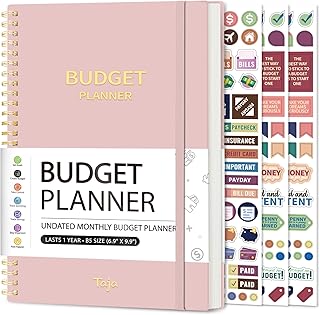
1. Budget Planner – Monthly Budget Book with Expense Tracker (Pink)
Price: $8.99 | Rating: 4.6
This undated planner lets you track income, expenses, and savings goals. Use it to record your “pay yourself first” transfer each month and see progress over time. The pink cover adds a touch of fun to your finance routine.
2. NICOOTH Budget Binder Cash Envelopes (Purple)

Price: $6.28 | Rating: 4.6
Perfect for the envelope system. After you pay yourself first, allocate the remaining cash into these zippered envelopes. The binder keeps everything organized and prevents impulse spending.
3. SKYDUE Budget Binder with Zipper Envelopes

Price: $8.98 | Rating: 4.7
Comes with expense budget sheets and multiple cash envelopes. Use it to divide your after-savings income into spending categories. The clear pockets make it easy to see your remaining cash at a glance.
4. Budget Planner – Monthly Budget Book (Black)

Price: $8.99 | Rating: 4.6
The black version offers the same functionality with a sleek, professional look. Great for those who prefer a more understated design.
5. Budgeting 101 Book

Price: $9.69 | Rating: 4.6
An essential guide from the Adams 101 Series. It covers the Pay Yourself First principle in detail, alongside tracking expenses, setting goals, and building savings. A perfect companion for beginners.
Pay Yourself First vs. Traditional Budgeting: A Deeper Comparison
| Aspect | Pay Yourself First | Traditional Budget |
|---|---|---|
| Priority | Savings first | Savings last |
| Psychological effect | Empowerment | Deprivation |
| Consistency | High (automatic) | Low (manual) |
| Flexibility | Less room for error | More room for overspending |
| Best for | People with irregular income, freelancers, goal-driven savers | People who need tight tracking |
| Risk | May save too little if percentage is too low | May not save at all |
Advanced Strategies for Experienced Savers
Once you’ve mastered the basics, consider these next-level tactics:
Use Multiple “Piggy Banks”
Pay yourself first into different buckets: emergency fund (3–6 months expenses), retirement (15%+), short-term goals (vacation, car), and long-term goals (down payment). Automate different percentages to each.
Raise Your Savings Rate with Every Raise
When you get a salary increase, commit to saving 50% of the raise. You won’t feel the pinch because you never had that money to begin with.
Coordinate with Your Partner
If you’re married or live with a partner, agree on a joint “pay yourself first” percentage. Automate it from a joint account, then each partner can manage their own spending from the remainder.
Protect Against Inflation
In inflationary times, the purchasing power of your savings can erode. Consider investing a portion of your “first” income in assets that outpace inflation, like stocks or I-bonds. See Saving Strategies for Inflationary Times: Protecting Your Cash’s Buying Power.
Common Objections and How to Overcome Them
“I can’t save because I live paycheck to paycheck.”
Start with 1% – that’s $10 on a $1,000 paycheck. You won’t miss it. Over months, increase it. The most important step is to start.
“What if an emergency comes up?”
That’s why you build an emergency fund first. Pay yourself first into a liquid savings account until you have $1,000, then slowly add more.
“I have high-interest debt. Should I still pay myself first?”
Yes, but redirect that first payment toward debt. Paying off credit card debt at 20% interest is like earning a 20% return on your money. Once debt is gone, switch to saving.
“Automation makes me feel out of control.”
Set a weekly review ritual. Check your accounts every Sunday. Automation reduces the mental load, but you still maintain oversight.
Real-World Examples
Example 1: Freelancer with Variable Income
Sarah earns $3,000–$6,000/month. She sets up a rule: every time she invoices a client, she immediately transfers 15% to her savings account. She uses the Budget Planner Pink to track her transfers. In six months, she saved $3,400.
Example 2: Couple Using Envelopes
Mark and Lisa both work. They agreed to pay themselves first 20% of their combined income. The remaining 80% goes into cash envelopes using the SKYDUE Budget Binder for groceries, gas, and entertainment. They never fight about money because the savings are already out of sight.
Example 3: New Graduate Starting Out
Andrew earns $40,000/year. He sets up a 401k contribution at 10% (automatic pay yourself first) and another 5% into a Roth IRA. He lives on 85% of his gross pay and uses the Budgeting 101 book to fine-tune his spending. By age 30, he has $25,000 saved.
Integrating Pay Yourself First with Other Savings Strategies
This method works synergistically with other approaches:
- Short-term vs. long-term: Use Pay Yourself First to fund both buckets separately. Short-term vs. Long-term Saving Strategies: How to Organize Your Goals
- For parents: Automate a portion into a 529 plan. Saving Strategies for Parents: Building Funds for Kids Without Sacrificing Retirement
- Seasonal strategies: Set up a sinking fund for holidays and vacations. Seasonal Saving Strategies: How to Plan for Holidays, Vacations, and Big Purchases
- Beginners: If you’ve never saved before, start here. Saving Strategies for Beginners Who’ve Never Saved Consistently Before
- Overall framework: Smart Saving Strategies to Grow Your Money on Any Income
The Psychological Shift: From Scarcity to Abundance
The biggest transformation from Pay Yourself First is mental. Instead of feeling like you are giving up something, you are claiming something for your future. Every time you see your savings balance grow, you feel more confident and in control.
This shift aligns with the E-E-A-T principles of Google: Experience, Expertise, Authoritativeness, and Trustworthiness. Financial wellness is rooted in behavior, not just math. By automating and prioritizing, you build real financial resilience.
FAQ: Pay Yourself First
1. What is the pay yourself first method?
It’s a saving strategy where you automatically transfer a percentage of your income to savings before paying any other expenses. You “pay” your future self like a non-negotiable bill.
2. How much should I pay myself first?
Beginners often start at 10%. Many experts recommend 20% if possible. Adjust based on your debt and lifestyle. The key is consistency, not the amount.
3. Can I pay myself first if I have debt?
Yes. Direct the first payment toward high-interest debt until it’s gone, then switch to saving. That debt reduction is still paying yourself first by freeing future income.
4. Do I need separate accounts?
Not strictly, but it helps. A high-yield savings account for short-term goals and a retirement account for long-term goals create clear mental buckets.
5. How do I automate pay yourself first?
Set up direct deposit splitting or recurring transfers from checking to savings on payday. Many banks allow you to schedule automatic transfers.
6. What if my income varies each month?
Use a percentage-based approach. Determine a floor percentage (e.g., 10% of all income) and stick to it. You can also use an app that calculates a percentage automatically.
7. Is pay yourself first better than a budget?
It works within a budget. It sets your savings priority first, then you budget the remainder. Combined, they are powerful.
8. How do I avoid spending the savings?
Keep it in a separate account without a debit card. Do not link it to your checking for overdraft. Treat it as invisible money.
9. What if I need to use my savings?
That’s what it’s for. But you should have a separate emergency fund. If you tap savings, reset the automation immediately after.
10. Can I use pay yourself first for retirement?
Absolutely. Contributing to a 401k or IRA automatically every paycheck is the ultimate form of paying yourself first.
Final Thoughts: Start Today, Automate Tomorrow
Pay Yourself First is the most effective saving strategy because it removes the friction of decision-making. By treating your savings as a non-negotiable expense, you ensure that your financial future gets funded before your present self can derail it.
Pick a percentage. Set up the automation. Get a physical planner like the Budget Planner Black to track progress. Within three months, you’ll wonder why you didn’t start sooner.
Your future self will thank you.