 Insurance Curator
Starting retirement planning in your 40s or 50s can feel overwhelming. You might look at your savings, compare them to where you should be, and wonder if it’s even possible to retire comfortably.
The good news? It absolutely is. The key lies in a smart, realistic budget that prioritizes aggressive saving without sacrificing your quality of life. Whether you’re 45 with nothing saved or 55 with a small nest egg, a strategic budget is your most powerful tool.
This guide dives deep into budgeting as the foundation for catching up on retirement savings. You’ll learn exactly how to rework your spending, boost your savings rate, and leverage tools like Budgeting 101: From Getting Out of Debt and Tracking Expenses to Setting Financial Goals and Building Your Savings, Your Essential Guide to Budgeting (Adams 101 Series) to build a system that works.

Why Budgeting Is the Game-Changer for Late-Start Retirement Planning
If you start saving for retirement at 25, a modest 10% savings rate and compound interest will do the heavy lifting. But when you start at 40 or 50, time is no longer on your side — so you need to save more money, faster. That requires a budget that frees up cash flow.
A well-designed budget for late starters does three critical things:
- Identifies hidden spending you can redirect to retirement accounts.
- Prioritizes high-impact goals like maximizing employer 401(k) matches and funding Roth IRAs.
- Prevents lifestyle creep as your income grows, ensuring every raise boosts your savings rate.
Without a budget, you’re guessing. With a budget, you’re directing every rand (or dollar) toward a secure future.
Step 1: Know Your Retirement Number – and Your Gap
Before you can budget for retirement, you need a target. Most late starters need to save 15–25% of their income, depending on their current age and desired retirement age.
How to Estimate What You’ll Actually Need
Use the 25x rule: multiply your desired annual retirement income by 25. For example, if you want R500,000 per year (in today’s money), you’ll need a portfolio of R12.5 million.
But that’s just a starting point. Read our deep dive: Retirement Planning Basics: How to Estimate What You’ll Actually Need.
Calculate Your Savings Gap
| Your Age | Current Savings | Monthly Savings Needed (15% rate) | Monthly Savings Needed (25% rate) |
|---|---|---|---|
| 40 | R0 | ~R5,000 | ~R8,500 |
| 45 | R100,000 | ~R7,500 | ~R12,000 |
| 50 | R200,000 | ~R12,000 | ~R19,000 |
Numbers assume 7% real return, retirement at 67.
The gap may look intimidating, but a budget can close it faster than you think.
Step 2: Build a “Retirement-First” Budget
Most people budget by paying bills first and saving what’s left. That’s a recipe for failure, especially for late starters. Instead, use a pay-yourself-first approach: automate retirement savings before you pay any other expense.
Zero-Based Budgeting for High Savings
Zero-based budgeting means every rand has a job — including a large “retirement savings” job. Start with your net income, subtract your savings target (say, 20%), and then allocate the rest to fixed costs, variable expenses, and discretionary spending.
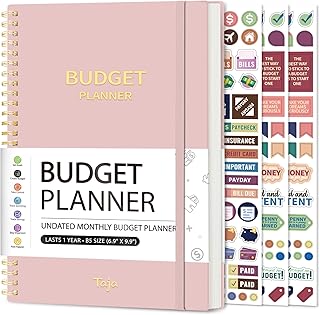
Tools like a Budget Planner – Monthly Budget Book with Expense Tracker Notebook, Undated Bill Organizer & Finance Planner to Take Control of Your Money, Account Book to Manage Your Finances-Pink make this process tangible. Writing down every expense forces you to stay accountable.
Example: A 50-Year-Old with R50,000 Monthly Income
| Category | Before Budget | After Budget (20% savings) |
|---|---|---|
| Retirement | R0 | R10,000 |
| Housing | R15,000 | R15,000 |
| Transportation | R8,000 | R5,000 |
| Food | R6,000 | R4,500 |
| Entertainment | R4,000 | R2,000 |
| Insurance | R3,000 | R3,000 |
| Other | R14,000 | R10,500 |
| Total | R50,000 | R50,000 |
By trimming transportation, food, and entertainment, this late starter frees up R10,000 per month — enough to max a 401(k) and a Roth IRA.
Step 3: Choose the Right Accounts for Maximum Growth
Not all retirement accounts are created equal, especially for late starters. You need accounts that allow aggressive contributions and tax advantages.
Tax-Efficient Order of Operations
- Employer 401(k) up to match – That’s free money. Contribute enough to get the full match.
- Roth IRA – Tax-free growth is invaluable if you expect higher taxes in retirement.
- Back to 401(k) – Once Roth IRA is maxed, increase 401(k) contributions up to the annual limit (R23,000 for 2024, plus R7,500 catch-up if you’re 50+).
- Taxable brokerage account – Only after maxing retirement accounts.
For a detailed comparison, read: 401(K) vs. Ira vs. Roth Ira: Choosing the Right Retirement Accounts.
Catch-Up Contributions: Your Secret Weapon
If you’re 50 or older, you can contribute an extra R7,500 to a 401(k) and R1,000 to an IRA. That’s a massive boost. Combined, a 55-year-old can stash over R31,000 per year in tax-advantaged accounts alone.
Step 4: Slash Expenses Without Feeling Deprived
Budgeting for retirement doesn’t mean living like a monk. It means redirecting spending from low-value areas to high-value ones (your future).
Three High-Impact Cuts for Late Starters
- Housing downsizing – Moving to a smaller home or refinancing can free up thousands per year.
- Car payment elimination – Pay off your car and drive it for another 5+ years. Use the freed payment for savings.
- Subscription audit – Cancel unused gym memberships, streaming services, and apps. Savings: R150–R500 per month.
Budgeting Tools to Keep You on Track
Physical tools can reinforce your commitment. The NICOOTH Budget Binder Cash Envelopes A6 Money Saving Binder with Zipper envelopes (Purple) uses the classic cash envelope system — a proven method for controlling discretionary spending.

Similarly, the SKYDUE Budget Binder, Money Saving Binder with Zipper Envelopes, Cash Envelopes and Expense Budget Sheets for Budgeting offers a complete system with budget sheets and tracking pages — perfect for visual learners.

Step 5: Invest Aggressively but Smartly
Late starters can’t afford to be ultra-conservative. A portfolio heavy in bonds at age 45 may not generate enough growth. But you also can’t swing for the fences with day trading.
Recommended Asset Allocation for Late Starters
| Age | Stocks | Bonds | Cash |
|---|---|---|---|
| 40 | 80% | 15% | 5% |
| 45 | 75% | 20% | 5% |
| 50 | 70% | 25% | 5% |
| 55 | 65% | 30% | 5% |
Stocks should be a mix of low-cost index funds (S&P 500, total stock market) and a small allocation to international or emerging markets for diversification.
For a deeper breakdown of how much you should be investing at each age, see: How Much Should You Be Investing for Retirement at Every Age?.
Step 6: Balance Retirement Saving with Other Financial Goals
Late starters often face competing priorities: paying off debt, funding kids’ college, and saving for retirement. You can’t do everything at once — but you also can’t ignore debt.
The Debt vs. Saving Dilemma
- High-interest debt (credit cards >8-10%) – Pay it off first. No investment guarantees an 18% return.
- Low-interest debt (mortgage, student loans <5%) – Prioritize retirement savings, even if you carry the debt longer.
- Auto loans – Pay off quickly to free cash for retirement.
For a framework to juggle multiple goals, read: How to Balance Retirement Saving with Other Goals like Debt and College.
Self-Employed? You Have Unique Options
If you run your own business (or freelance), you don’t have an employer match — but you can still save aggressively with a SEP IRA or Solo 401(k). These allow contributions up to 25% of net earnings or R66,000 (2024 limits).
Learn more: Retirement Planning for Self-employed and Small Business Owners.
Step 7: Use Tax Strategies to Keep More of Your Money
Tax efficiency is crucial for late starters because every dollar saved on taxes is another dollar you can invest.
Tax-Efficient Retirement Planning Strategies Most People Overlook
- Roth conversions in low-income years – If you have a year with lower income, convert some traditional IRA to Roth to pay taxes now at a lower rate.
- Health Savings Account (HSA) – Triple tax-free: contributions are pre-tax, growth is tax-free, and withdrawals for medical expenses are tax-free. Max it out if you have a high-deductible health plan.
- Tax-loss harvesting – Sell losing investments to offset gains and reduce your taxable income.
For a full list of strategies: Tax-efficient Retirement Planning Strategies Most People Overlook.
Step 8: Plan for Healthcare Costs – The Hidden Retirement Expense
Healthcare is one of the biggest wild cards in retirement. A 65-year-old couple retiring today can expect to spend over R300,000 on healthcare in retirement (before Medicare?).
How Budgeting for Healthcare Helps
- Use an HSA as a supercharged retirement account. If you can’t max it out, at least contribute enough to cover your deductible.
- Factor Medicare premiums into your retirement budget. Part B currently costs R164.90 per month, but can be higher based on income.
- Consider long-term care insurance if you have assets to protect. Premiums are lower if you buy in your 50s.
For a comprehensive plan: Planning for Healthcare Costs in Retirement: Hsas, Medicare, and Beyond.
Step 9: Create Your Retirement Income Plan
Once you’ve saved, you need a plan to turn that nest egg into a paycheck. Budgeting doesn’t stop at retirement — it shifts from saving to spending.
The 4% Rule vs. Bucket Strategy
- 4% Rule – Withdraw 4% of your portfolio in year one, adjust for inflation. Safe for a 30-year retirement.
- Bucket Strategy – Keep 1–2 years of expenses in cash, 3–5 years in bonds, and the rest in stocks. This protects against market downturns.
For a detailed guide: How to Create a Retirement Income Plan That Replaces Your Paycheck.
Step 10: Avoid Costly Mistakes That Derail Late Starters
Even with a great budget, one wrong move can set you back years. Here are the top mistakes to avoid:
- Not taking full employer match – That’s leaving 50–100% returns on the table.
- Withdrawing retirement savings early – Penalties and taxes destroy growth. Never cash out a 401(k) when changing jobs — roll it over.
- Underestimating inflation – A R50,000 annual budget today will need R100,000+ in 20 years. Budget for rising costs.
- Investing too conservatively too early – A 50-year-old with a 50/50 stock/bond mix might not generate enough growth.
For a full list: Avoiding Common Retirement Planning Mistakes That Cost You Hundreds of Thousands.
Practical Budgeting Tools to Get Started Today
You don’t need fancy software. A simple notebook and envelope system can work wonders. Here are the top-rated tools from real users:
| Product | Price | Rating | Best For |
|---|---|---|---|
| Budget Planner (Pink) | $8.99 | 4.6 | Visual monthly tracking |
| NICOOTH Budget Binder (Purple) | $6.28 | 4.6 | Cash envelope system |
| SKYDUE Budget Binder | $8.98 | 4.7 | All-in-one budgeting |
| Budget Planner (Black) | $8.99 | 4.6 | Clean, professional look |
| Budgeting 101 Book | $9.69 | 4.6 | Building financial literacy |
Each of these tools helps you track every rand — the first step to reclaiming control.
Final Word: You Can Do This – One Budget at a Time
Starting retirement planning late is not a failure. It’s a reality that millions face. What matters is what you do today.
A budget isn’t a punishment. It’s a plan that gives you permission to save aggressively while still enjoying life. You don’t have to cut everything — just reprioritize. Every time you skip a coffee or pack a lunch, you’re buying a piece of your future.
Begin by downloading the Budget Planner – Monthly Budget Book with Expense Tracker Notebook, Undated Bill Organizer & Finance Planner to Take Control of Your Money, Account Book to Manage Your Finances-Black and writing down where your money went last month. Then set a retirement savings target of at least 15% of your income. Automate it. Watch it grow.
Your 40s and 50s are not too late. They’re the perfect time to build a rich, secure retirement — starting with a budget that works for you.
Frequently Asked Questions
Can I retire if I start saving at 50?
Yes, but you’ll need to save aggressively — at least 20–25% of your income — and invest in a diversified portfolio of stocks and bonds. Catching up with catch-up contributions and reducing expenses through a strict budget will accelerate your progress.
What is the best budgeting method for late-start retirement savers?
Zero-based budgeting combined with the pay-yourself-first approach works best. Automate your retirement contributions at the beginning of the month, then allocate remaining funds to expenses. Tools like cash envelope binders help control discretionary spending.
How much should a 45-year-old have saved for retirement?
There’s no universal number, but a common rule is 3–4 times your annual salary by age 45. If you have less, don’t panic — a focused budget and boosted savings rate can close the gap within 10–15 years.
Should I pay off debt or save for retirement first?
Prioritize high-interest debt (credit cards, personal loans) above 8–10% before boosting retirement savings. For low-interest debt like a mortgage, invest first and pay the debt slowly.
What retirement accounts should I use as a late starter?
Max out your employer 401(k) up to the match, then fund a Roth IRA. If you’re 50+, use catch-up contributions. Self-employed individuals should consider a SEP IRA or Solo 401(k) for higher contribution limits.
How can I save for retirement if I have a low income?
Even a small, consistent contribution — like R50 per week — adds up over time. Focus on reducing expenses, using cash-back apps, and taking on side gigs to boost income. Every rand counts.
What is the 4% rule in retirement?
The 4% rule suggests that in the first year of retirement, you withdraw 4% of your portfolio, then adjust that amount for inflation each year. It is designed to make your savings last 30 years.
Can I use a budget binder to track retirement savings?
Absolutely. A physical budget binder helps you see exactly how much you’re saving each month, track progress against your goal, and stay motivated. Many people find handwritten tracking more effective than apps.