 Insurance Curator
You’ve heard the warnings: “Don’t check your credit too often—it will drop your score.” It’s one of the most persistent financial myths, and it keeps millions of people from monitoring their own financial health. The truth is far simpler and much more empowering. Checking your own credit score or report does not damage it at all.
In fact, regular monitoring is one of the smartest habits you can build—especially if you’re managing a budget, planning a major purchase, or simply trying to stay on top of your finances. When you understand the difference between a soft inquiry and a hard inquiry, you can check your credit as often as you like without worry.
This article will give you a complete, step-by-step guide on how to check your credit score and report safely—and how to use that information to strengthen your budgeting strategy.
What Is a Credit Score and Why Should You Check It?
Your credit score is a three-digit number that lenders use to evaluate your creditworthiness. It ranges from 300 to 850, and the higher your score, the more likely you are to qualify for loans, credit cards, and even rental agreements at favorable terms.
Checking your score regularly helps you:
- Spot errors on your credit report that could be dragging your score down.
- Detect identity theft early before it wrecks your finances.
- Track progress when you’re working on improving your credit.
- Plan big expenses like a car, a home, or a business loan.
Within the context of budgeting, your credit score is a reflection of how well you manage your debt and payment obligations. A strong score often means lower interest rates, which means more money stays in your budget for savings, investments, and everyday expenses.
Soft Inquiries vs. Hard Inquiries: The Critical Difference
The fear of “checking your credit hurting your score” comes from confusing two types of credit inquiries. Let’s break them down.
| Inquiry Type | What It Is | Does It Affect Your Score? | Examples |
|---|---|---|---|
| Soft Inquiry (or soft pull) | A credit check that does not affect your score. You or a company checks your credit for informational or pre‑approval purposes. | No impact | Checking your own score, employer background check, pre‑approved credit card offers, “rate shopping” for loans (within a short window). |
| Hard Inquiry (or hard pull) | A credit check that a lender performs when you apply for new credit. It is recorded on your report and can lower your score by a few points. | Yes, temporary drop (usually 2–5 points) | Applying for a mortgage, auto loan, student loan, or new credit card. |
Key takeaway: When you check your own credit score or order your credit report, you are performing a soft inquiry. It has zero negative effect on your score. The only time you risk a small, temporary dip is when you actively apply for new credit and a lender performs a hard inquiry.
How to Check Your Credit Score for Free (Without Hurting It)
There are several legitimate ways to access your credit score at no cost and with absolutely no damage. Here are the most trusted sources:
1. Credit Karma (TransUnion & Equifax)
- What you get: Free VantageScore 3.0 from TransUnion and Equifax.
- How often: Updated weekly.
- Impact on score: Soft inquiry – zero effect.
Credit Karma also provides personalized tips and alerts for changes to your credit report.
2. AnnualCreditReport.com (Official by Law)
- What you get: Free credit reports from Equifax, Experian, and TransUnion (not scores, but reports).
- How often: Once every 12 months per bureau (currently you can request weekly through 2024 due to COVID‑19 extensions).
- Impact on score: Soft inquiry – no effect.
This is the only federally authorized website for free credit reports. It gives you the detailed data behind your score—payment history, credit utilization, accounts, and inquiries.
3. Your Credit Card Issuer or Bank
- What you get: Many banks and credit card companies now provide free FICO or VantageScore scores to their customers.
- How often: Usually monthly or with each statement.
- Impact on score: Soft inquiry – no effect.
Check your online banking dashboard or mobile app. Issuers like Chase, Capital One, Discover, and Citi often include a free score without even asking for your permission.
4. Free Score from Credit Monitoring Services
- What you get: Some services (like Credit Sesame, WalletHub) offer free scores with optional paid monitoring.
- How often: Varies, often monthly.
- Impact on score: Soft inquiry – no effect.
Be cautious with paid upgrades. You never need to pay for a credit score you can get for free elsewhere.
How to Check Your Full Credit Report (Step‑by‑Step)
Your credit report contains the detailed history that determines your score. Checking it thoroughly is essential for accuracy and fraud detection.
Step 1 – Go to AnnualCreditReport.com. Avoid look‑alike sites that charge fees.
Step 2 – Choose which bureau to pull. You can request all three at once or stagger them throughout the year (e.g., Equifax in January, Experian in May, TransUnion in September) for continuous monitoring.
Step 3 – Verify your identity. You’ll be asked for your name, address, Social Security number, and possibly answers to security questions based on your credit history.
Step 4 – Review each section:
- Personal information
- Credit accounts (open/closed, balances, payment history)
- Public records (bankruptcies, judgments)
- Inquiries (hard and soft)
- Collections accounts
Step 5 – Dispute any errors. If you see an account you didn’t open, a late payment you actually made, or an incorrect balance, file a dispute online with the bureau. By law, they must investigate within 30 days.
Important: Ordering your report from AnnualCreditReport.com is a soft inquiry. It does not affect your score.
Common Myths About Checking Your Credit (Busted)
Myth #1: “Checking my score every month will make it drop.”
Truth: Monthly self‑checks via a soft inquiry have zero impact. Hard inquiries only occur when you apply for new credit.
Myth #2: “I should never check my score because it’s a red flag to lenders.”
Truth: Lenders cannot see your soft inquiries. Only hard inquiries appear on your report when a lender pulls it.
Myth #3: “Free credit score sites are scams.”
Truth: Reputable services like Credit Karma and AnnualCreditReport.com are legitimate and secure. Always verify the URL and avoid sites that ask for payment upfront.
Myth #4: “If I freeze my credit, I can’t check my score.”
Truth: A credit freeze does not prevent you from seeing your own score or report. It only blocks new applications from being processed by lenders.
How Regular Credit Checks Strengthen Your Budget
Tying your credit monitoring to your budgeting routine creates a powerful feedback loop. When you know your score and report details, you can make smarter spending and saving decisions.
For example:
- High credit utilization (using more than 30% of your available credit) is a red flag. If you see this on your report, you can adjust your budget to pay down balances faster.
- Late payments hurt your score. A budget that includes automated bill payments or calendar reminders keeps you on track.
- Errors on your report, like a paid‑off account still showing a balance, can eat up your score. Regular checks let you catch and fix them quickly.
A budget is more than a spending plan—it’s a tool to protect your credit health. Using a physical budget planner or budget binder can keep your finances organized and your credit goals front and center.
Recommended Budgeting Tools to Support Your Credit Journey
To build credit without going into debt, you need a clear picture of your income, expenses, and savings targets. The following products from Amazon can help you stay on track:
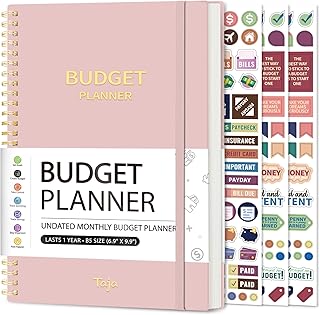
1. Budget Planner – Monthly Budget Book with Expense Tracker Notebook
Price: $8.99 | Rating: 4.6 ⭐
This undated planner helps you track expenses, set financial goals, and monitor bill due dates—perfect for ensuring you never miss a payment that could hurt your credit.
2. NICOOTH Budget Binder Cash Envelopes A6

Price: $6.28 | Rating: 4.6 ⭐
The cash envelope system is a classic budgeting method. By dividing your income into categories, you avoid overspending and keep credit card balances low—directly improving your credit utilization ratio.
3. SKYDUE Budget Binder with Zipper Envelopes

Price: $8.98 | Rating: 4.7 ⭐
Includes pre‑printed budget sheets and cash envelopes. Using a binder helps you stay accountable to your spending plan—and accountable to your credit score goals.
4. Budget Planner – Monthly Budget Book (Black)

Price: $8.99 | Rating: 4.6 ⭐
A sleek black cover and the same undated format as the pink version. Use it to map out your monthly saving targets for debt repayment or credit building.
5. Budgeting 101: From Getting Out of Debt and Tracking Expenses to Setting Financial Goals

Price: $9.69 | Rating: 4.6 ⭐
An excellent foundational book that teaches budgeting alongside credit management. It covers debt reduction, expense tracking, and building savings—all of which directly support a healthy credit score.
Integrating a budgeting tool like the ones above into your routine makes it easier to monitor your credit effectively. When you know exactly where your money goes each month, you can avoid the two biggest score killers: high utilization and late payments.
Deeper Dive: What Happens Behind the Scenes When You Check Your Credit?
To truly understand why self‑checks don’t hurt, let’s look at how the credit bureaus treat inquiries.
When you request your score from a service like Credit Karma, that service asks the bureau (Equifax, TransUnion) for your data. The bureau logs your request as a “soft inquiry.” These inquiries are only visible to you on your report. They do not factor into the FICO or VantageScore formula.
Hard inquiries happen when a lender asks the bureau for your report because you applied for credit. That request is logged and visible to other lenders—and it can drop your score by 2–5 points, usually for a year.
The window for rate shopping – Multiple hard inquiries for the same type of loan (mortgage, auto, student) within a 14‑ to 45‑day period are counted as one inquiry by scoring models. This protects you from being penalized for comparison shopping.
So if you ever apply for a credit card or loan, do your rate shopping within a short timeframe. But when you’re just checking your own progress, there is absolutely no penalty.
Step‑by‑Step: Monthly Credit Check Routine (Without Hurting Anything)
Here’s a simple routine you can follow every month, tied to your budgeting cycle:
- On the same day each month (e.g., after paying your bills), log into Credit Karma or your bank’s app.
- Review your score and note any changes since last month.
- Check credit utilization – If you used more than 30% of your available credit, plan to pay it down in your next budget.
- Look for new hard inquiries – If you didn’t apply for credit, any hard inquiry could be a sign of fraud.
- Set a quarterly report review – Every three months, download your free report from AnnualCreditReport.com and scrutinize every line.
This routine gives you total control over your credit without the fear of damaging it. And because all checks are soft inquiries, you can repeat it as often as you like.
Related Articles to Build Your Credit Knowledge
Understanding how to check your credit is just one piece of the puzzle. For a complete financial picture, explore these related topics:
- Credit Scores Demystified: What They Are and Why They Matter
- Proven Ways to Improve Your Credit Score in 90 Days
- How Credit Utilization Works and Why It Can Make or Break Your Score
- Building Credit from Scratch: Strategies for Students and Newcomers
- How Late Payments, Collections, and Defaults Actually Impact Credit Scores
- Credit Score Myths That Keep People Stuck with Bad Credit
- Using Credit Cards Wisely to Build Credit Without Going into Debt
- How to Recover Your Credit Score after Bankruptcy or Serious Delinquency
- Rent, Utilities, and Subscriptions: What Really Counts Toward Your Credit Score
These articles dive deeper into each aspect of credit management, from the basics to advanced recovery strategies. They all tie back to the core principle: proactive, informed habits lead to a stronger financial future.
Frequently Asked Questions
Q1: Will checking my credit score on Credit Karma lower it?
No. Credit Karma uses a soft inquiry, which has zero impact on your credit score.
Q2: How many times can I get a free credit report per year?
You are entitled to one free report from each of the three major bureaus every 12 months through AnnualCreditReport.com. Due to pandemic measures, free weekly reports are currently available until the end of 2024.
Q3: Does applying for a credit card hurt my score even if I don’t take the card?
Yes. When you apply for a credit card, the issuer performs a hard inquiry, which can lower your score slightly. If you are approved but never activate the card, the inquiry remains but no new account is added. The inquiry will fall off your report after two years.
Q4: Can my employer see my soft inquiries when they do a background check?
No. Soft inquiries are only visible to you. Employers see only public records and the credit report details they are authorized to request—not your personal monitoring history.
Q5: I want to check my report multiple times a month. Is there a way to do that safely?
Yes. Many free services (like Credit Karma, WalletHub) allow you to check your VantageScore weekly or even daily via soft pulls. For your full report, you can stagger your requests to AnnualCreditReport.com—pull one bureau now, another in four months, the third in eight months, then repeat.
Q6: What happens if I find an error on my credit report?
Dispute it immediately with the credit bureau that issued the report. They must investigate within 30 days and correct any errors. An error corrected in your favor can boost your score.
Final Thoughts: Check Often, Budget Better
Your credit score is not a fragile secret that shatters under scrutiny. It’s a dynamic, manageable number that reflects your financial habits. The more you check it—the right way—the more equipped you are to make smart budgeting decisions.
By checking your credit score and report regularly through soft inquiries, you protect yourself from fraud, catch errors early, and keep your financial goals on track. Pair that habit with a solid budgeting tool like the planners and binders recommended above, and you’ll have a powerful system for building wealth and credit quality at the same time.
Start today. Visit AnnualCreditReport.com or open your bank’s app. Your score will thank you—and it won’t hurt a bit.