 Insurance Curator
When life throws a surprise medical bill, a sudden job loss, or an urgent car repair your way, your emergency fund becomes your financial lifeline. But where you keep that money matters just as much as how much you save. The perfect spot balances safety, liquidity, and a little growth—without tempting you to spend it on a weekend getaway.
Your emergency fund isn’t an investment; it’s insurance. That means your top priorities are protecting the principal and being able to access cash within a day or two. Yet many people stash their safety net in the wrong place—a low-interest checking account or even worse, a volatile stock portfolio. Let’s fix that.
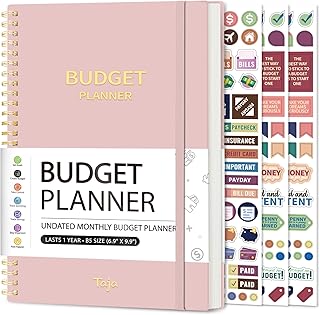
We’ll walk through the best accounts for your emergency fund, compare their features, and show you how budgeting tools like the Budget Planner – Monthly Budget Book with Expense Tracker Notebook can help you track your savings goals. By the end, you’ll know exactly where to park your cash for maximum safety and access.
Why Your Emergency Fund Location Matters
An emergency fund is your financial shock absorber. It keeps you from relying on credit cards, payday loans, or draining your retirement accounts when the unexpected happens. But if your money is tied up in a certificate of deposit (CD) with a penalty for early withdrawal, or sitting in a brokerage account that’s down 20%, it’s not really available when you need it.
The three pillars of an emergency fund account are:
- Safety: The account should be FDIC or NCUA insured up to $250,000. No market risk.
- Liquidity: You can withdraw money without delay or penalty.
- Modest yield: Beats inflation? Not necessarily, but at least earns something while waiting.
Strike the right balance, and your fund works for you without working against you.
The Contenders: Best Account Types Compared
Let’s look at the most common places to keep an emergency fund, ranked by how well they meet the safety + access + yield trifecta.
1. High-Yield Savings Accounts (HYSAs) — The Gold Standard
High-yield savings accounts are the overwhelming favorite among financial experts. They offer FDIC insurance, easy access via online transfers or debit card, and interest rates that are often 10–20 times higher than traditional savings accounts.
Pros:
- Superior liquidity—transfer to checking in 1–2 business days
- No penalties for withdrawals (though some limit to six per month)
- Competitive APYs (currently 4–5% or more)
- Insured up to $250,000 by the FDIC
Cons:
- Rates are variable and can drop
- Some banks require minimum balances
- Not as fast as a checking account for instant access
Best for: The core of your emergency fund (3–6 months of expenses). If you’re just starting, you can pair a HYSA with a budget binder like the NICOOTH Budget Binder Cash Envelopes A6 Money Saving Binder to visually track your emergency savings progress.

2. Money Market Accounts (MMAs)
Money market accounts are like a hybrid of savings and checking. They often offer check-writing privileges and a debit card, making them even more accessible than a standard HYSA. Interest rates are comparable to HYSAs.
Pros:
- Check-writing and debit card access
- Usually FDIC insured (confirm it’s a deposit account, not a money market fund)
- Competitive yields
Cons:
- Often require higher minimum balances ($1,000–$5,000)
- May limit transactions (e.g., six withdrawals per month)
- Rates may be tiered—better rates for larger balances
Best for: People who want near-instant access to their emergency fund without an extra transfer step. Great for the “tiered” emergency fund strategy (see below).
3. No-Penalty Certificates of Deposit (CDs)
A no-penalty CD lets you lock in a fixed rate for a set term (often 6–12 months) and withdraw the entire balance early without paying a fee. This gives you a guaranteed return without sacrificing liquidity.
Pros:
- Fixed interest rate protects against drops
- No penalty for early withdrawal
- FDIC insured
Cons:
- Lower rates than standard CDs (usually 0.5–1% less)
- Limited to one-time withdrawal of the entire deposit
- Must hold for a minimum period (usually 7–10 days) before withdrawal
Best for: A portion of your emergency fund that you’re confident won’t be needed in the near term but still want accessible.
4. Traditional Savings Accounts (Brick-and-Mortar Banks)
The classic savings account at your local bank is the safest and most familiar option. However, rates are notoriously low—often 0.01% APY.
Pros:
- Insured and easy to open alongside your checking account
- Instant transfers to checking
- No surprises
Cons:
- Abysmal yields that lose purchasing power to inflation
- May charge fees if balance drops below minimum
Best for: A small “immediate” stash of $500–$1,000 for emergencies that require cash today (like a tow truck). Combine with a HYSA for the bulk of your fund.
5. Cash Envelope System (Physical Cash)
Some budgeting enthusiasts keep emergency cash in a fireproof safe at home or in a cash envelope system like the SKYDUE Budget Binder, Money Saving Binder with Zipper Envelopes. This method works best for a small “petty cash” emergency fund—say $200–$500—for situations where cards aren’t accepted.
Pros:
- Zero reliance on banks or internet
- Immediate access
- Helps with budgeting discipline
Cons:
- No interest
- Risk of theft, fire, or loss
- Not insured
- Harder to track large sums
Best for: A backup to your primary emergency fund. Not recommended for the full 3–6 months of expenses.

6. Checking Accounts (Not Recommended)
Your checking account is the most liquid place, but it’s also the most dangerous. Easy access can lead to spending your emergency money on non-emergencies. Plus, checking accounts rarely pay interest.
Pros:
- Instant access via debit card or check
- No transfer delays
Cons:
- Low or no interest
- Too tempting to dip into for everyday spending
- No separation from daily cash flow
Best for: Nothing—keep your emergency fund in a separate account.
Quick Comparison Table
| Account Type | FDIC Insured | Liquidity | Typical APY | Best For |
|---|---|---|---|---|
| High-Yield Savings | Yes | 1–2 days | 4–5% | Core emergency fund |
| Money Market Account | Yes | Instant (debit/checks) | 3.5–4.5% | Tier 1 access + yield |
| No-Penalty CD | Yes | After 7 days | 3.5–4% | Fixed-rate portion |
| Traditional Savings | Yes | Instant | 0.01% | Small immediate stash |
| Cash Envelope | No | Instant | 0% | Petty cash backup |
| Checking | Yes | Instant | 0% | Not recommended |
The Tiered Emergency Fund Strategy
One account rarely fits all needs. Financial experts often recommend a layered approach to emergency savings. This gives you optimal access, safety, and a little extra growth.
Layer 1: Immediate Access
Keep $500–$1,000 in your checking account or in a separate cash envelope at home. This covers same-day emergencies—flat tire, urgent prescription, etc.
Layer 2: Core Fund
Put 3–6 months of expenses into a high-yield savings account. This is your main safety net. It earns decent interest and can be transferred to checking within a day or two.
Layer 3: Extended Buffer
If you have more than 6 months saved, consider placing the excess in a no-penalty CD or a money market account. This gives you slightly better yield while still keeping the money accessible for major crises (prolonged job loss, large medical bills).
Internal links: For more on how much you need, read Emergency Funds Explained: How Much You Really Need and Why. If you’re starting from scratch, check How to Build an Emergency Fund from Zero When Money Is Tight?.
What About Inflation? Should You Invest Your Emergency Fund?
Inflation erodes the purchasing power of cash. If your emergency fund is earning 4% but inflation is 3%, you’re still ahead—barely. But many people wonder: should I invest my emergency fund in stocks or crypto to beat inflation?
The short answer: No. Your emergency fund is not an investment. It’s insurance. The moment you expose it to market volatility, you risk losing principal when you need it most. Imagine needing $5,000 for a medical emergency, but your fund is down 20% in the stock market. You’d be forced to sell at a loss.
Instead, keep your emergency fund in safe, liquid accounts and invest your long-term savings separately. For a deep dive on inflation’s effect, see How Inflation Affects Your Emergency Fund and What to Do About It?.
The “Cash Plus” Alternative
Some people keep a small portion (10–20%) of their emergency fund in a short-term bond ETF or a Treasury money market fund. These are still relatively safe and can offer slightly higher yields, but they are not FDIC insured. Only consider this if you have a separate traditional emergency fund and are comfortable with minimal price fluctuation.
Budgeting Tools to Build Your Emergency Fund Faster
Having the right account is half the battle. The other half is actually saving the money. Budgeting tools help you track every dollar, cut unnecessary expenses, and automate transfers to your emergency fund.
Physical Budget Planners
Analog methods work for many visual learners. A dedicated budget planner like the Budget Planner – Monthly Budget Book with Expense Tracker Notebook, Undated Bill Organizer (Black) gives you a tangible way to record income, expenses, and savings goals. Write down your emergency fund target each month and watch your progress grow.

Cash Envelope Binders
The envelope system isn’t just for variable expenses—you can dedicate an envelope to your emergency savings. The SKYDUE Budget Binder comes with multiple zipper envelopes and expense sheets, making it easy to allocate cash for your safety net. It’s especially useful for building a micro emergency fund —a starter stash of $500–$1,000.
Books to Improve Your Skills
If you’re new to budgeting, consider Budgeting 101 by Michele Cagan. It’s a straightforward guide that covers everything from tracking expenses to setting financial goals. Grab a copy: Budgeting 101: From Getting Out of Debt and Tracking Expenses to Setting Financial Goals and Building Your Savings.

Special Scenarios: Freelancers, Dual-Income Families, and Living Paycheck to Paycheck
Your account choice may vary depending on your income stability and family dynamics.
Freelancers and Gig Workers
Irregular income means your emergency fund needs to be larger—often 6–9 months of expenses. A high-yield savings account is ideal because you can make frequent deposits and withdrawals without penalty. Consider keeping two tiers: one month’s expenses in checking for tight months, and the rest in a HYSA.
Internal link: For a tailored plan, read Emergency Funds for Freelancers and Gig Workers with Unstable Income.
Dual-Income Families
Two incomes bring more stability, but also higher fixed costs (mortgage, childcare). A joint high-yield savings account works well. Some families prefer to keep a smaller fund (3 months) because they can each tap their own accounts. For more, see How Dual-income Families Should Structure Their Emergency Funds?.
Living Paycheck to Paycheck
If you’re just starting, don’t worry about perfect account choices. Focus on building a micro emergency fund of $500–$1,000 in a regular savings account. The most important thing is to start. Once you have that buffer, you can move it to a HYSA and grow it. Check Micro Emergency Funds: a Starter Safety Net for People Living Paycheck to Paycheck.
When to Tap Your Emergency Fund — and When Not To
An emergency fund is only useful if you use it correctly. The rule: true emergencies only. Job loss, major medical bills, urgent home repairs (roof leak, broken furnace). Not for planned expenses like a vacation or a new TV.
If you do need to withdraw, replenish as soon as possible. For guidance on rebuilding, see Rebuilding an Emergency Fund after a Job Loss or Major Crisis.
And if you’re tempted to use your fund for non-emergencies, keep it in a separate bank from your checking account—out of sight, out of mind.
Frequently Asked Questions
Can I use a Roth IRA as an emergency fund?
You can withdraw contributions (not earnings) from a Roth IRA penalty-free at any time. However, this should be a last resort because you lose the tax-free growth potential. Better to keep a dedicated emergency fund in a liquid account.
How much should I keep in my emergency fund?
Three to six months of essential expenses is standard. Freelancers and single-income households may need six to nine months. Start with $1,000 if you’re in debt and build up gradually.
Should I stash emergency cash in a safe at home?
A small amount (up to $500) can be useful for power outages or natural disasters. But the bulk of your fund should be in a bank to earn interest and avoid theft risk.
What’s the difference between a high-yield savings account and a money market account?
Both are FDIC-insured deposit accounts. MMAs often offer check-writing and debit cards, while HYSAs typically only allow online transfers. Rates are similar, but MMAs may require higher minimums.
How do I know if my emergency fund is too large?
If you have more than 12 months of expenses saved in cash, you might be losing out on potential investment growth. Consider directing extra savings toward retirement or other goals.
Final Thoughts: Pick the Right Account and Start Today
Your emergency fund deserves a home that’s safe, accessible, and earning a fair return. High-yield savings accounts remain the top choice for most people, with money market accounts and no-penalty CDs as strong alternatives. Layer your funds for immediate access and long-term stability.
Pair your account with a solid budgeting system—whether a physical planner like the SKYDUE Budget Binder or a digital app—to automate your savings and stay on track.
Remember: the best account is the one you actually use. Open one today, set up automatic transfers, and give yourself the peace of mind that comes from knowing you’re prepared for life’s curveballs.