 Insurance Curator
 If you have young children, estate planning isn’t just about dividing assets — it’s about protecting your kids until they are mature enough to handle money. Without a trust, inheritances often pass outright at age 18, which can be a recipe for disaster. A trust for minor children gives you the power to decide exactly when and how your children receive their inheritance.
This article is a comprehensive deep-dive into trusts for minor children. You’ll learn how they work, the types available, control mechanisms you can set, tax implications, and step-by-step instructions to create one. By the end, you’ll have the knowledge to make informed decisions — and the resources to take action.
For a broader overview of estate planning tools, see our guide on Types of Trusts Explained: Revocable, Irrevocable, Special Needs, and More. And if you’re comparing wills vs. trusts, check out Last Will vs. Living Trust: Which Is Better for Your Situation?.
Why Minors Need a Trust — Not Just a Will
A will names a guardian for your children, but it cannot control how assets are managed after your death. If you leave money to a minor in a will, the court typically appoints a guardian of the estate who must manage the funds under court supervision until the child turns 18. At 18, the child receives the entire inheritance free and clear — no strings attached.
This “lump sum at 18” approach has serious drawbacks:
- Lack of financial maturity: Most 18-year-olds lack the experience to manage a significant sum.
- Vulnerability to predators: Young adults are often targeted by scammers or pressured by friends and family.
- No incentive for education or responsibility: There’s no mechanism to tie distributions to milestones like college graduation.
A trust solves all these problems. By placing assets in a trust, you appoint a trustee to manage the money and distribute it according to your written instructions. You can stagger payouts, tie them to life events, or even withhold principal until a specified age.
How a Trust Works for Minor Children
A trust is a legal arrangement where one person (the grantor or settlor) transfers assets to a trustee for the benefit of a beneficiary — in this case, your minor child. The trust document spells out exactly when and how the child receives money.
Key players:
- Grantor (you): Creates the trust and funds it.
- Trustee: Manages the assets and makes distributions.
- Beneficiary (your child): Receives the benefits according to the trust terms.
The trust can be created during your lifetime (a living trust) or established through your will after death (a testamentary trust). Either way, the effect is the same: your child does not receive the inheritance directly until the conditions you set are met.
For a detailed look at the trustee’s role, read The Role of a Trustee: Duties, Liabilities, and How to Pick the Right Person.
Key Control Mechanisms: Age, Milestones, and Incentives
The beauty of a trust is the flexibility it offers. Here are the most common control mechanisms parents use:
Age-Based Distributions
Most trusts specify that a child receives a portion of the principal at certain ages. A popular structure is one-third at age 25, one-third at age 30, and the remainder at age 35 (often called a “staggered distribution”).
| Age | Distribution |
|---|---|
| 25 | 1/3 of principal |
| 30 | 1/3 of remaining |
| 35 | Balance outright |
Some parents choose an even longer timeline (e.g., 30, 35, 40) to ensure the child has decades of financial experience before receiving full control.
Milestone-Triggered Distributions
You can tie distributions to meaningful life events:
- Graduation from college or trade school
- Completion of a degree program
- Purchase of a first home
- Starting a business
- Marriage (though some parents add prenuptial agreement requirements)
Incentive Provisions
Some trusts include “carrot and stick” language that rewards desired behaviors and penalizes undesired ones:
- Matching contributions: The trust matches the child’s earned income dollar-for-dollar up to a limit.
- Education bonuses: Extra distributions for maintaining a certain GPA.
- Drug and alcohol provisions: Withhold distributions if the child fails a drug test (enforceable, but careful drafting needed).
HEMS Standard (Health, Education, Maintenance, Support)
Many trusts give the trustee discretion to distribute money for the child’s health, education, maintenance, and support. This flexibility allows the trustee to adapt to the child’s needs without being locked into a rigid schedule.
Types of Trusts for Minor Children
Not all trusts are created equal. Choose the type that aligns with your goals, tax situation, and family dynamics.
1. Testamentary Trust
Created in your will and only comes into existence after probate. Pros: Simple to set up; you can amend it anytime. Cons: Goes through probate, which is public and can be costly. No ability to fund until after death.
2. Standalone Living Trust (Revocable)
Created during your lifetime and funded with assets now. Pros: Avoids probate; you can serve as trustee while alive; easily amended. Cons: Requires more upfront work and asset retitling. Offers no asset protection from creditors while you are alive.
3. 2503(c) Trust (Minor’s Trust)
An irrevocable trust designed specifically for minors. Pros: Gifts qualify for the annual gift tax exclusion ($18,000 per year in 2024) even though the child doesn’t have immediate control. Cons: The trust must distribute all income and principal by age 21 (or the child gets control at 21 under some states). This may not align with your desire for later distributions.
4. Crummey Trust
Used primarily for life insurance policies and large gifts. It gives the beneficiary a temporary right to withdraw contributions (the “Crummey power”), which allows the gifts to qualify for the annual exclusion. After the withdrawal period expires, the funds remain in trust. Best for: Large gifts and life insurance proceeds.
5. Special Needs Trust
If your child has a disability, a special needs trust allows them to receive benefits without disqualifying them from government programs like Medicaid or SSI. Crucial: Do not use a standard trust for a special needs child; use this specialized trust instead.
For a full comparison, see Types of Trusts Explained: Revocable, Irrevocable, Special Needs, and More.
Setting Up the Trustee: Who, Duties, Successor
The trustee is the most critical decision. This person or institution will manage the money, make investment decisions, and decide when to distribute funds.
Qualities of a good trustee
- Financially savvy — understands investing and budgeting.
- Trustworthy — will put your child’s interests first.
- Available — time and emotional capacity to manage the trust.
- Neutral — not someone who might be biased or conflicted.
Individual vs. corporate trustee
| Individual Trustee | Corporate Trustee (Bank/Trust Company) |
|---|---|
| Lower cost | Professional management |
| Personal touch | Impartial, consistent |
| Risk of mismanagement | Higher fees (often 1–1.5% of assets) |
| May not outlive trust | Perpetual existence |
Many parents choose a co-trustee arrangement: one individual (a sibling or trusted friend) and one corporate trustee. The individual handles day-to-day decisions; the corporate trustee provides oversight and investment management.
You need at least one successor trustee — someone who steps in if the primary trustee dies, resigns, or becomes incapacitated. For guidance on choosing wisely, read How to Choose an Executor for Your Will and What Their Job Really Involves?. (Though that article focuses on executors, many of the same principles apply to trustees.)
Funding Your Trust: What Assets Go into It?
A trust is useless until it is funded — meaning assets are legally transferred into the trust’s name. For minor children trusts, the most common funding sources are:
- Life insurance policies — Name the trust as beneficiary.
- Retirement accounts — Name the trust as beneficiary (with caution regarding tax implications).
- Bank accounts and investments — Change ownership to the trust.
- Real estate — Deed property into the trust.
- Personal property — Assign through a “pour-over will” or list in the trust schedule.
Critical step: Ensure beneficiary designations on life insurance and retirement accounts align with your trust. If you name a minor directly, the court gets involved anyway.
For a deeper explanation, see Funding Your Trust: What It Means and How to Properly Transfer Assets.
Tax Considerations for Minor Children Trusts
Trusts are separate tax entities. Understanding the tax rules helps you avoid surprises.
Kiddie Tax
Under the “kiddie tax,” unearned income of a child (over a certain threshold, $2,600 in 2024) is taxed at the parents’ marginal rate if the child is under 19 (or under 24 if a full-time student). When income is retained in the trust instead of distributed, it is taxed at trust tax rates — which hit the highest bracket (37%) at very low income levels (around $15,200 in 2024).
Strategy: Distribute income to the child each year to take advantage of the child’s lower tax bracket, then let the trust retain principal. Or consider a trust that is grantor trust for tax purposes (like a revocable living trust while you are alive), which avoids separate filing.
Trust Tax Rates (2024)
| Trust Taxable Income | Tax Rate |
|---|---|
| $0 – $3,100 | 10% |
| $3,101 – $11,150 | 24% |
| $11,151 – $15,200 | 35% |
| Over $15,200 | 37% |
Compare this to individual tax brackets, where the 37% rate starts at $609,351. Clearly, retaining too much income inside a trust can be costly.
State Taxes
Some states impose their own trust income tax, and they may tax the trust based on the grantor’s residence, the trustee’s location, or the beneficiary’s residence. Consult a CPA or estate attorney for state-specific rules.
For a more complete analysis, read Tax Implications of Different Trusts: What Families Need to Know before Setting One up.
Comparison Table of Trusts for Minor Children
| Trust Type | Probate Avoided? | Age Control | Best For | Tax Complexity |
|---|---|---|---|---|
| Testamentary Trust | No | Any age | Simplicity, small estates | Low |
| Living Trust (Revocable) | Yes | Any age | Avoiding probate, flexibility | Low while alive; moderate after death |
| 2503(c) Trust | Yes | Must end by age 21 | Gift tax planning | Moderate |
| Crummey Trust | Yes | Any age | Large gifts & life insurance | Higher (Crummey powers) |
| Special Needs Trust | Yes | Any age | Disabled child | Moderate to high |
Step-by-Step Guide to Creating a Trust for Minor Children
Step 1: Define Your Goals
Ask yourself: At what age do I want my child to have full control? What values do I want to encourage? Do I want to incentivize education? List your “must-haves” and “nice-to-haves.”
Step 2: Choose the Trust Type
Based on your goals, asset size, and need for probate avoidance, pick the right trust. For most families, a revocable living trust with staggered distributions is ideal. For tax-efficient gifting, a 2503(c) trust might work. For special needs, always use a special needs trust.
Step 3: Select Your Trustee(s)
Pick at least one primary trustee and one successor. Consider a corporate trustee if the trust will hold substantial assets.
Step 4: Draft the Trust Document
You can use online services, but for minor children trusts — especially with complex incentive provisions — a local estate planning attorney is strongly recommended. The document must comply with state law.
Recommended resource: Nolo’s Guide to Estate Planning (4.7 stars) provides an excellent overview and sample forms. But for finalizing a trust, professional legal advice is invaluable.

Step 5: Sign and Notarize
Trusts typically require notarization to be valid. Follow your state’s execution requirements.
Step 6: Fund the Trust
Transfer assets into the trust’s name. This means:
- Changing bank and brokerage account registrations.
- Deeding real estate to the trust.
- Updating beneficiary designations on life insurance and retirement accounts to the trust.
Step 7: Review Periodically
Review your trust every 3–5 years or after major life changes. For guidance on updates, see How to Update a Will or Trust after Major Life Changes?.
Common Mistakes to Avoid
- Naming minor children directly as beneficiaries on life insurance or bank accounts. This triggers guardianship and court supervision.
- Not funding the trust. A beautifully drafted trust with no assets is worthless.
- Choosing the wrong trustee. An irresponsible trustee can cause financial harm or family conflict.
- Ignoring tax implications. Retaining income in the trust can lead to high taxes.
- Forgetting to name a successor guardian for the child (in your will) alongside the trust.
- Using a DIY trust without understanding state law nuances — especially in community property states. See Community Property, Wills, and Trusts: Estate Planning in Community Property States.
When to Update the Trust
Your trust should be updated when:
- You have another child.
- Your child develops special needs.
- You move to a different state.
- Your financial situation changes dramatically.
- A trustee dies or becomes unsuitable.
- You change your mind about distribution ages or incentives.
Avoid the common pitfall of set-it-and-forget-it. Life evolves, and so should your trust.
Expert Insights and Recommended Resources
Estate planning attorneys consistently stress that a trust for minor children is one of the most important documents a parent can create. “The default rule — giving an 18-year-old free rein over a pile of cash — is a nightmare waiting to happen,” says one veteran planner. “A well-designed trust can nurture responsibility and protect against life’s curveballs.”
To help you get started, here are the highest-rated books on estate planning and trusts. Each provides in-depth knowledge, but remember: for your actual legal documents, consult a professional.
Living Trusts, Wills & Estate Planning for Seniors – The Complete 3-in-1 Guide
Price: $22.97 | Rating: 4.4
A comprehensive resource covering wills, trusts, probate avoidance, and includes sample forms. While targeted at seniors, the trust information applies to any parent.

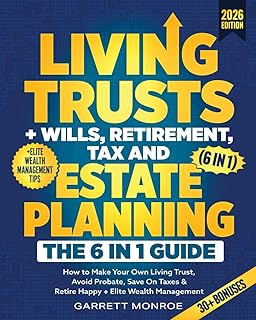
Living Trusts + Wills, Retirement, Tax & Estate Planning – The 6-in-1 Guide
Price: $24.97 | Rating: 4.5
This book expands beyond basic trusts to include wealth management and tax strategies, making it ideal for families with larger estates.
Estate Planning For Dummies
Price: $20.99 | Rating: 4.3
A beginner-friendly guide that breaks down complex estate planning topics, including trusts for minors, in an accessible way.

I’m Dead, Now What? Planner
Price: $11.63 | Rating: 4.6
This planner helps you organize important information for your trustee or executor, ensuring your trust works smoothly after you’re gone.

Frequently Asked Questions
Q: At what age should my child receive full control of the trust?
A: Many parents choose age 25 to 35. There is no “right” answer — it depends on your child’s maturity and your family values. Some trusts never give full control; the child receives income for life and can withdraw principal only with trustee approval.
Q: Can I name my child as the trustee when they turn 18?
A: Yes, but most parents delay that role until the child reaches the final distribution age. You can name the child as co-trustee at an earlier age to give them experience while keeping a safety net.
Q: Does a trust protect assets from my child’s creditors?
A: If the trust contains a spendthrift clause (which most do), creditors cannot force a distribution that the trustee has discretion not to make. Once the child receives the money outright, it is no longer protected.
Q: Should I use a revocable or irrevocable trust for my children?
A: Revocable trusts are more flexible and easier to change. Irrevocable trusts offer better asset protection from your creditors and can save on estate taxes. For most parents, a revocable living trust is sufficient.
Q: What happens if I die without a trust for my minor children?
A: The court will appoint a guardian of the estate, who must follow state procedures. The child receives everything at 18. A trust avoids this and gives you control.
Q: Can I include provisions that withhold money if my child engages in harmful behavior?
A: Yes, but they must be carefully drafted. Incentive provisions (e.g., matching income) are usually more effective than punitive ones. Courts generally uphold reasonable conditions, but overly restrictive clauses may be deemed against public policy.
Q: Do I need an attorney to create a trust for a minor?
A: While you can use online templates, an attorney is strongly recommended — especially if you have a large estate, complex family dynamics, or want special provisions. The cost of fixing a poorly drafted trust often exceeds the attorney’s fee.
Final Thoughts
Creating a trust for your minor children is one of the most loving and responsible estate planning decisions you can make. It gives you the power to shape how and when they receive their inheritance — ensuring your hard-earned assets support their growth, education, and well-being, rather than enabling reckless behavior or falling into the wrong hands.
Remember: a trust is not a one-time task. Revisit it as your children grow and your circumstances change. Pair it with a solid will (see Step-by-step Guide to Writing a Legally Valid Will (Even if You’re Not Rich)), healthcare directives (see Living Will and Healthcare Directives: Making Medical Wishes Legally Clear), and proper storage of documents (see How to Store and Share Your Will and Trust Documents So They’re Found When Needed?).
Start today. Your future self — and your children — will thank you.