 Insurance Curator
 Estate planning is never a one-size-fits-all process. If you live in a community property state, the rules for what you own and how it passes to your heirs are fundamentally different from the rest of the country. Understanding these differences is critical to protecting your assets and your family.
Whether you’re building a simple will or a comprehensive trust-based plan, the way you hold property—especially with a spouse—determines everything from probate costs to tax liability. This guide walks you through the unique estate planning landscape in community property states, with expert insights and actionable steps.
To help you on your journey, consider a trusted resource like Living Trusts, Wills & Estate Planning for Seniors—a complete 3-in-1 guide with forms and step-by-step instructions. It’s a solid foundation whether you’re starting from scratch or fine-tuning an existing plan.

Understanding Community Property and Its Impact on Estate Planning
Community property is a legal regime in nine U.S. states: Arizona, California, Idaho, Louisiana, Nevada, New Mexico, Texas, Washington, and Wisconsin. In these states, any income or asset acquired during marriage is considered owned 50/50 by both spouses—regardless of whose name is on the title.
How Community Property Differs from Separate Property
Separate property is owned individually. It includes assets acquired before marriage, gifts and inheritances received by one spouse alone (as long as they are kept separate), and items purchased with separate funds.
Community property, on the other hand, includes wages earned during marriage, retirement accounts built up while married, and most real estate purchased after the wedding—unless a valid agreement states otherwise.
This distinction matters enormously when you die. In a common law state, the surviving spouse may only own what was titled in their name or devised through a will. In a community property state, the surviving spouse automatically owns half of all community assets. Only the deceased spouse’s half passes through probate or a trust.
Why Estate Planning Must Adapt
Because each spouse owns an equal half of community property, your will or trust can only control your half. That means:
- You cannot leave your spouse’s half to someone else.
- Your will must clearly identify which half is yours to give.
- You need a strategy that coordinates both spouses’ half shares for tax efficiency and asset protection.
For a deeper dive into the foundational documents, read our guide on Last Will vs. Living Trust: Which Is Better for Your Situation?.
How Wills Work in Community Property States
A will in a community property state governs only the deceased spouse’s half of community property—plus any separate property they owned. The surviving spouse already owns the other half by law.
The Probate Process for Community Property
Probate is the legal process of validating a will and distributing assets. In community property states, the surviving spouse’s half is not subject to probate. Only the deceased’s half goes through probate (unless held in a trust).
However, many states allow a community property agreement (e.g., Texas) or a community property with right of survivorship (e.g., Arizona, California). These can pass the entire community estate to the surviving spouse without probate—similar to joint tenancy.
Writing a Will That Works
Your will should explicitly state: “I give my half of our community property to…” This prevents ambiguity. If you don’t have a will, the deceased’s half goes to heirs under intestacy laws—often the surviving spouse, but not always, depending on whether there are children from a prior marriage.
For a complete walkthrough, see our Step-by-step Guide to Writing a Legally Valid Will (Even if You’re Not Rich).
Using a Will to Set Up Trusts
Many couples use their wills to create testamentary trusts for minor children or a surviving spouse. In community property states, each spouse’s will can pour their half into a trust. This is especially useful for blended families, where you want to provide for a second spouse while preserving assets for children from a first marriage.
The Role of Trusts in Community Property States
Trusts offer significant advantages in community property states—especially for married couples.
Revocable Living Trusts and Community Property
A revocable living trust holds assets during your lifetime and directs them after your death without probate. When both spouses create a single joint living trust, they can contribute all community property to the trust.
The trust then holds each spouse’s half share. Upon the first death, the trust can split into two sub-trusts:
- Survivor’s Trust – holds the surviving spouse’s half (plus any separate property)
- Family Trust (or Bypass Trust) – holds the deceased’s half, often for the benefit of the surviving spouse
This structure, called an A-B trust, was historically used to maximize estate tax exemptions before portability became law. Even with portability, A-B trusts remain valuable for state estate tax purposes, creditor protection, and preserving step‑up in basis.
The Community Property Step‑Up in Basis Advantage
One of the biggest tax benefits in community property states is the double step‑up in basis.
In common law states, when the first spouse dies, only assets owned by that spouse receive a step‑up to fair market value. The surviving spouse’s half retains the original cost basis.
In community property states, both halves receive a step‑up upon the first spouse’s death. This can save surviving spouses—and their heirs—substantial capital gains taxes when assets are sold.
A properly funded trust ensures this benefit is captured. Learn more about Funding Your Trust: What It Means and How to Properly Transfer Assets.
Types of Trusts Commonly Used
- Revocable Living Trust – flexible, avoids probate
- Irrevocable Trust – removes assets from estate for Medicaid or tax planning
- QTIP Trust – ensures the deceased’s half eventually goes to designated beneficiaries (ideal for blended families)
- Special Needs Trust – protects a disabled beneficiary without losing government benefits
For a full breakdown, read Types of Trusts Explained: Revocable, Irrevocable, Special Needs, and More.
Key Differences: Community Property vs. Common Law States
| Aspect | Community Property States | Common Law States |
|---|---|---|
| Ownership of marital assets | 50/50 by law | Based on title or contribution |
| Probate for married couple | Only deceased’s half (unless survivorship agreement) | All jointly owned assets may still require probate |
| Step‑up in basis at first death | Both halves get step‑up | Only deceased spouse’s half gets step‑up |
| Portability of estate tax exemption | Available (like common law) but A-B trusts still useful for state taxes | Available, but A-B trusts optional |
| Creditor protection for surviving spouse | Community property may be reachable by creditors of either spouse | Differing rules by state |
Understanding these differences helps you choose the right estate planning documents and strategies.
Estate Planning Strategies for Married Couples in Community Property States
Use a Joint Revocable Living Trust
A joint trust is simple and effective. It holds all community property, plus any separate property contributed. At the first death, the trust automatically splits, preserving the step‑up and avoiding probate.
Consider a Community Property Agreement
In states like Texas, a community property agreement converts separate property into community property and automatically passes everything to the surviving spouse. It’s a low-cost alternative to a trust, but it doesn’t provide the same control over ultimate distribution (e.g., to children from a prior marriage).
Plan for Blended Families
If you have children from a previous relationship, a will or simple trust may not protect them. The surviving spouse could remarry and redirect assets away from your children. A QTIP trust or a trust with mandatory distributions can solve this. Discuss your options in our article Trusts for Minor Children: How to Control When and How They Receive Money.
Pay Attention to Beneficiary Designations
Retirement accounts, life insurance, and payable-on-death accounts pass outside of your will or trust. In a community property state, your spouse must usually consent to naming anyone else as beneficiary. Without that consent, the spouse may have a claim.
Update Your Documents After Major Life Changes
Marriage, divorce, birth of a child, or moving to/from a community property state all require updates. See How to Update a Will or Trust after Major Life Changes for a practical checklist.
Essential Documents and Resources
You don’t need to reinvent the wheel. Excellent books and planners can guide you through the process. Below are top-rated resources that cover wills, trusts, and estate planning—with a special emphasis on community property nuances.
Featured Resources
1. Living Trusts, Wills & Estate Planning for Seniors – The Complete 3-in-1 Guide
This book covers everything from creating a living trust to avoiding probate. It includes fillable forms and clear instructions. Perfect for seniors and anyone wanting a DIY approach.
- Price: $22.97
- Rating: 4.4 / 5.0
- ASIN: B0FQ2WD9P5
2. Living Trusts + Wills, Retirement, Tax & Estate Planning – The 6-in-1 Guide
A comprehensive resource that integrates retirement, tax, and estate planning. Ideal for those who want a holistic view of wealth management.
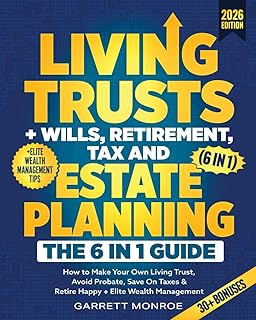
- Price: $24.97
- Rating: 4.5 / 5.0
- ASIN: B0F7FRGV1L
3. Nolo’s Guide to Estate Planning
Nolo is a trusted name in legal self-help. This guide covers wills, trusts, probate, and taxes with state-specific notes. It’s highly rated for its plain‑language explanations.

- Price: $27.89
- Rating: 4.7 / 5.0
- ASIN: 1413331661
4. Estate Planning For Dummies
A beginner-friendly overview. Great if you’re just starting to learn about wills, trusts, and estate planning concepts. Includes tips on community property states.

- Price: $20.99
- Rating: 4.3 / 5.0
- ASIN: 1394158548
5. I’m Dead, Now What? Planner
An organizer for your family to find everything after you’re gone. Helps you document accounts, policies, wishes, and contacts. Essential even if you have a trust.

- Price: $11.63
- Rating: 4.6 / 5.0
- ASIN: 1441317996
DIY vs. Professional Help
Books are excellent for education, but community property laws are complex. Consider consulting an estate planning attorney if you have a blended family, substantial assets, or own a business. For tips on using online will services safely, read DIY Online Wills: Are They Safe or a Legal Disaster Waiting to Happen?.
Common Mistakes to Avoid in Community Property States
Even well‑intentioned estate plans can fail if you overlook these pitfalls.
1. Ignoring Portability of the Estate Tax Exemption
Portability allows the surviving spouse to use the deceased spouse’s unused federal estate tax exemption. However, portability is not automatic—you must file an estate tax return (Form 706) after the first death. Many couples mistakenly think a trust isn’t needed, but for state taxes or asset protection, an A‑B trust may still be superior.
2. Mixing Separate and Community Property
If you deposit a separate inheritance into a joint bank account, it becomes commingled and likely converts to community property. Track separate assets carefully, or sign a written agreement.
3. Failing to Update Beneficiary Designations
Your will may direct one thing, but beneficiary designations on retirement accounts override it. After a divorce or spouse’s death, update all beneficiaries immediately.
4. Not Funding Your Trust
A trust is only effective if assets are titled in the name of the trust. Simply signing a trust document does nothing—you must transfer deeds, bank accounts, and investment accounts into the trust. Read more in The Role of a Trustee: Duties, Liabilities, and How to Pick the Right Person.
5. Forgetting About Pet Planning
Pets are often treated as property. A pet trust ensures your furry companions are cared for if you die before them. See Pet Trusts and Wills for Pet Owners: Ensuring Your Animals Are Cared for.
Frequently Asked Questions (FAQ)
Q1: Is a will valid in a community property state if it doesn’t mention community property?
A: Yes, but it creates confusion. The will should specify “my half of the community property” to avoid disputes. Without that language, it may be interpreted as trying to give away the spouse’s half, which is invalid.
Q2: Does a surviving spouse automatically inherit everything in a community property state?
A: Not always. The surviving spouse automatically keeps their own half. The deceased spouse’s half passes according to their will—or by intestacy if no will exists. In intestacy, the surviving spouse typically receives everything if there are no children from a prior relationship.
Q3: Can I disinherit my spouse in a community property state?
A: Generally, no. Most community property states protect the surviving spouse with forced share laws. Even if the will excludes them, the spouse can claim their half of community property and sometimes a portion of separate property.
Q4: Is a revocable living trust better than a will for community property?
A: It depends on your goals. A trust avoids probate, offers privacy, and can coordinate the double step‑up in basis. For many married couples, a joint living trust is the most efficient tool.
Q5: Do I need a trust if I have a community property agreement?
A: A community property agreement works well for simple estates, but it lacks the flexibility of a trust. It doesn’t allow for sub‑trusts, creditor protection, or control over distributions to children from prior marriages.
Q6: How does moving to a different state affect my community property?
A: If you move from a community property state to a common law state, the assets you already own remain community property, but new assets are governed by the new state’s laws. You should review your estate plan every time you relocate. For more, see What Happens if You Die Without a Will? Intestacy Laws Explained by State.
Conclusion
Estate planning in community property states demands a tailored approach. The equal ownership rule affects everything from how you write your will to how you structure trusts. The good news? With the right knowledge and tools, you can build a plan that protects your spouse, minimizes taxes, and ensures your assets go where you intend.
Start by educating yourself with resources like Nolo’s Guide to Estate Planning or the comprehensive Living Trusts + Wills, Retirement, Tax & Estate Planning 6-in-1 Guide. Then consult with a local attorney who understands community property nuances.
Remember, the most expensive estate plan is the one you didn’t create. Take action today to secure your family’s future.
For more detailed guidance on specific topics, explore our full library of estate planning articles, including Tax Implications of Different Trusts and How to Store and Share Your Will and Trust Documents So They’re Found When Needed.