 Insurance Curator
Imagine your car breaks down, your roof springs a leak, or you lose your job unexpectedly. Without a safety net, these events can send you spiraling into debt or financial ruin. That’s exactly why an emergency fund isn’t just a good idea—it’s a cornerstone of any solid budget.
An emergency fund is a dedicated pile of cash set aside specifically for life’s curveballs. It keeps you afloat without needing to rely on credit cards, loans, or family support. And here’s the best part: building one is simpler than you think, especially when you use the right budgeting tools to get started.
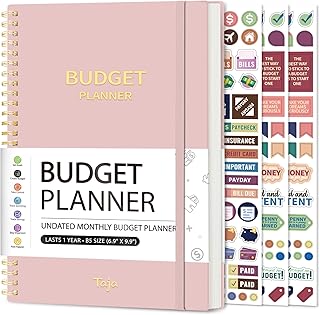
A structured budget planner, like the Budget Planner – Monthly Budget Book (pink or black edition, both rated 4.6 stars at $8.99), can help you track every dollar so you know exactly how much you can funnel into savings each month.
In this deep dive, you’ll learn exactly what an emergency fund is, why you absolutely need one, and—most importantly—how much you should target. We’ll also share expert strategies and real-world examples to make sure your fund is both robust and realistic.
What Is an Emergency Fund?
An emergency fund is money you’ve saved for true emergencies only. Think job loss, major medical bills, urgent home or car repairs, or an unexpected move. It’s not for planned expenses like vacations, holiday gifts, or a new TV.
The fund acts as a financial shock absorber. When you dip into it, you avoid high-interest debt and keep your monthly budget intact. And because it’s separate from your regular checking or savings, you’re less tempted to spend it on non‑emergencies.
A true emergency is anything that threatens your ability to pay essential bills—rent or mortgage, utilities, food, transportation, and insurance—without taking on debt. If the situation isn’t urgent, unexpected, or necessary, it probably isn’t an emergency.
Why You Need an Emergency Fund (Even If You’re Broke)
Many people say, “I’ll start saving later,” but life doesn’t wait. Consider these hard facts:
- Nearly 40% of Americans would struggle to cover a $400 emergency expense (Federal Reserve).
- The average cost of a single car repair is around $600–$1,000.
- Job loss followed by long unemployment is the top cause of foreclosure and bankruptcy.
Without an emergency fund, you’re forced to borrow. Credit cards charge 15–24% APR on average; payday loans can hit triple digits. An emergency fund saves you from that financial quicksand.
Moreover, having a fully funded emergency cushion reduces stress. You sleep better knowing you can handle a sudden layoff or a medical crisis without panicking. It allows you to make smarter decisions under pressure, like waiting for a better job instead of accepting the first offer out of desperation.
How Much Do You Really Need? The 3‑6‑Month Rule (and When to Break It)
The classic rule of thumb is 3 to 6 months of essential living expenses. But the right number depends on your situation.
Baseline Calculation: 3 Months of Essential Expenses
Start by listing your must‑pay expenses each month:
- Rent or mortgage
- Utilities (electricity, water, internet)
- Groceries and toiletries
- Transportation (car payment, gas, insurance, public transit)
- Minimum debt payments (credit cards, student loans)
- Health insurance premiums
- Childcare or pet care
If those total $3,000 per month, a 3‑month fund is $9,000. A 6‑month fund would be $18,000.
When You Need More (Closer to 6+ Months)
Consider stashing 6 to 12 months if you:
- Have unstable income (freelancers, gig workers, commission‑based jobs)
- Are the sole breadwinner in a single‑income household
- Work in a volatile industry (tech startups, seasonal jobs, oil & gas)
- Have health issues or dependents with special needs
- Own a home (repairs can be very expensive)
When You Can Get Away With Less (1–3 Months)
If you have a stable government job, dual income that covers all essentials, or a strong safety net from family, you might aim for a smaller fund—but still aim for at least $1,000 as a starter. This is often called a micro emergency fund (read more in Micro Emergency Funds: a Starter Safety Net for People Living Paycheck to Paycheck).
Factors That Affect Your Target Amount
Your emergency fund is personal. Here’s a breakdown of the key variables:
| Factor | Impact on Fund Size |
|---|---|
| Job stability | Unstable = larger fund |
| Number of earners in household | Dual income = could aim lower (but still need coverage for one job loss) |
| Dependents | More dependents = higher expenses, so larger fund |
| Health status | Chronic illness or high deductible = more buffer |
| Homeownership | Homeowner needs extra for repairs (roof, HVAC, plumbing) |
| Debt level | High debt = need fund to avoid default while paying minimums |
| Access to credit | Good credit can be a backup, but not a replacement |
For dual‑income couples, the calculation gets nuanced. You might need enough to cover essential expenses for 6 months but only if both jobs are lost simultaneously. A smarter approach: keep a fund equal to 3 months of expenses per earner, or enough to replace the higher earner’s salary for 6 months. See our dedicated guide: How Dual-income Families Should Structure Their Emergency Funds.
How to Calculate Your Emergency Fund Number Step by Step
Follow these steps to find your exact target. Use a Budget Planner – Monthly Budget Book with Expense Tracker Notebook, Undated Bill Organizer & Finance Planner to Take Control of Your Money, Account Book to Manage Your Finances-Black (also $8.99, 4.6 stars) to track your spending for a month.
- List every essential expense for a typical month (use your budget planner).
- Add up the total – that’s your monthly burn rate.
- Multiply by 3 for a minimum fund, by 6 for a comfortable fund.
- Adjust upward for the factors above (e.g., add $5,000 if you own a home).
- Round up to the next $1,000 for simplicity.
Example: Maria earns $4,500/month, with $3,200 in essential expenses. She’s a freelancer in graphic design (unstable income). She decides on a 9‑month fund: $3,200 × 9 = $28,800. She sets a goal of $30,000.
Where to Keep Your Emergency Fund
Your emergency cash needs to be safe, liquid, and accessible within a few days. The best accounts are:
- High‑yield savings accounts – currently offering 4–5% APY, FDIC‑insured.
- Money market accounts – similar yields, often with check writing.
- No‑penalty certificates of deposit (CDs) – fixed rate and penalty‑free withdrawal.
Avoid keeping it in stocks, crypto, or long‑term CDs with penalties. The goal is preservation and liquidity, not growth.
For a full breakdown of account options and features, read Where to Keep Your Emergency Fund: Best Accounts for Safety and Access?.
Building Your Emergency Fund from Scratch
Starting from zero can feel overwhelming. The secret is to break it into small, achievable milestones.
Step 1: Start Small – The $1,000 Mini‑Fund
Focus on saving just $1,000 first. This covers most minor emergencies: a broken phone, a doctor visit copay, or a flat tire. This “micro fund” gives you immediate breathing room.
Step 2: Automate Your Savings
Set up an automatic transfer from your checking to a separate savings account on payday. Even $20 per week adds up to $1,040 in a year. Use a cash envelope system to stay disciplined – the NICOOTH Budget Binder Cash Envelopes A6 Money Saving Binder with Zipper envelopes (Purple) ($6.28, 4.6 stars) lets you physically separate cash for emergency savings.
Step 3: Cut Expenses Temporarily
Trim non‑essentials for a few months: cancel unused subscriptions, eat out less, negotiate insurance premiums. Redirect every freed‑up dollar to your fund.
Step 4: Use Windfalls
Allocate tax refunds, bonuses, side gig income, or gifts to your emergency fund until you reach your target.
Step 5: Earn More Temporarily
Drive for rideshare apps, freelance online, or pick up overtime. Even $500 extra per month accelerates your progress dramatically.
For a more detailed roadmap when money is extremely tight, see How to Build an Emergency Fund from Zero When Money Is Tight?.
Top Budgeting Tools to Help You Save
The right physical tools make budgeting tangible and fun. Here are five Amazon bestsellers that can supercharge your savings journey.
| Product | Image | Price | Rating |
|---|---|---|---|
| Budget Planner (Pink) | |
$8.99 | 4.6 |
| NICOOTH Budget Binder (Purple) |  |
$6.28 | 4.6 |
| SKYDUE Budget Binder |  |
$8.98 | 4.7 |
| Budget Planner (Black) |  |
$8.99 | 4.6 |
| Budgeting 101 Book |  |
$9.69 | 4.6 |
Budget Planner – Monthly Budget Book (Pink or Black)
This undated planner includes expense tracker pages and bill organizers. It helps you visualize where every dollar goes – essential when you’re trying to carve out savings for your emergency fund. Simply write down your income and expenses each month, then set a savings goal and track your progress.
NICOOTH Budget Binder (Purple) & SKYDUE Budget Binder
Both binders come with zippered cash envelopes and budget sheets. The SKYDUE version (rated 4.7) includes expense budget sheets that help you allocate cash for categories like “Emergency Fund.” Use the envelopes to physically set aside cash each pay period. This method is proven to reduce overspending because handing over cash feels more painful than swiping a card.
Budgeting 101 Book
For a deeper education, pick up Budgeting 101: From Getting Out of Debt and Tracking Expenses to Setting Financial Goals and Building Your Savings by Michele Cagan. It covers everything from basics to advanced strategies, including how to build an emergency fund while paying off debt. It’s a great companion read while you fill out your budget planner.
Using Your Emergency Fund the Right Way (and Avoiding Common Mistakes)
An emergency fund is only helpful if you use it correctly. Here are the when to tap vs. when not to guidelines.
✅ When to Tap Your Fund
- Job loss or income reduction
- Major medical bills not covered by insurance
- Urgent home repairs (leaking roof, broken furnace)
- Essential car repairs needed for work
- Unexpected travel for family crisis
❌ When NOT to Tap Your Fund
- Buying a new phone on sale
- Paying for a vacation
- Covering routine car maintenance (budget for that separately)
- Paying off low‑interest debt faster
- Making a down payment on a house (use dedicated savings)
For a complete decision framework, see Using Your Emergency Fund the Right Way: When to Tap It and When Not To.
After Using It, Rebuild Immediately
Once you withdraw from your fund, prioritize replenishing it. Treat it like a bill: add a “rebuild” line to your monthly budget. If you have a major loss, read Rebuilding an Emergency Fund after a Job Loss or Major Crisis.
Emergency Funds for Freelancers and Gig Workers
If your income varies wildly, your emergency fund becomes even more critical. You need to cover both essential expenses and income gaps.
A good rule: save 6 to 12 months of essential expenses. Use a separate savings account specifically for business emergencies. Consider automating savings during high‑income months and accepting lower contributions during lean months.
The budgeting tools mentioned above are perfect for tracking variable income. The SKYDUE Budget Binder allows you to allocate cash into envelopes for quarterly taxes, business expenses, and your emergency fund all at once.
Learn more in Emergency Funds for Freelancers and Gig Workers with Unstable Income.
How Inflation Affects Your Emergency Fund
Inflation eats away at purchasing power. A $10,000 fund today might only cover $9,000 worth of expenses in a year if inflation runs 10%.
To combat this:
- Keep your fund in a high‑yield account earning 4–5% APY to offset some inflation.
- Re‑evaluate your target annually based on updated essential expenses.
- Consider a slightly larger buffer (e.g., 7 months instead of 6) if inflation is high.
For a deeper analysis, see How Inflation Affects Your Emergency Fund and What to Do About It.
Emergency Fund vs. Savings for Goals: How to Separate and Prioritize
Many people confuse emergency savings with goal‑based savings (vacation, house down payment, new car). They are not the same.
- Emergency fund = for unexpected, urgent needs. Never touch for planned goals.
- Goal savings = for things you plan to buy or achieve.
Keep them in separate accounts to avoid temptation. If you notice yourself dipping into your emergency fund for a planned purchase, create a sinking fund instead.
Read Emergency Fund vs. Savings for Goals: How to Separate and Prioritize for a step‑by‑step method.
Frequently Asked Questions
What is the minimum emergency fund amount I should have?
A good starting point is $1,000. This micro emergency fund covers most small emergencies like a minor car repair or a medical copay. Once you have $1,000, build toward 1 month of essential expenses, then 3 months, and finally 6 months.
Should I invest my emergency fund?
No. Your emergency fund needs to be safe and liquid. Investing in stocks or crypto risks losing value exactly when you need the cash. Keep it in a high‑yield savings account or money market account.
How long does it take to build a 6‑month emergency fund?
It depends on your income and savings rate. If you save $500 per month and need $18,000, it will take 36 months. Increase your savings rate or cut expenses to speed it up.
Can I use my emergency fund for a large, planned expense?
Only if that expense is a true emergency. Planned expenses (like a new roof that’s still functional) should be covered by a separate sinking fund. Using your emergency fund for planned costs leaves you vulnerable when a real crisis hits.
Is a credit card a good substitute for an emergency fund?
No. Relying on credit cards adds debt and interest charges. They are a temporary bridge, not a replacement. A cash emergency fund gives you financial freedom without accumulating high‑interest debt.
How often should I review my emergency fund target?
At least once a year. Also review after major life changes: marriage, divorce, new baby, job change, or moving to a higher‑cost area.