 Insurance Curator
 Choosing the right life insurance policy for parents is one of the most important financial decisions you’ll ever make. The stakes are high: your family’s future security, your children’s education, and your spouse’s ability to maintain the household all depend on having the right coverage.
For most parents, the debate boils down to term life insurance versus whole life insurance. Each has distinct advantages, but the best choice depends on your budget, goals, and timeline. In this exhaustive guide, we’ll break down every aspect so you can confidently select the plan that protects what matters most.
Why a Life Insurance Policy for Parents Matters More Than You Think
Parents carry a unique financial burden. You’re not just covering daily expenses—you’re funding college tuition, paying down a mortgage, and ensuring your partner can keep working without fear. A well-structured life insurance policy for parents acts as a safety net that catches your family if you’re gone too soon.
Without coverage, the loss of income could force a move, derail educational plans, or push your spouse into debt. Term life insurance offers affordable, temporary protection, while whole life insurance builds cash value and lasts a lifetime. Let’s explore both paths in depth.
Term Life Insurance: Simple, Affordable, and Powerful
Term life insurance is the most straightforward way to buy a death benefit. You choose a coverage period—commonly 10, 20, or 30 years—and pay a fixed premium. If you die during the term, your beneficiaries receive the tax-free payout. If you outlive the policy, it expires with no cash value.
How Term Life Works for Parents
For a 35-year-old parent in good health, a 20-year term policy with $500,000 in coverage can cost as little as $20–$30 per month. That’s less than a streaming subscription, yet it guarantees your family’s largest financial obligations are covered through your peak earning years.
Key benefits of term life for parents:
- Affordability – You get the highest death benefit for the lowest premium.
- Predictability – Fixed premiums never increase during the term.
- Flexibility – You can align the term with your mortgage payoff or kids’ college years.
- Simplicity – No investment accounts or cash value to manage.
When Term Life Is the Right Choice
Term insurance works best when your main goal is pure protection during the years when your family depends most on your income. Most experts recommend a term length that matches your youngest child reaching financial independence (age 22–25). If you’re a parent looking for an affordable life insurance policy for parents, term is often the wisest option.
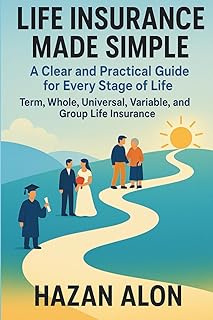
Expert insight: “The majority of families need only term life insurance. It’s the most efficient way to replace income during the years when your children are dependent.” — Adapted from Life Insurance Made Simple: A Clear and Practical Guide for Every Stage of Life, which provides a step-by-step method for calculating exactly how much term coverage you need.

Whole Life Insurance: Lifetime Protection with Cash Value
Whole life insurance is a type of permanent coverage that stays in force as long as you pay premiums. Part of each premium goes into a cash value account that grows tax-deferred. You can borrow against it or withdraw it later in life.
How Whole Life Differs from Term
The premium for whole life is 5 to 15 times higher than term for the same death benefit. A $500,000 whole life policy for a 35-year-old could cost $300–$500 per month. In exchange, you get:
- Lifetime coverage – Benefits are guaranteed no matter when you die.
- Cash value growth – The policy builds savings you can access.
- Fixed premiums – Unlike some universal policies, whole life premiums never rise.
When Whole Life Makes Sense for Parents
Whole life becomes attractive when you have maxed out other tax-advantaged accounts (401k, IRA, HSA) and want another tax-friendly vehicle. It can also serve as an estate planning tool for parents with high net worth who want to leave a legacy.
However, for the vast majority of parents, the high premium of whole life stretches the budget too thin. That extra $300 per month could instead be invested in a 529 college savings plan or a diversified portfolio, potentially yielding greater long-term returns.
Term vs Whole Life: Head-to-Head Comparison for Parents
To see the difference side by side, here’s a clear comparison based on a 35-year-old non-smoking parent seeking $500,000 in coverage.
| Feature | Term Life (20-Year) | Whole Life |
|---|---|---|
| Monthly Premium | ~$25 | ~$400 |
| Death Benefit | $500,000 (if death occurs within 20 years) | $500,000 (guaranteed for life) |
| Cash Value | None | Yes (grows tax-deferred) |
| Coverage Duration | Fixed term (20 yrs) | Lifetime |
| Best For | Income replacement during child-rearing years | Estate planning, permanent needs, forced savings |
| Flexibility | Can convert to permanent later | Fixed premiums and death benefit |
| Affordability | Excellent | Expensive for most families |

The book Life Insurance 101: The Basics of Life Insurance Explained offers a practical breakdown of these differences, helping parents understand that term life delivers the most protection per dollar spent.
How Much Coverage Do You Need as a Parent?
A common rule of thumb is 10–12 times your annual income. But a more accurate approach considers your specific obligations.
Use this formula:
- Outstanding debts – Mortgage, car loans, credit cards.
- Future education costs – 4 years of in-state tuition per child (approx. $100,000–$150,000 per child).
- Income replacement – 5–10 years of your salary to help your spouse adjust.
- Final expenses – Funeral and medical bills ($10,000–$20,000).
Add those up. That’s your target death benefit.
Example:
- Mortgage: $250,000
- College for 2 kids: $240,000
- Income replacement (5 years at $80k): $400,000
- Final expenses: $15,000
- Total: $905,000
A 30-year term policy for $900,000 would cost a healthy 35-year-old parent roughly $50–$70 per month. Compare that to whole life at $600–$900 monthly. The difference is staggering.
Pros and Cons of Each Type for Parents
Term Life Insurance Pros and Cons
Pros:
- Lowest cost per $1,000 of coverage
- Easy to understand and apply for
- Can be converted to permanent later (many policies include conversion options)
- Ideal for covering temporary needs (mortgage, college)
Cons:
- No cash value or investment component
- Coverage ends if you outlive the term (you lose the premium)
- Premiums increase significantly if you renew at an older age
Whole Life Insurance Pros and Cons
Pros:
- Permanent coverage no matter when you die
- Cash value accumulates tax-deferred
- You can borrow against the policy
- Premiums are fixed for life
Cons:
- Very expensive – premiums can be 10x term
- Cash value grows slowly (often only 2–4% annually)
- Surrender charges if you cancel early
- Complexity – policies have many moving parts
Real-World Scenarios: Term vs Whole Life for a Parent
Scenario A: Young parents with limited budget
You’re 30, have two toddlers, a mortgage, and student loans. You need maximum protection right now. Term life is the clear winner. A 30-year $1 million term policy costs about $40/month. Whole life would set you back $800/month—money you can’t spare.
Scenario B: Older parent with substantial assets
You’re 55, your children are self-supporting, but you want to leave a tax-free inheritance and have maxed out retirement accounts. Whole life could make sense, but only after you’ve explored cheaper options like a paid-up policy or estate planning trusts.
Scenario C: Parent who wants forced savings
If you struggle to save consistently, whole life’s cash value can act as a disciplined savings tool. However, the returns are often subpar compared to low-cost index funds. Consider pairing term life with a separate investment account for better results.
How to Buy the Right Life Insurance Policy for Parents
Follow these steps to find the best coverage for your family.
- Calculate your coverage needs – Use the formula above or a free online calculator.
- Decide on term length – Match the term to your youngest child’s independence (typically age 22–25).
- Shop around – Get quotes from at least three top-rated insurers. Compare rates and riders.
- Choose a reputable company – Look at financial strength ratings (A.M. Best, Moody’s).
- Consider conversion rights – Many term policies let you convert to permanent later if your needs change.
- Name your beneficiaries correctly – Designate primary and contingent beneficiaries.
- Review annually – Major life events (birth, divorce, promotion) may require adjusting your coverage.
The Bottom Line: Which Life Insurance Policy for Parents Wins?
For the vast majority of parents, term life insurance is the optimal choice. It provides the necessary protection during the years when your family depends on you, at a price that leaves room in the budget for other priorities like emergency funds, college savings, and retirement.
Whole life is best reserved for those with high income, maxed-out retirement accounts, or a need for estate planning. If you’re a typical parent raising kids and paying a mortgage, term life will secure your family’s future without straining your finances.
If you want to dive deeper into the calculations, Life Insurance Made Simple: A Clear and Practical Guide for Every Stage of Life (rated 4.8 stars) offers a complete framework. For a quick, budget-friendly primer, Life Insurance 101: The Basics of Life Insurance Explained (only $14.95) is an excellent starting point.
 |
|
Frequently Asked Questions
Can I convert my term life policy to whole life later?
Yes, many term policies include a conversion rider that allows you to switch to a permanent policy without a new medical exam. This is useful if your health declines or your needs change.
What happens if I outlive my term life policy?
The policy expires and you receive no payout. You can often renew at a higher premium or apply for a new policy, but rates will be based on your current age and health.
Is whole life insurance a good investment for parents?
Generally, no. The cash value grows at a low rate, and high fees eat into returns. Term life plus a separate investment account usually outperforms whole life in terms of net worth growth.
How much does a life insurance policy for parents cost for a 40-year-old?
A healthy 40-year-old parent can get a 20-year, $500,000 term policy for $35–$50 per month. A whole life policy with the same death benefit would cost $400–$600 per month.
Which is better for stay-at-home parents?
Even stay-at-home parents need coverage to pay for child care, household management, and future costs. Term life makes sense here, too—coverage of $250,000 to $500,000 is often sufficient.
Should I buy life insurance for my children?
Adding a small child rider to your own policy is usually more cost-effective. Separate child policies are rarely necessary unless you have a specific reason, such as a child with a chronic condition.
Further reading from our content cluster:
- Life Insurance Policy for Parents: Why It’s Essential for Your Family’s Security
- Life Insurance Policy for Parents: Affordable Options with Great Benefits
- Life Insurance Policy for Parents: How Much Coverage Do You Really Need?
- Life Insurance Policy for Parents: Protecting Your Children’s Future with the Right Plan