 Insurance Curator
Two incomes bring two sets of security — and two sets of risk. When both partners work, an emergency fund isn’t just a safety net. It’s a strategic tool that protects your household from a layoff, a medical crisis, or an unexpected expense that could derail your shared financial goals.
Yet many dual-income couples build their emergency funds the same way a single person would. That’s a mistake. Your structure needs to reflect your combined income streams, your higher spending baseline, and the fact that both jobs could be at risk simultaneously. Let’s dive into exactly how to design a bulletproof emergency fund for your two-income household.
Why Dual-Income Families Need a Different Emergency Fund Strategy
A single earner can base their emergency fund on one salary. But when you have two incomes, the math shifts. If one partner loses their job, the household still has some cash flow — but likely not enough to cover all expenses. If both lose jobs simultaneously (think industry downturns or a recession), the risk multiplies.
According to the Bureau of Labor Statistics, dual-income households now make up nearly half of all married-couple families. That means millions of couples need a plan that accounts for:
- Partial income loss: One partner is out of work while the other still earns.
- Total income loss: Both are unemployed at the same time.
- Higher fixed costs: Mortgage, childcare, student loans, and two car payments are common.
- Childcare expenses: If one parent loses a job, you may still need childcare for the other to work — or you may eliminate it and save money, changing your expense baseline.
Your emergency fund must flex to cover these scenarios. A flat “3–6 months of expenses” rule won’t cut it. You need a layered approach.
Step 1: Calculate Your True Monthly Expenses — Not Your Combined Income
Before you can structure your fund, you must know your baseline. Most couples overestimate how much they can cut back during a crisis. Instead of guessing, use a Budget Planner – Monthly Budget Book with Expense Tracker Notebook — like the top-rated pink version — to track every dollar for three months. This gives you a factual picture.
List every recurring expense:
- Mortgage or rent
- Utilities, internet, phone
- Groceries and household supplies
- Car payments, gas, insurance
- Childcare or tuition
- Student loan minimums
- Health insurance premiums
- Minimum credit card payments
- Subscription services
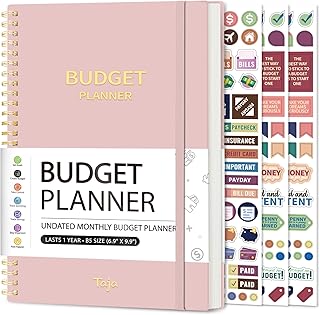
Then subtract any discretionary spending you could easily pause — restaurants, entertainment, travel. The result is your minimum survival expense. For most dual-income families, that number is 20–30% lower than their typical monthly spending.
Pro tip: Use a Budget Binder like the NICOOTH cash envelope system to physically allocate your emergency fund savings each month. Seeing the cash grow reinforces the habit.
Step 2: Set Three Target Tiers for Your Emergency Fund
Instead of a single number, build three milestones:
| Tier | Coverage | Duration | Target Amount (based on survival expenses) |
|---|---|---|---|
| Tier 1: Partial Job Loss | Covers gap when one partner loses income, other still working | 3 months | 3× monthly survival expenses |
| Tier 2: Full Dual Job Loss | Both lose jobs simultaneously | 6 months | 6× monthly survival expenses |
| Tier 3: Severe Crisis (extended) | Includes major medical or housing disaster | 9–12 months | 9–12× monthly survival expenses |
Most couples should aim for Tier 2 as the baseline. Tier 3 is ideal if you have dependents, variable incomes, or work in volatile industries.
Expert insight: Financial planner Kristin Wong recommends dual-income couples target 6–9 months of expenses rather than the standard 3–6. “If both partners work in the same industry — like tech or hospitality — a downturn could hit both at once. In that case, six months may not be enough.”
Step 3: Where to Keep Your Emergency Fund as a Dual-Income Couple
Liquidity is king. You need instant access without penalty. The best places are:
- High-yield savings accounts (HYSA) — Current rates above 4% APY make this a no-brainer.
- Money market accounts — Slightly higher rates, but watch for minimum balances.
- No-penalty CDs — Lock in a rate for 6–11 months but can withdraw early without penalty.
- Treasury bills (short-term) — State tax exempt, but slightly less liquid.
Avoid keeping the whole fund in a standard checking account — inflation will eat its value. Also avoid stocks or crypto for any portion you might need in a crisis.
Where NOT to keep it: Under the mattress, in a low-interest savings account (0.01% APY), or tied up in long-term investments.
For couples who prefer a structured approach, the SKYDUE Budget Binder (4.7 stars) includes expense budget sheets that help you allocate monthly savings toward your emergency fund. Use it to track your progress across all three tiers.

Step 4: Decide Who Holds the Fund — Joint or Separate Accounts?
This is a common point of friction. Should both partners contribute to one joint account? Or keep separate emergency funds? There’s no single answer, but here’s a framework:
- Joint account approach: Best for couples with fully merged finances. One account, auto-transfers, both names. Simplest to manage.
- Separate + joint combination: Each partner holds a small personal emergency stash (1 month of their own survival expenses) in case of a solo crisis, and a joint fund covers the household. This respects autonomy while protecting the family.
Example: Marcus and Taylor each contribute $300/month to a joint HYSA. They also maintain individual accounts with $2,000 each for personal emergencies (car repair, medical copay). When Marcus’s car broke down, he used his personal fund without tapping the joint savings.
The key is agreement. Use a Budget Planner – Black to map out contributions and track both accounts. The black version is durable and gender-neutral — perfect for a shared planner.
Step 5: How Much Should Each Partner Contribute?
For dual-income couples, total contribution should aim to fill Tier 2 (6 months) within 12–18 months. Here’s a realistic monthly savings schedule based on a combined household income of $100,000 (survival expenses = $4,500/month):
| Timeframe | Monthly Contribution | Total after 12 months | Total after 18 months |
|---|---|---|---|
| 12 months | $2,250 | $27,000 (6 months) | N/A |
| 18 months | $1,500 | $18,000 (4 months) | $27,000 (6 months) |
Adjust based on your comfort. If one partner earns 70% of income, they may contribute 70% of the emergency fund. Or split 50/50. The important thing is automation: set up auto-transfers the day after each paycheck hits.
Step 6: Integrate Budgeting Tools to Stay on Track
Building an emergency fund requires discipline. That’s where a structured budgeting system helps. The Budgeting 101 book (Adams 101 Series, 4.6 stars) is a fantastic read for couples new to the process. It covers expense tracking, goal setting, and debt management — all essential when you’re funneling cash into a fund.

Weekly check-in routine: Every Sunday, review your budget binder or app together. Ask: “Did we overspend on takeout this week? Can we redirect that money to the emergency fund?” This keeps both partners accountable and connected to the goal.
Step 7: When to Tap the Emergency Fund — and When Not To
Dual-income households face unique temptation. One partner’s bonus arrives, and suddenly you want to “upgrade” something. Resist. Your emergency fund is not a vacation fund, home renovation pool, or investing seed money.
Appropriate uses:
- Job loss (one or both)
- Major medical emergency not covered by insurance
- Emergency home repair (roof leak, furnace failure)
- Unexpected car replacement or major repair
- Family crisis requiring travel or reduced work
Inappropriate uses:
- Wedding or event expenses
- New furniture or electronics
- Investing in stocks (even “safe” ones)
- Paying down low-interest debt (unless you’re at risk of default)
Create a written policy together. For example: “We only tap the fund for emergencies over $1,000 that we cannot cover from our monthly cash flow.” Review it quarterly.
Step 8: Rebuild After a Drawdown
If you use the fund, don’t panic — that’s what it’s there for. But rebuild immediately. After a job loss crisis, once you’re both employed again, increase your savings rate temporarily. Cut discretionary spending for 3–6 months until the fund is restored.
The NICOOTH Budget Binder (purple, $6.28) is excellent for rebuilding because its cash envelope system forces you to allocate physical cash to each category. When you’re in rebuild mode, use the “emergency fund” envelope exclusively.

Common Mistakes Dual-Income Families Make
- Assuming two incomes are safer – They are, but only if you plan for both to fail. Don’t complacently keep just 2–3 months.
- Keeping the fund in a checking account – Inflation erodes it. Move to a HYSA.
- Failing to adjust for children – If you have kids, your survival expenses are higher. Factor in daycare, formula, clothes, school supplies.
- Not updating the fund amount annually – As your income and expenses rise, so should the fund. Review it every January.
- One partner handles all the savings – This creates disconnect. Both should see the progress and understand the purpose.
How Inflation Affects Your Dual-Income Fund
Inflation silently reduces the buying power of cash saved in a low-interest account. For a fund of $27,000, 8% inflation over 12 months means your real value drops to about $25,000. That’s why high-yield savings accounts (4%+ APY) are critical. Even then, you’re losing some ground — but it’s better than losing all.
For more detail, read our guide on How Inflation Affects Your Emergency Fund and What to Do About It.
Putting It All Together: A Sample Dual-Income Emergency Plan
Let’s follow a fictional couple: Emma ($55k/year) and James ($65k/year). Combined gross: $120k. Survival expenses: $5,000/month. Target: 6 months ($30,000). They decide on a joint HYSA with automated transfers.
- Month 1–12: Save $2,500/month ($1,250 each). Reach $30,000 in 12 months.
- Tools: Emma uses the Budget Planner – Pink to track household spending; James uses the Budget Binder – Black for his personal expenses.
- Agreed rules: Only tap fund if monthly income drops below $7,000 or for a one-time expense > $2,500.
- After fund is full: They shift savings to medium-term goals (down payment, vacation), but maintain the fund at $30,000.
Internal Resources to Deepen Your Knowledge
Building an emergency fund is just one piece of the puzzle. Explore these related guides:
- Emergency Funds Explained: How Much You Really Need and Why
- How to Build an Emergency Fund from Zero When Money Is Tight?
- Where to Keep Your Emergency Fund: Best Accounts for Safety and Access?
- Emergency Fund vs. Savings for Goals: How to Separate and Prioritize
- Using Your Emergency Fund the Right Way: When to Tap It and When Not to
Final Thoughts
Dual-income households have a golden opportunity to build a robust emergency fund faster than singles. But that speed can lead to complacency. Structure your fund in tiers, keep it in a liquid high-yield account, and commit to a joint budgeting system. Use the planners, binders, and books recommended here to stay on track — every dollar you save is a layer of protection against life’s curveballs.
Remember: your emergency fund is not just a pile of cash. It’s the foundation of your financial peace. Build it together, maintain it consistently, and it will serve you through every storm.
Frequently Asked Questions
What is the ideal emergency fund size for a dual-income family with children?
For families with kids, aim for 6–9 months of survival expenses. Children add childcare, healthcare, and education costs that won’t pause during a crisis. Use the tiered approach: 3 months as a minimum, 6 months as standard, 9 months if you have dependents or one income is unstable.
Should we contribute equally to the emergency fund?
Not necessarily. Many couples contribute proportionally to their income. If one partner earns 60% of household income, they fund 60% of the emergency savings. The key is both partners are committed and can see the progress.
Can we use our emergency fund to pay off credit card debt?
Generally no. Your emergency fund is for income loss or major unexpected expenses. Credit card debt is a liability, but it’s not an emergency unless you’re facing default. Prioritize paying down high-interest debt from your regular budget, not your safety net.
How often should we review and adjust our emergency fund amount?
At least once a year, or after any major life change: new baby, job change, move, significant salary increase or decrease. Inflation also erodes the value, so adjust the dollar amount upward to maintain the same months of coverage.
What if we disagree on how much to save?
Start with a smaller goal — 3 months — that both can agree on. Use a visual tracker like a budget binder to see progress. Compromise by splitting the difference between your preferred amounts, then revisit after 6 months when results are visible.
Can we keep part of our emergency fund in investment accounts?
Only if it’s a small portion (10–20%) of a tier beyond 9 months. Never invest your core 6 months of survival expenses. Market downturns often coincide with job losses, so you could lose both income and fund value simultaneously.