 Insurance Curator
Financial Literacy and Debt: How Understanding the Numbers Can Help You Get out and Stay out
Debt can feel like a shadow that follows you everywhere. You make a payment, but the balance barely budges. You pick up a second job, yet the interest keeps piling. The root cause is often the same: a lack of financial literacy —specifically, the ability to understand the numbers that drive your money decisions. When you learn how to read your income, expenses, and debt repayments as a clear system, getting out of debt transforms from a wish into a plan.
Think of financial literacy as the instruction manual for your money. Without it, you’re operating on guesswork. With it, you see exactly where your money goes, how interest compounds against you, and which lever to pull first to free up cash. Budgeting is the practical tool that brings that literacy to life. By combining the two, you don’t just escape debt—you build a system that keeps you out forever.
The Hidden Cost of Financial Illiteracy
Most people underestimate how much they pay for not understanding basic finance. In 2023, the average American carried over $6,000 in credit card debt, with interest rates hovering above 20%. That means a $1,000 balance left unpaid for a year costs an extra $200 or more—money that could be saved or invested. Without financial literacy, those numbers feel abstract. You just see a minimum payment.
The real trap is that debt often feels like a permanent condition. You assume you’ll always owe something. But when you break down the mathematics of debt repayment, you realize it’s a predictable equation: Principal + Interest = Total Payoff. Understanding that equation lets you speed up the journey. Every extra dollar you send toward principal saves future interest. That’s the first lesson of financial literacy: pay off high-interest debt first because it’s the most expensive.
Why Budgeting Is the Single Most Powerful Debt Tool
If financial literacy is the knowledge, budgeting is the action. A budget is simply a plan for your money before the month begins. Without one, you react to expenses passively. With one, you decide exactly where every rand, dollar, or pound goes. For debt reduction, a budget does two critical things:
- It reveals your “debt snowball” fuel. Once you know your spending categories, you can cut unnecessary costs and redirect that cash toward debt payments.
- It prevents new debt. A budget that includes a “debt payment” line forces you to treat that payment as a non-negotiable bill, just like rent or electricity.
A well-structured budget is the difference between paying down debt in three years versus ten. And the most effective budgets are written down—not just in your head. That’s where tools like a physical budget planner come in.
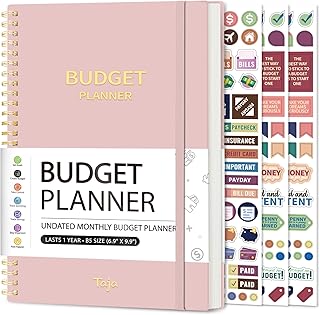
A dedicated budget book keeps you accountable. The act of writing down numbers forces you to confront them. It’s harder to ignore a $200 overspend when you physically circle it in red. The Budget Planner – Monthly Budget Book with Expense Tracker Notebook helps you track every category, set goals, and see progress—all for under $9. This small investment often pays for itself in the first month by preventing impulse purchases.
Step 1: Know Your Numbers – A Financial Literacy Crash Course
Before you can budget effectively, you need to understand three key numbers: your net income, your fixed expenses, and your variable expenses. That’s it. Yet most people can’t tell you their monthly spending within $500. Here’s a simple exercise:
- List all sources of income after tax. This is your take-home pay.
- List every bill that is the same each month. Rent, mortgage, car payment, insurance, subscriptions.
- Track every other spending for 30 days. Use a notepad, an app, or a budget binder to capture every coffee, takeaway, and online purchase.
Once you have those three numbers, subtract total expenses from income. If the result is negative, you are spending more than you earn—and debt will grow. If positive, that surplus is your debt-killing ammo.
The Cash Envelope System – A Visual Way to Stay on Track
One of the most effective budgeting methods for debt reduction is the cash envelope system. You allocate a fixed amount of cash to each spending category (groceries, entertainment, gas) and when the cash is gone, you stop spending. This method works because it removes the mental friction of swiping a card. You physically see the money leave your hand.
A NICOOTH Budget Binder Cash Envelopes A6 Money Saving Binder with Zipper envelopes (Purple) makes this system portable and organized. It comes with zippered envelopes for each category and a binder to keep everything together. The tactile nature of handling cash makes overspending harder—most people spend 20-30% less when using cash instead of plastic.

Step 2: Choose a Debt Payoff Strategy – Snowball vs. Avalanche
Financial literacy means understanding the difference between two popular debt payoff strategies:
| Strategy | Method | Best For | Example |
|---|---|---|---|
| Debt Snowball | Pay off smallest balances first, regardless of interest rate | People who need quick wins for motivation | $200 min payment on $1,000 card → pay off in 2 months |
| Debt Avalanche | Pay off highest interest rate first | People who want to save the most money on interest | 22% APR card before 15% card |
Both work mathematically, but the right one depends on your psychology. Snowball is more forgiving for those who get discouraged easily. Avalanche saves more money in the long run. The key is to pick one and stick to it. Write your debt list in your Budget Planner – Monthly Budget Book with Expense Tracker Notebook, Undated Bill Organizer & Finance Planner to Take Control of Your Money, Account Book to Manage Your Finances-Black and mark off each victory.
The Role of Emergency Savings in Staying Debt-Free
A common reason people fall back into debt is an unexpected expense—car repair, medical bill, job loss. Without savings, they put it on a credit card. Financial literacy teaches you that an emergency fund is not optional if you want to stay out of debt. Aim for at least $1,000 as a starter, then build to 3-6 months of expenses.
Your budget should include a monthly “sinking fund” line for irregular expenses. For example, set aside $50 each month for car maintenance. That way, when your tires need replacing, you have cash ready instead of debt.
How to Use a Budget Binder to Track Progress
Tracking progress is the secret to long-term success. A SKYDUE Budget Binder, Money Saving Binder with Zipper Envelopes, Cash Envelopes and Expense Budget Sheets for Budgeting provides structured sheets to log daily spending, monthly totals, and debt payoff milestones. The visual of crossing off a paid debt is powerful. It releases dopamine and reinforces the habit.

Use the binder to set a monthly review session—30 minutes where you compare actual spending to your budget. Did you overspend on eating out? Adjust next month’s envelope accordingly. This reflective practice is the highest form of financial literacy: learning from your own data.
Automate Your Systems, Then Forget About Them
Once you’ve built a budget and chosen a payoff strategy, automation is your best friend. Set up automatic transfers to:
- Pay at least the minimum on all debts
- Send extra toward your chosen priority debt
- Move a fixed amount to savings every payday
Automation removes the temptation to spend that money. It also enforces discipline without willpower. Your budget binder can track these automatic transfers, so you still see the big picture.
Common Budgeting Mistakes That Keep You in Debt
Even with the best intentions, people slip up. Here are three common pitfalls and how financial literacy fixes them:
- Ignoring irregular expenses. Car insurance paid quarterly? Add it to your monthly budget by dividing the annual cost by 12. Save that amount each month.
- Overestimating your income. Use net income, not gross. Many people budget based on what they expect to earn, then overspend.
- Not budgeting for “fun money.” A restrictive budget that bans all treats leads to burnout. Include a small “blow” category in cash envelopes. It keeps you sane.
When Financial Literacy Meets Real Life: A Case Study
Meet Thandi. She had $12,000 in credit card debt across three cards with rates ranging from 17% to 23%. She started tracking expenses with a simple notebook, then upgraded to the Budgeting 101 book to build foundational knowledge. She learned the avalanche method and attacked the 23% card first. By reducing dining out and using cash envelopes, she freed $400 per month. She paid off all debt in 18 months—3 years faster than she would have with minimum payments alone.

Thandi’s story isn’t magic—it’s mathematics. She understood the numbers and let them guide her actions.
How to Stay Out of Debt Forever
Getting out is one thing. Staying out requires a mindset shift. That shift comes from continuous financial education. Read books, listen to podcasts, and review your budget monthly. Learn about lifestyle creep—the tendency to increase spending when your income rises. Use that extra income to accelerate savings and investments instead.
Internal resources can deepen your understanding. For instance, our article on Financial Literacy 101: Plain-english Basics Everyone Should Know before Building Wealth explains core concepts like compound interest and net worth. You might also explore Financial Literacy for Beginners: How to Finally Understand Money Without Feeling Overwhelmed for a gentle introduction.
The Difference Between Financial Literacy and Budgeting
Many people confuse the two. Financial Literacy vs. Budgeting: What’s the Difference and Why You Need Both lays it out clearly. Literacy is the knowledge; budgeting is the application. You need both to master your finances. Without literacy, you might budget blindly. Without budgeting, you never put knowledge into practice.
Small Habits That Transform Your Money
You don’t need to overhaul your life overnight. Simple, consistent habits build financial competence. Read our guide on Simple Financial Literacy Habits That Can Transform Your Money in 15 Minutes a Week for actionable tips. Even 15 minutes a week of reviewing your budget and debt balances keeps you grounded.
Young adults especially benefit from early financial literacy. The skills learned in your 20s compound for decades. Check out Financial Literacy for Young Adults: Money Skills Every 20‑Something Should Master Early for age-specific advice.
Teaching Financial Literacy to the Next Generation
If you’re a parent, you have the power to stop the debt cycle before it starts. Children learn money habits by watching you. Involve them in budgeting discussions. Use a clear jar for savings so they see it grow. For detailed strategies, read Financial Literacy for Parents: How to Teach Kids About Money at Every Age.
Breaking Free from Money Myths
Society is full of harmful myths: “Debt is normal.” “You’ll always have a car payment.” “Investing is for rich people.” Educate yourself on why these are false. Our article Financial Literacy Myths That Keep You Broke (And What Actually Matters) debunks common misconceptions and reveals high-leverage actions.
Curious about where you stand? Take our self-assessment: How Financially Literate Are You? a Self‑assessment to Spot Hidden Money Gaps?. It will highlight areas where you can improve.
For High Earners: Avoid Lifestyle Creep
Making more money doesn’t automatically mean being debt-free. High earners often fall into the trap of upgrading their lifestyle as income rises. This “silent money leak” can keep you indebted even at a high salary. Learn to recognize it in Financial Literacy for High Earners: Avoiding Lifestyle Creep and Silent Money Leaks.
The Bottom Line
Financial literacy is not a luxury—it’s a survival skill. Every number on a statement tells a story. When you learn to read that story, you gain control. Budgeting is your pen. Together, they write a future free of debt.
Start today. Write down your income. Write down your debts. Pick one small expense to cut. Use a tool like the NICOOTH Budget Binder to stay organized. And never stop learning—the more you understand, the more you can achieve.
Frequently Asked Questions
Q: What is the first step to becoming financially literate?
A: Start by tracking every dollar you spend for 30 days. This gives you the raw data you need to build a realistic budget and identify spending leaks.
Q: How does budgeting help get out of debt?
A: Budgeting forces you to allocate money intentionally. By creating a “debt payment” category and cutting waste, you free up cash to pay down balances faster than minimum payments.
Q: Should I pay off debt or save an emergency fund first?
A: Save a small starter emergency fund of $500–$1,000 first. This prevents you from using credit cards when unexpected expenses arise. Then attack debt aggressively.
Q: What is the best budgeting method for beginners?
A: The cash envelope system is beginner-friendly because it limits spending physically. Pair it with a Budget Planner to track progress.
Q: How long does it take to become debt-free using a budget?
A: It depends on your income, debt amount, and how much you can redirect. Most people see significant progress in 6–12 months with a focused plan. Consistency is key.
Q: Is financial literacy the same as budgeting?
A: No. Financial literacy is understanding concepts like interest and compound growth. Budgeting is applying that knowledge to manage daily money. You need both.