 Insurance Curator
 Financial exploitation of older adults is a quiet crisis. In 2023 alone, elder financial fraud cost U.S. seniors an estimated $3.4 billion, according to the FBI’s Internet Crime Complaint Center. That number is almost certainly an undercount—many victims are too ashamed, confused, or isolated to report the crime.
The sad truth is that the people who love an older relative often don’t realize something is wrong until the damage is done. Fraudsters deliberately target seniors because they tend to have accumulated wealth, own their homes, and may be experiencing cognitive decline or loneliness. Knowing how to spot the warning signs, monitor accounts without being intrusive, and build legal safeguards into an estate plan can stop fraud before it devastates a family.
This guide will walk you through the most common elder fraud schemes, the behavioral and financial red flags to look for, and the concrete estate-planning tools—including several highly rated books and planners—that can help you protect your loved one’s assets and dignity.
Why Elder Financial Fraud Is an Estate-Planning Emergency
Most families think of estate planning only as a way to avoid probate or reduce taxes. That’s a mistake. A well-structured estate plan is also a powerful fraud-prevention mechanism. Durable powers of attorney, revocable living trusts, and joint accounts with proper oversight can block scammers from draining accounts, changing beneficiaries, or stealing property.
If your aging parent or relative does not have these documents in place, you are essentially leaving their financial life unlocked. A fraudster who gains access to a single bank account or insurance policy can, in a matter of hours, redirect income streams and empty savings.
An estate plan that anticipates fraud doesn’t just list who gets what. It names a trusted person to monitor transactions, places assets in a trust that requires multiple signatures for large withdrawals, and includes clear instructions for reporting suspected exploitation. That is why the topic of elder fraud belongs squarely in the estate-planning conversation.
The Most Common Fraud Schemes Targeting Seniors
Fraudsters are creative, but their methods fall into predictable patterns. Knowing these schemes helps families spot trouble before it escalates.
Government-Imposter Scams
A caller claims to be from the Social Security Administration, Medicare, or the IRS. They warn of a pending arrest, benefit suspension, or fine unless the senior pays immediately with gift cards, wire transfers, or cryptocurrency. This is always a scam—government agencies never demand payment in gift cards.
Grandparent Scams
The fraudster calls pretending to be a grandchild (or a lawyer representing the grandchild) in legal trouble. They plead for money for bail, car repairs, or medical expenses. The call often comes late at night to catch the senior off-guard.
Romance Scams
Lonely seniors are targeted on dating sites and social media. The scammer builds a relationship over weeks or months, then invents a crisis—hospital bills, travel costs, a business opportunity—that “only you can help with.” Victims can lose hundreds of thousands of dollars.
Tech-Support Scams
A pop-up warns of a virus on the senior’s computer. The “tech support” agent asks for remote access and payment to fix a non-existent problem. Once inside the computer, the scammer can steal passwords, bank credentials, and personal information.
Investment and Ponzi Schemes
Fraudsters promise high returns with no risk, often targeting seniors with large retirement accounts. They use convincing paperwork, fake testimonials, and pressure to “act now before the opportunity closes.” Legitimate investments never guarantee unrealistic returns.
Caregiver and In-Home Aide Exploitation
A trusted caregiver or aide gradually gains control of bank accounts, credit cards, and legal documents. This form of fraud is especially hard to detect because the victim often trusts the abuser explicitly.
Behavioral and Financial Red Flags Families Should Watch For
Changes in a senior’s behavior or financial routine are often the first warning. Look for:
- Unexpected large withdrawals or transfers from savings accounts.
- New credit cards or loans that the senior cannot explain.
- Missing funds that were previously allocated for bills or medication.
- Changes to wills, trusts, or beneficiary designations that benefit a new acquaintance.
- Unexplained fear or anxiety about money or financial calls.
- Secretive behavior about phone calls, emails, or visitors.
- New “friends” who suddenly appear and are deeply involved in financial decisions.
- Unpaid bills despite sufficient income.
- Multiple late-night calls from unknown numbers.
If you see any of these signs, do not accuse the relative. Instead, start a gentle conversation: “Mom, I noticed a large withdrawal from your account last week. Were you helping someone? I want to make sure you’re not being taken advantage of.”
For more detailed steps on everyday vigilance, see our Fraud Prevention Basics: Everyday Steps to Avoid Becoming a Victim.
How to Monitor Finances Without Destroying Trust
Monitoring is essential, but it must be done respectfully. Seniors value their independence, and heavy-handed oversight can feel like a loss of control. Here are strategies that work:
Set Up Account Alerts
Help your relative enable text or email alerts for any transaction over a certain amount—say $100. This way you both get notified immediately of large transfers. It is not full access, but it is a safety net.
Use Authorized Access (Not Full Joint Ownership)
Instead of adding your name as a joint owner to every account (which has tax and liability complications), ask the bank about “view-only” access or a limited power of attorney that lets you see transactions but not move money.
Create a Shared Document Folder
Use a secure service like Google Drive or a password manager to store copies of bank statements, insurance policies, and estate-planning documents. Review them together monthly over coffee.
Appoint a Trusted Contact
Many financial institutions let you name a “trusted contact” who is notified if the institution suspects exploitation. This person does not have control over the account but can be a safety check.
Schedule Regular “Money Check-Ins”
Rather than ambushing your relative with unexpected questions, set a recurring monthly or quarterly appointment to review finances together. Treat it as a collaborative session, not an interrogation.
For help recognizing the specific red-flag language used in phishing messages, read our guide on Recognizing Phishing Emails and Texts: Real-world Examples and Red Flags.
Estate-Planning Documents That Block Fraud
A solid estate plan does more than distribute assets—it creates layers of protection. Here are the key documents and how they fight fraud:
Durable Power of Attorney for Finances
This document gives a trusted agent authority to manage finances if the senior becomes incapacitated. Critical point: the power of attorney should include explicit language authorizing the agent to investigate suspected fraud, freeze accounts, and report exploitation to authorities.
Revocable Living Trust
A trust lets you place assets in a protected structure that requires multiple signatures for large transactions. Trustees are legally bound to act in the beneficiary’s best interest. A living trust also avoids probate, which means a scammer cannot use public court records to learn about the estate.
Medical Power of Attorney and HIPAA Authorization
Fraudsters often try to access medical records to fabricate illnesses or bill Medicare for fake services. A medical power of attorney designates someone to oversee healthcare decisions and monitor billing.
“No-Contact” Clauses in Wills
Some estate lawyers now include a clause that says any person who attempts to unduly influence the testator (the person making the will) automatically forfeits their inheritance. This acts as a deterrent against coercion.
In terrorem Clause (No-Contest Clause)
This clause discourages fraudulent challenges to the will. If a beneficiary challenges the will and loses, they receive nothing. It can prevent a scammer who has manipulated the senior from filing a bogus claim.
For a tool that simplifies creating these documents, many families turn to comprehensive guides like Living Trusts, Wills & Estate Planning for Seniors – The Complete 3-in-1 Guide. It includes ready-to-use forms for wills and trusts that help you avoid costly lawyers while still building legal protection.

Five Essential Tools for Building an Estate Plan That Prevents Fraud
A stack of dusty documents won’t help. You need practical, up-to-date resources that your family can actually use. The following five products (available on Amazon) are consistently top-rated by both consumers and estate-planning professionals. Each one addresses a different piece of the fraud-prevention puzzle.
1. Living Trusts, Wills & Estate Planning for Seniors – The Complete 3-in-1 Guide
Price: $22.97 | Rating: 4.4 stars | ASIN: B0FQ2WD9P5
This guide is specifically written with seniors and their families in mind. It covers the three most essential estate-planning documents—living trusts, wills, and powers of attorney—and explains how each can be used to block financial exploitation. The book includes fillable forms and checklists that help you name a trusted agent, stipulate that large withdrawals require sign-off, and document your wishes in a way that courts will respect.
Why it matters for fraud prevention: The book dedicates an entire chapter to “Scams and Exploitation: How Your Estate Plan Can Shield You.” It walks you through adding protective language to your durable power of attorney and teaches you how to use trust provisions to monitor spending.
Best for: Families who want a step-by-step workbook they can complete together.
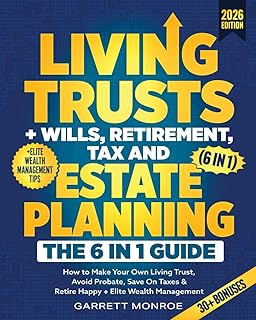
2. Living Trusts + Wills, Retirement, Tax & Estate Planning – The 6-in-1 Guide
Price: $24.97 | Rating: 4.5 stars | ASIN: B0F7FRGV1L
This expanded resource goes beyond basic documents to cover retirement accounts, tax strategies, and wealth management—all through the lens of protecting assets from predators. It includes a specific section on “Fraud-Proofing Your Retirement Accounts” that explains how to set up required minimum distributions and beneficiary designations so scammers cannot redirect them.
Why it matters for fraud prevention: The 6-in-1 guide teaches you how to create a “trust protector” role—a person who reviews transactions and can veto suspicious movements. This is a sophisticated, yet accessible, strategy that few families know about.
Best for: Families with significant retirement savings who want a holistic, integrated plan.
3. Nolo’s Guide to Estate Planning
Price: $27.89 | Rating: 4.7 stars | ASIN: 1413331661
Nolo is a trusted legal publisher. This guide covers all the foundational estate-planning topics with clear, plain-English explanations. It includes sample forms, checklists, and detailed instructions for creating a living trust, a durable power of attorney, and a health care directive. The book is updated regularly to reflect current laws.
Why it matters for fraud prevention: Nolo’s guide includes a chapter on “Avoiding Estate-Planning Scams” that explains how to vet financial advisors and lawyers. It also covers how to revoke powers of attorney if you suspect abuse.
Best for: Those who want a reliable, legal-publisher-backed resource that is widely used by attorneys.

4. Estate Planning For Dummies
Price: $20.99 | Rating: 4.3 stars | ASIN: 1394158548
If the senior or family member is intimidated by legal jargon, this is the right book. It breaks down every concept into small, digestible pieces and includes real-world scenarios. The “Dummies” series has a reputation for making complex topics approachable.
Why it matters for fraud prevention: The book includes a dedicated “Fraud and Exploitation” chapter that lists red flags specific to estate-planning documents—like a suddenly changed will that leaves everything to a new caregiver. It also explains how to use living trusts to shield assets from creditor claims and scammers.
Best for: Beginners and those who feel overwhelmed by traditional legal texts.

5. I’m Dead, Now What? Planner
Price: $11.63 | Rating: 4.6 stars | ASIN: 1441317996
This is not a traditional estate-planning guide—it is a workbook that organizes all critical information in one place. The planner has prompts for bank accounts, insurance policies, passwords, safe deposit boxes, and final wishes. It is designed to be filled out by the senior and kept in a secure location.
Why it matters for fraud prevention: When a senior dies, scammers often swoop in to claim unmonitored accounts. This planner ensures that no account is forgotten. A complete record also makes it easier to spot if an account has been tampered with because the original information is already documented.
Best for: Organizing all financial and legal information in a way that is easy for family members to access after death or incapacitation.

Using Credit Card Protections and Alerts to Stop Fraud in Real Time
Elder fraud often moves through credit cards because they are easy to use and have high limits. Help your relative enable all available fraud protections on their credit cards:
- Transaction alerts for every purchase over $0.
- Credit freezes with the three major bureaus (Equifax, Experian, TransUnion).
- One-time virtual card numbers for online purchases.
- Low credit limits on secondary cards.
Also teach them never to give credit card information over the phone unless they initiated the call. Fraudsters often claim to be from the “fraud department” and ask for the full card number to “verify identity.” That is a reverse scam.
For a full breakdown of card settings, see our guide on Credit Card Fraud Prevention: Settings, Alerts, and Shopping Habits That Help.
What to Do If You Suspect Fraud Has Already Occurred
If you discover that your relative has already been defrauded, act quickly. The first 48 hours are critical.
- Do not confront the suspected scammer. They may try to destroy evidence or intimidate the victim.
- Contact the financial institution immediately and ask to freeze or reverse the transaction.
- File a report with the local police and the FBI’s Internet Crime Complaint Center (IC3).
- Report to the FTC at ReportFraud.ftc.gov.
- Notify the Adult Protective Services in your state.
- Gather all documentation – bank statements, emails, phone logs, and text messages.
- Change all passwords and PINs for accounts, and consider a credit freeze.
If the scam involved wire transfers or Zelle, alert the sending institution within minutes—some transactions can be reversed if caught quickly.
For a complete step-by-step checklist, read What to Do if You’ve Been Defrauded: Reporting, Documentation, and Recovery Steps.
Creating a Family Fraud-Response Plan
Every family should have a written plan that answers:
- Who is the primary contact for financial emergencies?
- What is the chain of command for reviewing suspicious transactions?
- Which accounts are monitored, and by whom?
- What passwords or documents are stored, and where?
- Who has legal authority (power of attorney, trustee) to intervene?
Write down these details and keep a copy with the estate-planning documents. Review it annually or whenever the senior’s health changes.
FAQ: Elder Financial Fraud and Estate Planning
How can I talk to my aging parent about fraud without making them feel incompetent?
Start with empathy. Say something like, “I read that scammers are getting more sophisticated, and I’m worried about all of us. Let’s put a few safeguards in place together.” Frame it as a partnership, not an accusation.
What is the single most important estate-planning document for fraud prevention?
A durable power of attorney for finances. Without it, no one has legal authority to step in if the senior is incapacitated and being exploited. But make sure the document is current—many are outdated or too vague.
Should I add my name as a joint owner to my parent’s accounts?
Not without careful thought. Joint ownership can subject the account to your creditors and may trigger gift taxes. Instead, consider a trust or a limited power of attorney that gives you access only for monitoring.
How often should we review the estate plan?
At least once a year, and after any major life event: death of a spouse, move to assisted living, diagnosis of dementia, or a change in finances.
Are there any free resources to help learn about fraud prevention?
Yes. The FTC’s Pass It On campaign offers free booklets. AARP has a Fraud Watch Network with alerts. The CFPB has guides for older adults. But for a comprehensive estate-planning toolkit, the books listed above provide structured guidance that free resources often lack.
Conclusion: A Loving Watch, A Solid Plan
Elder financial fraud is devastating, but it is not inevitable. Families who combine loving vigilance with a well-structured estate plan create a powerful barrier against exploitation. Monitoring accounts, recognizing red flags, and putting the right legal documents in place are acts of care, not control.
Start today. Have the conversation. Buy one of the trusted guides we’ve recommended—any of them will give you a concrete starting point. Then schedule that annual review. The peace of mind you gain is worth every moment you invest.
Your parent or relative deserves to enjoy their later years without fear. With a little knowledge and the right tools, you can help make that happen.