 Insurance Curator
 Life moves fast—marriages, divorces, births, deaths, relocations, and sudden wealth. Your estate plan should keep pace. A will or trust that sits untouched for a decade can become a roadmap for unintended consequences, leaving loved ones confused and courts involved. Updating these documents after major life changes isn’t just smart; it’s a duty you owe to yourself and your family.
Many people assume a living trust or will is a one-and-done task. In reality, estate planning is a living process. According to a 2023 survey, nearly 40% of Americans have never updated their estate plan after a significant life event. That gap can lead to probate delays, tax penalties, or assets going to an ex-spouse rather than a new partner. This guide walks through every trigger for an update, the legal steps involved, and the best resources to do it right—including top-rated books like Living Trusts, Wills & Estate Planning for Seniors and Nolo’s Guide to Estate Planning.
Why Updating Matters More Than You Think
A will or trust is a set of instructions based on your life at the time you signed it. If your circumstances change but the document doesn’t, the law defaults to what’s written—not what you intended. For example, if you get divorced and forget to update your will, your ex-spouse might still inherit everything in states that don’t automatically revoke bequests to a former spouse.
Similarly, a trust that names a deceased beneficiary or a trustee who moved abroad can create legal gridlock. Regular reviews (every 2–3 years or after any major life change) prevent these headaches. Even if nothing dramatic happens, estate tax thresholds change, state laws evolve, and your financial picture shifts. Ignoring updates is a gamble most families can’t afford.
Major Life Changes That Trigger a Required Update
Marriage or Remarriage
When you marry, many states automatically revoke any prior will unless it explicitly contemplates the marriage. However, relying on automatic revocation is risky. You should execute a new will or a codicil that names your spouse as beneficiary and, if desired, as executor.
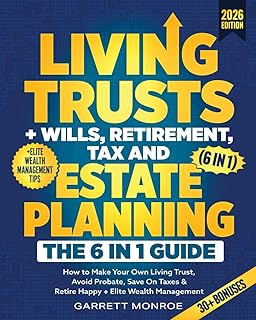
For blended families, a trust often works better than a will because it can provide for a surviving spouse while preserving assets for children from a prior marriage. A revocable living trust can include terms that limit a spouse’s access to principal, ensuring stepchildren aren’t disinherited. Resources like Living Trusts + Wills, Retirement, Tax & Estate Planning – The 6-in-1 Guide offer step-by-step strategies for exactly these scenarios.
Divorce or Legal Separation
Divorce is one of the most critical triggers for an estate plan update. While many states have laws that automatically revoke provisions favoring an ex-spouse after divorce, these laws vary widely. You cannot rely on them. A divorced person who dies before updating their will may still see their ex inherit under outdated terms—especially if the will names the ex as executor or guardian for minor children.
- Immediate steps after divorce becomes final: Revoke all previous wills and trusts. Execute a new will. Change beneficiary designations on life insurance, retirement accounts, and payable-on-death accounts. Update powers of attorney.
- If you have minor children: The divorce decree likely affects custody and guardianship. Your will must name a guardian who aligns with the parenting plan. Failing to update could give guardianship to your ex or to someone you no longer trust.
Birth or Adoption of a Child
A child born or adopted after you execute your will may not be included if the will doesn’t have a clause covering after-born children. Some states provide protections, but not all. Update your will to specifically name the child or include a generic “all my children” clause that covers future additions.
If you have a trust, you may want to create sub-trusts for education, health, or staggered inheritances. For children with special needs, a special needs trust is essential to preserve eligibility for government benefits. The book Estate Planning For Dummies covers these nuances in plain language, making it a great resource for new parents.
Death of a Beneficiary or Trustee
When a named beneficiary, executor, or trustee dies, your estate plan may be left without a key player. If a beneficiary predeceases you, their share might pass to their descendants (per stirpes) or be distributed among remaining beneficiaries—but only if your documents include that language. Without it, the property could fall into intestacy or go to unintended heirs.
- Update your will or trust to name alternate beneficiaries. Many estate planners recommend naming at least two contingent beneficiaries per primary.
- If a trustee or executor dies, appoint a successor immediately. A living trust without an active trustee can become unmanageable and may require court intervention.
Change in Financial Status or Asset Ownership
A sudden inheritance, business sale, lottery win, or significant real estate purchase can make your existing estate plan obsolete. For example, if your estate now exceeds the federal estate tax exemption ($13.61 million in 2024 for individuals, adjusted annually), you may need tax-reduction strategies like an irrevocable life insurance trust or a credit shelter trust.
Similarly, if you sell a primary asset previously held in your living trust, you must re-title any new assets into the trust to avoid probate. Many people forget to fund their trust after acquiring new property. Use a checklist like the one in I’m Dead, Now What? Planner to track all assets and their titling.
Relocation to a Different State
Estate laws vary significantly by state. Community property states (e.g., California, Texas, Arizona) treat marital property differently than common law states. Some states have their own estate or inheritance taxes. If you move, your will or trust may still be valid, but the legal interpretation could shift.
A trust executed in one state is generally valid in another, but witnessing and notarization rules differ. More importantly, state-specific provisions like homestead exemptions or elective share rights for a surviving spouse may override your documents. Review your plan with an attorney licensed in your new state within 90 days of moving.
Health Changes and Incapacity
Estate planning isn’t just about death—it’s about incapacity. If you develop a chronic illness, dementia diagnosis, or become disabled, your existing durable power of attorney and healthcare directive may need updating. A living will should reflect your current medical wishes.
Consider a revocable living trust as a tool for disability management. If you become incapacitated, your successor trustee can step in and manage trust assets without court-appointed guardianship. Update your trustee choices regularly, especially if your chosen person has passed away or moved.
How to Update a Will vs. a Trust: Key Differences
| Aspect | Updating a Will | Updating a Trust |
|---|---|---|
| Formalities | Usually requires a codicil (amendment) or completely new will signed in front of witnesses | Requires a trust amendment or restatement (often simpler, may only need notarization) |
| Probate Impact | Will update doesn’t change probate status; will still goes through probate | Trust update keeps assets outside probate if properly funded |
| Complexity | Can be done with simple forms for minor changes; major changes need new will | Minor changes can be an amendment; major changes often require restatement and re-funding |
| Cost | $100–$300 for a simple codicil; $500–$1,500 for a new will | $200–$500 for an amendment; $1,000–$3,000 for a restatement (attorney fees) |
| Speed | Quick if witnesses are available; delays if notarization required (some states) | Usually requires notarization; can often be done in one sitting |
Real-world example: John created a will in 2018, naming his sister as executor. In 2023, he moved to another state and got divorced. A simple codicil won’t cover the divorce and relocation complexities—he needs a new will. Meanwhile, Mary funded a revocable trust in 2020. After her son was born, she added a sub-trust for his education via a two-page amendment, notarized it, and the trust remained fully funded. The process took under an hour.
Step-by-Step: How to Update Your Will or Trust
Step 1: Review Your Current Documents
Dig out the original signed copies. Read every clause. Pay special attention to:
- Named beneficiaries, executors, trustees, guardians
- Powers of attorney (financial and healthcare)
- Asset distribution formulas (e.g., “all to my spouse” vs “percentage shares”)
- Contingency plans (what if a beneficiary dies before you?)
Step 2: Identify What Has Changed
Make a list of all life events since you last signed. For each event, ask: “Does this change my wishes regarding who gets what, who manages the estate, or who cares for my dependents?” If yes, you need an update.
Step 3: Decide Between Amendment, Codicil, or New Document
- Codicil (will amendment): Best for simple changes like replacing an executor or adding a single bequest. Requires same signing formalities as the original will.
- Trust amendment: Use for minor changes (e.g., changing a successor trustee percentage). No witnesses needed in most states, but must be notarized.
- New will or restated trust: Necessary for major changes—divorce, new marriage, additional children, relocation, or complete change of distribution plan.
Pro tip: If you’re updating because you have a blended family or new tax concerns, a new trust often serves better than patching an old one. Books like Nolo’s Guide to Estate Planning help you weigh these options.
Step 4: Update Beneficiary Designations for Non-Probate Assets
A common mistake: updating a will or trust but forgetting life insurance policies, retirement accounts, IRAs, 401(k)s, transfer-on-death accounts, and payable-on-death bank accounts. These assets pass outside the will and trust—their beneficiary designations control. If you name an ex-spouse on a life insurance policy, they get the money even if your will says otherwise.
Action: Download beneficiary change forms from each financial institution. List both primary and contingent beneficiaries. Keep copies with your estate plan.
Step 5: Retitle Assets into Your Trust (If Applicable)
If you own a revocable living trust, assets must be transferred into the trust’s name to avoid probate. After a major life change—especially buying or selling real estate, starting a business, or inheriting property—verify all titles. Common funding tasks:
- Deed real estate into trust (record with county recorder)
- Re-title bank and brokerage accounts to trust name
- Change vehicle titles (DMV requirements vary by state)
- Assign business interests (LLC membership, stock certificates)
Step 6: Sign and Notarize According to Your State Law
A will typically requires two witnesses (and sometimes a notary). Trusts usually require notarization but not witnesses. Failure to follow the correct formalities can void the entire update. If you use a DIY service, double-check your state’s rules. The product Estate Planning For Dummies includes state-by-state checklists that simplify compliance.
Step 7: Distribute Copies and Inform Key Parties
Give signed copies to your executor, successor trustee, attorney, and a safe-keeping location. Don’t store the only copy in a safe deposit box that becomes inaccessible after your death. Use a planner like I’m Dead, Now What? Planner to record where every document is kept. Inform your executor and trustee of the update so they don’t rely on old instructions.
Step 8: Set a Reminder for the Next Review
Schedule a date in your calendar every two years—or immediately after any future major life change—to revisit the plan. Life events compound, and a small change today can become a big problem tomorrow.
When Should You Hire a Lawyer vs. DIY?
DIY estate planning is tempting, especially with online platforms. For simple estates—no kids, no real estate, modest assets—a DIY will may suffice. But after major life changes, complexity increases. Consider hiring an attorney if:
- You have a blended family (stepchildren, multiple marriages)
- Your estate might exceed the state or federal estate tax exemption
- You own a business or real estate in multiple states
- A beneficiary has special needs, substance abuse issues, or financial immaturity
- You want to disinherit a legal heir (e.g., an adult child)
- You’ve moved to a new state and the laws differ significantly
DIY with high-quality guides can still work for many. Books like Living Trusts, Wills & Estate Planning for Seniors and Living Trusts + Wills, Retirement, Tax & Estate Planning – The 6-in-1 Guide provide forms, step-by-step instructions, and real examples that help you avoid pitfalls. The key is to follow the law to the letter—especially witnessing and notarization rules.
Trust Funding: The Most Overlooked Step
After updating a trust, many people forget to fund it with new assets. A trust that isn’t funded is like a locked box with no key—it provides no probate avoidance. After a major life change:
- Inheritance received? Transfer that money or property into the trust.
- New home? Record a new deed transferring title from your name to the trust.
- New bank account? Open it in the trust’s name, not your personal name.
Where to keep records: Use the I’m Dead, Now What? Planner to list every asset, its location, and whether it’s titled in the trust. This document becomes your executor’s bible.
Digital Assets: A Growing Concern
In the last decade, digital assets—cryptocurrency, online accounts, domain names, cloud storage—have become a significant part of many estates. Most wills and trusts written before 2015 don’t address digital access. Update your plan to include:
- A list of all digital assets and login instructions (store securely)
- Permission for your executor or trustee to access digital accounts (some state laws require explicit authorization)
- Instructions for cryptocurrencies: where is the private key? Which exchange holds the coins?
Consider adding a “digital executor” clause in your will or trust. The book Nolo’s Guide to Estate Planning has an excellent chapter on digital assets, including sample language.
How to Store and Share Your Updated Documents
Even the best estate plan is useless if no one can find it. After updating your will or trust, follow the three-copy rule:
- First copy: In a fireproof safe at home (not a safe deposit box, which may be sealed upon death).
- Second copy: With your attorney or trusted advisor.
- Third copy: With your executor or successor trustee.
Also create a “letter of instruction” —not legally binding, but invaluable. It tells your family where to find everything, whom to contact, and any funeral wishes. The I’m Dead, Now What? Planner is designed exactly for this purpose, with fill-in pages for account numbers, passwords, and final wishes.
For more on secure storage, see our guide: How to Store and Share Your Will and Trust Documents So They’re Found When Needed?.
Tax Implications of Updating Your Trust
When you update a trust, particularly a revocable trust, there are no immediate income or gift tax consequences because you retain control. However, if you convert a revocable trust to an irrevocable trust (common for Medicaid planning or asset protection), you may trigger gift tax reporting.
Important: If you change beneficiaries in a way that gives away control (e.g., switching from a revocable to an irrevocable trust), the IRS counts it as a completed gift. Consult a tax professional before making such changes. For a deeper dive, read Tax Implications of Different Trusts: What Families Need to Know before Setting One up.
International Considerations
If you move abroad, own property in another country, or become a dual citizen, your U.S. will or trust may not be fully recognized. Some countries force heirship rules that override your will for local assets. Update your plan to include a separate international will or a “situs trust” for foreign assets. This is a specialized area—always consult an attorney with cross-border expertise.
The Role of an Executor and Trustee After Your Update
Every time you update, review who you’ve named as executor (for your will) and trustee (for your trust). Ask yourself:
- Is this person still willing and able to serve?
- Have they moved to a different state (making administration expensive)?
- Has their own health declined?
- Do they have the financial skills to handle new assets like a business or cryptocurrency?
If you’ve added new types of assets, consider naming a professional trustee or co-trustee. For more, see How to Choose an Executor for Your Will and What Their Job Really Involves? and The Role of a Trustee: Duties, Liabilities, and How to Pick the Right Person.
Special Cases: Pet Trusts, Minor Children, and Special Needs
- Pet owners: If you have a pet, a pet trust ensures your animal is cared for. Update it if your pet’s needs change or if you acquire new pets. See Pet Trusts and Wills for Pet Owners: Ensuring Your Animals Are Cared for.
- Minor children: Trusts for minors should specify ages at which they receive inheritances. Update these ages as your children grow—what seemed smart at age 5 may not fit at age 15. Read Trusts for Minor Children: How to Control When and How They Receive Money.
- Special needs: A special needs trust must be updated if government benefits rules change or if the beneficiary’s condition changes. Always involve a special needs attorney.
Putting It All Together: Your Action Plan
Updating a will or trust after a major life change doesn’t have to be overwhelming. Follow this checklist:
☐ Identify all life events since your last estate plan
☐ Review current documents for outdated names, wishes, or clauses
☐ Decide: amendment, codicil, or completely new document
☐ Update beneficiary designations on retirement, insurance, and bank accounts
☐ Retitle assets into your trust (if using one)
☐ Sign and notarize according to your state’s laws
☐ Distribute copies and inform key parties
☐ Set a reminder for the next review in 2 years
Ready to get started? Grab one of these trusted resources to guide you step by step:



Frequently Asked Questions
How often should I update my will or trust?
At minimum, every 2 to 3 years, or immediately after any major life event like marriage, divorce, birth of a child, death of a beneficiary, or significant change in assets.
Can I update my will myself without a lawyer?
Yes, many people successfully use DIY kits or books like Nolo’s Guide or Estate Planning For Dummies. However, if your situation involves blended families, taxable estates, or special needs, consulting a lawyer is wise.
What is the difference between a codicil and a new will?
A codicil is a separate document that amends a specific part of your existing will. A new will completely replaces the old one. Use a new will when changes are substantial—don’t patch a broken document.
Does updating a trust require re-funding the trust?
Not necessarily. If you only change beneficiaries or trustees via an amendment, existing assets remain in the trust. But if you acquire new assets, you must retitle them into the trust to maintain probate avoidance.
What happens if I don’t update my will after divorce?
In some states, divorce automatically revokes spousal provisions. In others, it doesn’t. To be safe, always update your will after divorce to ensure your ex-spouse doesn’t inherit or serve as executor.
Do I need to update my trust if I move to another state?
Yes. While a trust is generally recognized across state lines, state-specific laws (community property, elective share, estate taxes) may affect its operation. Have it reviewed by a local attorney.
What is the best book to guide me through updating my estate plan?
For a comprehensive 3-in-1 guide, Living Trusts, Wills & Estate Planning for Seniors (rated 4.4) is excellent. For a broad legal reference, Nolo’s Guide to Estate Planning (rated 4.7) is unsurpassed. For an organizer, I’m Dead, Now What? (rated 4.6) is a must-have.
Can I update my living trust online?
Yes, many online services offer trust amendment forms. But proceed carefully—incorrect wording or lack of proper notarization can make the amendment invalid. Follow your state’s rules exactly.