 Insurance Curator
You’re out of school, earning your first real paycheck, and suddenly the financial world is yours to navigate. No one hands you a manual. Yet every decision — from rent to takeout to that “emergency” car repair — shapes your future. This is where financial literacy becomes your superpower. And at the heart of it all? Budgeting.
Think of budgeting not as a restriction but as a permission slip to spend on what truly matters. It’s the skill that gives you control over your money instead of wondering where it went at the end of the month. For young adults, mastering budgeting early can prevent years of debt, stress, and missed opportunities. Let’s dive deep into the money skills every 20‑something should master — and the tools that make it stick.
Why Budgeting is the Cornerstone of Financial Literacy
Financial literacy isn’t just knowing what a stock is or how compound interest works (though that helps). It’s the daily habit of aligning your income with your values. Budgeting is the engine that powers everything else — saving, investing, paying off debt, and building wealth.
Without a budget, you’re flying blind. Surveys show that nearly two-thirds of Americans don’t use a budget, and that lack of visibility often leads to overspending and credit card debt. For a 20‑something, a few months of careless spending can snowball into thousands of dollars of high-interest debt. Conversely, a simple tracking system can set you years ahead.
Key benefits of mastering budgeting in your 20s:
- Debt avoidance – You see where every dollar goes before it disappears.
- Better savings habits – You can allocate funds for emergencies, retirement, and goals.
- Reduced financial anxiety – Knowing you’re on track eases the mental burden.
- Foundation for investing – You can’t invest what you don’t save.
“A budget is telling your money where to go instead of wondering where it went.” — Dave Ramsey
The 50/30/20 Rule – A Simple Starting Point
If you’re new to budgeting, the 50/30/20 rule is the perfect framework. It’s flexible, easy to remember, and works for most income levels. Here’s how it breaks down:
| Category | Percentage | What it includes |
|---|---|---|
| Needs | 50% | Rent, utilities, groceries, insurance, minimum debt payments |
| Wants | 30% | Dining out, entertainment, travel, shopping |
| Savings & Debt | 20% | Emergency fund, retirement, extra debt payments, investments |
Example: If you earn $3,500/month after taxes:
- Needs = $1,750
- Wants = $1,050
- Savings/Debt = $700
This rule forces you to prioritize housing and essentials without depriving yourself of fun. Adjust the percentages if your rent is higher than 30% — many young adults need to tweak the “needs” slice — but the core idea remains: track your spending and cap your wants.
Tracking Every Dollar – Tools and Techniques
You can’t manage what you don’t measure. Tracking expenses doesn’t mean becoming a miser; it means gaining awareness. Some people prefer apps like Mint or YNAB, while others swear by pen-and-paper methods. For many young adults, physical budget planners offer a tangible, distraction-free way to stay accountable.
Here are three top‑rated physical tools that help you build the tracking habit:
Budget Planner – Monthly Budget Book (Pink or Black)
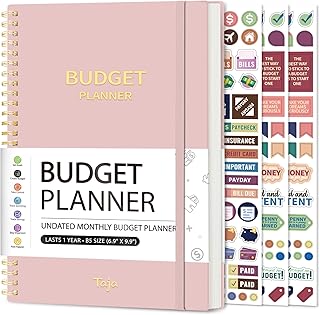
Price: $8.99 | Rating: 4.6 ⭐
This undated planner lets you organize bills, track expenses, and set goals without being tied to a calendar year. The pink version (affectionately called “Take Control of Your Money”) includes monthly budget worksheets, expense trackers, and bill organizer sections. The black version offers the same functionality in a more professional look. Both are compact enough to slip into your bag.
SKYDUE Budget Binder with Zipper Envelopes

Price: $8.98 | Rating: 4.7 ⭐
For those who prefer the cash envelope system, this binder is a game changer. It comes with zippered envelopes for different spending categories, plus expense budget sheets. The 4.7‑star rating reflects how well it works for visual learners who want to see physical cash dwindling — a powerful deterrent against overspending.
NICOOTH Budget Binder Cash Envelopes (Purple)

Price: $6.28 | Rating: 4.6 ⭐
An affordable, A6‑sized binder that’s perfect for minimalist budgets. The purple zipper envelopes hold cash for categories like groceries, gas, and entertainment. It’s lightweight enough to take everywhere, yet durable enough to last months of daily use.
Budgeting 101: Your Essential Guide (Book)

Price: $9.69 | Rating: 4.6 ⭐
If you prefer reading before doing, this book from the Adams 101 series breaks down everything from creating a budget to setting financial goals. It’s written in plain English with real‑world examples — perfect for beginners who feel overwhelmed by jargon.
Which tool should you choose?
- Pen‑and‑paper enthusiasts → Monthly Budget Planner (pink or black)
- Cash‑based budgeters → SKYDUE or NICOOTH binder
- Learners who want theory + practice → Budgeting 101 book + any planner
Common Budgeting Mistakes Young Adults Make
Even with the best intentions, pitfalls await. Here are the most frequent mistakes and how to avoid them:
- Not tracking small expenses – A daily coffee and lunch out can add up to $200+ a month. Track everything, even the $3 purchases.
- Setting unrealistic goals – Cutting all entertainment leads to burnout. Allow yourself some guilt-free wants.
- Forgetting irregular expenses – Car insurance, gifts, and annual subscriptions hit only once or twice a year. Divide them by 12 and set aside monthly.
- Not adjusting the budget regularly – Life changes: new job, moving, inflation. Review your budget every month and adjust categories.
- Using credit cards as “backup” – Budgeting works only if you stick to it. Relying on credit for overspending defeats the purpose.
How to Automate Your Savings and Bills
Automation is a young adult’s best friend. When money moves out of your checking account automatically, you don’t have to rely on willpower each month.
Step‑by‑step:
- Set up a separate high-yield savings account (e.g., Ally, Marcus).
- Schedule an automatic transfer on payday — even $50 per check adds up to $1,300 a year.
- Automate bill payments for rent, utilities, insurance, and any monthly subscriptions. Use your bank’s bill‑pay feature.
- Use a budgeting app that syncs with your accounts to track in real time.
Automation creates a “pay yourself first” mentality. You’ll never miss money you never see.
The Psychology of Spending – Why You Overspend
Budgeting isn’t just math; it’s behavior. Understanding why you spend can prevent emotional purchases.
Common triggers:
- Stress or boredom – Retail therapy feels good in the moment but hurts later.
- Social pressure – Seeing friends dine out or buy new gadgets can trigger “keeping up.”
- Scarcity mindset – Fear of missing out leads to impulse buys.
Expert insight: Dr. Brad Klontz, a financial psychologist, notes that money scripts — beliefs formed in childhood — often drive spending. If you grew up hearing “money is the root of all evil,” you might unconsciously avoid saving. Reflect on your own scripts and work to replace them with healthier narratives.
Practical countermeasure: Before any non‑essential purchase over $50, implement a 24‑hour rule. Wait a day. Often the urge passes, and you realize you didn’t need it.
Building an Emergency Fund While Budgeting
A budget without an emergency fund is like a house with no foundation. Life happens: car breakdown, medical bill, job loss. Aim for 3–6 months of essential expenses.
How to build it fast on a young adult’s salary:
- Cut one or two “wants” (e.g., streaming services, takeout twice a week).
- Use any windfalls — tax refunds, bonuses, birthday gifts — to boost the fund.
- Keep the fund separate from your checking (so you aren’t tempted).
Even $1,000 saved can prevent a debt spiral. Once you reach that milestone, celebrate and then aim higher.
Using Budget Planners to Stay on Track – Real Product Reviews
You’ve already seen the top recommendations. Let’s compare them side by side for a deeper look.
| Product | Price | Rating | Best For |
|---|---|---|---|
| Budget Planner (Pink) | $8.99 | 4.6 | Monthly bill tracking, goal setting |
| Budget Planner (Black) | $8.99 | 4.6 | Same, professional look |
| SKYDUE Budget Binder | $8.98 | 4.7 | Cash envelope system, visual budgeters |
| NICOOTH Budget Binder | $6.28 | 4.6 | Minimalist, portable cash budgeting |
| Budgeting 101 Book | $9.69 | 4.6 | Learning fundamentals while planning |
Why physical tools still win for young adults:
- No app notifications to distract you.
- Writing by hand helps memory and commitment.
- You can see the whole month at a glance.
- No risk of digital clutter or battery drain.
Pair a planner with a simple spreadsheet or app, and you’ll have a bulletproof system.
Integrating Budgeting with Broader Financial Literacy
Budgeting is just one piece of the puzzle. To truly master your money in your 20s, connect it with other financial skills:
- Financial Literacy 101: Plain-english Basics Everyone Should Know before Building Wealth – Understand the language of money so budgeting makes deeper sense.
- Financial Literacy vs. Budgeting: What’s the Difference and Why You Need Both – Clarify how budgeting fits into the bigger picture.
- Simple Financial Literacy Habits That Can Transform Your Money in 15 Minutes a Week – Small weekly actions that compound.
- Financial Literacy and Debt: How Understanding the Numbers Can Help You Get out and Stay out – Use your budget to attack debt strategically.
Each of these resources builds on the foundation you’re creating today.
FAQ: Financial Literacy for Young Adults
Q: What’s the first step to becoming financially literate?
A: Start with a simple spending tracker. For one month, write down every purchase, no matter how small. That awareness alone transforms your relationship with money.
Q: How much should a 20‑something have in savings?
A: Aim for at least one month’s expenses as a starter, then build to 3–6 months. Even $500 is a great start.
Q: Is it okay to use a credit card while budgeting?
A: Yes, if you pay the full balance each month. Treat it like a debit card. Never charge more than you have in your checking.
Q: What if my income varies month to month?
A: Use a zero‑based budget based on your lowest expected income. When you earn more, allocate the extra to savings or debt.
Q: Do I need a budget planner app or a physical planner?
A: Either works. Many people succeed with a hybrid: a digital tracker for real‑time updates and a physical planner for weekly reviews. The key is consistency, not perfection.
Take Control Before Life Gets More Expensive
Your 20s are the most powerful decade for building lifelong financial habits. The choices you make today — track spending, automate savings, use a Budget Planner or SKYDUE Budget Binder — set the trajectory for your future. Financial literacy isn’t a college course you need to pass. It’s a skill you practice every day.
Start small. Pick one tool from this guide, commit to tracking for the next 30 days, and watch your confidence grow. The money you save and the stress you avoid will pay dividends for decades to come. You’ve got this.