 Insurance Curator
Money talks. But for most beginners, it speaks a foreign language. You know you should budget, save, and invest, but the jargon, spreadsheets, and guilt often push you away before you even start.
The truth is, financial literacy isn’t about being a math genius or sacrificing every latte. It’s about building simple habits that make your money work for you. And it all starts with one cornerstone: budgeting.
In this guide, we’ll break down financial literacy for beginners without the overwhelm. You’ll learn exactly what budgeting means, why it’s the bedrock of understanding money, and how to set up a system you’ll actually stick with. We’ll even show you the exact tools — like the popular Budget Planner – Monthly Budget Book — that thousands of beginners use to finally take control.
Let’s start your journey to financial confidence.
What Is Financial Literacy? (And Why Budgeting Is the First Step)
Financial literacy is the ability to understand and effectively use various financial skills, including personal financial management, budgeting, and investing. But for beginners, the term often feels overwhelming — like a college course you never signed up for.
Here’s the simplified truth: Financial literacy simply means knowing where your money comes from, where it goes, and how to make decisions that align with your goals. And the fastest way to gain that knowledge is through budgeting.
When you track your income and expenses, you stop guessing. You see your spending patterns, uncover leaks, and gain clarity. Budgeting transforms abstract concepts like “saving” and “debt reduction” into actionable numbers. That’s why every financial literacy program — from high school courses to expert guides — places budgeting at the center.
Real data point: The popular book Budgeting 101: From Getting Out of Debt and Tracking Expenses to Setting Financial Goals and Building Your Savings (4.6 rating, $9.69) has helped thousands of beginners demystify their finances. It’s proof that a simple framework can replace confusion with control.
Why Budgeting Feels Overwhelming (And How to Fix It)
Before we dive into the “how,” let’s address the elephant in the room: why does budgeting scare so many people?
Common overwhelm triggers:
- Perfectionism: Believing you must account for every penny from day one.
- Guilt: Feeling bad about past spending decisions.
- Complexity: Trying to use advanced apps or spreadsheets before understanding the basics.
- Restriction: Thinking a budget means you can never spend on fun again.
Here’s the mindset shift you need: A budget is not a straitjacket. It’s a spending plan that gives you permission to enjoy your money without anxiety.
Instead of tracking every cent with a spreadsheet, start with a simple, flexible method. The goal is awareness, not austerity.
The 5-Step Budgeting Framework for Beginners
You don’t need a degree in finance to master budgeting. Follow this five-step framework, and you’ll build financial literacy one paycheck at a time.
Step 1: Know Your “Why”
Before you open a spreadsheet, ask yourself: Why do I want to understand my money?
Maybe it’s to pay off debt, save for a vacation, or build an emergency fund. Write your goal down. Research shows that people who tie budgeting to a specific, emotional goal are 70% more likely to stick with it.
Step 2: Track Your Income and Expenses (for 30 Days)
For one month, write down every dollar that comes in and every dollar that goes out. Don’t judge yourself — just observe.
To make this easier, use a dedicated tool like the Budget Planner – Monthly Budget Book (4.6 rating, $8.99, available in pink or black). It has undated pages, expense trackers, and bill organizers — everything you need for a no-stress 30-day tracking experiment.
Step 3: Categorize Your Spending
Once you have your data, group expenses into three categories:
- Fixed necessities: Rent, utilities, insurance, loan payments.
- Variable essentials: Groceries, gas, medication.
- Discretionary: Dining out, streaming services, hobbies.
Most beginners are shocked by how much “small” discretionary spending adds up. A $5 coffee every workday? That’s $100 a month — enough for a small emergency fund contribution.
Step 4: Choose a Budgeting Method (That Works for You)
There’s no one-size-fits-all. Here are three beginner-friendly methods:
| Method | How It Works | Best For |
|---|---|---|
| 50/30/20 | 50% needs, 30% wants, 20% savings/debt | Simple, balanced allocation |
| Zero-based | Every dollar is assigned a job (income – expenses = $0) | Detailed control |
| Envelope system | Cash for each category in physical envelopes | Overspenders |
Pro tip: The envelope system works brilliantly with a physical binder like the NICOOTH Budget Binder Cash Envelopes A6 (4.6 rating, $6.28, purple). It comes with zippered envelopes that keep your cash organized and your budget tangible.
Step 5: Automate and Adjust
Set up automatic transfers for savings and bills. Then, review your budget weekly — not daily. Adjust categories as needed. A budget is a living document, not a rigid commandment.
Tools of the Trade: Physical Budgeting Aids That Actually Help
Digital apps are great, but for many beginners, writing things down creates a stronger mental connection to money. The tactile act of recording expenses reinforces awareness and reduces impulsive spending.
Below are three top-rated physical tools used by thousands of beginners to build financial literacy through budgeting.
1. Budget Planner – Monthly Budget Book (Pink or Black)
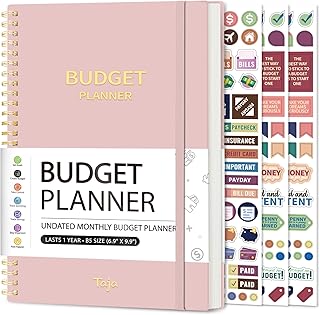
Price: $8.99 | Rating: 4.6
This undated planner is a favorite among beginners because it’s straightforward. You get monthly spreads, expense trackers, bill organizers, and space for financial goals. The pink and black editions offer style without distraction.
Why it works: Writing down expenses forces you to slow down and think about each purchase. The planner’s layout encourages weekly reviews, which builds the habit of financial reflection.
2. SKYDUE Budget Binder with Zipper Envelopes

Price: $8.98 | Rating: 4.7
If you prefer the envelope system, this binder is a complete kit. It includes cash envelopes, expense budget sheets, and a zippered closure to keep everything secure.
Why it works: Physical envelopes create a powerful psychological barrier. When the “Groceries” envelope is empty, you stop spending. The binder also comes with tracker sheets, so you can log every transaction in one place.
3. NICOOTH Budget Binder Cash Envelopes A6 (Purple)

Price: $6.28 | Rating: 4.6
Compact and affordable, this A6 binder is perfect for people who want portability. The purple zippered envelope set includes multiple compartments for different budget categories.
Why it works: Its small size means you can carry it everywhere. You’ll be reminded of your budget every time you open your bag. The low price also removes any excuse not to start.
4. Budgeting 101: The Book That Puts It All Together

Price: $9.69 | Rating: 4.6
For those who want the complete backstory, this book from Adams 101 Series covers everything: getting out of debt, tracking expenses, setting financial goals, and building savings. It’s like having a financial coach in your pocket.
Why it works: The book breaks down complex concepts into digestible chapters. You can read one section per week while applying the lessons to your own budget.
How to Stick to Your Budget (Even When Motivation Fades)
Motivation peaks in January and crashes by February. Here’s how to make budgeting a lasting habit:
- Schedule a weekly “money date” — 15 minutes every Sunday to review your budget. Treat it like a non-negotiable appointment.
- Celebrate small wins — Paid off a credit card? Hit a savings milestone? Reward yourself (within reason).
- Use the “30-day rule” — For non-essential purchases over $50, wait 30 days. Most impulse buys lose their appeal.
- Buddy up — Share your goals with a trusted friend or join an online community. Accountability multiplies success.
Remember, budgeting isn’t about restriction — it’s about alignment. When your spending matches your values, you feel empowered, not deprived.
Advanced Budgeting Strategies for Growth (Once You’re Comfortable)
Once you’ve tracked your expenses for three months and built a basic budget, you can level up your financial literacy.
Pay yourself first: Treat savings like a fixed expense. Transfer 10–20% of your income to a separate account the day you get paid.
Use the 50/30/20 as a springboard: After a few months, tweak the percentages. If you’re debt-free, increase the 20% savings to 30% and reduce wants to 25%.
Implement sinking funds: Save for irregular expenses (car repairs, holidays) in separate sub-accounts. Your budget binder can include extra envelopes for these.
Review subscriptions quarterly: Most people waste $50–100 per month on forgotten subscriptions. Use a service like Rocket Money, or simply scan your bank statements.
Common Budgeting Mistakes (And How to Avoid Them)
Even financially literate people slip up. Here are the top mistakes beginners make:
- Setting an unrealistic budget — Cutting all fun money leads to burnout. Allocate at least 5–10% for guilt-free spending.
- Ignoring irregular expenses — Annual insurance, birthday gifts, car registration — they’ll blindside you if you don’t plan ahead.
- Not adjusting for life changes — A raise, a new baby, or a move requires a budget overhaul. Revisit your plan every quarter.
- Using only one tool — Combining a physical binder (like the SKYDUE Budget Binder) with a digital tracker gives you the best of both worlds.
Deepen Your Financial Literacy Journey
Budgeting is just one piece of the financial literacy puzzle. To build a complete foundation, explore these related topics:
- Financial Literacy 101: Plain-English Basics Everyone Should Know Before Building Wealth
- Financial Literacy vs. Budgeting: What’s the Difference and Why You Need Both
- Simple Financial Literacy Habits That Can Transform Your Money in 15 Minutes a Week
- Financial Literacy for Young Adults: Money Skills Every 20‑Something Should Master Early
- Financial Literacy for Parents: How to Teach Kids About Money at Every Age
- Financial Literacy Myths That Keep You Broke (And What Actually Matters)
- How Financially Literate Are You? A Self‑Assessment to Spot Hidden Money Gaps
- Financial Literacy for High Earners: Avoiding Lifestyle Creep and Silent Money Leaks
- Financial Literacy and Debt: How Understanding the Numbers Can Help You Get Out and Stay Out
Frequently Asked Questions About Financial Literacy and Budgeting
1. What is the easiest way to start budgeting as a beginner?
Start by tracking your income and expenses for 30 days using a simple notebook or a tool like the Budget Planner – Monthly Budget Book. Once you see where your money goes, choose a method like 50/30/20.
2. Do I need to use an app, or is a physical binder enough?
Either works. Many beginners find physical binders like the SKYDUE Budget Binder more effective because writing reinforces memory. You can also combine both.
3. What’s the biggest mistake people make when budgeting?
Setting an overly restrictive budget. If you cut all discretionary spending, you’ll quit within weeks. Leave room for fun.
4. How long does it take to see results from budgeting?
Most people notice reduced financial stress within one month. After three months, you’ll likely have extra cash and a clearer picture of your habits.
5. Is budgeting the same as financial literacy?
No. Budgeting is a key component of financial literacy, which also includes saving, investing, debt management, and insurance. But budgeting is the foundation — once you master it, other topics become easier.
6. What should I do if I have irregular income?
Use the “balanced average” method. Calculate your average monthly income over the past year, then base your budget on that. In high-income months, save the excess. In low months, draw from savings.
7. Can I budget while paying off debt?
Absolutely. In fact, budgeting is essential for debt repayment. Use the 50/30/20 method with the 20% allocated entirely to debt until you’re free.
8. How do I stay motivated when my budget feels boring?
Connect your budget to a big goal — a trip, a house, debt freedom. Visual reminders work. Also, schedule a weekly “money date” to track progress and reward milestones.
Final Thoughts: Your Financial Journey Starts Now
Financial literacy for beginners doesn’t have to be a mountain of stress. It’s a series of small, consistent steps — starting with understanding your cash flow through budgeting.
Pick one tool from this article — whether it’s the Budget Planner – Monthly Budget Book, the NICOOTH Budget Binder, or the Budgeting 101 book — and take the first step today.
Remember: you don’t need to be perfect. You just need to start. And once you do, the confidence you gain will ripple into every area of your life.
Your money is your tool. Budgeting is the manual. Now go read it.