 Insurance Curator
Stepping into the world of personal finance can feel overwhelming, but it doesn’t have to be. The foundation of any solid money plan starts with understanding the basic banking products available to you. Whether you’re fresh out of school, rebuilding your finances, or simply looking to get more organized, knowing the difference between a checking account, a savings account, a certificate of deposit (CD), and other options is crucial for smarter budgeting.
Banking products are not just places to stash your cash. They are tools that help you manage income, track spending, save for goals, and earn a little interest along the way. When used strategically, these accounts can automate your budgeting process, reduce fees, and even help you avoid debt. In this guide, we’ll walk through every major banking product, explain how each fits into a healthy budget, and share expert tips to get the most out of your money.
If you’re looking for a practical way to track your expenses while you explore banking options, consider using a dedicated planner like the Budget Planner – Monthly Budget Book with Expense Tracker Notebook. It’s a favorite among budgeters and pairs perfectly with the accounts we’ll discuss. Check it out on Amazon.
Why Understanding Banking Products Matters for Budgeting
Budgeting isn’t just about cutting expenses. It’s about directing your money where it needs to go. Each banking product serves a specific purpose in that direction. For example, a checking account handles day-to-day transactions, while a savings account keeps your emergency fund safe and separate. CDs help you lock in higher rates for money you won’t need soon, and money market accounts offer a blend of liquidity and yield.
Without knowing these distinctions, you risk paying unnecessary fees, earning little to no interest, and mixing up funds meant for bills with funds meant for long-term goals. By aligning your banking products with your budgeting categories, you create a system that practically runs itself. And with FDIC insurance covering up to $250,000 per depositor per institution, your money stays protected.
Let’s dive into each product and see how they can supercharge your budgeting efforts.
Checking Accounts – The Heart of Your Daily Finances
A checking account is your financial command center. It’s where your paycheck lands, where you pay bills, and where your debit card draws from. Most checking accounts offer unlimited transactions, online bill pay, and ATM access. For budgeting, a checking account is indispensable for tracking variable expenses like groceries, gas, and dining out.
Key features to look for:
- No monthly maintenance fees (or easy ways to waive them)
- Free ATM access or reimbursements
- Overdraft protection options (but avoid high fees)
- Mobile check deposit and app integration
- Alerts for low balances or large transactions
When choosing a checking account, consider how you spend. If you’re a student or freelancer with variable income, look for accounts with low minimum balances. For a deeper dive on selecting the right one, read our guide on How to Choose the Right Checking Account for Your Everyday Money.
Budgeting tip: Use your checking account for your fixed monthly expenses only. Transfer a set amount to savings as soon as you get paid. This “pay yourself first” method makes budgeting effortless.
Savings Accounts – Building Your Safety Net
A savings account is designed for money you don’t intend to spend immediately. It typically earns interest, though rates vary widely. High-yield savings accounts (HYSAs) offered by online banks often provide significantly better returns than traditional brick-and-mortar banks.
Why you need a savings account for budgeting:
- Emergency fund: Aim for 3–6 months of expenses. A separate savings account prevents you from dipping into it for daily needs.
- Short-term goals: Saving for a vacation, a new laptop, or holiday gifts? A savings account keeps that money visible and earning interest.
- Buffer against overdrafts: Keeping a small cushion in your checking and linking it to savings can prevent costly fees.
To compare offers and find the best rates, check out our article High-yield Savings Accounts: What to Look for and How to Compare Offers.
Common mistake: Keeping too much money in a checking account that earns zero interest. Move excess cash to savings and watch it grow.
Certificates of Deposit (CDs) – Locking in Gains for Specific Goals
A certificate of deposit (CD) is a time deposit account. You agree to leave your money untouched for a fixed term (e.g., 6 months, 1 year, 5 years) in exchange for a guaranteed interest rate, usually higher than a standard savings account.
When to use a CD in your budget:
- Known future expenses: You know you’ll need a down payment for a house in two years. Lock that money into a 2-year CD to earn more than a savings account.
- Laddering strategy: Open multiple CDs with staggered maturity dates (e.g., 6-month, 1-year, 18-month). As each matures, you can reinvest or use the cash without penalty.
- Avoiding impulse spending: The early withdrawal penalty discourages you from touching the money. Perfect for disciplined goal-setting.
However, CDs are not ideal for emergency funds because you may need immediate access. For a side-by-side comparison, read Certificates of Deposit vs. Savings Accounts: Which Banking Product Fits Your Goal?.
Expert insight: Use a CD for “once-in-a-while” goals like a wedding or a major home renovation. Never put your entire emergency fund in a CD.
Money Market Accounts – A Hybrid Option
A money market account (MMA) combines features of checking and savings. It usually offers a debit card or check-writing ability, but also pays interest similar to a savings account. Minimum balance requirements are often higher than regular savings.
Who should use a money market account?
- People who need easy access to a larger pool of cash (e.g., for a large upcoming expense)
- Those who want higher interest than a checking account but still want limited transactional access
- Investors parking cash temporarily while deciding on next moves
MMAs are not designed for daily transactions. Most limit you to six withdrawals per month (a Federal regulation that may still apply at some banks). They’re best for short-term cash reserves that you might need to move quickly.
Learn more in our detailed guide: Money Market Accounts Explained: Who Should Use Them and Why.
Budgeting tip: Use an MMA as your “big expense” bucket – for things like property taxes, insurance premiums, or a new car fund. Keep it separate from your regular checking and long-term savings.
Other Banking Products You Should Know
Beyond the core four, several other banking products can help you manage your money more effectively.
Overdraft Protection and Lines of Credit
Overdraft protection links your checking account to a savings account or a line of credit. If you overspend, funds are automatically transferred, saving you from expensive overdraft fees. But be careful: some banks still charge a transfer fee. A better option is to opt out of overdraft and keep a small buffer.
For a full breakdown, see Overdraft Protection, Lines of Credit, and Other Hidden Banking Products.
Mobile-First Banking Products
Digital-only banks (neobanks) offer high-yield checking and savings accounts with no fees, early direct deposit, and powerful budgeting tools. Features like round-ups, automatic savings, and spending categorization make them ideal for budgeters.
Check out Mobile-first Banking Products: Features That Actually Make Life Easier to see if they fit your lifestyle.
Using Separate Accounts to Organize Bills and Goals
One of the most effective budgeting strategies is to open multiple accounts – one for bills, one for discretionary spending, one for savings, and one for goals. This “envelope system” digitalized reduces temptation and makes tracking easy.
Our article Using Separate Banking Products to Organize Bills, Goals, and Everyday Spending walks you through exactly how to set this up.
Evaluating and Avoiding Fees
Bank fees can eat away at your budget. Monthly maintenance, ATM, overdraft, and foreign transaction fees all add up. Always read the fine print, set up direct deposit to waive fees, and choose accounts with no minimum balance requirements.
For a complete guide, read How to Evaluate Banking Fees and Avoid Paying for Basic Services.
Safe Places for Large Sums
If you’re holding a large amount of cash – from a home sale, inheritance, or business profits – you need to understand FDIC insurance limits. At a single bank, deposits are insured up to $250,000 per depositor, per ownership category. To insure more, spread funds across multiple banks or use a CDARS service.
For full details, see Safe Places to Keep Large Sums of Cash: FDIC Insurance and Banking Product Limits.
How to Bundle Banking Products for a Better Budget
Now that you know the options, the magic happens when you combine them. Here’s a sample setup that many financial experts recommend:
| Account Type | Purpose | Budget Role |
|---|---|---|
| Checking | Pay bills, daily expenses | Variable spending (30–50% of income) |
| High-Yield Savings | Emergency fund | 3–6 months of expenses |
| Online Savings (sub-account) | Goal #1 (e.g., vacation) | Automated monthly transfer |
| CD (12-month) | Goal #2 (e.g., down payment) | Lock in higher rate for known date |
| Money Market | “Big bills” fund | Property tax, insurance, annual subscriptions |
This structure keeps your money organized, earning interest where possible, and reduces the chance of overspending.
Practical Tools to Support Your Banking and Budgeting Journey
Even with the perfect banking setup, you need a system to track your progress. Physical tools like budget planners and binders can be surprisingly effective. They force you to write down every expense and review your spending patterns.
Here are some top-rated budgeting tools that complement your banking products:
1. Budget Planner – Monthly Budget Book with Expense Tracker Notebook (Pink)
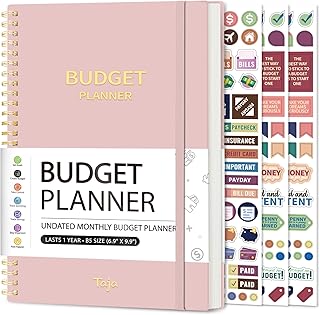
Price: $8.99 | Rating: 4.6
This undated planner lets you track income, expenses, and savings goals side by side. Perfect for pairing with your checking and savings accounts.
2. NICOOTH Budget Binder Cash Envelopes A6 (Purple)

Price: $6.28 | Rating: 4.6
Great for the “cash envelope” method – withdraw budgeted cash and label envelopes for categories like groceries or entertainment.
3. SKYDUE Budget Binder with Zipper Envelopes

Price: $8.98 | Rating: 4.7
Includes budget sheets and multiple envelopes. Use it alongside your savings account to allocate cash for irregular expenses.
4. Budget Planner – Monthly Budget Book (Black)

Price: $8.99 | Rating: 4.6
A sleek, undated option for those who prefer a more professional look. Helps you reconcile your accounts monthly.
5. Budgeting 101 (Adams 101 Series)

Price: $9.69 | Rating: 4.6
A must-read companion that explains the theory behind budgeting and how to apply it to your banking choices. Highly recommended for beginners.
Any of these tools can help you stay on top of the banking products you choose. Start with one that matches your style – digital or paper – and build your system from there.
Frequently Asked Questions About Banking Products and Budgeting
What is the best banking product for an emergency fund?
A high-yield savings account (HYSA) is the best choice because it offers easy access, no penalties, and competitive interest. Keep at least three months of expenses there.
Can I have multiple checking accounts for budgeting?
Absolutely. Many budgeters use one checking for fixed bills and another for discretionary spending. Just watch out for minimum balance fees.
Are CDs worth it for small amounts?
Yes, if you can spare the money for the full term. Even small CDs can earn more than a savings account. Just avoid using CDs for money you might need before maturity.
How can I avoid monthly maintenance fees?
Most banks waive fees if you set up direct deposit, maintain a minimum daily balance, or use your debit card a certain number of times per month.
Should I use a money market account instead of savings?
Only if you need check-writing ability and can meet the higher minimum balance. Otherwise, a high-yield savings account usually offers better rates without the restrictions.
What happens if I withdraw from a CD early?
You’ll pay an early withdrawal penalty, typically a few months of interest. For example, a 1-year CD might forfeit three months of interest. Always check the terms.
Can I link multiple banking products to one budget planner?
Yes. Most budget planners have sections for each account type. Simply log transfers and balances under each category.
Conclusion
Understanding banking products is the first step toward taking control of your finances. From checking accounts that handle your daily cash flow to CDs that lock in higher rates for specific goals, each product plays a unique role in your budgeting strategy. By choosing the right mix and using tools like budget planners to track everything, you can eliminate guesswork and build a system that works automatically.
Start small. Open a high-yield savings account for your emergency fund. Link it to your checking for overdraft protection. Then add a CD for a medium-term goal. Over time, you’ll have a personalized banking ecosystem that supports your budgeting goals and helps your money grow.
Take action today – review your current accounts, see where you can improve, and grab a budgeting tool that makes the process enjoyable. Your future self will thank you.